Planning for change
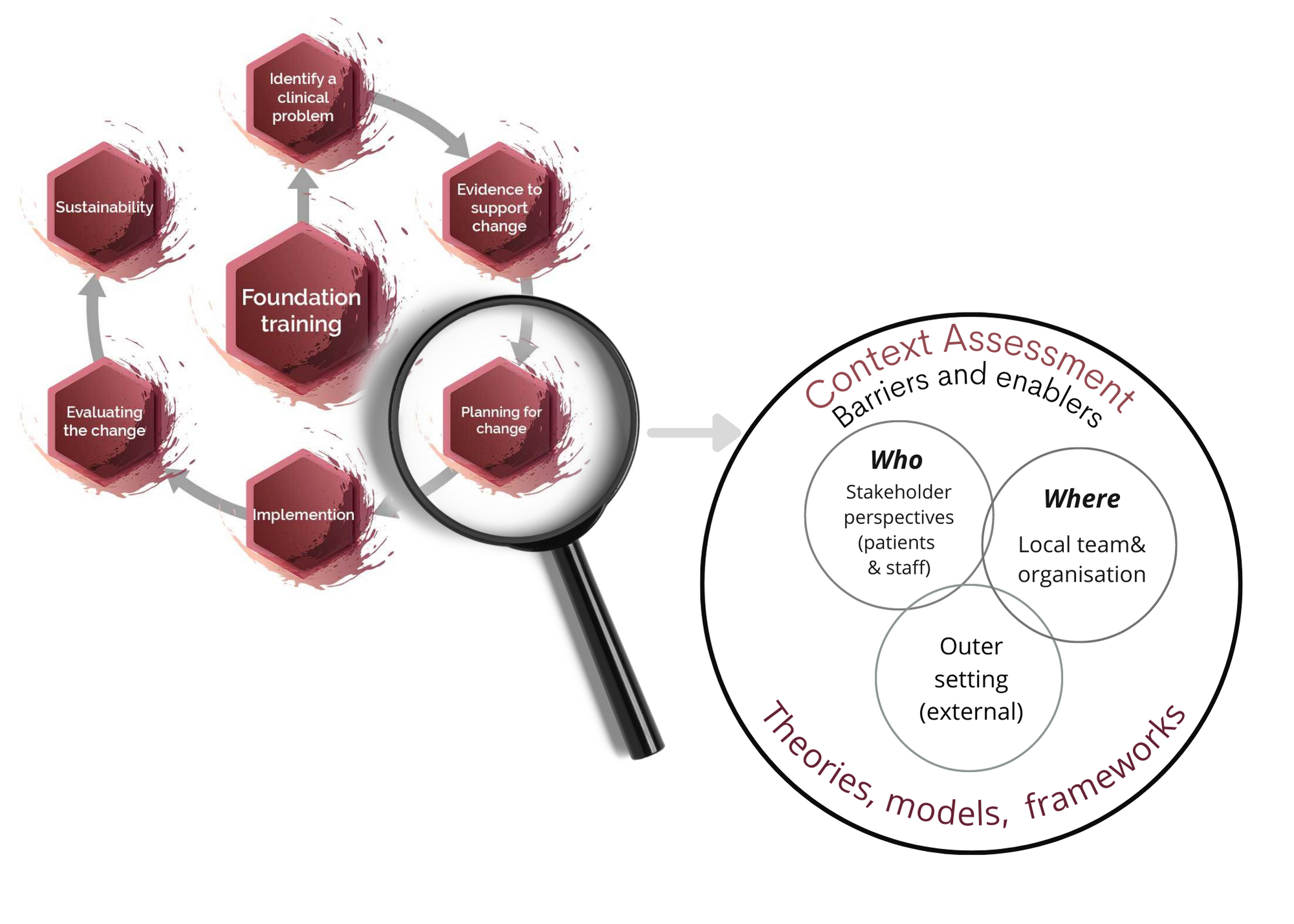
Designing an evidenced based solution and planning for implementation is an important stage of planning – using a logic model or theory, model, or framework to understand the implementation context including barriers and enablers, strategies for change and who needs to do what differently for success is covered in this phase.
Before you move to planning, it is important you have:
(1) Identified a problem that an evidenced-based approach aims to tackle (i.e. an implementation gap)
(2) Conducted a review of the literature and evidence-base of the intervention(s) you have selected to address the identified problem
Stakeholders
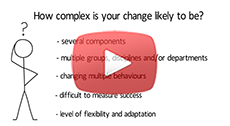
When considering your TRIP project, it is not just the impact on you but also the range of stakeholders involved. It is important to identify and understand whether there is an impact on other individuals, teams, or organisations. Identification, selection and management of stakeholders can be tricky but do not underestimate their role. It is helpful to understand what ‘stake’ each stakeholder holds in the system to identify how you might best engage the different individuals, groups or organisations.
Webinar 2: Identifying and Engaging Stakeholders
Context Assessment
It is essential to understand the specific environment(s) where you will implement your intervention. Context affects implementation success, so it is important to understand what may unfold when your TRIP project and setting (e.g., team, department, or organisation) converge. It is important to note that context is distinct from the intervention and both will have their own set of characteristics that will need to be considered and managed. Is the specific context ready for this particular intervention? Does the intervention fit within the context? Finally, what are the barriers and enablers to making a change? Understanding this is key to selecting the right implementation strategies
Theories, models and frameworks
Using an implementation theory, model or framework helps ensure a sustainable change can occur by systematically thinking about a TRIP project and ensuring you understand the barriers and enablers to implementation to help guide the best strategies to for implementation. It is one of the key components to what sets TRIP apart from any other improvement or change project. A theory, model or framework allows you to explicitly consider all the different facets of a project - assisting you to understand or explain what influences your TRIP project and helping you to contextualise and evaluate your implementation outcomes.
Webinar 4: Choosing an implementation Theory, Model and Framework Dr Elizabeth Lynch
Other resources
Champion Guide - Planning for change
This manual will provide a guide of how you can facilitate AH-TRIP training to use the AH-TRIP webinars and training materials. This guide will provide you with discussion points, prompts and concepts for you to consider and pose to your department or team to enhance learning opportunities. Read More > (PDF 186 kB)