

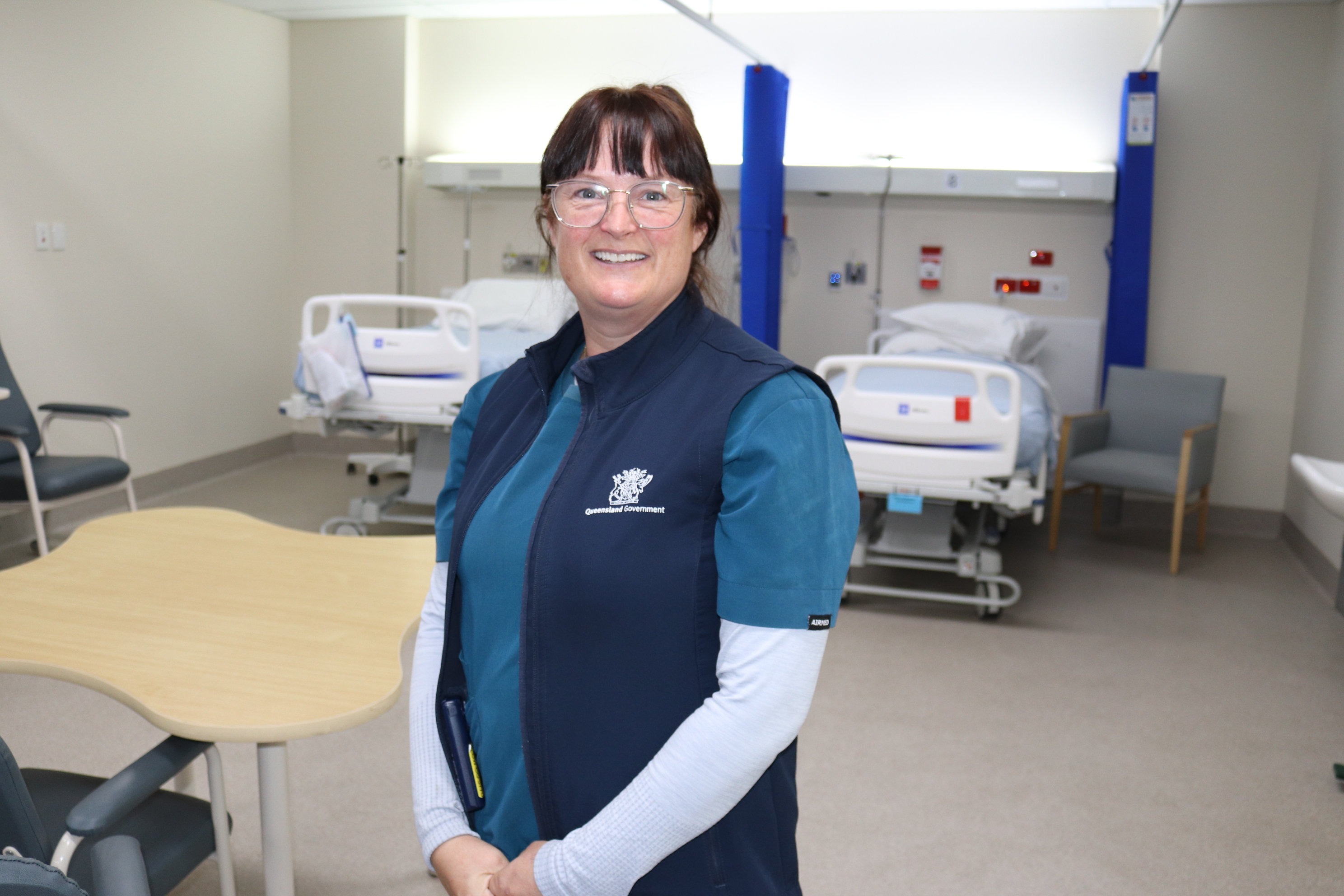
Patient Flow Commander Anna Kennerley in the Gladstone Transit Lounge
Thanks to nurses like Anna Kennerley, transit lounges across Queensland are streamlining patient flow by freeing up critical beds across wards and emergency departments.
The dedicated, nurse-led spaces are designed for patients awaiting admission, transfer, discharge or outpatient appointments, or those awaiting medications, final test results, transport home, or other equipment such as crutches.
The new hub at Gladstone Hospital, where Anna is a Patient Flow Commander and clinical nurse, has already been supporting more than 130 people each month.
Using her 26 years’ experience as an emergency nurse and duty manager, Anna ensures patients from across the hospital are receiving the most appropriate care, being kept comfortable, and getting home sooner.
We asked Anna what a typical day looks like in the Gladstone Hospital Transit Lounge. Here’s what she had to say.
8am – “I arrive in the transit lounge and am handed a list of every single patient across the whole hospital. I then head to a handover meeting with the medical team and the surgical team, where they share a brief synopsis of each patient, including what they've come in for and what their barriers for discharge or ongoing care are.
“From here, we see who we can bring to the transit lounge based on a few criteria – looking at whether they are able-bodied, if they need infusions, or even if they are waiting for a transfer to another hospital – and start bringing patients in.”
9am – “A quick huddle with multidisciplinary teams from across the whole hospital. Here I learn how many patients are likely to be discharged today, what’s on the surgical list, and whether we’ll need to chat with other allied health practitioners or other outside parties.
“This is where the work really starts – collating lots of lists, looking at treatment plans, care plans and allied health plans, and making sure every patient will be in the right place at the right time, under the right specialty, getting the right treatment.”
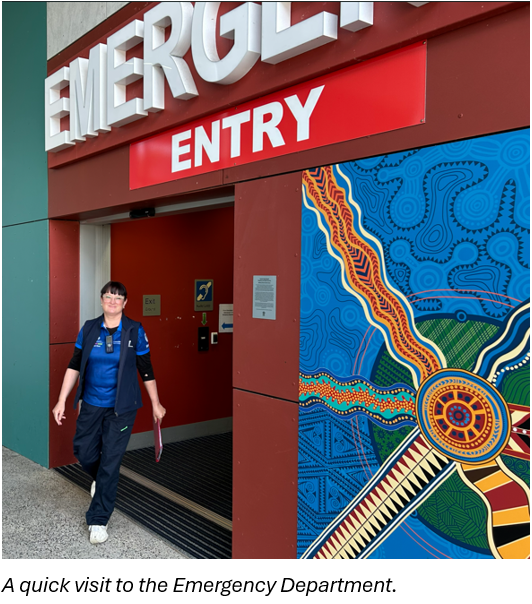
11am – “Next, I do a round of the emergency department. We’ll bring up patients awaiting surgery so we can get them ready – complete their pre-operative checklist, get consent forms sorted, give them any infusions they need and make sure they’ve got their surgical stockings on. They then get to chill out and watch TV in comfy recliner chairs in the transit lounge while they wait for theatre.
“Still in the emergency department, we’ll also see if there are any patients who would be better off going down to the nurse-led clinic and arrange transport for them if required.”
2pm – “A late lunch, then some more transfers. You really get your steps up here – I average around 20,000 per day!
“The doctors come and discuss their complex patients and then we'll decide on ongoing care plans for them.
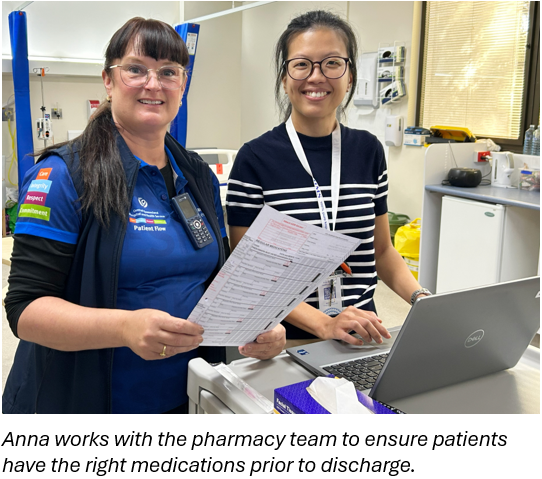
“It's like a bit of a Rubik's Cube around here – or a train station! We’ve got people going into wards, coming out of surgery, heading off to allied health or being transferred to other hospitals, awaiting Hospital in the Home assessments, or seeing the pharmacist to ensure they’ve got all the right medications to take with them. All the while, we ensure they are being monitored – reading their ECGs, looking at their heart tracings, recording all those details.
“We also act as a hub for patients that need infusions – whether that be an antibiotic infusion, iron infusion, or even cancer care infusions. If patients need to come back in at a later date, they can come straight to the transit lounge, have their infusions and then be discharged again, so they don’t have to go through the whole system again.”
4pm – “It’s been another big day with a lot of talking. I am constantly on the phone to other regional hospitals, doctors, surgeons, allied health and bed managers, so it’s lucky I’m a very talkative person!
“The transit lounge has made a huge difference to patient flow through the hospital. It’s improved communication and thinking outside of the square, and we’re getting patients out sooner – because who really wants to spend more time in hospital than they absolutely need to?
“We’re currently open seven days a week, with a registered nurse and enrolled nurse here from 7am until 5.30pm every day, but I wouldn’t be surprised if it expands beyond that soon.”
The Gladstone Transit Lounge opened in November 2025 and joins a network of 23 transit lounges across Queensland.
They’re part of the Queensland Government’s $80 million investment to increase hospital capacity under the Easier Access to Health Services Plan.