

Summary
In Queensland, melioidosis cases usually occur between December and May, often after heavy rain and flooding.
Queensland Health is reminding residents in the state’s tropical north to take precautions against melioidosis this wet season.
Melioidosis is an uncommon disease caused by a bacterium called Burkholderia pseudomallei, found in soil and water in northern Australia and South East Asia.
In Queensland, cases usually occur between December and May, often after heavy rain and flooding.
The 2024-25 wet season saw the highest number of melioidosis cases since the disease became notifiable in Queensland in the 1980s.
In 2025, there were 250 cases of melioidosis diagnosed in Queensland, with 37 deaths either directly caused by or associated with the disease.
As the likelihood of wet weather events increase over summer months and the wet season, Queenslanders - particularly those in the state’s north - are reminded to be aware of the risks.
What is melioidosis and how is it transmitted?
Melioidosis is an uncommon tropical disease that can lead to serious infection and even death.
The bacteria live deep in soil and can be brought to the surface by heavy rain or flooding, contaminating floodwaters and mud.
Infection can occur by walking through floodwaters or muddy waters with an open cut, or while using a high-pressure hose on muddy surfaces and breathing in contaminated droplets.
Melioidosis does not spread from person to person.

Where do melioidosis cases occur?
In Australia, cases most commonly occur in northern parts of Australia.
In Queensland, melioidosis is most often reported among residents of the Torres and Cape, North West, Cairns and Hinterland, and Townsville regions. Nearly 90 per cent of cases in 2025 were in residents of the Cairns and Hinterland or Townsville Hospital and Health Service areas.
Who is most at risk?
Melioidosis is rare in healthy adults and children, and most people exposed to the bacteria do not get sick.
People at highest risk include those with diabetes, cancer, chronic lung or kidney disease, older people and people who drink heavily or binge drink. Among this year’s cases, 94 per cent were in people most vulnerable to melioidosis infection.
For people who do get sick, the infection can be life-threatening and require prompt medical attention. Almost all (98 per cent) melioidosis cases this year were admitted to hospital, with many needing intensive care treatment.
How do you protect yourself against melioidosis?
It is important people take steps to protect themselves, especially those most at risk.
Every wet season, Hospital and Health Services in northern Queensland issue advice about melioidosis, particularly before, during and after recent severe weather events, to ensure at risk communities are aware of how best to protect themselves.
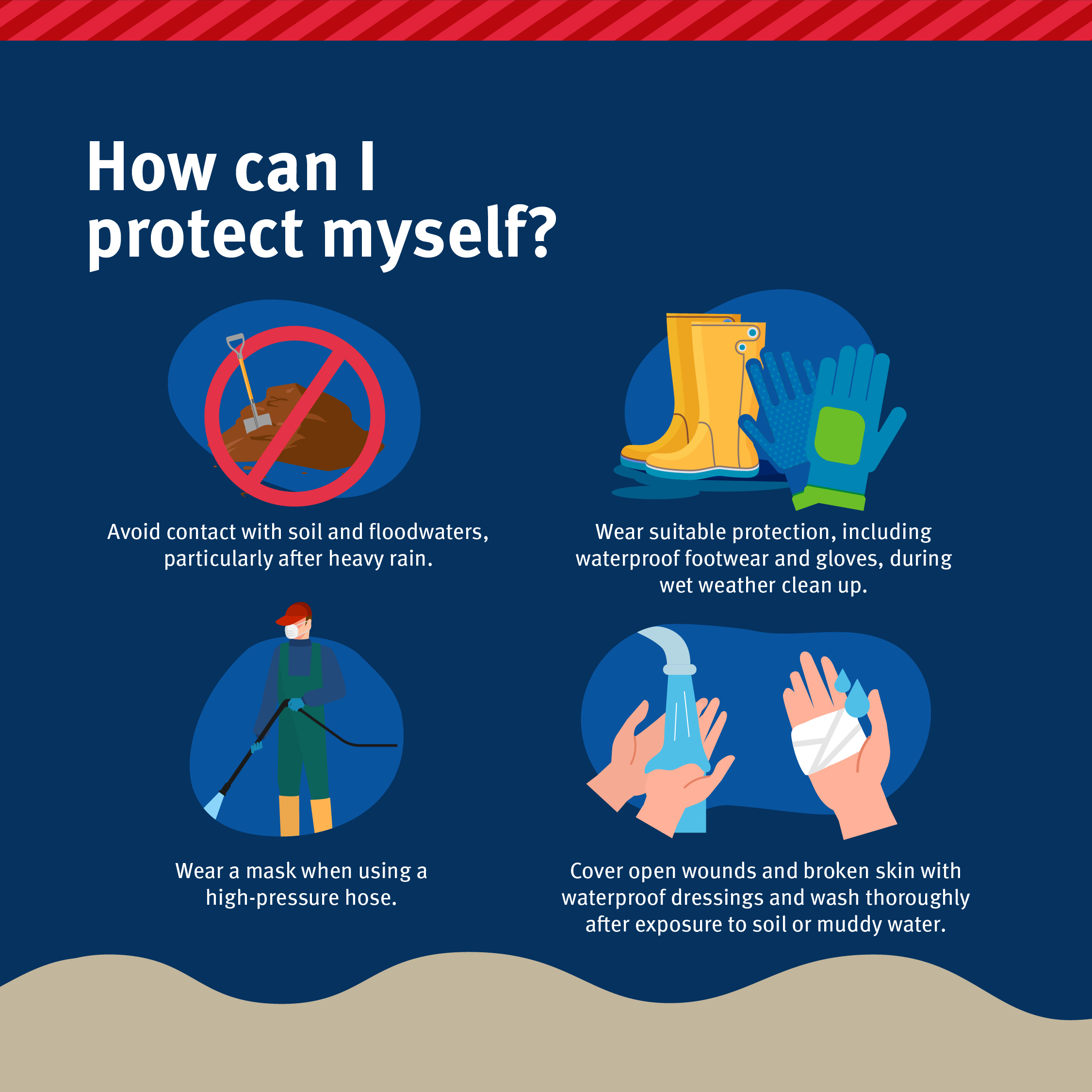
Steps to prevent infection include:
- Avoid contact with soil or muddy water after heavy rain or flooding. Never walk through floodwaters or muddy water in bare feet or thongs. Wear waterproof boots and gloves when working outdoors.
- If you are in an at risk group, stay inside during heavy downpours
- Cover cuts, sores or burns with waterproof dressings before working outdoors. Wash skin thoroughly if contact occurs.
- Foot and wound care is important for people with diabetes.
- Consider wearing a mask when using a high-pressure hose or spraying bore water.
What are the symptoms of melioidosis?
Symptoms may include fever, cough and difficulty breathing as a sign of a lung infection (pneumonia).
If not treated quickly, the infection can spread to other areas of the body, causing severe illness including sepsis (blood poisoning) and sometimes death.
Melioidosis can also cause ulcers or skin sores that do not heal.
Symptoms can appear within a few days or weeks after exposure to the bacteria, or sometimes months later.
How is melioidosis treated?
Melioidosis is treated with antibiotics, usually for at least three months. Those who are very unwell often need hospital care and sometimes intensive care.
Seek medical attention urgently if you think you may have melioidosis. It can be fatal without prompt antibiotic treatment.
Why were there so many melioidosis cases in the 2024-25 wet season?
The 2024-25 wet season was unique in the number of melioidosis cases notified.
In the previous five years, annual case numbers were much lower. For example, 82 cases were recorded in 2024, and 75 cases in 2023.
Several factors influence the numbers of melioidosis cases, including:
- Environmental factors such as heavy rain, flooding or major earthworks
- Medical factors like an ageing population and chronic illness
- Behavioural factors including outdoor work, flood clean-up and adequate wound care.
Will we see high numbers of melioidosis cases in future wet seasons?
Whether we will see high numbers of melioidosis cases in future years is dependent on many factors, such as weather conditions (for example, how often heavy rains occur) and community behaviour.
Queensland Health encourages people in northern Queensland to take note of wet-season health warnings and follow precautions, especially those at high risk.
Queensland Health will continue to monitor case numbers and support Hospital and Health Services to prevent and manage melioidosis.
The latest data on melioidosis cases is available on Queensland Health’s Notifiable Conditions reporting page.