

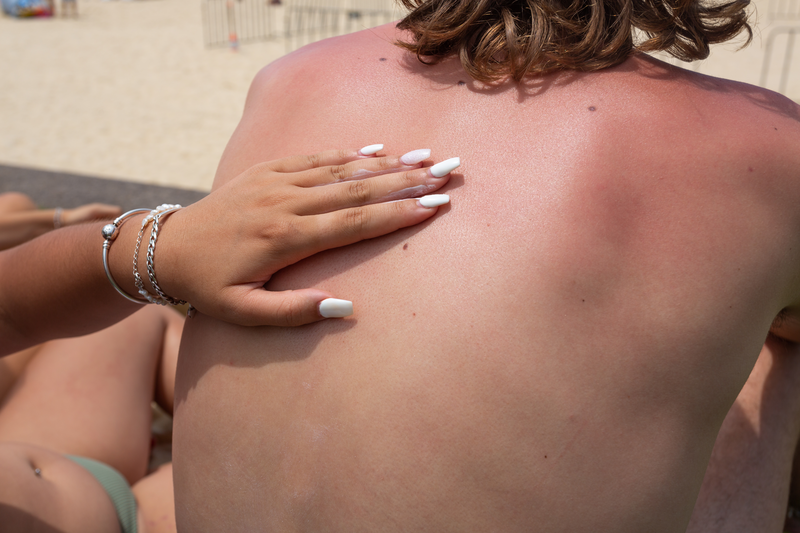
Remember to apply your sunscreen 20 minutes before sun exposure
Queenslanders love having fun in the sun, but with this stunning outdoor lifestyle comes a very real, very high chance of developing skin cancer.
We hold the unenviable title of ‘skin cancer capital of the world’, and with almost half of Queensland adults and children declaring in 2024 they’d been sunburnt in the last 12 months, it’s not hard to see why.
In 2023–24, there were more than 37,000 episodes of care for skin cancer in Queensland hospitals, and more than 4000 melanoma diagnoses.
Across the country, two in three Australians will be diagnosed with some form of skin cancer in their lifetime, but the encouraging news is it’s one of the most preventable types of cancer.
It doesn’t take long for skin damage to occur, so make sun-safety part of your daily routine.
Ban the tan
Despite skin cancer being the most commonly diagnosed cancer among Australians aged 20 to 39 and the second most common in those aged 15-20, many young people are still actively trying to get a tan, or following social media trends glorifying things like ‘sunburnt tan lines’.
Dr Michael Freeman, Director of Dermatology at Gold Coast Health, says he sees a tan as a sign of skin damage, not a sign of health.
“Whether it’s deliberate ‘sunburnt tan lines’ or chasing a ‘healthy glow’, the skin is responding to injury to make pigment,” he says.
"That damage adds up over time and increases wrinkles, plus causes sunspots and skin cancer, even if you don’t burn badly."
Sun safety is a flex
Nobody wants to look old, and while there is a myriad of anti-ageing products on the market, the cheapest, and most effective anti-ageing product is… limited exposure to the sun!
Being bright red and peeling is never a vibe, and having chunks cut out of your body to remove skin cancers and being left with extensive scarring is not an aesthetic many people desire.
While almost entirely preventable, it’s important to remember that skin cancer can spread throughout the body, requiring chemotherapy and long-term monitoring, and still results in around 2000 deaths across the country each year.
Reminder: Do the 5 to survive!
While most Queenslanders are familiar with the concept of Slip, Slop, Slap, Seek and Slide, skin cancer rates in the state indicate they are not being practised consistently enough to reduce the number of cases.
These five simple steps really do have the power to save lives.
Slip on a shirt
Ideally one that:
- has long sleeves and a collar
- is made from closely woven fabric in a dark colour (dark colours absorb more UV radiation than light colours) and has an ultraviolet protection factor (UPF).
Slop on sunscreen
Sunscreen should be part of your everyday morning routine. Check yours is:
- broad-spectrum
- water-resistant
- sun protection factor (SPF) of at least 50
- not past its used-by date
- covering all exposed areas – including the ears and backs of hands.
Slap on a hat
Choose a hat that shades the face, ears and neck, such as:
- a broad-brimmed hat
- legionnaire-style
- bucket hat.
Caps and visors are not recommended as they don’t offer enough sun protection for the face, ears and neck.
Seek shade
When outdoors, whether it is sunny or cloudy, seek shade:
- under trees, buildings or portable shade structures.
It’s also important to remember UV rays can bounce off reflective surfaces, so you can still get burnt in the shade if you’re on or near the water.
Slide on sunglasses
Protect your eyes from UV radiation by choosing sunglasses that:
- meet the Australian standards and have an eye protection factor (EPF) of 9 or 10
- cover the side of the eye area and fit closely to the face.
Even if it’s not sunny…
As backward as it sounds, sun safety is still important even when it’s overcast.
Sun damage is caused by ultraviolet (UV) radiation, not temperature, which means you can still get severely burned even if it doesn’t feel like a scorching summer’s day.
Dr Freeman explains that most of the UV radiation still comes through clouds, unlike the heating rays that are blocked.
“On an overcast day you can still burn without realising, because your skin doesn’t feel hot,” he says.
“If the UV index is 3 or above, your skin is at risk, regardless of temperature or clouds.”
The real-time UV index for your area can be checked on the ARPNSA website or the free SunSmart app through the Apple Store or Google Play.
Keeping kids and babies sun safe
It’s best to dress children in loose fitting, cotton or close-weave clothing, along with a broad-brim hat, and try to keep them out of direct sun when the UV is above 3.
Give them a pair of wrap-around sunnies to wear, and cover any exposed skin in SPF 50+ sunscreen 20 minutes before going out, then every two hours or after swimming.
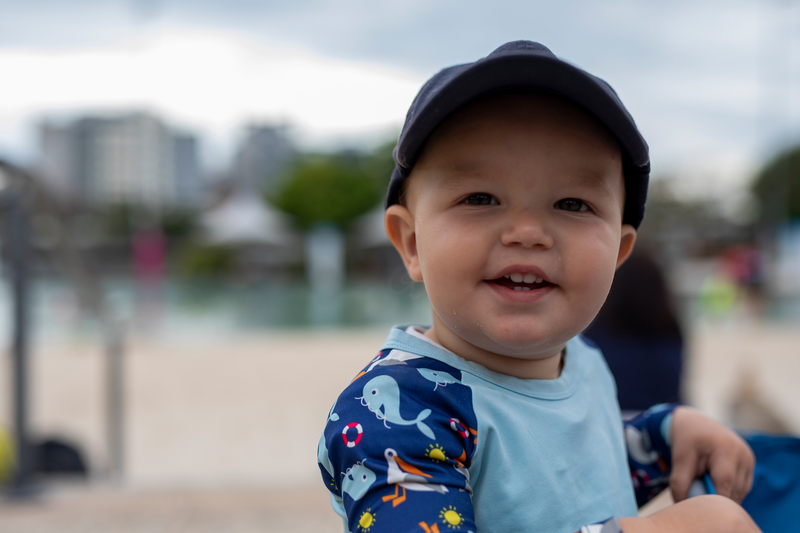
Make sun protection a normal daily habit so it doesn’t become a fight.
For babies under six months, keep them out of direct sun, use a sunshade or pram hood, hats and clothing.
Sun safety for older adults
Seniors should give extra care to areas with thin or already damaged skin, such as the scalp, ears and backs of hands.
Everyday sunscreen use is still very important, particularly if outside regularly, even for gardening or short walks, however in general, clothing is superior to sunscreen.
Regular skin checks with your doctor can help detect any lesions of concern before they turn deadly.
What to do if you do get sunburnt
If you do discover you’ve been sunburnt, Dr Freeman says your first action should be to get out of the sun immediately and stay out until fully healed.
“Cool the skin with cool – not icy – showers or compresses, and apply a gentle moisturiser,” he says.
“Take simple pain relief (e.g. paracetamol or ibuprofen) if you can use them safely, and drink extra water.
"Don’t peel, scrub or pop blisters, but if you have large blisters, feel unwell (fever, headache, vomiting) or the burn is severe, see a doctor urgently."
“And very importantly, treat it as a warning sign and tighten up your sun protection going forward.”
What to look out for on your skin
More than a million new cases of skin cancer are recorded every year, with one Australian dying from it every six hours.
Dr Freeman tells his patients to inspect their skin regularly for anything ‘new, changing or odd’.
“While skin cancers are most commonly picked up from middle age onwards, we do see them in younger adults,” he says.
“See your doctor if you notice a new spot that looks different from your other spots, a mole that changes in size, shape, colour, or starts itching, bleeding or crusting, or a persistent scaly patch, sore that doesn’t heal, or a pink/pearly bump that slowly grows.
“Earlier checking means simpler treatment and better outcomes.”