

Environmental sustainability
Position statement on environmental sustainability
The Queensland Infection Prevention and Control Unit is committed to an environmentally sustainable future for all, while ensuring patient safety and the prevention of healthcare associated infections.
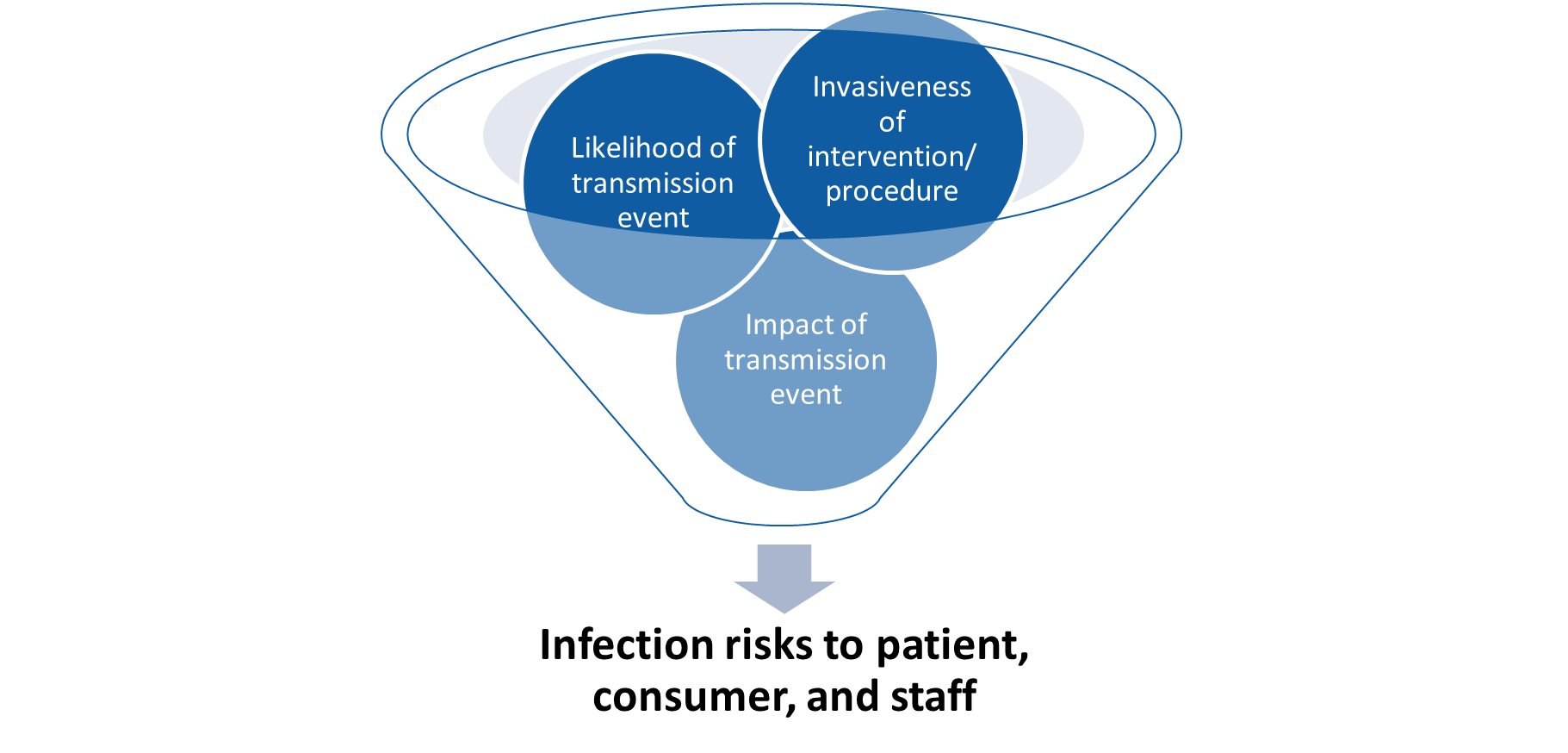
Decisions about environmental sustainability strategies must not compromise infection prevention and control (IPC) principles. Also, decisions should be risk‑assessed and implemented according to:
- the local context,
- clinical indication,
- relevant Australian Standards,
- the level of invasiveness of the intervention or procedure, and the likelihood and impact of a transmission event.
Low-risk environmental sustainability strategies
Circular systems (reuse, share, repair, refurbish, remanufacture, and recycle) aim to keep products, equipment and infrastructure in use for longer. The circular economy principles can be directly applied in healthcare to non-clinical processes and non-patient care. Circular economy principles should only be applied to clinical processes and patient care after compliance with regulations, policies and guidelines, and quality and safe care is assured.
Key strategies, which reduce carbon emissions and improve healthcare system efficiency and equity include:
- reducing demand for care, by keeping people healthy, and considering alternative models of care
- ensuring appropriate, equitable delivery of care and removing unwarranted variations, prioritising high value care, and avoiding low value care
- decarbonising high quality care delivery by addressing key sources of emissions.
Read the National Health and Climate Strategy from the Australian Centre for Disease Control to learn more.
Principles of infection prevention and control
IPC involves applying interventions to prevent the transmission of infectious agents during the provision of healthcare. It uses a 2-tiered approach to preventing healthcare associated infections:
- Standard precautions are the minimum infection prevention and control strategies applied to all patients, consumers and staff regardless of their infection status.
- Transmission-based precautions are applied to patients and consumers who are known to have a specific pathogen (bacteria, virus, fungi or other microorganism) or symptom to interrupt the mode of transmission of the infectious agents. Transmission-based precautions are used in addition to standard precautions.
Unless otherwise stated in a Queensland Health infection prevention and control clinical guideline, Queensland Health facilities adhere to the Australian Guidelines for the Prevention and Control of Infection in Healthcare. Healthcare facilities must comply with the Australian Commission on Safety and Quality in Healthcare Preventing and Controlling Infections Standard, and infection prevention and control professionals use the criteria to reduce the risk of healthcare-associated infections to patient, consumers and staff.
Managing infection prevention and control risks
IPC professionals apply risk management principles when assessing IPC interventions and strategies, by assessing the likelihood and consequences of transmission of an infectious agent in the healthcare setting. Section 3.02 and 3.03 of the Australian Commission on Safety and Quality in Healthcare Preventing and Controlling Infections Standards provides comprehensive details on how IPC professionals evaluate any healthcare intervention or practice before offering advice or endorsement.
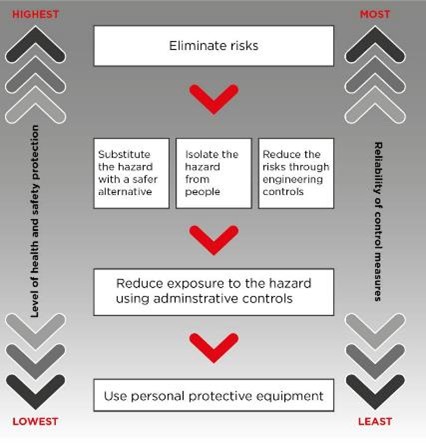
Also, IPC professionals use the hierarchy of controls from the Australian guidelines to:
- identify hazards
- assess risks
- control risks
- review control measures.
Governance
Queensland Infection Prevention and Control Unit is the lead body for Queensland Health, providing governance, subject matter expertise and leadership in the prevention of healthcare associated infections through policy, guidance, surveillance, education, and engagement strategies.
As the subject matter experts on IPC issues for Queensland Health, we provide support to Hospital and Health Services on preventing harm to patients, consumers, and staff from healthcare associated infections.
Hospital and Health Services chief executives retain governance of the IPC programs delivered at the local level per the Hospital and Health Boards Act 2011.
The Australian Commission on Safety and Quality in Health Care has developed a Healthcare Sustainability and Resilience Module to complement the other national safety and quality standards. The module contains items to support health services to adapt and migrate strategies for climate and environmental risk. Assessments against the module will commence from 2026 and assess sustainability maturity but not impact accreditation status until after 2030.
Source: Australian Commission on Safety and Quality in Health Care
Related resources
- Sustainability - Australasian College for Infection Prevention and Control
- Office of Hospital Sustainability (for Queensland Health staff only)