


If you’re male and aged over 50, can you recall the last time you were screened for prostate cancer?
September marks Prostate Cancer Awareness month and serves as a reminder to get screened for the disease on an annual basis if you’re over 50.
Prostate cancer is the most common cancer in Australian men aged 50 and over, with one in five Australian men affected by prostate cancer before the age of 80.
The prostate is a gland found only in males, and it plays an important role in maintaining fertility in sexually mature males.
It sits just below the bladder, and around the urethra, which is the tube that carries urine from the bladder and out the body. The muscles in your prostate also help with sexual function.
Once you get past 50 years of age, the chances of getting prostate cancer increase dramatically for men across Queensland .
The experience of being diagnosed has changed the life of Sunshine Coast man Chris Nelson, he has shared his story in the hope that men across the state get a simple but lifesaving blood test.

Chris, who works in IT, admits that getting health checks were “never a high priority” for him. He was an expert at avoiding doctors and just got on with life, enjoying time with his wife, children, and growing collection of grandchildren.
“For many years I worked in sales, I smoked and just lived with stress and avoided seeing the doctor,” the 62-year-old from Burnside said.
“I got married in 2017 to my wife who is a clinical nurse, and she was always on me to get a prostate-specific antigen (PSA) test, which is a simple blood test, but I never did.
“Then in March last year when I saw my doctor for a medical certificate for work, I told him that I had never had a PSA test or other general health checks.
“The doctor said, ‘Right, we are going to do the whole kit and caboodle on you Chris’, so I got the PSA test."
After Chris’s test results showed high PSA levels, he underwent a CT scan in April 2025 which confirmed he had prostate cancer. Fortunately, a subsequent MRI showed the cancer hadn’t spread and was contained to the prostate.
Chris became emotional when he shared what that scan meant to him and his family.
“They told me if it that scan had been done just six months later, I probably wouldn’t be sitting here telling this story,” he said.
Being told you have cancer is devastating, and the scariest part for me was waiting to find out if it had spread.
“When the results came back, fortunately it was contained.
“I think from this whole experience that was the scariest part for me.
“The question going around in my head while waiting for results was, ‘Has this spread’? Luckily it didn’t so that was such a relief.”
There was no history of the cancer in his family, which proved to Chris that it can affect any man, and he started to look at the options of how to deal with this life-changing diagnosis.
Chris was given two options to get him back to full health. The first was a long radiation treatment, the other was a surgery to totally remove the gland along with the cancer.
For him, the option he chose was removal, because if the radiation didn’t fully work, the option for removal would then be off the table.
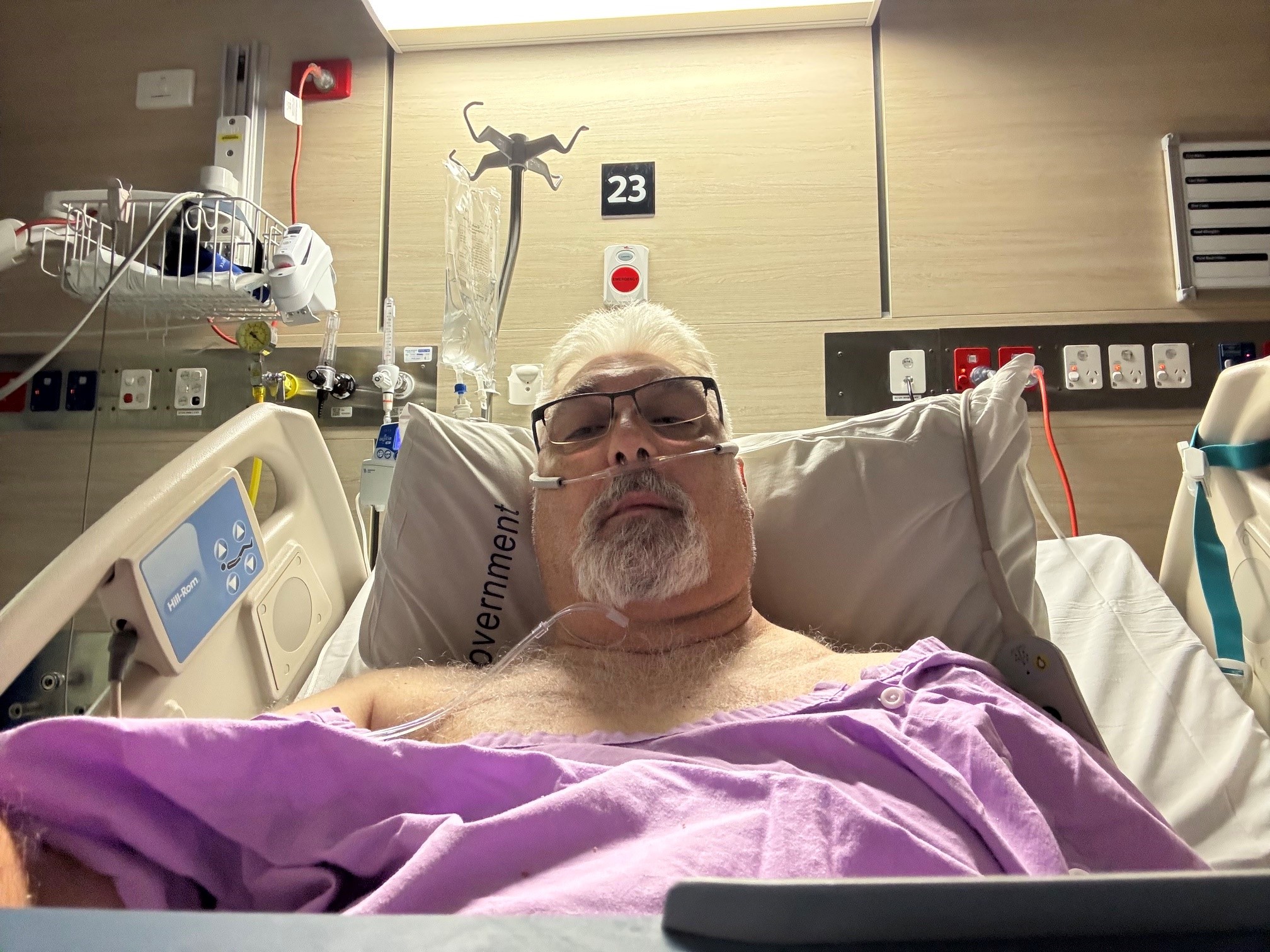
“I have to give credit to my wife, who as a nurse mentally prepared me for the surgery and the recovery,” Chris said. “I had total and complete faith in Queensland’s health system , and the staff who looked after me at Sunshine Coast University Hospital were awesome.
“For some time after the surgery I had to wear a catheter which is confronting, but necessary. Then while I recovered, I saw a physiotherapist and do lots of exercises, including working the pelvic floor muscles. I basically had to relearn how to do some things, it was a period of adjusting, and the urology team were great.”
Today, Chris says the whole experience has made him more active and appreciating the little things in life.
Moving house recently to be closer to his grandchildren, Chris is also planning to take a trip to Europe with his wife for the holiday of a lifetime and hopes that by sharing his story it may inspire other men to get that PSA test that could save your life…just like him.
“I used to be someone who avoided going to the doctor” he said. “But now I will go every year and tell my doctor to give me every test available for a man my age.
“When I got the news that all the cancer had been removed, it was such a relief.
“See your doctor and get tested for prostate cancer. I’m just grateful that I got that test when I did.”
Be on the lookout for:
- Urinating more than usual
- Poor urine flow
- Dribbling at the end of passing urine
- Slow to start the urine flow
- Feeling like you can’t fully empty your bladder
- Blood in the semen or urine – never ignore this symptom
- Pain on urination or ejaculation
- Back or pelvic pain
Are you male and over 50? Talk to your doctor about getting a PSA blood test every two years. It’s fast and easy.
Find out more about symptoms, causes and treatment of Prostate Cancer here.