

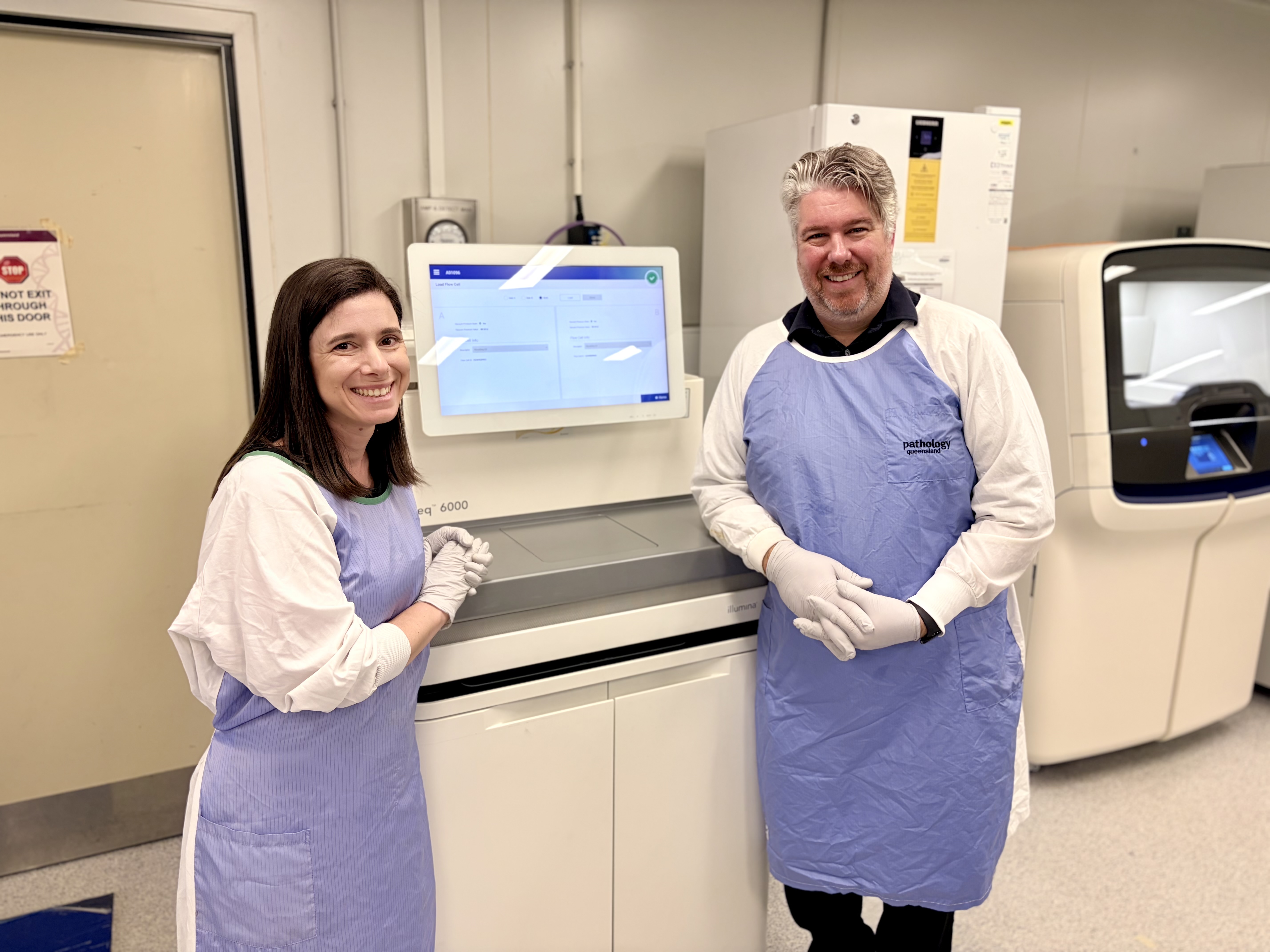
UQ's Dr Tatiana Yanes and Pathology Queensland's Ben Lundie with the Novaseq 6000 sequencer which enables genetic testing to be conducted in Queensland.
Queensland Health's pathology services have been slashing diagnosis times for children with immune conditions, helping families get answers sooner and reducing the need for DNA samples to be sent overseas.
With Pathology Queensland investing in the necessary technology and expertise to enable local capability since 2020, a study by The University of Queensland (UQ) found turnaround times reduced from up to two years to as little as two weeks. It also found the chance of getting a confirmed diagnosis doubled and 90 per cent of children with an existing diagnosis received a change to their treatment or management plan.
While genetic immune conditions are rare, they encompass more than 500 conditions that can be life-threatening or cause children to be more vulnerable to infection, allergies, inflammation, autoimmunity and cancer.
Depending on the condition, treatments can range from stem cell transplants, blood antibody infusions, or infection prevention.
Dr Tatiane Yanes from UQ’s Frazer Institute said the complex nature of genetic conditions meant young children were often seen by many different hospital departments, which previously resulted in multiple tests being sent overseas for testing.
“We describe genetic testing as the ‘why’ test,” Dr Yanes said.
“Children are hospitalised for life-threatening conditions, unusual infections, or autoimmune conditions but we don’t know why. This is where genetics testing comes in.
“Once we know the ‘why’ we can better manage the condition.
"When Queensland Health developed pathology services, we developed, then evaluated a model of care to go alongside that.
"We found that up to 15 per cent of tests had been duplicates, so we eliminated that.
"This has reduced unnecessary testing for families, which involved a blood test for the child every time."
The close relationship between clinicians and Pathology Queensland can also help expedite testing in urgent cases.
While genetic testing now typically takes three to four months, an urgent case can be prioritised, with a diagnosis possible in as little as two weeks. This can be critical when clinicians need to make time-sensitive decisions about treatment, including stem cell transplantation for babies with serious immune disorders.
Pathology Queensland Molecular Genetics Laboratory Supervising Scientist Ben Lundie said the local capability also leads to better data and reporting.
"When you send a DNA sample overseas, you get a report back and that's it," Mr Lundie said.
"Whereas when we find something unusual, we can just call the doctor and say 'hey, we found this thing, is this of interest to you?'
"We can then work through those results, meaning reports are of a higher quality.
"We're then able to classify things as benign, pathogenic, or uncertain, and minimise reporting of what we call 'variants of uncertain significance'."
Of the (approximately) 12,000 genetic tests requested each year from Queensland facilities being sent away to external laboratories (including overseas laboratories), Mr Lundie said around 60 per cent could now potentially be processed locally, leading to better data sovereignty and economic benefits.
Queensland Children’s Hospital Immunologist Dr Peter McNaughton said the new model has made a huge difference to patients.
“A faster result and diagnosis mean we can start targeted treatments early which leads to less cumulative problems, less organ damage, and increases the chance of kids leading a more normal life and attending school rather than being in and out of hospital,” Dr McNaughton said.
“This new model of care really is a team effort, and it’s making a huge difference to patients’ lives.”