

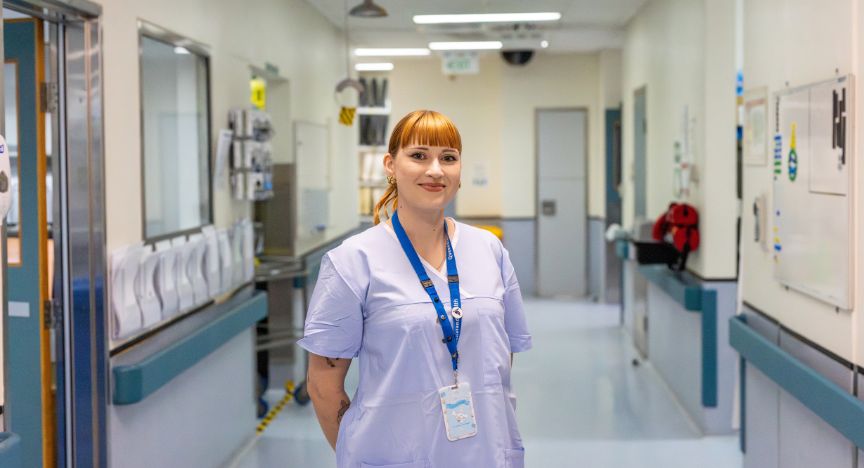
As a forensic mortuary assistant at Queensland Health’s Forensic Pathology and Coronial Services, Olivia Freeman's work involves caring for many deceased people in all stages of death.
For Olivia Freeman, her work is about people, not death.
As a forensic mortuary assistant at Queensland Health’s Forensic Pathology and Coronial Services, Olivia’s days are anything but boring.
She cares for many deceased people of varying ages in all stages of death and assists in autopsies.
The facility can conduct up to eight post-mortem examinations a day with dozens of bodies coming into and leaving the mortuary’s care.
But with every autopsy, she never loses sight of the body’s humanity.
It isn’t a newfound awareness – that connection came during a health science class at university, the moment she first worked on cadavers.
“The donated person still had her nail polish on and for some reason, that really freaked out a lot of students,” she says.
“It was as if it was a reminder that the person loved nail polish.”
That was the moment Olivia realised she wanted a career in death care.
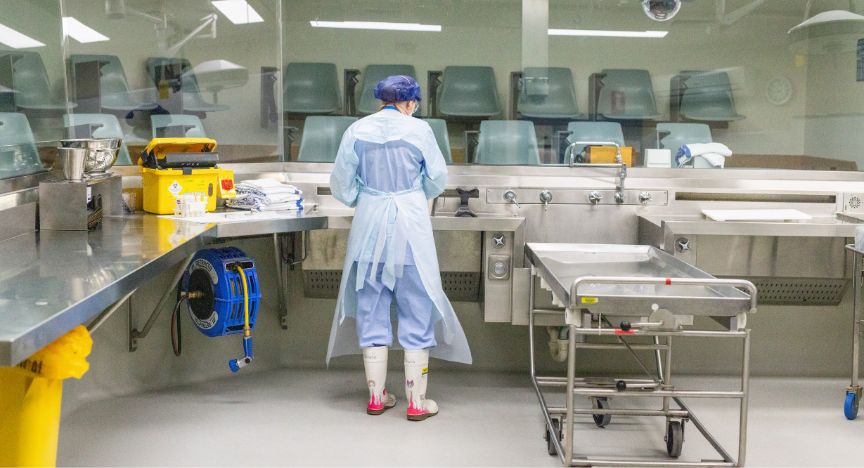
At first, she started working in pathology at Gold Coast University Hospital, but when she learned about the mortuary at the hospital, she was determined to become a mortuary assistant.
A few years later with perseverance and patience, Olivia had the opportunity to observe the work done in the Gold Coast University Hospital mortuary.
That then led her to take on a role as a mortuary assistant at the Forensic Pathology and Coronial Services in Brisbane – and she’s never looked back.
“I was amazed and excited to be there because I’d been wanting to do this for years and years,” she says.
“The first thing I noticed was the noise.
“There were trolleys being pushed down corridors, quiet conversations between staff and funeral directors, and heavy thuds of mortuary fridges closing.
“The sights, sounds and smells all caught my attention,” she explains. “It was surreal.”
Olivia describes forensic mortuary assistants as the “muscles of the autopsy”.
“We’re the ones doing the physical work in the autopsy but we’re also the ones maintaining the mortuary,” she says.
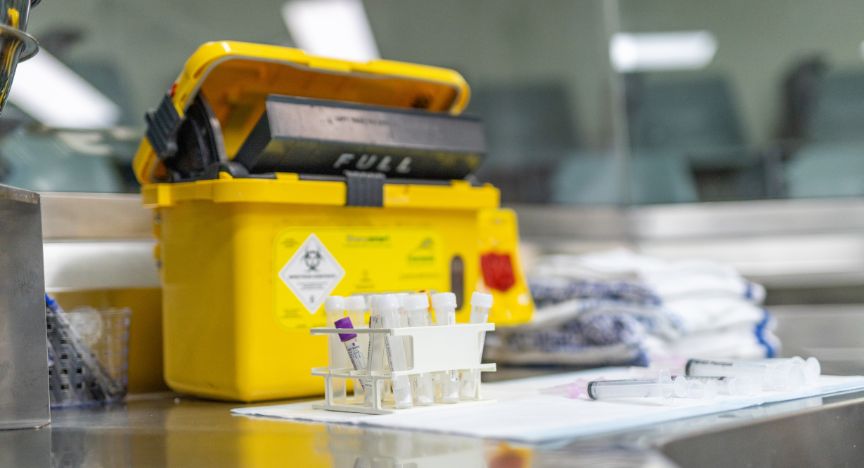
“We support forensic pathologists during post-mortems by preparing the theatre, setting up tools and any extra equipment, and preparing the deceased.
"We’re also the ones performing the initial incision and skilfully removing the organs.
"The forensic pathologists rely on us heavily in some areas of the autopsy and have great trust in our abilities and skills.
"After examination, we reconstruct the bodies, clean them and return to the fridge, ready for the funeral companies to collect them.
“We also clean the theatres and send any pathology samples to onsite or offsite laboratories for testing.”
Her typical day varies from training staff in autopsies to assisting one herself with a forensic pathologist, preparing the theatre, samples, and assisting with viewings for families.
“The training modules here are in-depth, there are procedures and legislations to know, anatomy to memorise and a basic understanding of pathology that we may come across," she says.
“I find assisting with viewings very rewarding. If there's anything that we can do as mortuary staff to support the family, we will try our best.
“I have had many amazing opportunities working here. I have assisted in some very important cases, travelled to different mortuaries, had incredible feedback from the forensic pathologists, police and management and worked with many incredible people in specialised fields.
“I can be part of a team that gives families answers and closure, and that is something I will never forget.”
At the end of the day, she takes off her scrubs, gumboots, gowns, three pairs of gloves, hair net, eye protection, and mask, and heads home to her husband and pets.
To stay grounded outside work, she paints, plays video games and does archery.
“I am extremely proud of what I do at work, and the death care I can provide to everyone,” she reflects.
“I don’t think this job makes you de-sensitised. Instead, it makes you focus on what’s important in life and what isn’t.
“It’s a daily reminder that healthcare doesn’t stop just because you’ve passed away.”