

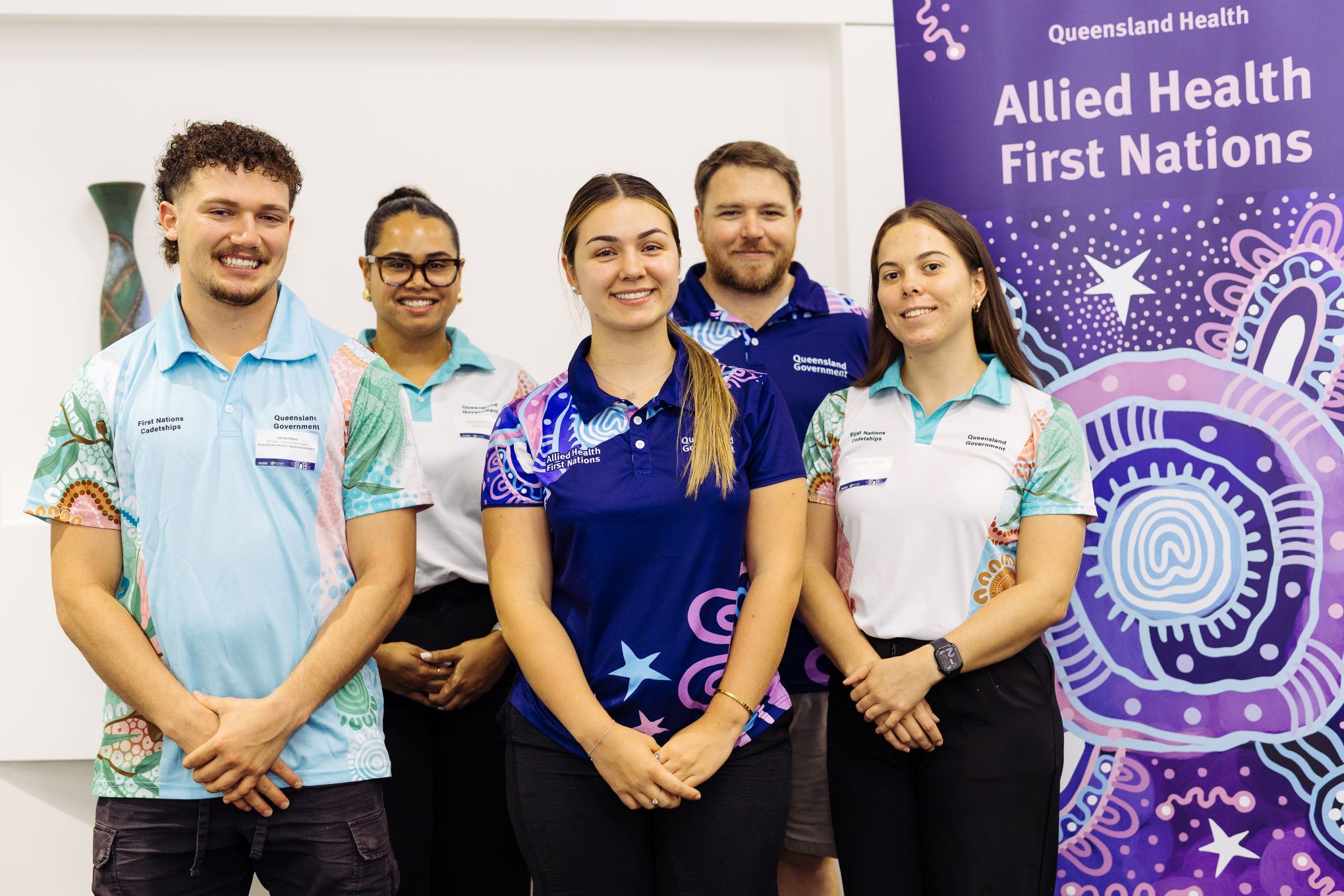
For decades, efforts to improve Aboriginal and Torres Strait Islander health have focused on hospitals, services and funding. But one of Queensland's most promising investments starts much earlier by recognising the strengths, knowledge, and leadership that First Nations students bring into the workforce.
By supporting First Nations university students while they study, a growing cadetship program is building a stronger, more culturally responsive workforce.
A proud descendant of the Darug Boorooberongal clan, Brooklyn Whitmore grew up in Darwin before moving to Queensland. She lived in Gympie for a while before making the move to Brisbane where she studied psychology and now works as a First Nations clinical assistant with Metro South Health.
During the first year of her psychology course, Brooklyn started looking for a job to support her through university.
”I was looking on the online job sites and the cadetship popped up on one of the ads. I just applied and got it,” she said.
Funded by Queensland Health, the cadetship program gives First Nations uni students the opportunity to gain practical experience in healthcare while completing their studies.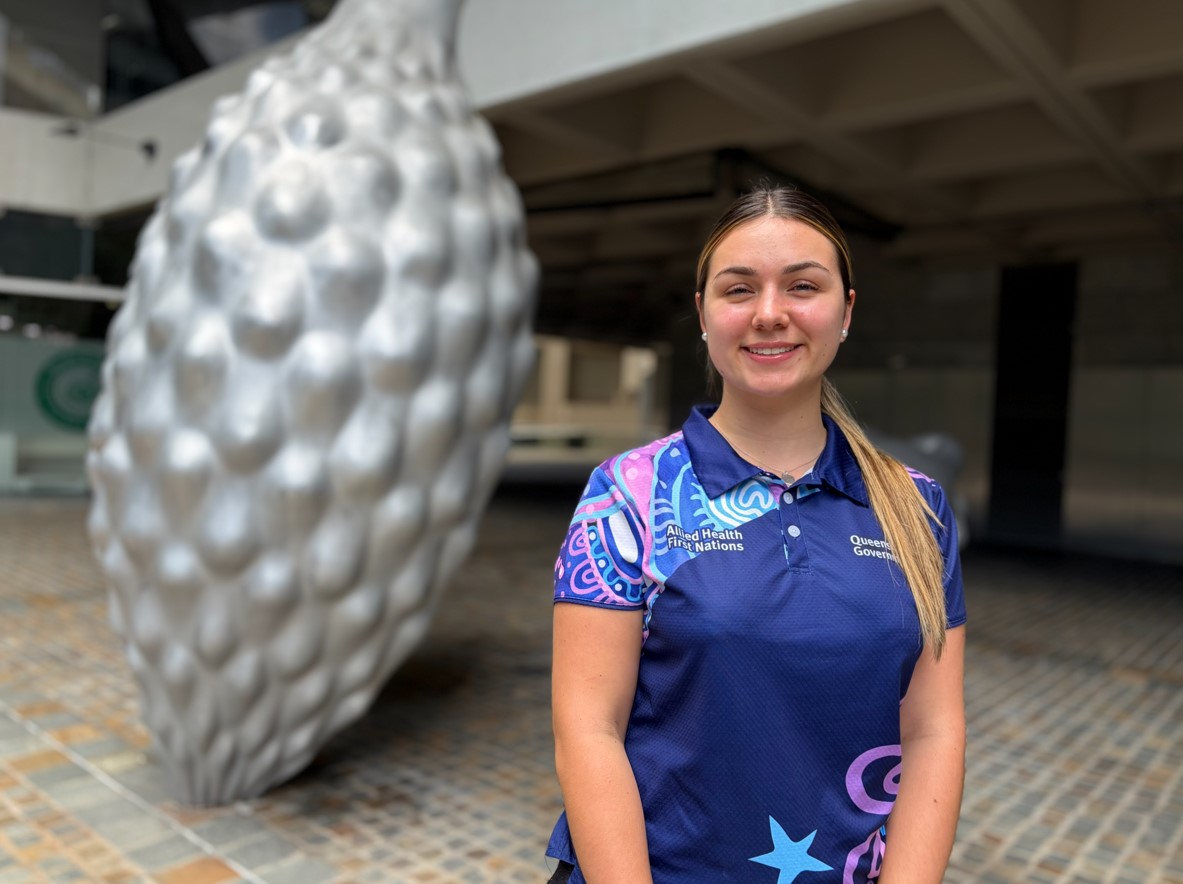
Over four years, Brooklyn completed two Aboriginal and Torres Strait Islander cadetships. As a psychology cadet, she did placements at the Inala Centre of Excellence, Princess Alexandra Hospital, Queen Elizabeth II Jubilee Hospital (QEII) and Logan Hospital. She also worked as a workforce development officer cadet with the Executive Director of Allied Health.
The experience recognised Brooklyn’s strengths and provided opportunities to develop them in real world healthcare settings.
“It was amazing. I didn't realise Queensland Health had identified positions like this. Being able to identify myself through my role was really special.
“Doing the cadetships allowed me to build strong connections with the community. As someone new to the area, having those connections also helped me grow my skills, improved my grades and encouraged me to stay at uni.”
Brooklyn says the cadetship team became like a family to her and the program gave her some amazing opportunities she wouldn't have otherwise had.
“Having a whole team of people around you who are culturally responsive and culturally safe means you can work to the best of your ability.”
Now with a psychology degree under her belt, Brooklyn has started her Master of Clinical Psychology. It's a highly competitive program to get into, but she earned her place.
“I can confidently say the experience I gained from the cadetship is the reason I got into the Masters course first go,” Brooklyn said.
“Our communities hold incredible strengths, knowledge, and resilience.
“Having more Aboriginal and Torres Strait Islander psychologists helps ensure those strengths are recognised and reflected in the care people receive.
“The cadetship reinforced the importance of carrying those strengths into my practice every day.”
Proud Iman woman Lauren Williams has overseen the program since it started in 2024.
Demand and interest from students quickly outgrew the initial 50 positions on offer.
Last year, 108 cadets completed the program across Queensland, with 73 per cent going on to employment with Queensland Health.
Cadets are now working across every Hospital and Health Service in the state, with almost 90 students currently participating and more joining throughout the year.
Lauren said it has been exciting to work with mob in university who really want to work for Queensland Health.
“Students are seeing what a career in Queensland health is going to look like because we're giving early exposure and experience,” she said.
“By the time they're ready for that graduate entry or to go into their roles, they are aware of what they are entering into, and they've created an incredible network around them.
“Additionally, the other program I also look after - the Deadly Start program, is helping to create an education to employment pathway for high school students to go into university and stay employed. And importantly, we're seeing greater retention after graduation year on year.”
Lauren said that by investing in education opportunities that offer cultural and economic support we are not only growing our future health workforce but will support Closing the Gap by up to 10 years.
“Fostering these young people is super important because it's breaking cycles and I know that it gets thrown around quite a lot, but it truly is,” she said
“It's contributing to improving educational outcomes, it's increasing the economic status of students and communities across all sixteen health services.
For Lauren, the success of the program is about more than employment outcomes – it reflects a broader cultural shift within Queensland Health.
“These programs show that the system has changed, since when I joined Queensland Health over 10 years ago, there wasn't this support, there wasn't this network."