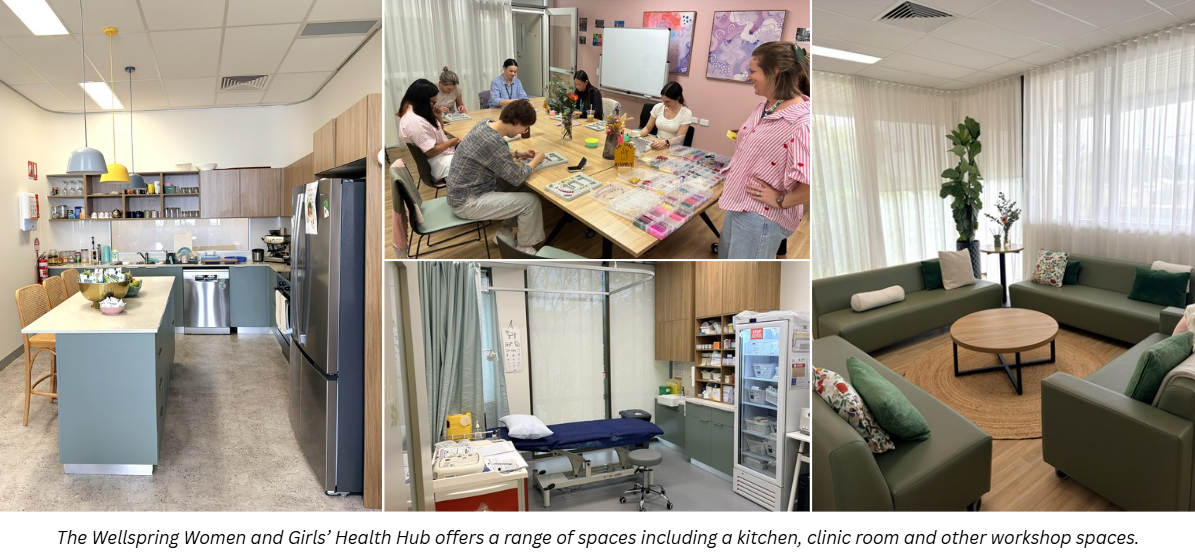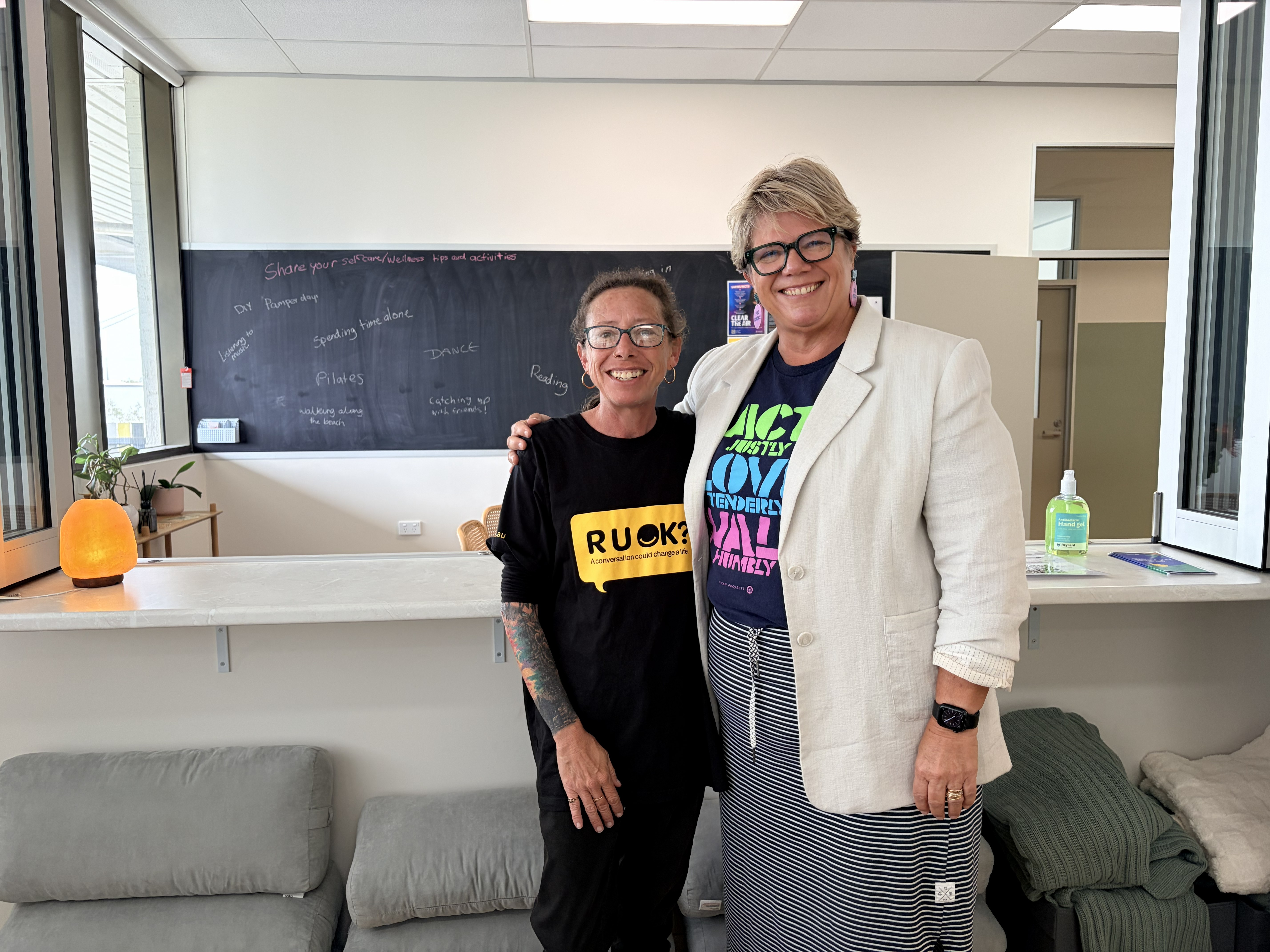
Jo Moore and Jo Bennett at the Wellspring Women and Girls' Health Hub.
When mum-of-seven Jo Moore first stepped through the doors of the Wellspring Women and Girls’ Health Hub at one of her daughters’ suggestions, she had her guard up, having not seen a doctor in a decade.
But what she found was a “safe haven” that provided a welcoming space to manage health and wellbeing – not just for herself, but for her whole family.
The Caboolture facility is one of two Women and Girls’ Health Hubs funded by Queensland Health and operated by non-government organisations.
Wellspring is run by Micah Projects and the Jalbu Women and Girls’ Health Hub in Cairns South is operated by Wuchopperen Health Service Ltd.
The two sites provide free and flexible care and work with other local services to help women access the support they need.
Services on offer include general health care, health screening and immunisation, maternal health, sexual and reproductive health, gynaecological care, pregnancy and preconception support, chronic disease management, mental health and social support, alongside regular workshops, classes and activities.
The hubs are not intended to replace general practice but rather to complement existing services by providing another entry point into the health system for women and girls who may not find traditional models of care accessible or suitable.
Ms Moore had spent years prioritising her family’s health above her own.
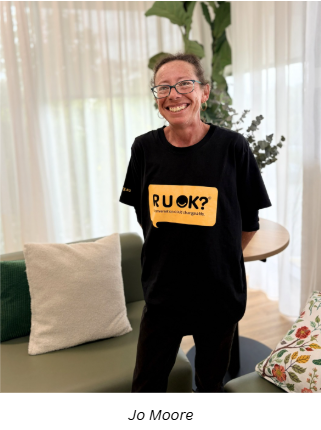 “My daughter has a young bub and found out about Wellspring through the Micah mum’s group – the Caboolture Young Mothers for Young Women – and she directed me here as a bit of an intervention,” she said.
“I was fully resistant and came in thinking, ‘I don't want to do this, I'm going to fight it’.
“But I found some beautiful humans here who actually had the time to give me and to talk about the hard things that I had been ignoring. The team is so caring and hold no judgment.
“I had my bloods taken. I hadn’t had a pap smear in – I can’t even remember how long. They sent me to the bathroom with full instructions on the wall and that was done in five minutes.
“They asked me some hard questions, and I got some answers to things I needed, and I went to see some specialists.
“It turned out that if I hadn't been here, if I had left it another year, it might have been a little too late.”
Jo Bennett from Micah Projects said the hubs went beyond just healthcare and offered a comprehensive holistic model that was culturally safe and gender and trauma informed.
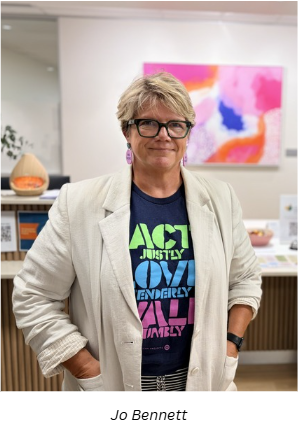
“A woman can walk through the doors with a health concern, and walk out with more than just an appointment,” Ms Bennett said.
“We provide both clinical support and social support, community connections, education, and a range of group activities throughout the week.
“We’ve had a really positive response from the community, with some women coming from as far as the Gold Coast to see us, and many coming back for subsequent visits.”
Wellspring welcomes women and girls of all ages, with Ms Moore and her three daughters all encouraging each other to visit when they need to talk to someone, or even to take courses offered at the hub.
“My 13-year-old took a course called ‘My Body, My Choice’ along with a few of her friends,” she said.
“It was a six-week course for young girls and adolescents about online consent, your body, and all the important things they need to know about puberty, here in a safe environment.
“They could speak openly and comfortably about all the things they don't want to talk to their mums about and got the information they needed, which is so important.
“In general, it's been a safe haven for the women in my family, plus my grandson as he's under my eldest daughter’s care and he's so little. We all bring each other here.”
The Wellspring Hub features a range of facilities, including clinical rooms, interview areas and spaces for young children. It also includes a kitchen for hosting workshops on cooking nutritious meals on a budget.
Clinical Excellence Queensland’s Director of Community Care Improvement Cristina Mears said the biggest difference between the Women and Girls’ Health Hubs and a general practice was the environment.
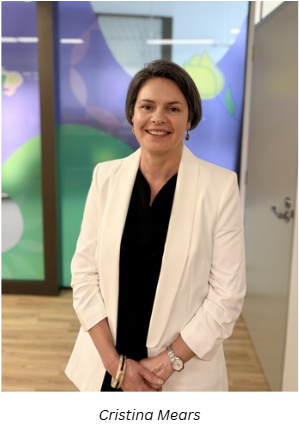
“The hubs do have clinic rooms, but on the whole, the environment is designed to be warm and welcoming,” Ms Mears said.
“The model intentionally provides staff the time to get to know people and their unique story, circumstances and history, as well as what their clinical and medical needs are.
“Staff still refer and link to local hospital and health services and other social supports such as legal, education and housing services if needed, but there’s a focus on a person's whole life and history, not just their clinical condition.
“Women and girls can come to these hubs and be supported to feel physically well, but also socially safe, so they don't reach a point where they might need crisis support or end up at an emergency department.”
Among the women and girls who have visited the Cairns and Caboolture hubs so far:
- 10 per cent identified as First Nations
- 4 per cent were experiencing homelessness
- 4 per cent were from a culturally and linguistically diverse background
- 3 per cent had experienced domestic and family violence
- 1 per cent were in contact with the justice system.
The hubs are part of the Queensland Women and Girls’ Health Strategy, with the Queensland Government investing $20.4 million over four years to establish the two services.
More information on the hubs can be found at Wellspring Women and Girls' Health Hub | Micah Projects and Jalbu Hub.