

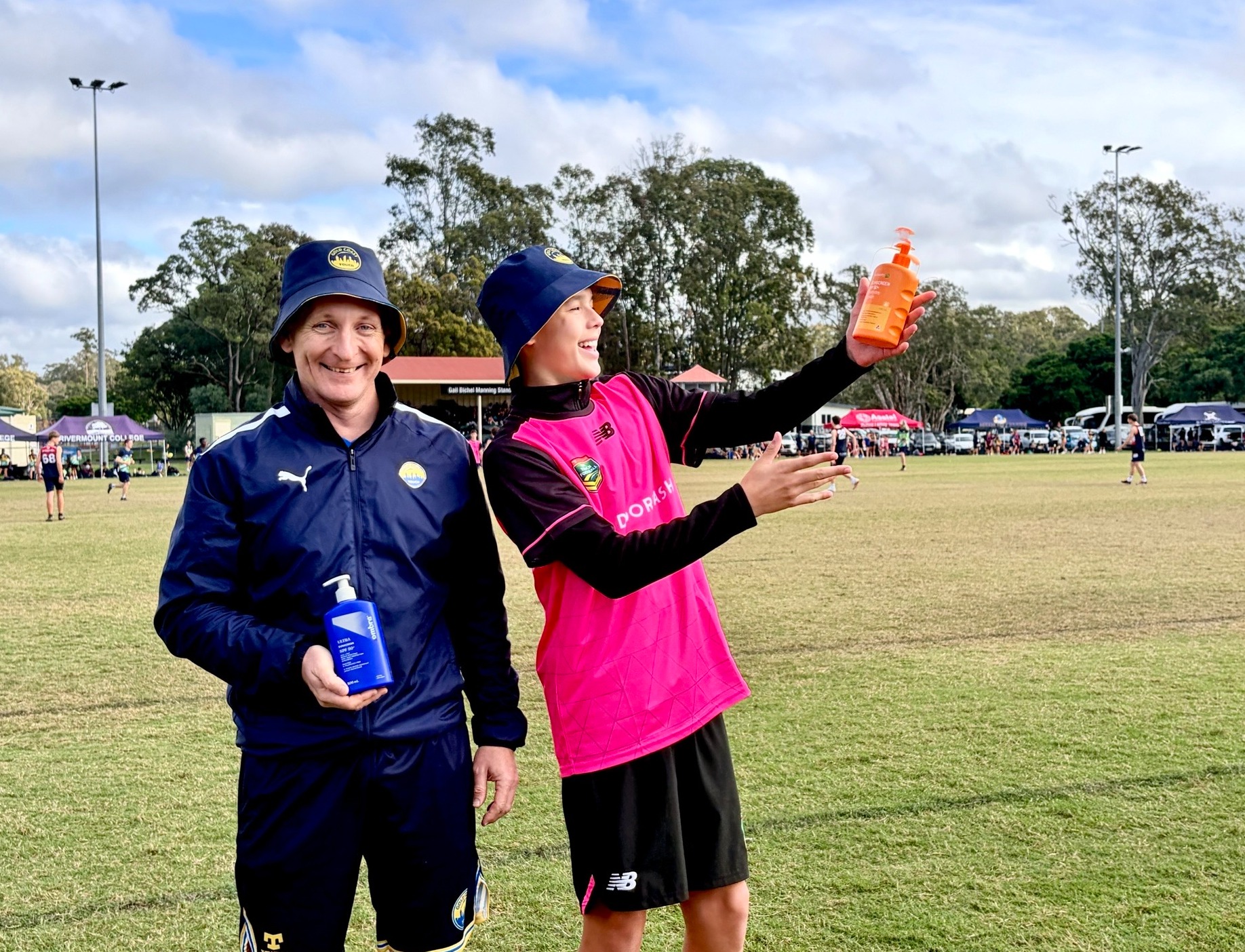
Gold Coast Touch Association General Manager Lee Rossow and youth referee Connor Beck are sun safety champions
Grassroots touch football affiliates across Queensland are heading up a new push to make sun safety part of every game-day routine.
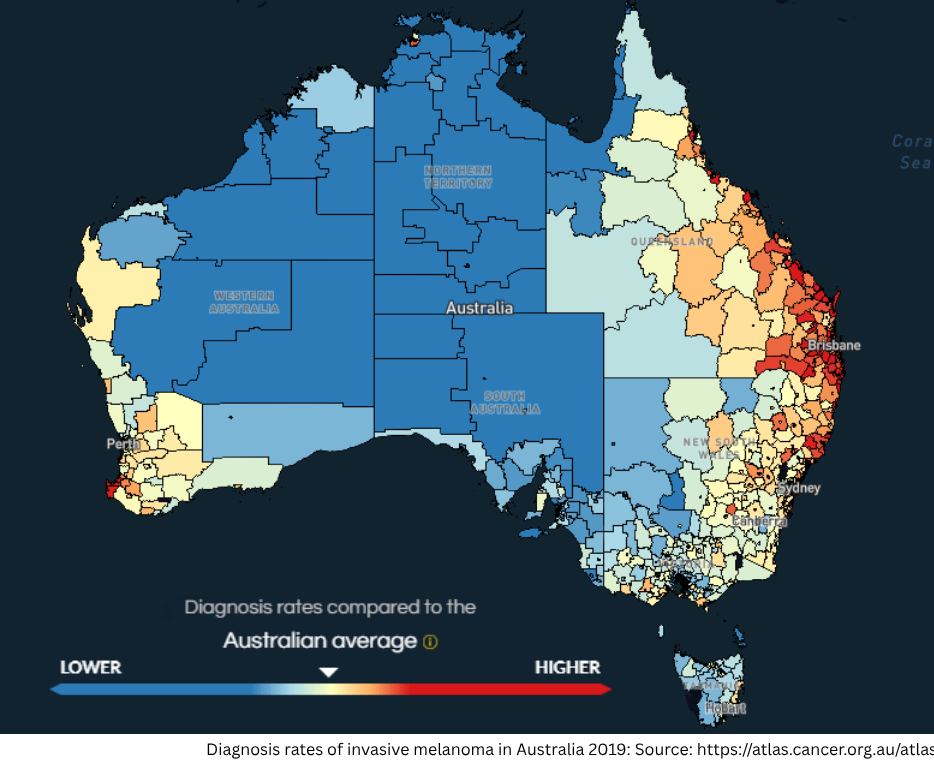
With Queensland retaining the unenviable title of skin cancer capital of the world and the Gold Coast sitting right in the centre of Australia’s melanoma hotspot, it made sense for clubs like Gold Coast Touch to be among those leading the charge to normalise slip, slop, slap, seek and slide behaviours – particularly among their youth members.
 It comes as part of a new Champions for Sun Safety collaboration between Queensland Health and Queensland Touch Football, which encourages players, coaches, volunteers, parents and supporters to model sun-safe behaviours at local clubs and major events.
Champions are provided with training, resources and support, and use their own experience to advocate for simple habits such as applying sunscreen, wearing long sleeves, hats and sunglasses, seeking shade and staying hydrated to become second nature, helping ensure protection from sunburn and heat stress on game days and minimising risk of future skin cancers.
Queensland Chief Health Officer Dr Marianne Gale said organised sport provided a valuable opportunity to reinforce healthy behaviours across the community.
“Queenslanders spend a lot of time outdoors supporting and participating in community sport, so sporting clubs are in a unique position to help encourage sun-safe habits,” Dr Gale said.
“In 2024, 45 per cent of adults and 47 per cent of children in Queensland reported being sunburnt in the previous 12 months.
“Even during the cooler months, UV levels in Queensland can still be high enough to damage skin, which is why it’s important to stay sun safe all year round.”
The most recent Cancer Alliance Queensland data shows that in 2023–24, Queenslanders had more than 37,000 episodes of care for skin cancer in Queensland hospitals, and 4,637 Queenslanders were diagnosed with melanoma in 2023 – the most serious form of skin cancer.
With personal experience of having skin cancers removed, Gold Coast Touch Association General Manager Lee Rossow is one of the club’s sun safety champions.
Launching their own campaign locally using comic-strip style imagery on social media and modelling positive behaviours, the initiative was embraced at the recent Junior State Cup and South Queensland All Schools tournament, and will continue to build momentum at other major touch football events.
“Touch football is part of the lifestyle for so many Queensland families and we want to help make sun safety second nature for our players, parents and volunteers,” Mr Rossow said.
“We’ve already had a positive impact on a large group of our kids. They think it’s cool to wear a t-shirt under their singlets as this means their shoulders aren’t getting burnt like they have in the past.
“We’re hoping to show that simple sun-safe habits can allow our players to perform throughout entire tournaments, not just at the start before they’ve become burnt or dehydrated.
“We put up flyers, we keep in contact with the participating schools, we put out sunscreen for people to use, and we even give out some Gold Coast bucket hats as prizes to try and spread the word and get the message into the schools as well.”
Queensland Health plans to expand the sun safety champions initiative across more Queensland sports clubs, supporting more leaders in promoting positive actions in those who look to them for guidance.
All Queenslanders are also encouraged to remember the five sun protective steps whenever UV levels are 3 or above:
- Slip on protective clothing
- Slop on SPF50+ sunscreen
- Slap on a hat
- Seek shade
- Slide on sunglasses
For more information about sun safety, visit Sun safety in outdoor settings | Queensland Health.
You can also view the real-time UV radiation index on the ARPANSA website.