

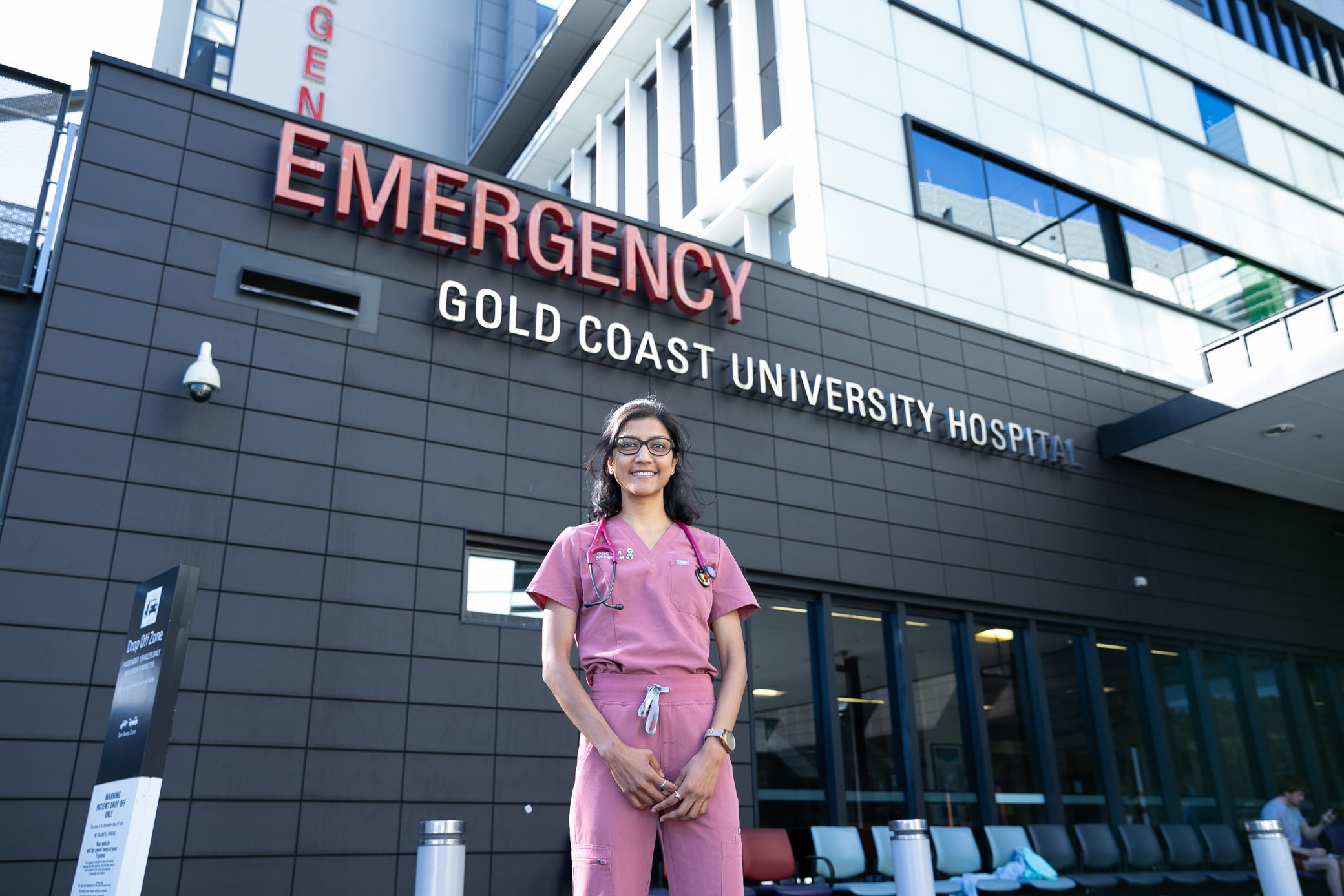
Dr Shabnam Gujadhur at Gold Coast University Hospital
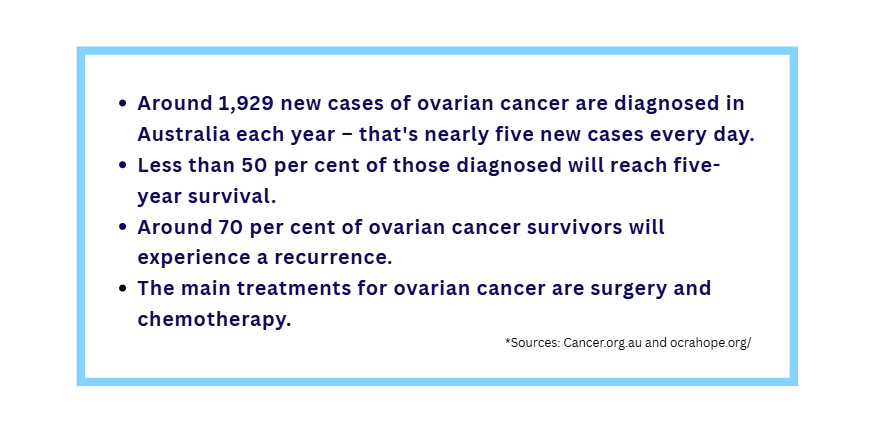
Each year, ovarian cancer – a malignant tumour affecting one or both ovaries – affects nearly 2,000 women across Australia.
With its subtle symptoms and absence of an effective screening test, ovarian cancer can be as stealthy as it is lethal.
While many other cancers can be detected early or in pre-development stages based on symptoms or screening, ovarian cancer has a disproportionately low survival rate due to the late stage at which it is commonly diagnosed, making it difficult to treat.
In fact, ovarian cancer has the poorest survival rate of any female cancer in Australia.
Diagnosis can be tricky because symptoms are often so vague they’re easily dismissed as stress, hormonal changes, irritable bowel syndrome or even endometriosis.
Understanding early warning signs, acknowledging what is not normal for your body, and knowing when to seek help can make a huge difference to detecting ovarian cancer as early as possible.
Ovarian cancer can affect women of all ages and symptoms can come on slowly or suddenly, and may include:
- lower abdominal or pelvic pain or swellingbloating, or feeling full after not eating much
- changes in bowel or urinary habits
- back pain
- extreme tiredness/fatigue
- vaginal bleeding after menopause, or bleeding outside of regular menstruation
- painful sex
- breathing problems
Medical Registrar Dr Shabnam Gujadhur counts herself as one of the ‘lucky’ ones who discovered her ovarian cancer early, after experiencing intermenstrual bleeding for several weeks, followed by cramping.
Diagnosed just after her 30th birthday while working as an intern in emergency medicine at Gold Coast University Hospital, Dr Gujadhur never imagined she would become the patient.
“I just kind of put [my symptoms] to the side and kept working,” Shabnam said.
“After a while a friend of mine who was also interning said I should go see my GP, so I did – not thinking too much of it as I had no family history of ovarian cancer.
”Following an ‘abnormal’ result from an ultrasound and a CT scan, the prognosis initially looked like a cyst or another benign growth, but luckily Dr Gujadhur’s GP advocated for her to have it removed – a move she is endlessly grateful for.
“I had my follow up with my gynaecologist after that surgery, and she had that look in her eyes. I knew that look because I myself have broken bad news to patients – and she said ‘unfortunately it’s not good news’.
“Everything just blurred after that and tears started running down my face.
”The next steps involved Dr Gujadhur being booked in for emergency surgery the following week, with the specimen removed in this surgery being sent for a second opinion to confirm it was definitely ovarian cancer.
Multidisciplinary teams then discussed the best way forward to manage the cancer, and given her cancer was detected so early, Dr Gujadhur was able to take a more conservative approach focused on strict surveillance over the next 10 years without needing chemotherapy at this stage.
Now training to become an oncologist, she is a fierce advocate for increased awareness, funding and research for ovarian cancer as an ambassador for the Ovarian Cancer Research Foundation, and recipient of the 2025 World Ovarian Cancer Coalition Impact Award.
“From the medical point of view, I feel we still know very little about it,” Shabnam said.
“There's no early detection test like there is for cervical cancer or breast cancer – the only way to have it confirmed is through surgery.
“I feel like every woman who gets diagnosed seems to have different symptoms, and many are misdiagnosed, which contributes to about 70 per cent of women only being diagnosed in advanced stages.
“We women know our body best so if you feel there's something not quite right – it can be as little as some bloating that's not going away, abdominal pain or changes to your cycle – there’s nothing wrong with getting it checked, or even getting a second opinion.
“It’s better to be safe now than continue ignoring it and having worse news in the future.
”More information on symptoms, diagnosis and treatment of ovarian cancer is available on the Cancer Council website or the Ovarian Cancer Australia website.