

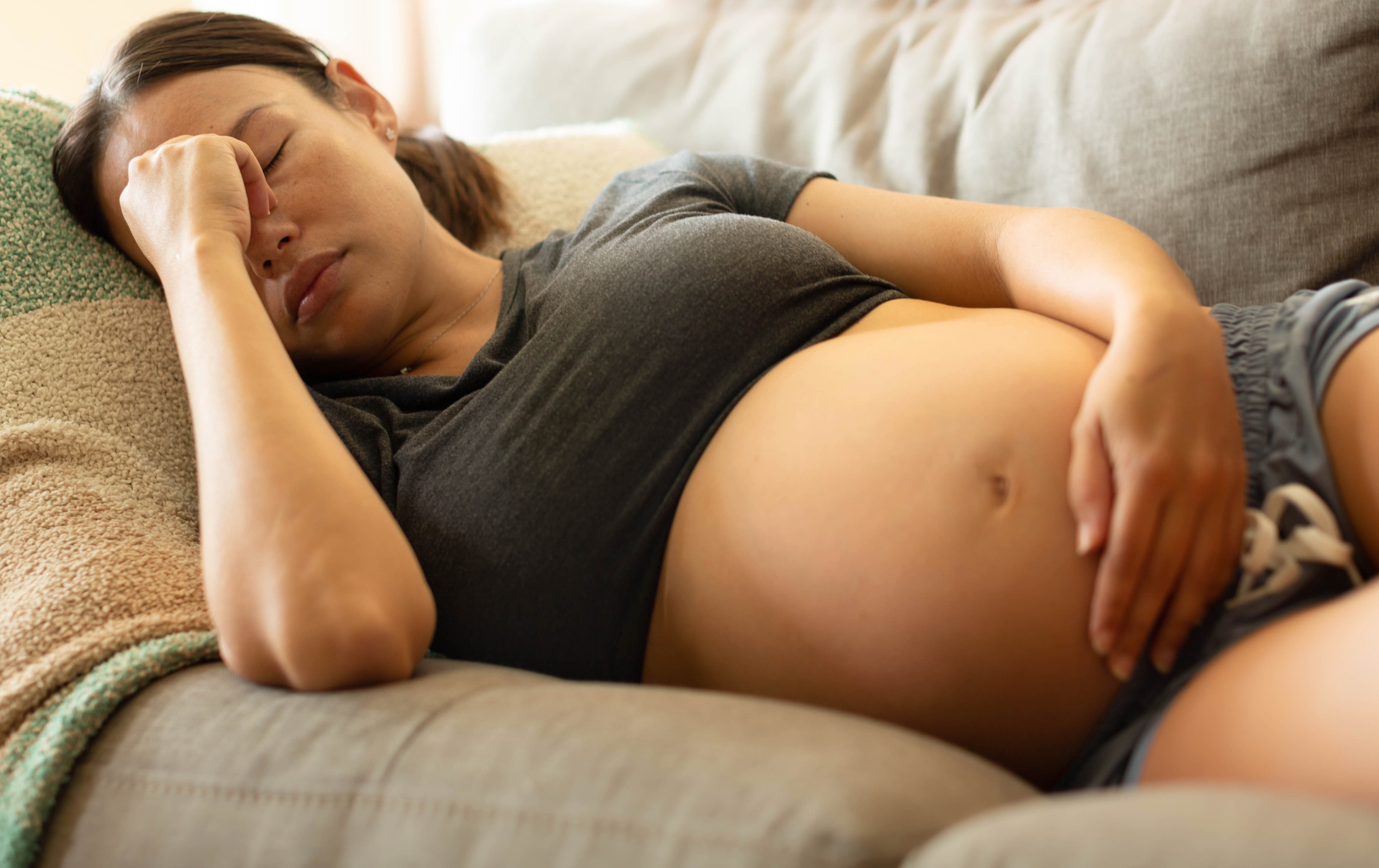
While nausea and vomiting are generally unwelcome but predictable parts of early pregnancy, some expectant mothers experience a version so severe it affects every aspect of their life and persists the entire pregnancy.
Hyperemesis gravidarum (HG) is the most severe form of nausea and vomiting in pregnancy (NVP). While around 70 per cent of women experience some degree of NVP, the one per cent struck by HG face relentless illness.
The condition is defined by the loss of more than five per cent of pre-pregnancy bodyweight, along with an increased likelihood of abnormal blood tests resulting from not eating or persistent vomiting.
It can also lead to mental health struggles due to the ongoing illness and the pressures to continue 'life as normal'.
Mum Phoebe Goddard was one of the few who suffered from HG throughout her pregnancy.
After feeling 'a bit off', Phoebe and her husband Pat were thrilled to discover she was five weeks' pregnant.
"It was a bit surreal – we were very excited, but also in a bit of shock as it happened a lot sooner than we'd expected, but then at six weeks, I started getting really sick," she said.
"I pushed through thinking 'oh, it's just morning sickness' but by the end of week six I felt so dehydrated and just really bad."
When a friend suggested Phoebe go to the hospital to get some fluids, the relief was short-lived.
"I was throwing up everything that had gone in, but I still thought 'this is just normal – this is what pregnant people feel like’.”
But the problem continued to get worse, even after a course of steroids at 10 weeks.
"I was 19 weeks pregnant, and everyone had been telling me 'it'll ease, it'll ease' but it just hadn't," she said.
"I was skin and bones – essentially, I was starving.
"My mental health was the lowest it had ever been in my entire life. I just couldn't fathom being that unwell for another 20 odd weeks. I just couldn't do it."
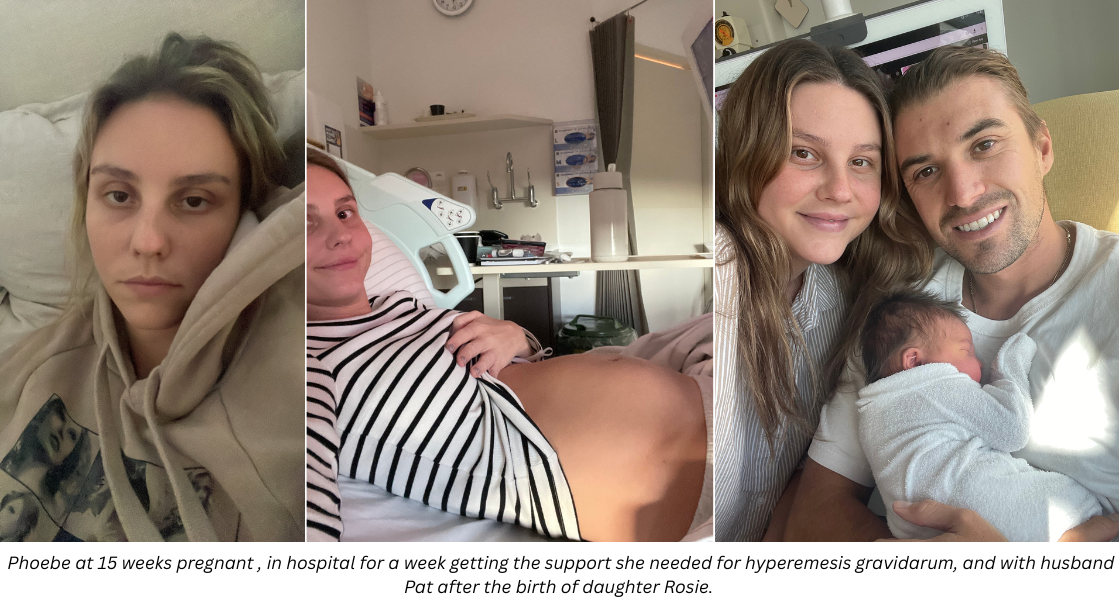
Sharing this with her husband, he immediately took her to the hospital.
Within an hour, she was speaking to a psychiatrist, was put on different medications, and had seen an obstetric specialist.
After a week in hospital, Phoebe could eat again and was feeling much better having received the help she so desperately needed.
Now with a beautiful, healthy and happy baby girl, Phoebe is a fierce advocate for increasing awareness of HG.
"It's so unknown and not spoken about, but it really needs to be," Phoebe said.
"While planning for baby number two is terrifying because of that first experience, I know we can put stringent plans in place to manage it from the start, and that it's going to end with another beautiful baby."
Someone who experienced HG through both her first and second pregnancy is Laura Gallagher.
Although Laura views her pregnancies as a short-term sacrifice for a lifetime of joy, she came perilously close to not seeing her children grow up.
“I don't think people understand how bad it is,” Laura said.
“I was vomiting a minimum of 25 times a day so there was no way I could work.
“I basically couldn’t move by the eight-week mark – all my muscle had wasted away, and I’d lost so much weight.
“When the ambulance came, they told me I was too sick to transport. They had to run a few bags of fluids through me before they could transport me to the hospital.”
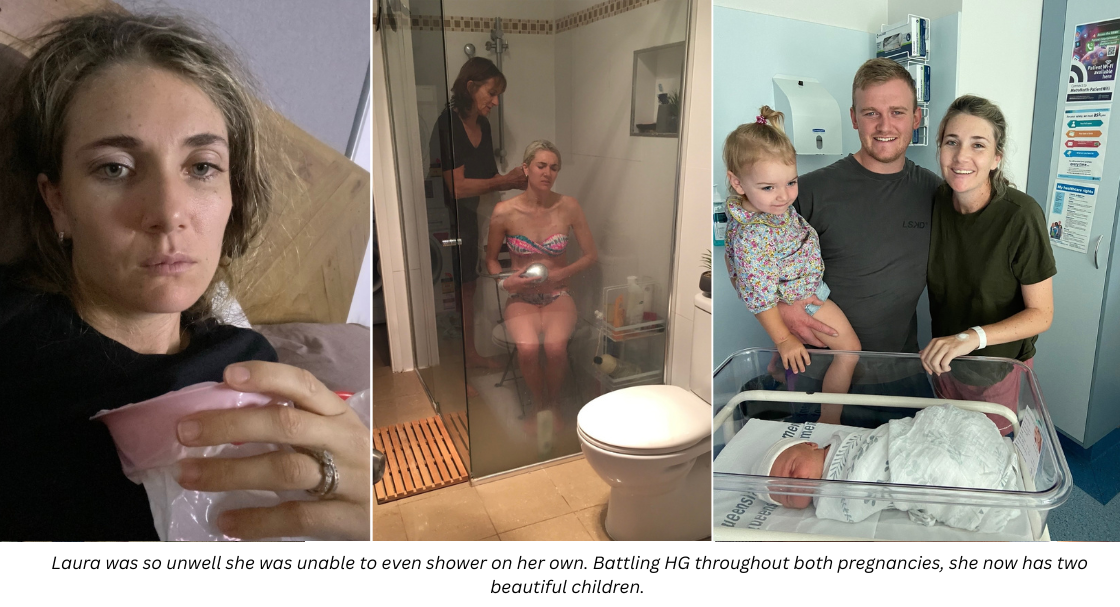
Laura continued her regular visits to the Royal Brisbane and Women’s Hospital for fluids and nutritional supplements, which home-care nurses later administered.
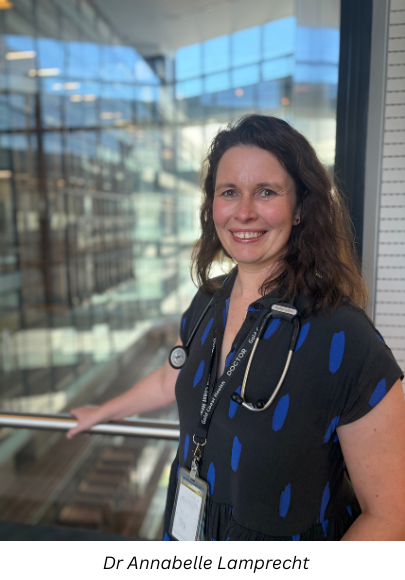
Gold Coast Health endocrinologist and obstetric medicine physician Dr Annabelle Lamprecht said that while 'morning sickness' (as it was previously known) is commonly associated with a 'normal' pregnancy, it's important to improve community understanding of how severe HG can be.
"If expectant mothers find that nausea and vomiting persist throughout the day, prevent them from working, cause weight loss, or stop them from eating, they should see their GP quite urgently or go to the hospital emergency department,” Dr Lamprecht said.
"It can be difficult to understand for both the sufferer and those around them, but it is important that we talk more and more about it so people more broadly – workplaces as well – can understand what impact HG has on women.”
Dr Lamprecht said there was no clear indicators of who would experience HG, other than that it tended to run in families and that it’s highly likely for it to return in subsequent pregnancies.
"If your mum had bad NVP or HG, you'll be much more likely to have bad NVP or HG," she said.
"Otherwise, it doesn't tend to be something we can predict until you fall pregnant the first time.”
The good news is, research is underway to determine the exact causes of the nausea in pregnant women, as well as some targeted treatments for the hormone or receptor cause of HG.
"It will really help to have effective treatments for this group of women and will hopefully change how they experience pregnancy entirely," Dr Lamprecht said.
“In the meantime, seeking care and support from an expert team can markedly improve symptoms and safety of the pregnancy.”