

Preparing lots of food during a hot Queensland summer can create perfect conditions for germs to grow, especially when seafood, cooked meats, salad and cheese platters are shared by many sets of hands.
Feeling full to the brim after a big Christmas Day lunch is perfectly understandable.
But once the grumbles and cramps start, things can quickly turn into the nightmare after Christmas lunch.
Preparing lots of food during a hot Queensland summer can create perfect conditions for germs to grow, especially when seafood, cooked meats, salad and cheese platters are shared by many sets of hands.
Symptoms of food poisoning (gastro) like stomach cramps, diarrhoea, nausea, vomiting and fever can start within hours of consuming affected foods and last for a few days.
Queensland this year has recorded 8,490 cases of Campylobacter and 3,460 cases of Salmonella.
Most people will recover from gastro without medical treatment, but it can be more serious for young children, pregnant women, the elderly and those with weakened immune systems.
Dr Heidi Carroll, executive director of Queensland Health’s Communicable Diseases Branch, provides some helpful tips when it comes to a few common Christmas favourites so you can enjoy your holidays.
Festive food safety
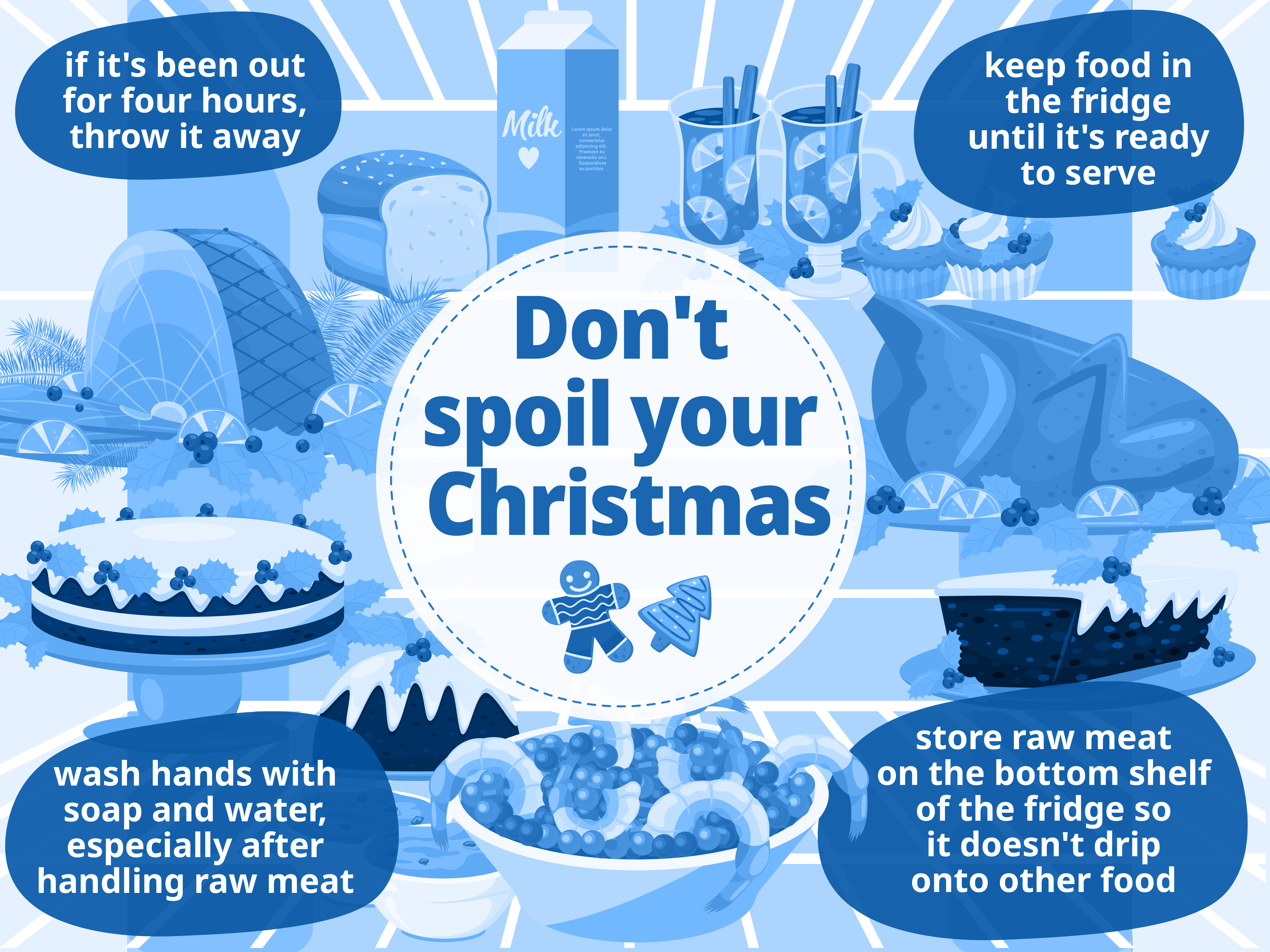
Dr Carroll says it is important to thoroughly wash your hands with soap under running water and dry your hands before and after preparing food – especially after handling raw meat and poultry.
“Do not prepare food for others if you have had vomiting or diarrhoea in the past 48 hours,” Dr Carroll says.
“If you have gastro symptoms that last more than a few days or are severe, always see a doctor.
“Stay home from work and avoid others for at least 24 hours after symptoms stop.”
Keep food cold
“Warm weather can quickly spoil seafood, cooked meats, salads and dairy products,” Dr Carroll says.
“Keep the fridge door closed as much as possible and avoid overfilling it, so the cold air can circulate.
“Keep cold foods in the fridge until you’re ready to serve them and avoid leaving perishable foods out on the table for long periods.
“Avoid raw or lightly cooked egg dishes such as raw egg mayonnaise as they carry a higher risk of causing food poisoning.
“Use an esky with plenty of ice to store drinks and non-perishable items so you can keep fridge space available for high-risk foods.”
To help reduce the risk of food poisoning when perishable food has been left out of the fridge, follow these rules:
- If it has been out for less than two hours, it can be refrigerated again.
- If it has been out for two to four hours, it should be eaten immediately.
- If it has been out for more than four hours, it should be thrown away.
Seafood
“Always purchase your seafood from a reputable seller,” Dr Carroll says.
“Cooked seafood is generally safer.
“However, be careful when handling pre-cooked prawns, crabs and lobsters as peeling and shelling can contaminate the food if your hands or surfaces aren’t clean”.
Chicken, turkey, ham and other meat
“Keep raw meat and poultry completely separate from cooked and other foods to avoid cross-contamination. Use separate storage bags, chopping boards and utensils for raw meat products,” Dr Carroll says.
“Store raw meats on the bottom shelf of your fridge so juices can’t drip onto ready-to-eat food like salads or desserts.
“Fully defrost your turkey or chicken in the fridge before cooking it. Remember that a large turkey can take several days to thaw, so plan ahead and don’t wash poultry before cooking, as this can spread bacteria around your kitchen.
“Cook your poultry thoroughly until the juices run clear when pierced with a skewer, or until a meat thermometer shows it has reached 75° C in the thickest part of the meat. Prepare the stuffing separately, as stuffing placed inside the bird may not cook through.
“Hams will keep for several days if they are removed from plastic wrap, covered with a clean cloth and stored in a refrigerator, or as directed on the packaging.
“If you’re reheating food later, make sure your food is hot all the way through.”