

Summary
You can’t know what the future will hold, but planning your health care choices today can make a big difference if you become too unwell to speak for yourself.
Advance care planning (ACP) involves thinking about, discussing and communicating your preferences for your future health care.
It is a voluntary process that can be completed by all adults regardless of health status or age, prompting you to consider what matters most, including your values, beliefs and the types of treatment and care you would or would not want.
It helps the people around you understand your wishes and know who should make decisions on your behalf if you were unable to speak for yourself.
Whether you're young or old, sick or well, having an advance care plan in place can give you and the people around you greater confidence that your choices will be understood.
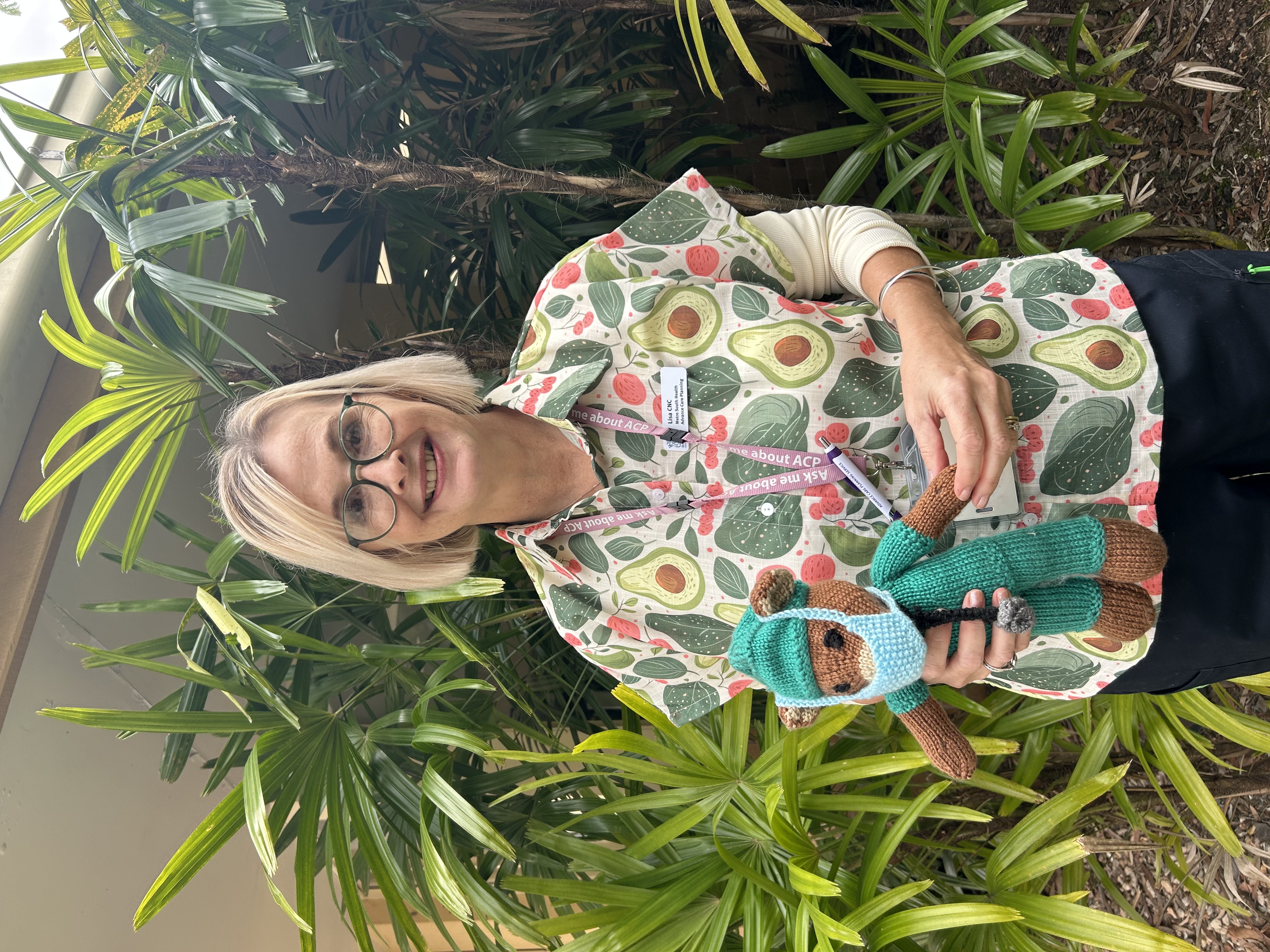
ACP Clinical Nurse Consultant Lisa Lee works at Redland Hospital and across the Metro South Health community to help guide people through the ACP process.
As a nurse of 38 years, she's had a lot of conversations with people at different life stages.
“I started my nursing career in palliative care, then I ended up working in emergency for 10 years, so I really saw people at that pointy end of life and saw how traumatic it can be for families if a person’s wishes are not known or if there’s no decision-maker appointed,” she said.
“I feel very lucky to be in this role. It allows me to sit with people and hear their stories and what's important to them, which a lot of nurses don't get to do."
While Lisa said younger generations have started to have these conversations within their families, many of her senior patients have never broached the topic.
"Although it may feel uncomfortable, planning ahead and having these discussions can help clarify your wishes and make it easier for your loved ones to understand what you want,” she said.
“Advance care planning conversations give people the opportunity to think about what is important to them, what they like, what they value most, what gives them enjoyment.
“For example, there was a gentleman who mentioned in his values that he loved ABBA.
“When he got advanced dementia and was in a residential aged care home, the staff played ABBA for him and that was the highlight of his day.
“Advance care planning also lets people say what would give them comfort at the end of life – whether they want their dog there, their family there, their feet warm, or certain bedding, smells and music.
“But it also allows them to talk about their medical preferences – whether they want to be resuscitated, put on life support or provided feeding via a tube.”
Lisa recommends anyone over 18 consider completing ACP documents, particularly individuals who have a chronic disease or life-limiting illness, are in and out of the hospital, or are older.
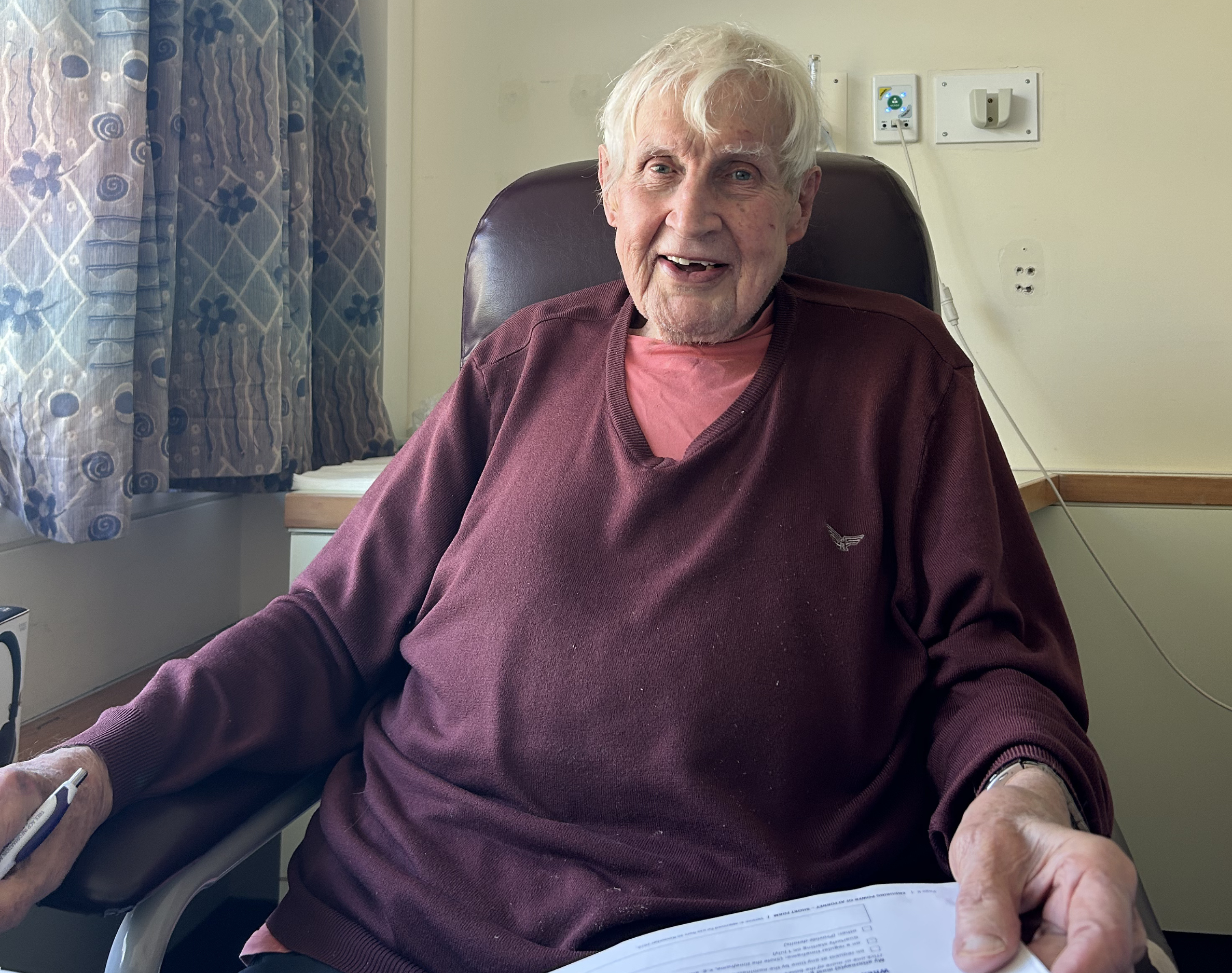
Barry Thomas at Redcliffe Hospital
Barry Thomas was one of the patients Lisa guided through the ACP process, and he and his wife now have their plans in place.
When Barry had a fall at home, his wife couldn’t get him up off the floor – leading to an ambulance call and a stay in hospital.
While he's now back on his feet with the assistance of a walker and they're preparing to move into aged care, the experience prompted them to start looking at things differently.
"Lisa came and saw me and she's a nice person," Barry said.
"I hadn't given [advance care planning] much thought but then suddenly I ended up here. We had discussed it in a roundabout way – we've got a Will but that's about as far as we got because, you know, you think you're going to be here forever.
"I was an accountant, so the process was easy for me, but Lisa was also very thorough going through everything with us."
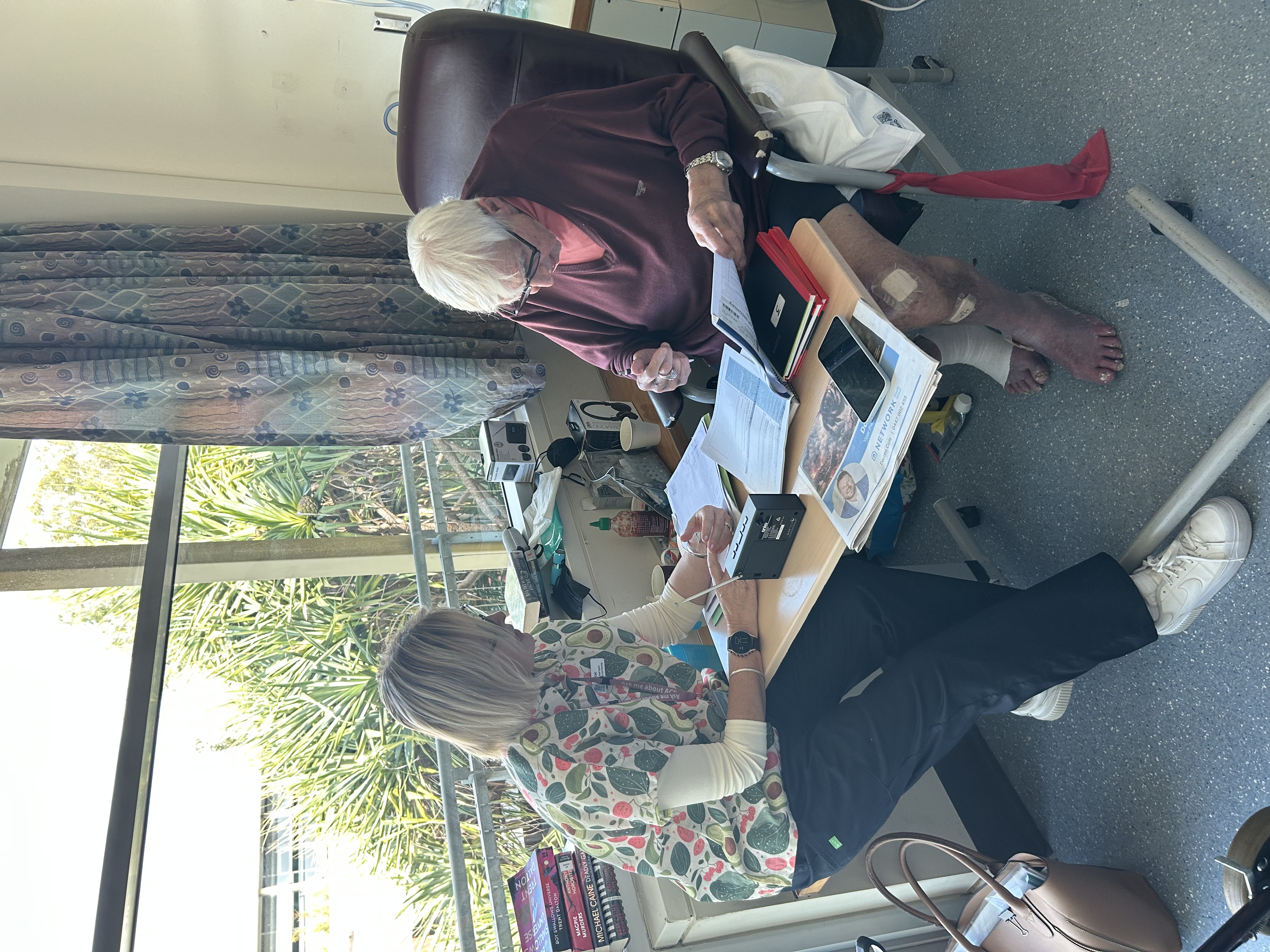
Nurse Lisa helped Barry complete his ACP
Although his wife is in good health, Barry encouraged her to think about advance care planning as well.
"We used to go out at least once a week to a restaurant – we've done that for nearly 60 years – so we had a nice glass of wine and dinner to discuss it," he said.
"I made sure she was fully informed about the process and what she needed to do – not that there was a great deal in it."
Barry's advice for anyone who has been putting off their advance care planning is simple: don’t.
"It makes you think about things. It makes you think about your family, what happens here and what happens there. It makes you think about the consequences of not doing it."