
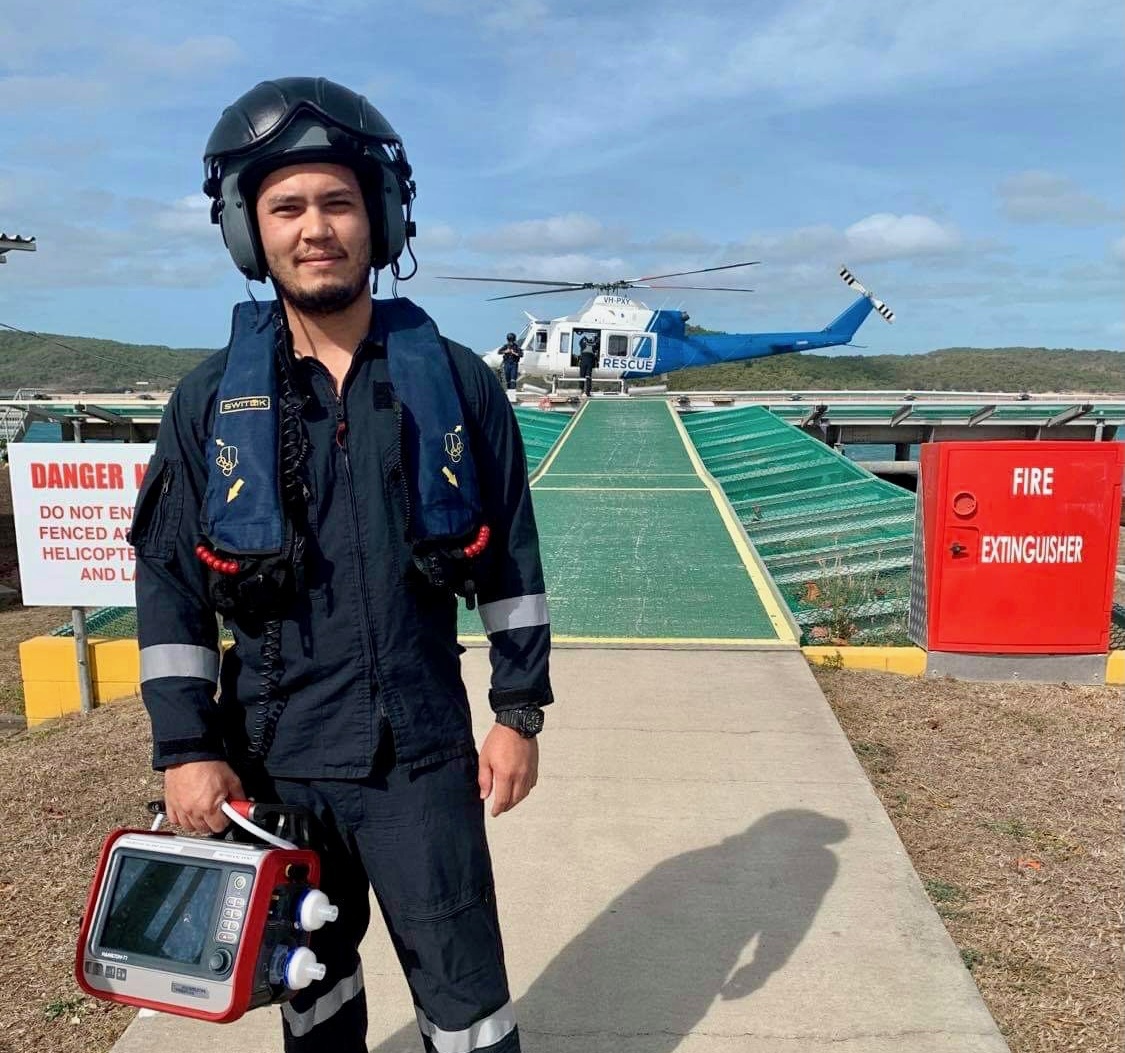
Dr Preston Cardelli is a Rural Generalist who works as Medical Superintendent at Thursday Island Hospital.
The Queensland Rural Generalist Pathway (QRGP) has provided the trajectory for hundreds of doctors to become integral cornerstones of country communities over the last 20 years.
Broad scope
It’s not every day you are flown to a remote island on a helicopter to help deliver a baby, which then unexpectantly turns into a battle to save newborn twins.
But that was just another shift for Dr Preston Cardelli as a Rural Generalist on Thursday Island (TI).
On any given day, Dr Cardelli could spend time working in Thursday Island Hospital’s emergency department and operating theatre, as well as the local general practice, before finishing off as on-call for the rescue helicopter.
He works as the hospital’s Medical Superintendent as well as clinical lead of Torres and Cape Hospital and Health Service’s retrieval and anaesthetics services.
Planting the seed
Dr Cardelli grew up on a farm in Mutchilba in Far North Queensland and his mother - a doctor from the Philippines - was instrumental in guiding him into medicine.
During his clinical placements as a medical student, he did stints in Weipa, Mount Isa and then in his final rotation, Thursday Island.
He made strong connections with staff on the island, including Dr Marlow Coates, who was working in the role Dr Cardelli now occupies.
“I guess I fell in love with the place and I knew I needed to come back,” Dr Cardelli said.
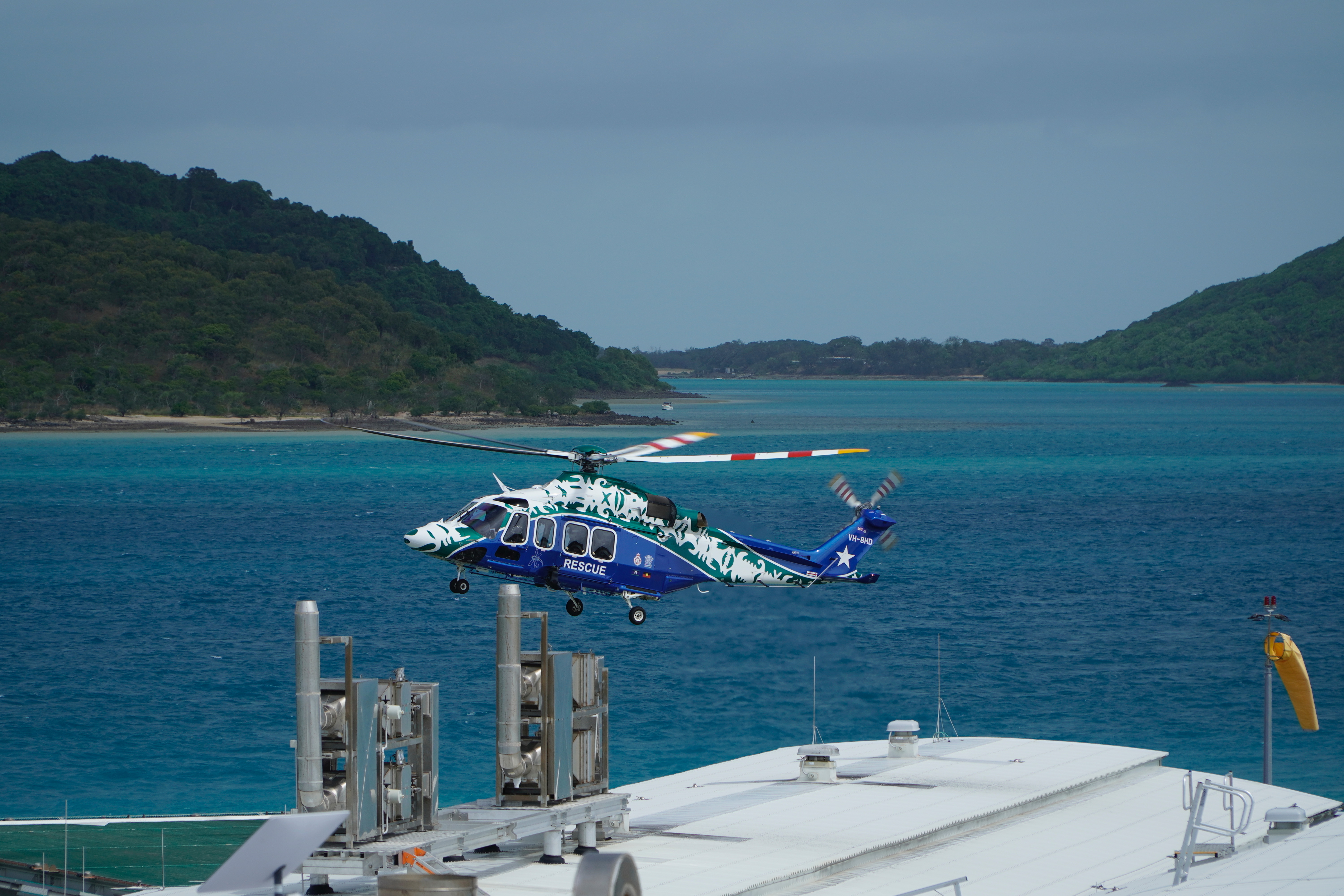
“When I first came up here, I not only got to see the clinical work I would be doing but also the lifestyle and the physical beauty of the place.
“I was always sort of gearing towards the idea that I’d come back. I’d keep checking in [with Dr Coates] about what sort of skillset would be required to come back up here.
“He guided me with whatever questions I had.”
Dr Cardelli made the move in 2020 with his partner Selena, who works as a nurse on the island.
Finding a place
Thursday Island Hospital is the nucleus of the health service in the Torres Strait and Northern Peninsula Area.
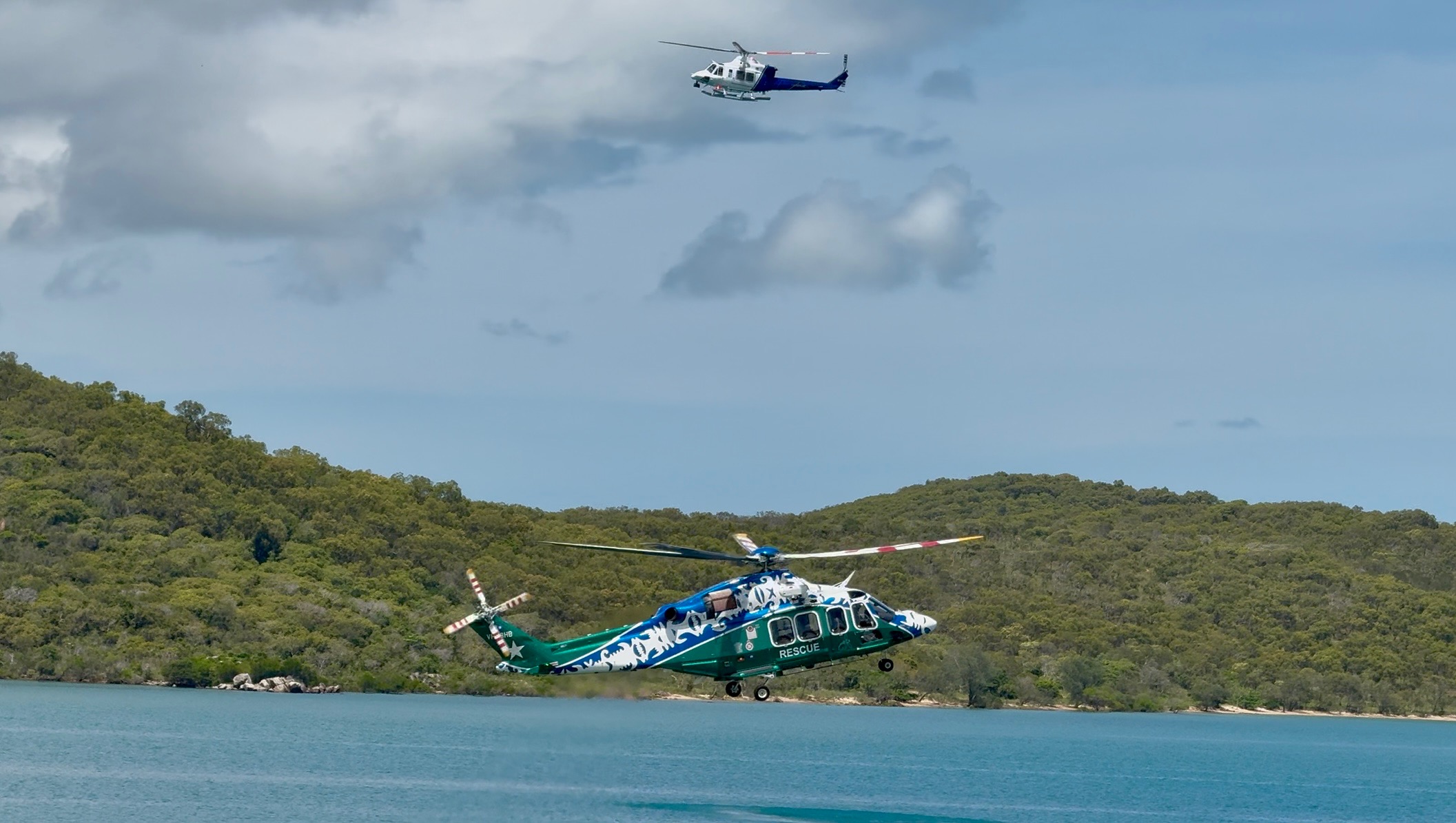
It requires its own aeromedical retrieval base, which is the most efficient – or sometimes only - way to reach residents scattered across surrounding islands in an emergency.
“There are two of our islands that don’t have runways so the only way we can get to them is by helicopter,” Dr Cardelli said.
“There was a case where a colleague and I – a GP obstetrician – flew to Saibai Island for a pregnant woman who ended up delivering not only one baby, but an undiagnosed twin.
“There happened to be a GP registrar on the island doing a clinic at the time and with the health clinic team we were able to deliver those two babies.
“Both babies needed resuscitation on Saibai and we transported the twins and their mother back to Thursday Island, and they all had a great outcome.”
Dr Cardelli and Selena have themselves welcomed two children and gotten married since moving to Thursday Island.
He said the unique and varied work complimented the island lifestyle.
“Our second child was born on TI which was a really lovely thing to have been a part of,” he said.
“The things that I enjoy outside of work five years ago have morphed. I love fishing and diving and going on the boat.
“Now it’s a lot of quality family time. We do lots of trips on the boat. We just go to a beach with the kids, have a swim and come home. There’s no need for a commute here.
“You really feel like a part of the community. I’ve been to so many community events, weddings, funerals, tombstone openings and sporting events.”
Mentoring the next generation
Dr Coates is now the Executive Director of Medical Services on Thursday Island and also a fellow of the QRGP.
The QRGP was Australia’s first structured statewide pathway to select, train and support doctors to become Rural Generalists when it was established in 2007.
More than 400 trainee doctors are currently on the program, with 55 joining in 2026.
Rural Generalists deliver broad, high-quality medical care that would otherwise be unavailable in rural and remote communities.
They provide comprehensive care across general practice, emergency and inpatient care, as well as advanced skills such as paediatrics and obstetrics.
Rural Generalists are equipped with the skillset to navigate the context and complexity of rural healthcare delivery.
“It’s what I consider to be the Jack or Jill of all trades,” Dr Coates said.
“I’ve got a lot of respect for the sub-specialities. We need them, but they cannot be in every community across Australia.
“There was something attractive to me about training to become an ‘all-hazards’ doctor who is trained to manage just about anything that comes through the doors.”
Having grown up in Mackay, Dr Coates had no interest in heading to a city and knew his future was going to be in a rural community.
While studying at the University of Queensland he chose to go to the Rural Clinical School in Bundaberg and did a junior doctor rotation on Thursday Island.
He was told picking up skills in anaesthetics would put him in a good position to return full-time - which he did – another parallel he shares with Dr Cardelli.
Dr Coates said life as a Rural Generalist provided an unparalleled learning environment.
“It’s very attractive to someone who likes to work hard and work across a broad scope of practice,” he said.
“It’s an excellent spot to feel like you’re working at the top of your scope.
“When Preston first came up here, he was really committed to learning and developing, not just as a clinician but as a leader too.
“He’s now a Med Super and he does some very high-level stuff across a broad scope, which is excellent.
“It’s probably one of the more rewarding areas of practice when someone like Preston or other juniors come through here and become seniors.
“You get to see them develop, become junior consultants and then stand on their own two feet. You see them work independently, make good decisions and provide good care. Then to close the loop you see them start to become mentors for others as well.”
Dr Cardelli encouraged medical students and junior doctors to explore opportunities to work in rural and remote areas.
“It’s little impost to just go somewhere for 10 weeks and get immersed in the community culture, but also the clinical culture,” he said.
“You could surprise yourself. A lot of the clinicians I’ve met over my years working rurally haven’t come from a rural background like myself.
“They went out as a junior doctor and they just loved it and never looked back.”