

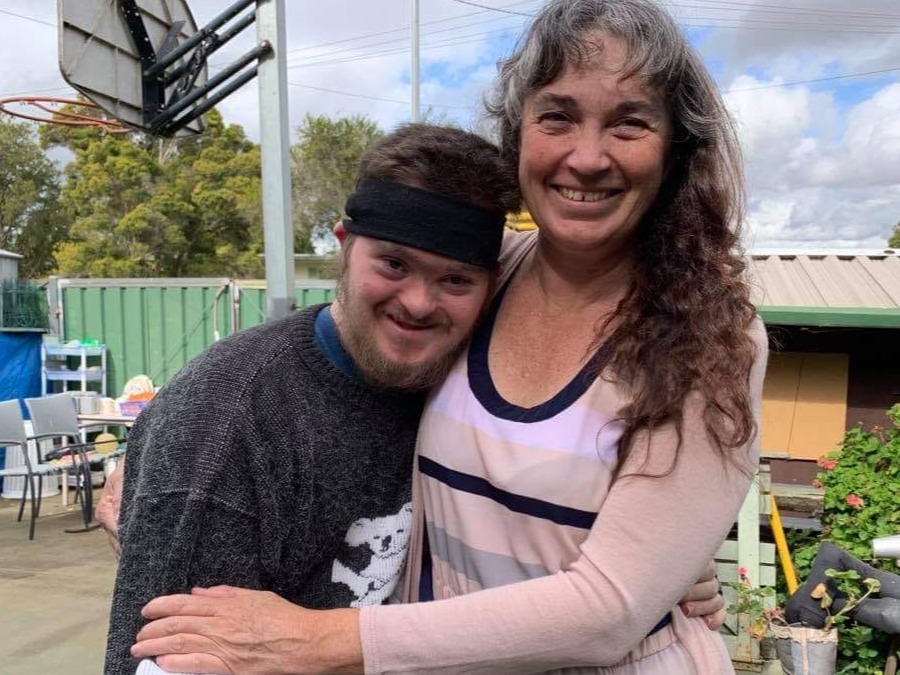
Mum Toni with her son, Josh
People with disability often have a higher risk of poorer quality health outcomes.
The use of a communication tool within Queensland hospitals is helping to change that, providing a voice for people who may encounter difficulties communicating to clinicians.
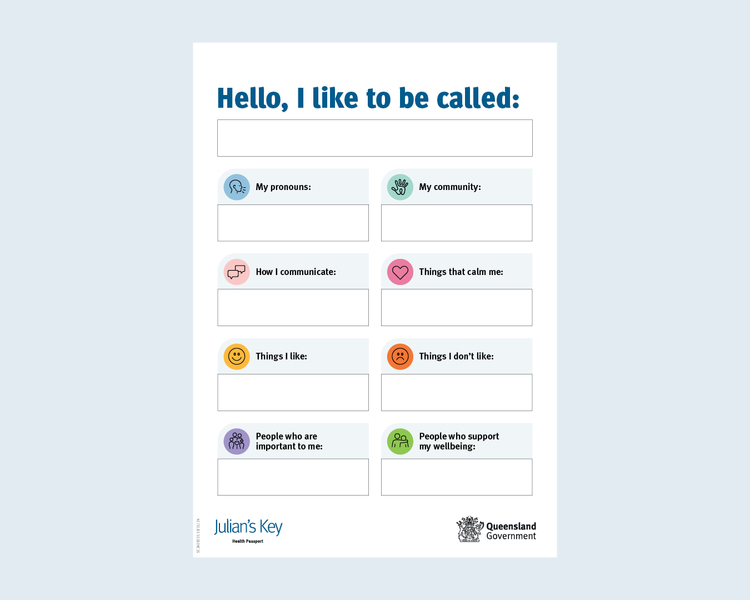
Through the Julian’s Key Health Passport, people with disabilities can now share vital information with healthcare staff that not only helps the patient, but also supports clinicians to provide safe and quality care leading to better patient outcomes.
The Julian’s Key Health Passport is a consumer-controlled communication tool designed with patients and carers to improve care while in a hospital or community health clinic.
It contains important information, such as a patient’s communication preferences and healthcare needs, while also helping healthcare staff to understand better the patient’s health needs to enable the best care possible.
Who is it for?
Julian’s Key Health Passport is for everyone. It can help all Queenslanders, especially those who need extra support, such as people with disability, to communicate with healthcare staff.
Questions in the communication tool are grouped into key themes such as about me, about my disability, my support needs and medical history.
A voice for Josh
For mum Toni Mitchell, the health passport is helping her son, Josh, become more independent and speak for himself.
Josh is 25-years-old and has multiple disabilities, including cognitive impairment with complex medical conditions, and spends much of his time in hospital or attending doctor appointments.
Toni said they had been looking at better ways to ensure Josh’s healthcare information was not only easier to collate and bring along to his appointments, but also for Josh to be able to understand it himself.
“I have been wanting to try and help him be more independent and speak for himself, so when I saw Julian’s Key I thought, well, there it is,” Toni said.
Before adopting the health passport for Josh’s needs, Toni recorded everything to do with his health in a “big folder”, which she admits was time consuming.
“I’ve been building on it (health records) since he was a baby, so it was huge, and definitely not something Josh could understand himself,” she said.
“It was my record of his health, whereas Julian’s Key is his record of his health.
“When we filled it in, we went through it together; I would ask him the questions and fill in the answers but would make sure he was giving me his own view of his answers.”
Toni said accessing the health passport has not only put Josh more in control and more empowered to take charge of his own healthcare needs, it also helps his doctors better understand what he needs.
“It's well set out and very easy to read through, so if they're (clinicians) looking for something in a hurry – especially if they want to get it from the patient's perspective when they're dealing with people with cognitive impairment and people who aren't very able to speak well for themselves – it's in the book,” she said.
“It's giving them that person's interpretation of what's going on instead of the interpretation of the person next to them. Even though I know Josh and his body, and everything about him inside out, it's really important as an adult that he also has that voice and be able to say ‘this is how I'm feeling’ and if he can't use his words, he can show them the page.”
While Toni applauds the accessibility and look of Julian’s Key, she said she looks forward to even more improvements to the health passport as more people begin to use it.
“I think that the more people who become aware of it, the better it will be,” Toni said.
“It's a wonderful tool to give people like Josh their own voice, so when they can't actually speak, they've got the book there that they can use to help them speak.”
Support in our hospitals
Carolyn Wilkinson works within the Metro South Addiction and Mental Health Service (MSAMHS).
Carolyn said Julian's Key Health Passport is playing an integral role when connecting and supporting those with intellectual disabilities and mental health needs.
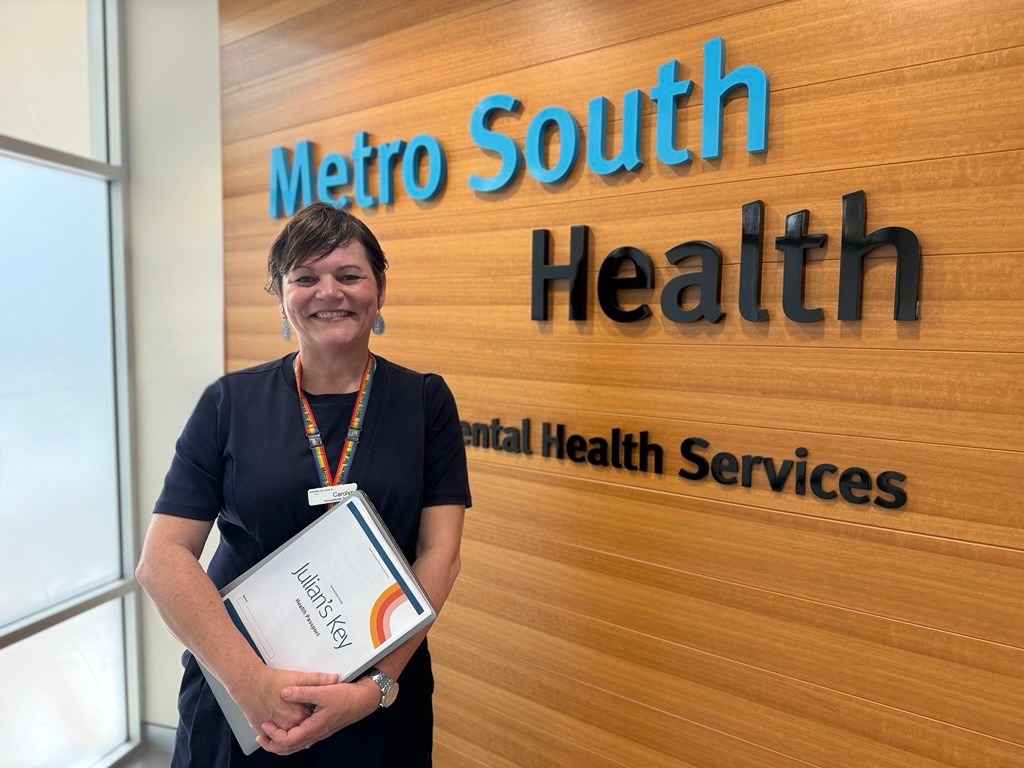
“We encourage consumers, their families and staff to use the health passport to share their preferences and needs. It’s supporting familiarity and bringing comfort at often a really stressful times for patients,” Carolyn said.
The health passport equally supports clinicians, helping to get key information quickly from the patient and bridging communication gaps, especially when self-advocacy becomes a challenge.
“It helps rotating staff deliver consistent, trauma-informed care by clearly documenting areas of discomfort and strengths,” she said.
“It's a patient's guidebook, offering the short cuts for how to best support the person and enabling clinicians to deliver care that is both safer but more compassionate.”
While the health passport best supports people who have communication difficulties or a disability, it can also be used by all Queenslanders who need support to communicate clearly, who are unwell, are anxious or fatigued.
“Consumers often use it to record key medical details and preferences about sensory environments, or communication styles. Everyone benefits when they can express what helps them feel safe and supported.”
Carolyn said the health passport reflects the heart of neuro-affirming practice by seeing and responding to the person, not just the illness.
“Our Mental Health Intellectual and Developmental Disability (MHIDD) team, alongside our lived experience workforce in MSAMHS, has seen firsthand how this tool enhances relationships, reduces anxiety during admissions, and fosters dignity and respect in care,” she said.
“It is a simple resource with profound impact, helping services like ours uphold excellence in person-centred care.”
How do I access a copy of Julian’s Key Health Passport?
To access a printed or online version, and versions in other languages, visit Julian's Key Health Passport | Queensland Health.
The concept of Julian’s Key Health Passport was developed in memory of Julian Klass, a patient with intellectual and physical disability within the West Moreton Hospital and Health Service (WMHHS).
While it was an HHS-led initiative at first, Julian’s Key was adopted by Queensland Health and trialled at Ipswich and Logan Hospitals in 2019.
After extensive and significant consultation with Queensland Disability Network (QDN) to develop what would be a consumer-owned and consumer-controlled tool moving forward, a revised tool was released in 2024.
Queensland Health continues to work with users to understand the need and requirements of any potential digital solution for Julian’s Key Health Passport.
Auslan videos and translated booklets in simplified Chinese, Arabic and Italian have also been developed so that Julian’s Key Health Passport is even more accessible.