

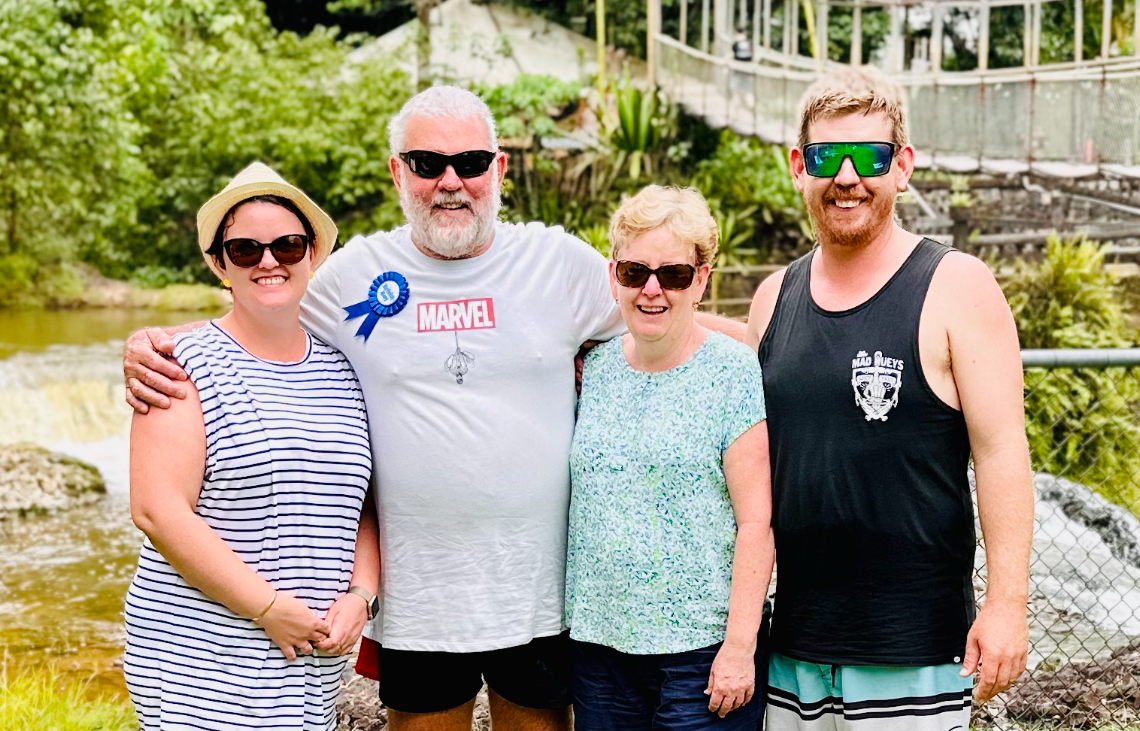
Since her twenties, Ann Johnson has lived with melanoma. After many treatments, she is finally cancer-free.
To her husband, children and four grandchildren, Ann Johnson is simply Ann – a devoted wife, mum, sister, friend and the much-loved nanna who is always there to lend a hand, solve a problem or bring everyone together.
For more than 50 years, however, another part of Ann’s life has quietly unfolded in the background.
Since her twenties, she has lived with melanoma.
Seven separate diagnoses, countless skin checks, surgeries, specialist appointments and, eventually, Stage IV metastatic melanoma.
Yet Ann has never allowed cancer to define who she is.
“My melanoma journey has been part of my life for many years, but it has never been who I am,” Ann said.
“I’ve always wanted to keep living my life, spending time with my family and being there for the people I love.”
Growing up in Queensland before the introduction of the iconic Slip, Slop, Slap campaign, Ann never imagined a suspicious mole on her chest would begin a lifelong health journey.
Because her mother had previously been diagnosed with multiple melanomas, Ann sought medical advice early.
“The initial mole proved to be melanoma and required further surgery,” she said.
“Then, over many years of stringent three- to six-monthly skin checks with my local doctor, five more melanomas were diagnosed and surgically treated.”
Despite decades of vigilance, Ann’s seventh melanoma came as a complete shock.
After experiencing mild breathlessness and with two siblings recently requiring heart treatment, Ann was referred to a cardiac specialist in Cairns.
“Those investigations found three tumours on my right lung, and further investigations confirmed they were metastatic melanoma,” she said.
“It was a devastating diagnosis.”
Ann was then referred to an oncologist at Cairns Hospital, who offered her the opportunity to participate in a clinical trial investigating immunotherapy combined with an investigational anti-cancer treatment for advanced melanoma.
Every three weeks, Ann travelled around 100 kilometres from the Atherton Tablelands to Cairns for blood tests, treatment and appointments.
Ann said she decided to enrol because she believed it offered the best possible care for her while contributing to research that could improve outcomes for future patients.
“The knowledge, compassion, expertise, organisation and communication shown by my doctor and the clinical trial nurses were of the highest standard,” Ann said.
“They made what was one of the most difficult periods of my life feel manageable. I always felt informed, supported and genuinely cared for.”
“Medical research gave me an opportunity I may not otherwise have had, but it was the people delivering that care who made such a difference.”
Today, Ann has been cancer-free for two years.
“I’m thankful to be alive,” she said.
“Without medical expertise, medical research and clinical trials, this outcome would not have been possible.”
Immunotherapy helping patients to survive
Thanks to decades of sun safety campaigns, early detection, and cutting-edge treatments like immunotherapy, Queenslanders boast some of the world’s best melanoma survival rates.
A landmark 40-year analysis from Cancer Alliance Queensland shows invasive melanoma cases stabilising since 2017 and mortality rates falling, with the vast majority of patients now diagnosed at Stage 1, where survival is nearly universal.
Professor Mark Smithers, Chair of the Clinical Outcomes from Melanoma Management Advisory (COMMA) Committee and the report’s co-author said this remarkable progress highlights the success of continuous public prevention efforts and modern medical interventions.
“With 79 per cent of patients now being diagnosed at Stage I – where survival is nearly 100 per cent – the combination of early detection and cutting-edge medical intervention is saving more lives than ever before,” Professor Smithers said.
“This data is informing steps for the future, including continued emphasis on prevention.”
The most striking findings in the report involve the survival outcomes for patients with advanced disease. While early-stage detection remains the gold standard, the prognosis for Stage III and IV melanoma has been radically transformed over the past decade.
Melanoma stage | 5-year survival (2003-2012) | 5-year survival (2013-2022) |
Stage I | 98 per cent | 99 per cent |
Stage II | 79 per cent | 85 per cent |
Stage III | 59 per cent | 75 per cent |
Stage IV | 15 per cent | 35 per cent |
Professor Smithers said these game-changing improvements are largely credited to the introduction of targeted and immune therapies since 2011, alongside a 29 per cent increase in patients being reviewed by multi-disciplinary teams to ensure the most modern treatment paths.
He said being able to report on the positive impact of immunotherapy was very special.
“The ability to formally report on the positive impact of new systemic treatments – particularly immunotherapy – for Queenslanders is significant,” he said.
“I am from an era when there was no real treatment for these people previously, so seeing this progress is truly special.”
Prevention remains critical
Both Ann and Professor Smithers encourage everyone, no matter their age, to get regular skin checks and to be aware of any changes in their skin or moles.
“If found early, melanomas can be treated quickly and may reduce the need for more invasive surgery,” Ann said.
The most powerful tool remains the one we’ve known all along – to save lives and reduce the burden, we must all remember to slip, slop, slap, seek and slide.
For more information and tips on how to stay safe in the sun, visit Queensland Health’s website.