

Summary
This episode is part of the It Can’t Hurt to Ask: Men's Health podcast
In this episode we're exploring how you can say fit, strong, and resilient as you age. Whether you're 25 or 45, it's never too early to start laying the foundations for healthy ageing.
Our featured expert is Dr Eric Chung, professor of surgery at the University of Queensland and a consultant urologist at the Princess Alexandra Hospital. He's here to share tips to unlock your best self now and into the future.
You'll hear from Queensland men, Andrew and Kevin, who share their experiences and views on staying healthy at any age.
Learn about the many factors affecting ageing well. Besides the more obvious ones, such as a healthy diet and exercise, you'll also hear about the effects of risky behaviours, family history, chronic conditions, substance use, mental wellbeing, social connectedness, happiness, and even your sex life, on healthy ageing.
If you'd like to learn more about men's health, listen to the other men's health episodes in this brand-new season.
Please leave us a review—we'd love to hear your thoughts.
Featured in this episode:
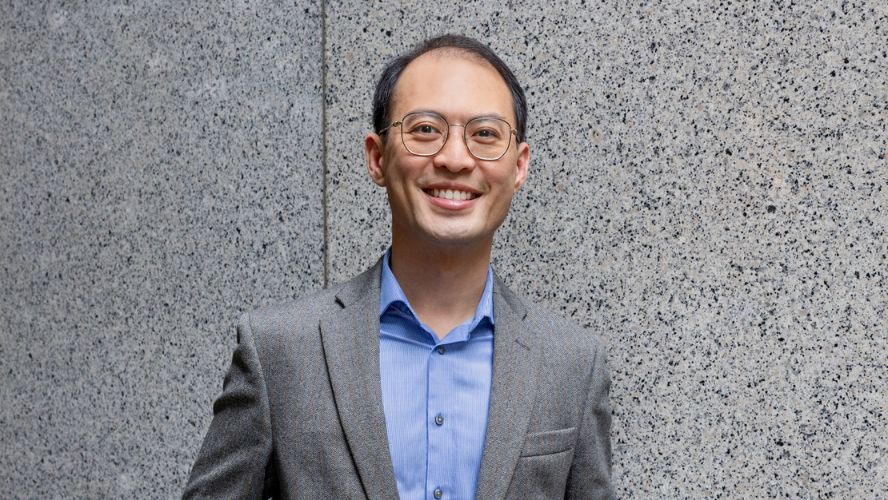 Dr Eric Chung
Dr Eric is a consultant urologist at the Princess Alexandra Hospital and Professor of Surgery at the University of Queensland.
As the Past Chair of the men’s health section for the Urological Society of Australia and New Zealand, Dr Eric knows his stuff when it comes to men’s aging and how to age well.
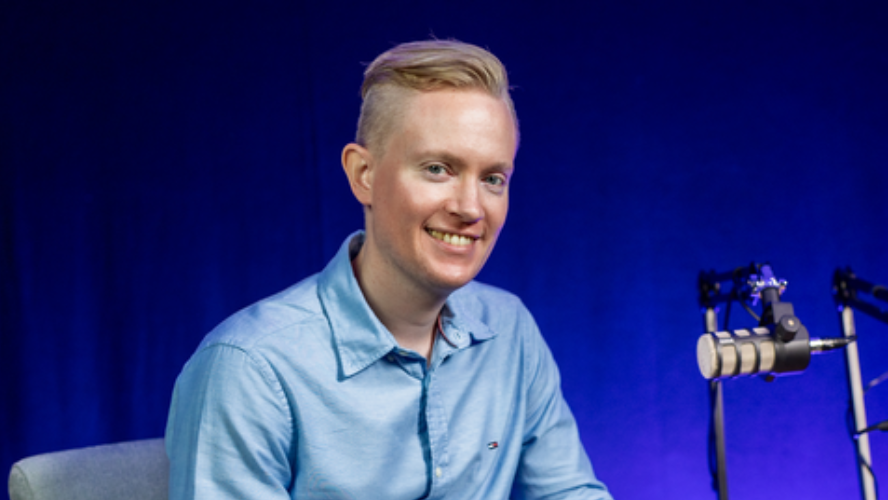 Beau
Beau
Beau is a health-conscious marketing and communications worker in his early 30s.
He loves music, movies, food, drink, and sport (well, watching it) and hates misinformation. He's definitely a dog guy but thinks cats are pretty cool, though he believes neither are as cool as our native animals.
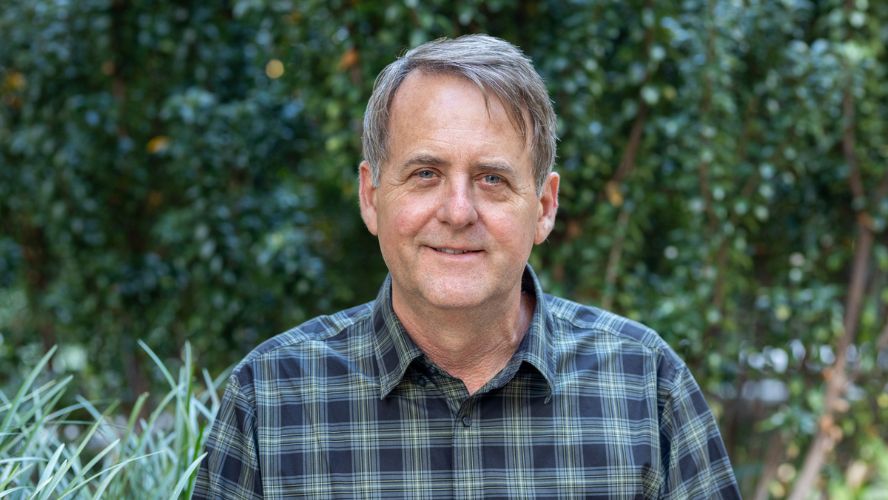 Andrew
Andrew is a 55-year-old proud father of twin boys, who laments the blurring passage of time between their birth and adulthood.
Known for his dry sense of humour, Andrew enjoys sharing obscure stories drawn from his decades of life experience - usually unbidden and frequently questions why coffee isn’t a food group.
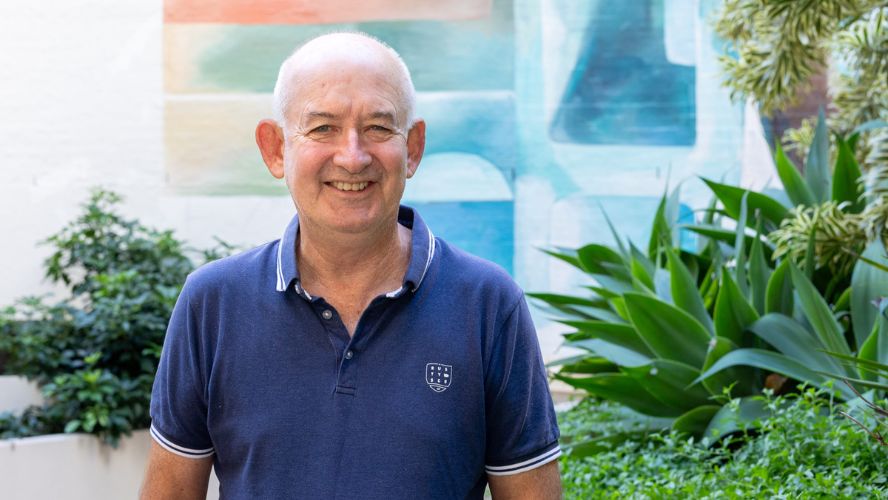 Kevin
Kevin
Brisbane-born Kevin spent his formative and middle years as a journalist in Australia and overseas.
Married with two grown daughters, he has worked as a public servant in his home town for the past 10 years.
His lifestyle is best characterised as 'not very active', a description he is working to change with the enthusiastic encouragement of his wife.
Episode Resources:
Ageing well
Everyone deserves to live well and maintain their health and independence into the future. To learn more, visit the Australian Government's websites: Positive ageing is ageing well and Tips for healthy ageing.
Many factors influence healthy ageing. Some of these, such as genetics, are not in our control. Others—such as exercise, a healthy diet, going to the doctor regularly, and taking care of our mental health—are within our reach.
Exercise
Physical activity is important at any age for good physical and mental health and wellbeing. It reduces the risk of many diseases, including some cancers. Learn how much exercise you should be doing and how to fit it into your day by reading the Physical activity and exercise guidelines for all Australians and the Choose Health, Be Active booklet.
Diet
Making smart food choices can help protect you from certain health problems as you age and may even help improve brain function. Visit the Australian guide to healthy eating for more information.
Mental health and wellbeing
Mental health, or mental wellness, is essential to your overall health and quality of life. It affects how we think, feel, act, make choices, and relate to others. Managing social isolation, loneliness, stress, depression, and mood through medical and self-care is key to healthy ageing.
If you feel that you may be in need of mental health support and have never accessed a mental health service before, our mental health access line 1300 MH CALL (1300 642 255) is available 24/7. This is a confidential mental health telephone triage service and is the first point of contact to Queensland public mental health services.
Organisations like Beyond Blue (1300 22 4636) and the Men's Shed Association are also available to provide mental wellbeing support. Find your local Men's shed location to connect with your community face-to-face, or speak to a Beyond Blue counsellor online or by phone.
Preventative health
Looking after your body and mind by getting vaccinated and avoiding risky behaviours – like smoking or drinking too much – can prevent many diseases and keep you healthy and well.
If you're concerned about your own or someone else's alcohol and other drugs use. Call Adis 24/7 Alcohol and Drug Support on 1800 177 833. You can also visit their website for more information or to chat with a counsellor online.
If you’re thinking about quitting smoking or vaping or are ready to quit contact Quitline on 13 78 48 or request a Quitline call by visiting their website.
Transcript
Andrew: I think men are hardwired to need a purpose and have a purpose.
Kevin: I think two aspects really—being mentally able and physically mobile.
Eric: We all like to think that our parents and grandparents are no longer engaging in sexual activities. But we do know that in humans, sexuality goes across the entire lifespan.
Beau: Welcome to It Can't Hurt To Ask, the podcast where we dive into all your health and wellbeing questions and concerns.
In this episode, we're exploring how to say fit, strong, and resilient as you age, and importantly, focus on men's health issues that are relevant to your age group. Whether you're 25 or 45, it's never too early to start laying the foundations for healthy ageing.
Today we're joined by Dr. Eric Chung who's professor of surgery at the University of Queensland and a consultant urologist at the Princess Alexandra Hospital. He's here to share tips to unlock your best self now, and, importantly, into the future. We'll talk about where to get more information and where to get help as we go along.
Thanks so much, Eric, for coming in.
Eric: Oh, thanks Beau, for having me again.
Beau: Great to have you back. Thinking about future proofing your health, trying to make sure that you age better and you avoid health problems down the track, what should guys who are younger, say 20, 30, or 40, be doing to future-proof themselves?
Eric: I think that's always difficult, isn't it? If you are someone that are looking into all the latest fads, you jump on the bandwagon one year, and then next few years later you find that this actually is bad for your health and you regret it. It's almost like an impossible search for perfection.
But I think in life it's about trying to optimize what you have, moderate what you're doing and also, importantly, be healthy in terms of your living.
So, number one, optimize, as in if you have hypertension, diabetes or cholesterol problem, it's important for you to optimize your blood pressure, your cholesterol, lipids, and also your blood sugar level. Moderation means that you want to be healthy in that normal range.
You don't want to do, things that are completely opposite end. So, eat healthy, regular exercise. Simple things that help to transform your life in a small but incremental manner and healthy living in the sense that you want to have good mental health, good physical health.
So, I think that's probably, very important to try to prolong your longevity. So rather than turning to fads, take different kind of diet with multi-supplements, visiting a plastic surgeon, those are probably temporary. I think if you stick to the key fact optimizing healthy living and a healthy lifestyle.
Beau: And so, do you think there's anything different that someone in their twenties should be doing than someone in their forties? Or is it ...
Eric: Definitely, it's, a bit like your cycle of life. When you're 20, you're invincible. So, when you're invincible, you start to do a lot of high-risk activity.
I think that is probably the very important stage that you try to build a very important foundation. Because the foundation, key to everything in later life. If you only start to build your foundation in forties, even though there's still benefit, the benefit's obviously not as, long as if you have done it in your twenties.
In your twenties it's about trying to minimize risk-taking behaviour. So, things like smoking for example. We know that people these days vape instead of smoke. Now there's a lot of good studies now showing that vaping can create pulmonary disease. Also, there's no difference in terms of addiction, in terms of mental health with vaping. So, people can have erectile dysfunction with vaping as well. So, I think risk-taking behaviour to be minimized and start to eat healthy and do regular exercise.
Beau: At the time, I guess you're not really thinking about how it's going to impact you when you are 60 or 80 or ...
Eric: Definitely. And when you're in your forties, when you're busy with your career and stuff like that, do take time off to try to enjoy life, spend time with your family because that's very important in the long term. Try to minimize your health issues. So, when you're in your forties, your metabolism slow down, you tend to have a gut, so you try to limit the food intake.
You try to look at healthy eating. Importantly, also pick up those exercises, right? So don't forget those exercise that you used to do in your twenties and thirties. In your forties, do them as well.
Beau: You’ve got to have some motivation now. And obviously a lot of people's motivation is, looking good. particularly at the age of social media, do you have any thoughts about, how that should be dealt with?
Eric: I think it's always hard because right now you don't have any problems, so you're not going to be anticipating that you're going to have problem in the future.
Yes. Right? Everyone always thinks that they could age gracefully and hopefully stay fit. So, I think as you get older in life, you really should have at least a five-or-10-year plan in mind. Let's say for example, you're in your thirties, right at the prime of your age group.
Perhaps you might have to set yourself some target and say, look, hopefully in the next five to 10 years, I keep my body weight in check. Hopefully I don't develop any risk factors, especially if you've got familial history. If you've got a family history of diabetes or hypertension, you know very well that you are at higher risk compared to the normal population. So, you probably have to adhere to a less salty diet for hypertension and for people that have diabetes, look after your dietary intake and also exercise because you can potentially prevent yourself from developing these chronic conditions.
Beau: And is there such a thing as doing too much? Is it detrimental to go too hard now and exercise too much or eat too crazily following fad diets?
Eric: Definitely. I think it's important not to burn out. If you over exercise, while it's good for you right now, but think of it in about 10, 20 years at a time where you're going to end up with some joint issues, some back pain.
This is going to be a big issue. So, if you exercise, do adopt healthy exercise from that point of view. Maybe speak to a gym trainer or physiotherapist that can give you good advice on how to actually limit stress on your body when you exercise.
Beau: I know it's something a lot of people jump straight into the gym and. Either expect they can do everything straight away or they maybe neglect certain exercises or muscle types.
Eric: I think that's very true because as science progress, we understand how to exercise different part of your body, and importantly, what exercise is good for you.
So, one person may not have the same effect as another person in terms of the same set of exercise. Because your body type is different and obviously what you wish to achieve may be different for another person as well. I think as science advances, we now understand that there are different things that we can do, that we can individualize and personalize to your particular wish and your preference.
Beau: If we're thinking about the future and long term down the track, is it better to be doing exercises that are more future proofing, for balance and things like that? Or is that something you only have to worry about once you get to that age?
Eric: In general you probably look at different decades of your life requiring different thing. But I think the same things apply, meaning that you need to have good physical strength, endurance, and flexibility. You can put emphasis on different things as you get older. So young, you probably look at more mental strength, in your mid part of your life, maybe endurance. As you get older, you want more flexibility, because your joints become quite stiff, so therefore you really need to loosen those joints so you can stay mobile from that point of view.
Beau: People don't realize that you might be able to get that in your gym program. You can still be a 20-year-old working out hard. But you could maybe do some different exercises. You could increase your range of motion, do things that might not only actually help you at the time, but benefit you down the track.
Eric: Well, I think you bring up a very good point, Beau. I think it's about being smart in what you do. Don't forget nutrition as well, right? Because at the end of the day, nutrition fuels the energy for you to exercise. So, if you eat well, healthy.
Also, importantly, in Australia, we have a high risk of problems in terms of skin cancer. So, you have to be smart when you exercise to keep that in check as well. And even though we have plenty of sunlight, osteoporosis is still a risk, especially as you get older.
So, you need to take into account your calcium, your vitamin intake as well. I think all in all, you probably should not just focus on exercise, but focus on every aspect, the healthy living side.
Beau: Yeah, for sure. I guess talking about eating and stuff, your fad diets, and there's a lot out there, you know every few years you might find out that something's good, when actually it's bad and vice versa.
Eric: I think personally there is some truth behind some of the fad diets. There has been good clinical studies to prove that in certain conditions, for example, a high fat diet may prevent a condition, for example in seizure, in certain type of seizure, so not all kind of seizure. And certainly, in some diets that improve your sort of muscle mass for someone that wish to attain certain body appearance, for certain activity, or certain duration of time.
But in general, a lot of these fad diets certainly do come in and out of fashion. Like I mentioned before, one year it could be in fashion, and one year it could be completely proven to be bad for you. So, in life I tend to adopt a more moderation stance. So be moderate in what you do.
Again, you know that there are certain foods that are very good for you, right? So, things that are high in omega oil, things that are high in fibre, that's going to help you in the longer term.
Beau: Yes, there's fad diets, but there's also things that we've always known that are good. Like we've always known that fruit's, good, you know?
Eric: Yeah. But you have to be careful as well, Beau, because some fruits are high in sugar, right? So, if you have diabetes, you shouldn't be eating a lot of fruits that have high in sugar because they'll be detrimental to you as well. You have to take into account what your body composition is, what are the medical problem you have?
But if you're really not sure about what diet you should adopt, a dietician certainly will have expertise in this field so they can advise you appropriately.
I think a lot of time GPs are the primary gatekeeper, so a lot of time we always advise patients to see the GP.
GPs usually have referral to endocrinologist, dietician, nutritionist. So, the GP usually will be able to advise you accordingly.
Beau: Yeah, true. I suppose that's like how it's great to see an exercise physiologist or someone like that to help you in your training, but you'll need to know if you have any preexisting conditions that they have to know about so they can advise you.
Eric: I think a lot of time you do really have to seek more expert opinion, if you really want to get into it. But for most of us who just wanted to try to be a bit more healthy, I think just stick to moderation and stick to the good stuff that we know about.
So, fruits, vegetables, fibre, Omega-3s, red pigment phytoestrogens, those are probably simple things that we can just do ourself without having to seek expert opinion.
Beau: Yeah. It's great to have those simple things that you know are safe and good, and like you say, as long as you don't overdo anything.
Eric: That is very true. I think moderation is the key.
Beau: Which is sometimes the hardest thing, I know guys, I've got a mate that fully threw himself into the gym when he discovered that he liked going to the gym, to the point where he'd go when he was sick, he'd go when he was injured. And you know, I'm not sure how healthy that is.
Eric: You have to put a bit of common sense behind it. I think a lot of time people jump onto a bandwagon that are in fashion and completely lost common sense. As a human being, you do have to have a bit of common sense in mind as to, what is good, what is not good for you.
When you're sick, you should probably limit your exercise, right? Your body need energy, so you cannot consume too much energy at the moment. So, when you're sick, rest. Take multivitamin and really get yourself better before you engage in activities. I'm not asking the audience and the listener to suddenly jump and subscribe to gym and suddenly change your entire dietary intake.
It's about doing tiny steps at a time, right? And don't go overboard, because you are trying to play the long game here. So you want to try to adopt a consistent lifestyle that you can keep over the years, so in the long term your life expectancy and your quality of life is improved.
Beau: Yeah, true. And I think my understanding is, that studies are showing that. Doing even some exercise or eating a bit healthier, that will actually go a long way. You don't have to jump completely into it like you say.
Eric: I think, like you said, Beau, if you eat, let's say, junk food, burgers three times a week, then maybe just cut it down to once a week, right?
Whether than taking a lift or escalator, perhaps just maybe walk up this flight or two flights of stairs. So simple things like these does work. So, if you go to work, you drive, then perhaps, maybe park your car a bit further so you can do a bit more walking and stuff. Maybe every now and then when you're not doing anything, pick up a glass of water and drink a glass of water to keep your hydration. And also, from a urology point of view, prevent kidney stones, which is, something that we see quite often.
Yeah, if you think about it, if you do 10 minutes, how on earth is this going to add five years of your life? But you’ve got to remember that 10 minutes is an incremental 10 minutes of every day that you're doing. So, you are changing things over time.
Beau: And I guess that habit forming and having good healthy habits actually probably something really important.
Eric: Yeah. Repetition is good, but at the same time, you also need to mix and change to keep things, interesting, right?
Imagine you do mundane things every day, how boring your life's going to be, right? So, mix and match,
Beau: And I think that helps prevent things like burnout, like you were talking about.
Eric: That is, that is very true.
Beau: Here's an interesting fact for you. Did you know that muscle mass naturally starts declining in your thirties and forties? This is called sarcopenia, but resistance training can slow or even reverse this process.
Regular exercise helps maintain bone density, reduces bone loss, and reduces falls. This all helps to reduce the risk of fractures, so get out there and start moving.
Subscribe for more actionable tips to optimize your health by checking out our other episodes and other series in the podcast.
With all that in mind, I think one thing we haven't talked about yet, and that I'm curious about is sleep. And that's something that isn't hype-y, it's not something you can sell on social media. How important is sleep to us now and into the future?
Eric: I think that's a very important question. And again, this is a question that is very critical to healthy ageing, because we know that when you sleep it's your body trying to repair - it's downtime for your body. Your body is in hyperactive mode the whole time, but the moment you shut down, you sleep, your body gets time to then start to repair itself, improve that immunity in the background.
But one of the things important about sleep, there are a couple of things that we’d like to highlight to listeners. So, number one is sleep apnoea. Sleep apnoea is very common but is under recognized. So, unless you have a partner that sleeps next to you that tells you that you snore, most of us don't know that we have sleep apnoea.
And sometimes we thought we had a good sleep, we slept 12 hours, yet we wake up very tired, and that's probably because we don't sleep properly. The concept of good sleep doesn't really equate to time, but we do know that if you have six to eight hours a day, that's good sleep. But importantly, we know that you have to go into the deep sleep, the REM sleep, the REM sleep is very important.
So, if you've got multiple disruptions (to) sleep across the nighttime, then you don't get a good sound sleep. And we also know that a lot of casual workers that work in different times will have very disruptive wake/sleep cycle. So that melatonin release from your brain is not getting you into deep sleep.
At the end of the day, it is about having a very restful sleep. I think quality is certainly more important than quantity. So, I do advise that you should sleep at least six hours a day. And certainly, we do know that from a lot of publications, when you sleep, you want to remove a lot of the stimuli, right?
So, you want to remove those mobile phones, music, TV playing in the background, so at least you can have a good deep sleep. I think sleep is very important, but again, I'm also guilty of not having enough sleep because life is very busy these days. But if you can, hopefully during the weekend you can do some catch up sleep.
The other thing I'd like to bring up is that concept of micro sleep. During the daytime, if you're quite tired, then perhaps have a micro sleep. Maybe even for five minutes or 10 minutes, that micro sleep allows you to improve your mental agility and at the same time, give you time to recharge the battery.
Think of it like your mobile phone about to run flat. You just plug it into a charger and just charge it for about a good five to 10 minutes and you got enough power reserve to last you for a few more hours.
Beau: Yeah. Just to make it through that next bit.
Eric: Life is always difficult, especially when you're working. You got a lot of stress you don't have enough time to spare. Then you’ve got your hobby. Some people love watching TikTok, some people like to read, watch a movie. Then you end up eating into your sleep time.
Beau: When you mentioned TikTok and stuff like that, that sleep hygiene that you know, to increase our quality of sleep. Are there things we should be doing and watching out for?
Eric: I remember reading a few articles about if you have a mobile phone in your room or you have a TV in your room those are actually bad. If you believe in the concept of feng shui, they say they shouldn't have any sort of strong energy in the room, right? The room should be very calming, so at least you get a good rest.
Beau: And how about things you know, environment, comfort of bed, blackout curtains, should we be investing in all that sort of thing.
Eric: I think just invest in a good bed so you can get a good sleep. And then in terms of the rest, it really depends on people. Some people like to have a bit of ambient light. Some people like it completely dark. I think those are basically individual choices, but having a good bed is very important.
Beau: This probably sounds like marketing for a mattress company, but the amount of time you actually spend in your bed, is quite a lot if you add it up in terms of the percentage of your life.
Eric: Yeah. Your average spends somewhere between six to eight (hours). There are a lot of myths that we talk about in terms of going to sleep. For example, should you be drinking hot milk before you sleep? Should you exercise before you sleep? So, there's individual preferences from that point of view.
Beau: Yeah. So, you’ve got to find what works for you. So as part of that sleep hygiene and things to do to get good quality sleep, what about alcohol and other substances?
Eric: Well, that's a very good question because sometimes people can't sleep, they drink alcohol, they can sleep easily. But is that a good quality sleep? And also some people, unfortunately, require sleeping tablets, some kind of sedative to go into good sleep at the end of the day.
By no means I'm the expert in sleep here. Certainly, I will refer the listener to talk to a sleep physician for better advice. But I would say to a lot of listeners, sometimes you don't need to have alcohol or sleeping tablet to have a good sleep, but it's about trying to improve your daytime activity so that you get to the point that you are quite tired towards the end of the day so you can have good sleep.
So, alcohol or sedatives, sleeping tablets, probably are not good for the long term, but certainly in some cases people that have sleep disorder, unfortunately, they do require some sleeping tablets, so this is by no means exclusion on alcohol and sleeping tablets.
But again, it has to be individualised based on your personal circumstances.
Beau: And I guess it's not something we want as a long-term habit, if possible. In an ideal world, if you could get completely clear of any sort of substance before bed, it's going to increase that quality of sleep you're talking about before
Eric: It's about improving your quality of life, improving your sleep habits naturally.
Beau: Talking about alcohol and substances, and referring back to our topic for this episode, how much does alcohol and other substances affect your ageing?
Should we be worried about the effects 10 minutes into the future as much as 10 years into the future?
Eric: I think immediately, certainly intoxication has a bad effect if you're on the extreme of alcohol. Certain drugs are obviously quite bad, but in the long term it has significant add-on effects down the track.
I think if you suffer from alcohol addiction or you're taking a lot of sedative drugs, or if you are taking recreational drugs, this is probably the time to ask yourself, am I doing the right thing for myself in the long term? I think you really need to perhaps see your GP, seek some kind of medical input to try to at least address some of the underlying issue that perhaps contribute to your dependence on alcohol and substances.
Because these things in the long term are bad for you and also can cause a very bad adverse outcome. It's important for you to probably address it right now. Just don't be embarrassed about it. It's not uncommon for people to have alcohol issues or substance abuse issues. But do seek help.
There are very good strategies that we can implement to try to turn your life around and hopefully lead you to healthy ageing.
Beau: I guess it goes back to what you were saying before, moderation. Sometimes it's tough and obviously, if you have a condition that's extra tough, but the idea is to get back into that moderation, so you're still enjoying yourself, but protecting yourself down the track.
Eric: That's very true, isn't it? Because a lot of time you get caught in the moment and you forget about what happened when you're no longer in the moment. I think for listener, the audience out there, see your GP. At least have a conversation first. Perhaps some of the things that you do are not completely wrong, just need a bit of a minor adjustment, and then you are on the right path to healthy ageing and healthy living.
Beau: Yeah. Great. Back to that concept of improving a little bit so you can ...
Eric: One step at a time!
Beau: So, we've covered the more physical side of it, the diet and health and exercise. I think another key factor that obviously we all know, but we probably don't think too much about, is mental health on ageing. Is that something we need to be again focusing on now so that we can give ourselves the best future?
Eric: I think that is very important because, as you know, in your body, the brain sits on the top. So, the body sort of determines what function you want to do. If you have good mental health, you're more likely to engage in a healthy lifestyle and try to minimize high risk behaviour. We know that depression, anxiety is bad for you in the long term.
Obviously, other conditions can also affect you. For example, if you have a condition like schizophrenia or some other form of personality disorder, obviously this will require more expert help from a psychiatrist. But for a majority of patients that feel a bit down, a bit blue, definitely speak to your GP. Or at least, if you feel a bit embarrassed to talk about mental health with your GP, which you shouldn't be, there's always government phone lines, Beyond Blue, Lifeline and they can give you some advice over the phone. A good mind, a healthy mind is going to translate to healthy body and healthy ageing as well.
Beau:
Andrew: I'm Andrew, 55. I think men are hardwired to need a purpose and have a purpose. And I've seen that around me with my neighbours where I live.
I've got pensioners, male pensioners on either side of me, and both of them have stayed very active. They do a lot of activities during the day, and I think that each of them have an objective that they're trying to meet at the end of the day. And I think men are hardwired for that.
So they live in their sheds, which the men's shed thing is a funny thing, but it's real. And, and I think if they know that there's something they need to get finished that get drives them to get up and get out there. Now, maybe they may only get like an hour's work a day, but they feel that they've accomplished something.
And that's where I think, why they are, they seem so healthy.
Beau: We talked with, some guests the other week about mental health and a lot of the advice there was around improving your physical health as well, so it, it's interesting how connected it is.
Eric: It is. It is a bidirectional, isn't it? Because your brain controls your body function. Your body function indirectly then contributes back to what your mind is thinking. So, I think it's important to look at it from a holistic point of view. It's not just addressing one particular system; it's about addressing the human at the end of the day.
Beau: And something I'm intrigued about is, and you might not be able to answer this, but when you get older, I've heard of cognitive decline and stuff like that. Does that relate to mental health at all?
Eric: I think it does to a certain degree. Like you said before, if you are more mental agile, you are doing a lot more calculation, a lot of things that require mental function, you're more likely to not end up with cognitive decline Uh, obviously we do acknowledge that genetic disease these day, there's certainly familial history, but at least if you can't prevent it, at least try to optimize and minimize the early onset, or at least the immediate decline, so at least you can slow down the progression.
But these days there's medications as well, and also very specific set of mental. exercises they can do to try to improve that part.
But certainly, from depression, so if you're depressed, you're less likely to want to engage in healthy living, exercise, then you're more likely to go into cognitive decline, more withdrawn from society. So, I think mental health is a very important issue, and certainly it not only translates to your cognitive function and also to your body function and also your general health.
Beau: So, things like brain training games and stuff like that, is that the sort of thing we should be looking for? Or does anything, playing a video game or having a conversation, are these all things we can do?
Eric: I think anything that stimulate your brain is good from that point of view. So, some people like to do Sudoku, we know that children that play a lot of video game have very good hand-eye coordination.
Some of these activities do improve certain aspects of your mental health and also your mental agility. I think anything that you can do to try to stimulate your brain is good. That's why we always see young babies, you stimulate the brain, so the brain will grow accordingly.
I think simple things they can do to try to change a few things. Perhaps instead of reaching over for a calculator to do some addition, perhaps try to use your your mental mathematical skill to do a bit of addition and subtraction and that really helps you in terms of your brain's neuro connectivities.
Beau: Well, that's good news for all the gamers out there. But like you say, moderation. Obviously if you develop a gaming addiction that's not going to be good for your ageing.
Eric: I think so.
Beau: You just mentioned connection and that was something we talked on our mental health episode about, can you talk more about the importance of social connection to healthy ageing?
Eric: I believe you're alluding to social interaction or social activities. I think in life it's important to have a good set of friends, friends that will encourage you because we will know that through peer pressure, you're more likely to adopt certain behaviours. So, if you have a group of friends, and they are very into exercise, into good dietary intake, that will really help.
And also, this group of friends is important because that allows you to at least discuss some more personal stuff. So, someone to talk to. I think this is something that is unfortunate in the current digital era
I think that face-to-face verbal communication, personal interaction is certainly missing these days. But I think this is something that will add to you becoming more complete as a human and also more likely to then enjoy your life. As you enjoy your life, you're then more likely to have a better lifestyle and also hopefully, healthy ageing as well.
Beau: And I guess, hopefully, if you're developing and nurturing those networks, it can help you avoid getting older and down the track not having a network. Because I've heard that's a problem particularly for seniors - social isolation.
Eric: Yeah. Social isolation is very difficult, especially if you're not living in a nursing home.
And, unfortunately in life, the realistic thing is that as you get older, some of your friends and family member will pass away. So, it's important for you to encourage and actually nurture the relationship with the younger generation. So, keep that lifecycle going.
Beau: And hopefully they might help look after you too, if you really need it.
Eric: Yeah, definitely. If you get older, you definitely need someone to look after you. Unfortunately, as you get older, you are prone to end up with a bit of a breakdown every now and then with different aspects of your life. So having a good social support network it's fantastic. Rather than depend on the government all the time.
So I think if you have a good social network, people that can look after you, people that can at least go and buy some medication for you or buy your groceries, take you out for a walk, talk to you, improve your mental agility, that will really help you to enjoy a good senior life.
Kevin: Hi, I'm Kevin. I'm 62 years old. I did lose my dad half a dozen or so years ago and my mom two years ago, and that kind of brings things into focus a little bit and so I have been a bit more conscious of it in more recent times. Two aspects really - being mentally able and physically mobile, which is something that, that my mom lost late in her life. She was mentally very acute, great acuity, but she had not kept herself active and became almost immobile and quite prone to falls, which ultimately led to her death.
Beau: Going back to the topic at hand of healthy ageing and trying to future proof your body and your mind, the topic of chronic conditions, is that something you can actually help prevent developing? Is that something we should be worried about now?
Eric: I think some chronic diseases are preventable. Some unfortunately are non-preventable, for example, if you've got genetic history or family history, at least you can try to optimize and minimize the adverse outcomes as a result. So, a lot of things that we touched on upon previously is about healthy living. If you smoke, give up smoking, stop vaping, alcohol moderation, healthy eating, healthy lifestyle, exercise, adopt a more sort of healthy mindset to life as well.
When you get to your thirties and forties, I think this is very important for you to start to engage a good general practitioner, GP, for an annual checkup. The Australian Government, we do have a checkup (screening) for bowel, PSA screening, and different kinds of things. So, it's important for you to see your GP on an annual basis afterwards to make sure that all your health issues are optimized.
Also to try to prevent chronic illness from emerging. Invest in a simple blood pressure monitor machine. If you go to pharmacy, and you see a blood pressure machine, maybe just do a blood pressure, see what's going on. If you’ve got a strong family history of diabetes, perhaps maybe see your GP, get a urine check, get a blood-sugar level.
Cholesterol, hypertension, these are things that you can prevent. And if you've got very strong family history, at least you can try to look after it early on, so at least you don't develop significant severe complications down the track. I think annual screening and annual checkup is very important as you hit middle age.
Be proactive about your health because, no one can look after your health better than yourself. So be proactive.
Beau: That's great advice. And I guess, for someone like me who's in my early thirties, not something I've really thought about, to be honest.
Eric: I think we're all invincible in our twenties and thirties.
In the forties, you start to get a bit of wear and tear and then morbidity and mortality start to hit you in the fifties. I think the earlier you can start thinking about it, the better. You don't have to put yourself into it straight away, right? But just minor tweaks. So, in a younger age group, perhaps minimize those high-risk behaviours, right? In your middle age perhaps start to really concentrate on how to safeguard it from getting worse.
Beau: And with the annual checkups and things, that is something you should start earlier rather than later.
Eric: I think so. I think in general, the earlier you start, the better you are.
Beau: For someone with your expertise in urology and sexual health, how about that side of ageing? You know, is that something we should be, can be helping with now? Can we do anything now?
Eric: Well, that's a very good question because that's a very taboo subject, right? We all like to think that our parents and grandparents are no longer engaging in sexual activities because, remember, just thinking about it like wow, what's going on here?
But we do know that in humans, sexuality goes across the entire lifespan. People in their eighties are still sexually active.
Be open-minded. Don't be worried that you're in your seventies and eighties to talk about sexual health because, like we covered before, sexual health indirectly is a window to your general health. If you are someone that is sexually active, it's good for your mind. Your mind gets all these endorphins from sexual activities that bring positive energy to you.
You're more likely to experience and enjoy life. You're more likely to engage in physical activities, eating healthy, and also have a very good, supportive partner. And also social network from that point of view. So I think it all ties together.
Beau: I think that's pretty good motivation for, you know, guys are famously sort of directed by their penises. So, if you think, maybe down the track when I'm seventy years old, maybe not having that cigarette now will really help me.
Eric: I think that's true as well. And also, another thing that we have to acknowledge that, perhaps as you get older, there may be some issue faced by women, for example, they're going into menopause. Obviously it's going to be a lot more difficult. So, intimacy doesn't have to be about penetrative sex.
Intimacy is about sometimes just holding hands sometimes cuddle. I think that's very important as well.
Beau: That's really good advice. I think we don't really consider that a lot, like I guess you do in a relationship as a couple. But in general, when you're thinking sexual health, it's like, I know my mind just immediately goes to genitals. So, I don't know. That says more about me or what, but I think that's important. Like it's so key.
Eric: I sort of set you up in your mindset now, Beau. So, you going to start thinking about what your life's going to be in your seventies, your eighties. I think life changes according to what happened around your life.
But don't negate that part of your life. Simple things really can add a lot of happiness to it. I think happiness is very important. These days we underline and emphasize happiness being an important concept.
Beau: Yeah. I mean, the happier you are, the longer you live. I don't know if I can say that clinically, if that's proven, but it seems right, right?
Eric: That's right. You want to live long, but you want to live a happy life.
Beau: I'm afraid we're nearly out of time, which is a shame because I'd love to keep chatting.
But I guess to wrap this up nicely, do you have a particular thing that you want people to take away from this episode about healthy ageing?
Eric: Well, I wish I could talk more, isn't it, Beau, because we covered a lot of things: from scientific to simple life advice.
I think from this episode about healthy ageing the take-home message is similar to healthy living. As you age, if you adopt healthy living, good food, exercise, good mental health, addressing your medical comorbidities, preventing chronic illness from developing, then you're going to have healthy ageing.
So healthy living equals healthy ageing.
Beau: Yep. That's good advice for life. Well, thanks so much for coming in today, Eric. It's great to chat with you again and I'm so glad you came and shared your expertise once again.
Eric: Again, thank you very much Beau for having me. I’d love to chat to you more and I wish the audience learned something new again today.
Beau: Check out some of our other episodes for more on how to optimize your health. Please subscribe and review. Many thanks to Dr. Eric Chung and the team at Metro South Hospital and Health Service. This podcast was produced by Queensland Health.