

Summary
This episode is part of the It Can’t Hurt to Ask: Men's Health podcast
This episode, we’re talking about chronic conditions—complex health conditions that can be long term or lifelong—and how genes and lifestyle can increase or decrease a man's risk.
Chronic conditions are the leading cause of illness, disability and death in Australia, where over half of our population lives with at least one. They include cancer, heart disease, diabetes, kidney and autoimmune disease, vascular, lung, neurological and mental health conditions, and more.
Our featured expert is urologist and Professor of Surgery, Dr Eric Chung, who shares his deep knowledge of what affects men’s health and how many chronic conditions are preventable or manageable.
You'll also hear from Queensland men, Sam and Dan, who share their life experiences with chronic conditions such as hypertension, stroke, and chronic pain.
What are the effects of genetics, diet, exercise, sleep, and stress on your chances of developing a chronic condition? How can technology help to reduce your risk? Where can you seek support? Listen to find out.
If you'd like to learn more about men's health, listen to other men's health episodes in our brand-new season. Also listen out for our final episode this season, where we explore how Queensland men can age well.
Please leave us a review—we'd love to hear your thoughts.
Featured in this episode:
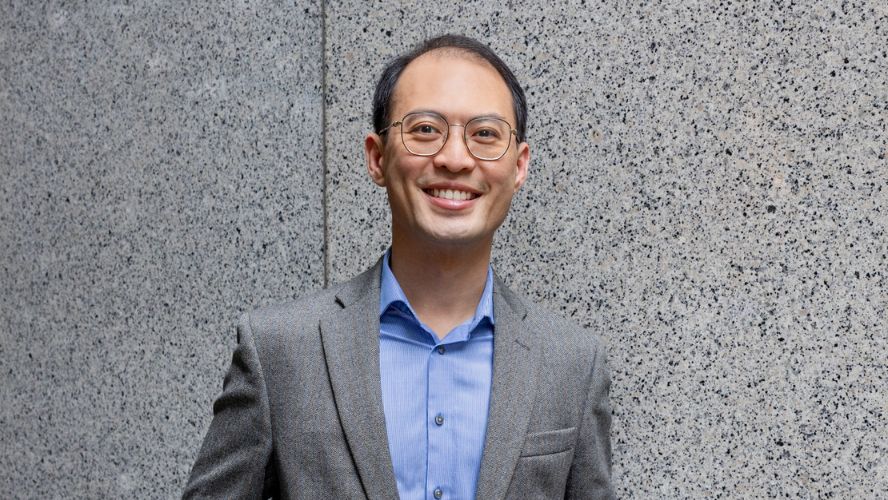 Dr Eric Chung
Dr Eric is a consultant urologist at the Princess Alexandra Hospital and Professor of Surgery at the University of Queensland.
As the President-elect of the International Society of Sexual Medicine, and Past Chair of the men’s health section of the Urological Society of Australia and New Zealand, Dr Eric knows his stuff when it comes to men’s health.
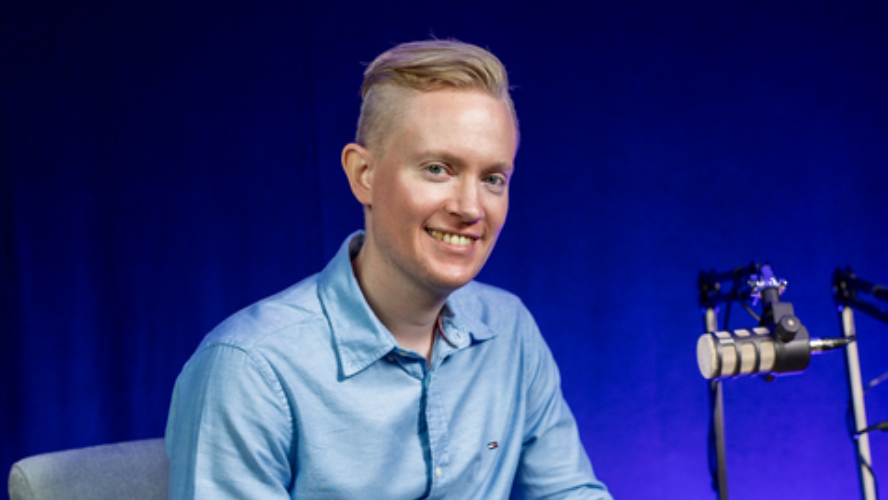 Beau
Beau
Beau is a health-conscious marketing and communications worker in his early 30s.
He loves music, movies, food, and sport (well, watching it) and hates misinformation. He's definitely a dog guy but thinks cats are pretty cool, though he believes neither are as cool as our native animals.
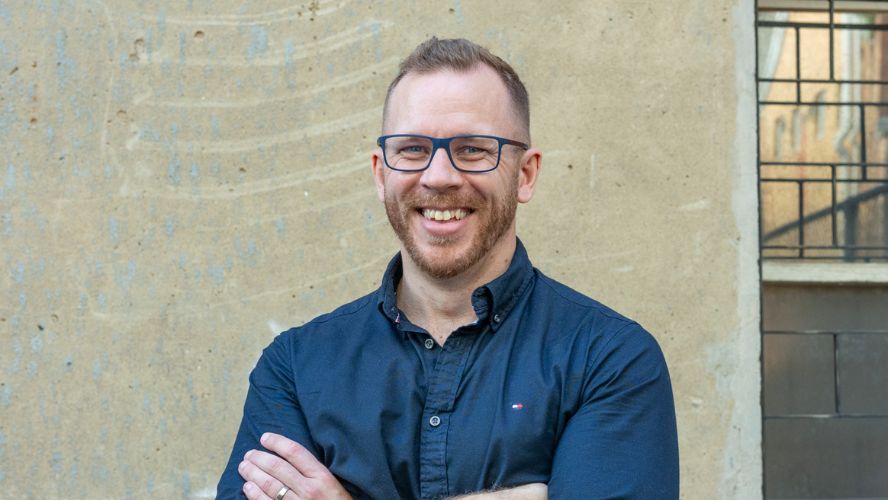 Dan
Dan
Dan is a 43-year-old married man with two kids who lives in Jindalee. He loves spending his time with his kids and partner, watching movies and playing music at local breweries as a covers artist and songwriter.
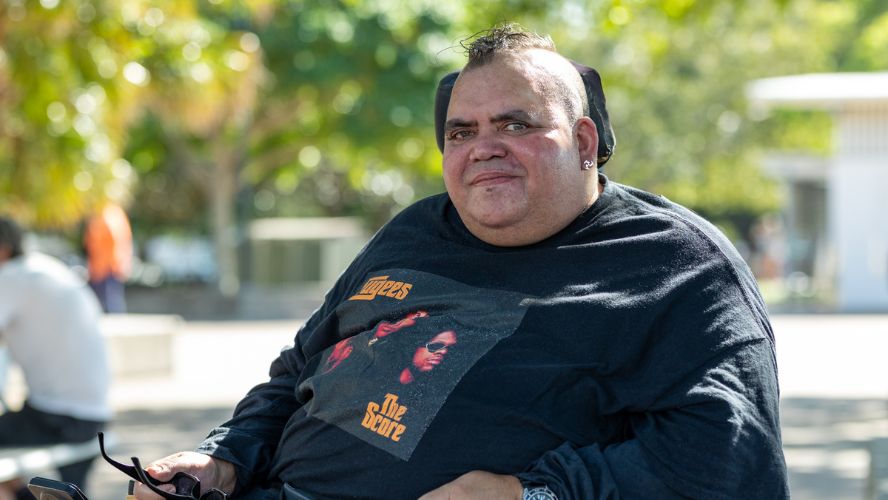 Sam
Sam
Samuel is 53, lives on Brisbane’s southside, and has helped raise three wonderful sons. He proudly carries Aboriginal and German ancestry. Samuel has mostly enjoyed a creative past working across the arts: bureaucracy, broadcasting, film and television, and journalism. In 2018 his writing earned him the Patrick White literary prize.
Samuel currently lends his writing skills and intuition as an advisor, and consumer partner in Metro South Hospital and Health Service.
Episode Resources:
Chronic conditions
Many Australians live with chronic conditions, which can cause illness, disability and even death. Chronic conditions can lower your quality of life and may affect your independence.
You can take an active role in managing and preventing chronic conditions. You can work with your GP and specialist to manage your condition, reduce your risk and improve your quality of life.
To learn more, visit the Australian Government's chronic conditions website.
Where to get help
13 HEALTH (13 43 25 84) is a confidential phone service that provides health advice to Queenslanders. You can phone and talk to a registered nurse 24 hours a day, 7 days a week for the cost of a local call. 13 HEALTH provides qualified health advice—it is not a diagnostic service and should not replace medical consultation. In an emergency always call Triple Zero (000).
Virtual emergency care is also available in Queensland. Visit our Virtual Emergency Care Service between 8am - 10pm for free specialist emergency care services, by telephone or video conferencing. You can also access the Health Direct symptom checker.
If you feel that you may be in need of mental health support and have never accessed a mental health service before, our mental health access line 1300 MH CALL (1300 642 255) is available 24/7. This is a confidential mental health telephone triage service and is the first point of contact to Queensland public mental health services.
Organisations like Beyond Blue (1300 22 4636)and the Men's Shed Association are also available to provide mental wellbeing support. Find your local Men's shed location to connect with your community face-to-face, or speak to a Beyond Blue counsellor online or by phone.
Transcript
Eric: Men are often not proactive about their health and wellbeing, and statistically men suffer more illness, more accident, and die earlier than women, and this is likely due to a variety of preventive diseases and are less likely than their counterpart to seek help.
Dan: I've got chronic neck pain. It's probably been six, seven years. Football as a child and teenager. Martial arts as well.
Sam: I'm, an indigenous man, I'm recovering from strokes.
Beau: Welcome to another episode of season three of It Can't Hurt To Ask, a podcast by Queensland Health where we look at all your health and wellbeing, questions and concerns.
I'm Beau and I'm your host for this season, all about men's health.
We'd like to acknowledge the traditional custodians of the land on which we record. For us, it's Meanjin, land of the Yuggera and Turrbul people. Today we're looking at chronic conditions in men, challenging health conditions that are long term, such as diabetes, heart disease, or autoimmune conditions.
Joining us is Dr. Eric Chung, a professor of surgery and an expert in urology and men's health conditions.
We'll talk all about avoiding preventable chronic conditions as well as dealing with these conditions if you have or develop them.
That includes actions you can take and where to find more info. Thanks so much for joining us, Eric.
Eric: Oh, thank you, Beau, for having me back again.
Beau: Great to see you. The first question I have is, what is a chronic condition?
Eric: Well, I guess if you look at the Webster Dictionary, chronic means something that is more acute, meaning there's something that occurs for more than six months. So, I presume chronic diseases are condition that affect you longer than the six months period.
Beau: I suppose a lot of them then, a lot of conditions.
Eric: Well, exactly correct. So, we're not talking about like acute viral illness that you get over within a fortnight. This is something that probably have a more lifetime implication and more serious sort of impact on your quality of life down the track.
Beau: Yeah. The sort of things that people live with and ...
Eric: That is very true, isn't it? This is something that hopefully we can either prevent ahead of time or at least minimize the impact.
Beau: Are there specific illnesses or diseases that would affect, guys in particular and younger guys, 30 to 40?
Eric: I think when you look at diseases, certainly men, unfortunately, seem to have more diseases compared to women.
Some of the common condition that can progress to become chronic disease are like hypertension, diabetes, autoimmune disease.
These are some of the conditions that potentially you could try to at least prevent earlier on, or if not, try to minimize it.
Beau: Some of these things, are they you predisposed to them from a genetic point of view, or is it all lifestyle, or does it just depend?
Eric: I think there're probably two sides. Number one, there's certainly some conditions that have very strong familial tendency.
If your parents, grandparents, siblings have hypertension, you're more likely to have hypertension, also dyslipidaemia, and similar with diabetes and autoimmune disease.
But there are certain environmental factors that also can predispose you to develop some of these chronic diseases, such as if you have, poor diet, you don't exercise, you have high stress levels, then you're more likely to develop conditions like hypertension and through bad eating, you develop, diabetes and high cholesterol.
Beau: For everyone listening, what are the red flags that we should be watching out for, to see if we are on the path to developing a chronic condition?
Eric: I think the first thing is probably you have to be more proactive about your health. You have to start thinking about how do you look after yourself.
Think of it like a car. So, when you buy a car, do you just drive the car to complete rust? That car is not gonna be in good shape after a few years. It's about you trying to identify what are your familial risks. So, if you have a father or mother with hypertension, or cholesterol, or diabetes, you need to start to look into your health a bit better.
That means that you eat better, you exercise. You look after your overall wellbeing.
Beau: If you're feeling tired or maybe if you are gaining weight or not in that sort of healthy range, is that just going to predispose you more to developing those conditions?
Eric: I think so, because in the current environment there's a lot of stress. Everyone is stressed about their life, stressed about their work, stressed about their finances. Stress can have a significant impact, not only on your mental wellbeing, but also on your physical health. So, you're not likely to exercise, you're more stressed, you eat bad.
All these things can accumulate and over time can increase your risk to develop hypertension, cholesterol, diabetes, and metabolic syndrome. And that can increase your risk to have a condition like cardiovascular disease, cerebral disease like stroke and long-term other implications
Beau: When you mentioned stress and things like that, it's one of those things that it's hard to avoid a lot of that stuff, and I guess when people are slipping into poor health habits, not exercising enough, or not eating well, like you say, stress is a factor. It's so much harder to even know that that's happening. Is there something people should do or like a good step that people can take to maybe check in on that?
Eric: Yeah, I think so. Number one is to have someone they can speak to. So that perhaps could be a good friend or could be a supportive coworker. And also, the Queensland Government has a specific helpline (13 HEALTH) that the patient can dial into and speak to someone in a more anonymous manner.
Obviously if you feel very comfortable with your GP, that probably would be a first port of call, because the GP can direct you to the appropriate area that can help you a lot. And I think that is probably the first step.
So rather than you spiral into a vicious cycle and become more withdrawn and become more depressed, you really need to sort of nip it in the bud.
I think depression is something that is quite common where a lot of persons feel isolated, lack of support, and also, the stress of the work environment, financial, social life.
I think it's important to try to address it early on.
Beau: Yeah. It's interesting you mention that because it all links in, I suppose, your mental health and your physical health, and like you say, it's so hard to stop something once it's got a roll on. So, I guess the prevention or that getting it early, noticing it early is perhaps the most important thing.
Eric: I think so. I think a lot of us feel very invincible. We think that nothing can go wrong, but do not underestimate the amount of stress you can have. Stress can really shut down your body quite badly. So, we see a patient who has stress and then develops conditions like heart disease due to poor eating, lack of sleep ... that can certainly have a big impact in terms of your overall wellbeing.
Beau: I guess my perception of chronic conditions is that it's all an older person's problem. Is that not the case?
Eric: Well, I think that's always the myth, isn't it? It's like when you're young, you're invincible. So, all these condition's are not going to impact on you until you're in your late forties and fifties. But I think we bring up a very important thing here is that if you have risk factors, so for example, if there's a familial risk factor, hypertension, cholesterol, diabetes, and you know that from a young age you have been eating poorly, you don't exercise.
Some of these chronic conditions can occur quite young. So, we do have patients in their twenties or thirties who develop hypertension, and if you don't address it when you're in your twenties and thirties, when you have early signs of hypertension, imagine the degree of damage you have when you hit your forties and fifties.
I think while we talk about chronic disease affecting older patients, but in real life, it doesn't really discriminate across the age groups.
Beau: And I suppose if you catch it earlier and tackle it while it's not developed or not fully set in, then you've got a better chance of dealing with it or living with it or even beating it.
Eric: That's correct. I think it's all about trying to educate the patient or the public about the need to be more proactive about their health, identify their risk factors and then act on it to try to minimize those risks becoming reality.
Beau: And you mentioned that you could do that with making sure you get enough sleep, having a good diet. Are there particular tips you can give around sleep and diet and things like that.
Eric: Well, when we talk about sleep, different people sleep differently, right? It's all about quality of sleep. So, there are many clinical studies that show that you need at least seven to eight hours of good sleep in order for your body to reach that nice new balance, right?
But for me, I can cope with four hours or six hours of sleep because, I do catch up sleep as well. I think importantly about sleep, there are two take-home messages.
Number one is about the quality of sleep. When you go into your deep sleep, that's when your body regenerates and rejuvenates. You need at least two hours of deep sleep.
And in between that, let's say for example, you have, certain activities that prevent you from sleeping seven to eight hours a day, then perhaps consider some power naps during the day. So, the power nap lets your body catch up, so you don't put your body through the stress of lack of sleep.
With regards to exercise, obviously there are two kinds of exercise. We have, aerobic exercise where you work really hard to try to stimulate your heart rate and then work on your cardiovascular fitness.
And then there's the anaerobic exercise, which is about strength and endurance. So, you help to burn off those calories. This is probably something that we need to focus about as you get older as well. You want to not just improve your cardiovascular fitness. But at the same time, you also want to improve your muscular strength and endurance, and also, importantly, flexibility as well, because this is something that as you get older, your joints become stiff, so it's important for you to keep yourself mobile and active.
Beau: Okay. I've never even thought about flexibility being a key thing, but yeah, that makes a lot of sense. Especially, because the older you get, the more risk you are of falls and things like that?
Eric: Definitely. I mean, like you see all the sports persons do some exercise warmup beforehand. So, I think that warmup is very important because, it helps to loosen the joint, increase the blood flow before you really hit it hard with the exercise.
Beau: On the topic of exercise, a lot of people will do either one or the other, the aerobic or anaerobic, and would you say it's more important to actually mix the two then?
Eric: I mean, when we talk about exercise, you are sometimes doing exercise without you actually being aware.
So, for example, catching a flight of stairs, walking up two flights of stairs, walking from point A to point B, park your car a bit further. So those things are exercise without you realizing it. So, you don't really have to join a gym membership to exercise because you can do it on a day-to-day basis.
Beau: I suppose you could do body-weight exercise at home, pushups, pull-ups, sit-ups, those kinds of things.
Eric: So do gardening, home keeping, cleaning the house, running up a flight of stairs.
Beau: Okay. I've never even thought about the prescribing gardening or something like that. But that makes a lot of sense because it's something that is a bit more enjoyable maybe for some people than going to the gym and, you know, pushing weights.
Eric: Some people like going to gym, some people don't have the time or don't have the financial incentive to join a gym.
Uh, so you can always turn to daily activities as part of your exercise program.
Beau: I suppose there's, a lot of guys out there that would have kids and playing with kids, picking them up, throwing them around, yeah. And picking up kids. Nice way. Yeah.
Eric: Definitely. Taking your partner out for a walk. Yeah. Things that are relaxing but at the same time help to build up that rapport with your partner.
Beau: True. And then you're, you're improving your mental and emotional health, I suppose, as well.
Eric: I think that's very important as well.
Beau: I think the only thing I didn't ask more about was diet So for chronic conditions, I mean, I know there's a lot of different types, you know, is there one good diet or is it, more a matter of working it to what you need or what your conditions are?
I think that's very important point to take into account that diets certainly play a real role in terms of chronic condition. So, we know that, for example, if you have coeliac disease, so obviously you need to avoid gluten, right? There are many different diets available, the keto diet, the Atkins diet, the paleo diet. All these diets are basically fads.
I think it's important that if you feel that you need to go onto a specific diet, perhaps consult your GP and speak to a nutritionist or dietician for further advice. But in general, stick to the big, broad sort of category. Lots of fibre, seafood, proteins are good for you. Try to minimize sugar, salt, so those are a bit more bad for you in terms of your preventing chronic illness.
And I guess things like making sure you're having whole foods rather than processed foods,
Eric: I think so. I think it's important to try to stick away from, preservatives and manufactured food. Try to go for fresh food. And in Australia, we have lots of fresh food.
Beau: True. We're lucky with that, actually. Go to your farmer's market and see what you can pick up.
Time for a quick trivia question. Do you know what percentage of Australians live with a chronic illness? It might surprise you. Stick around for the answer later.
So, talking about fad diets like Atkins and keto and things like that. Something key that maybe isn't covered by those diets and actually is really negative, is the inflammatory aspects
Is that something we really need to be worried about in terms of our health?
Eric: I think so. Inflammation usually comes from lipids and fats. So, if you have a a high fat diet, a high calorie diet, then more likely you could have more inflammation. As I mentioned before, it's important to speak to a nutritionist and dietician for further advice, especially because different body type respond to different diet intake.
We also need to mention about these days we are very focused about calisthenic exercise and also the concept of intermittent fasting. So, intermittent fasting allows your body time to recuperate, right? Previously we thought that we need to eat three meals a day. And this is based on the old sort of like stone-aged group where you have to gather food, do a lot of work.
So, you need three times a day of food intake. But these days we know that in real life, that most of us usually don't exercise or do much in the morning because we're at work.
Sometime the concept of intermittent fasting really take place where you fast for about 16 hours and then you have food intake during that, six or eight hours in between.
So that allows time for your body to do repair and, regenerate and also, increase the energy level over that period of time that you need it. So, I think these are fads that unfortunately do come and go, but I think intermittent fasting certainly does have some science behind it.
But that's only applied to people that are usually quite healthy, right? So, if you've got diabetes, obviously this is not for you. You need to have, regular intake in order not to go into a hypoglycaemic attack. Or if you've got chronic disease where you've got like a condition that actually increases your metabolism, some of the fads may not be appropriate for you, so you have to take into, consideration some common sense.
For people that have chronic diseases, perhaps really have a time to see your GP or to meet up with a nutritionist or dietician for more appropriate advice.
Beau: For sure. Because you mentioned before how it is very much up to the individual and your own metabolism and digestion.
Eric: Yeah. Because the ultimate goal is to try to improve your overall health, not to actually make it worse.
Beau: That's the ideal, I suppose. The negative effect of some of those fad diets is ... (the) carnivore (diet) comes to my mind because that's doing the rounds at the moment and that has a lot of inflammatories, it has a lot of fats.
You know, it's, it's basically terrible for you, but people will see some weight loss on it.
Eric: Yeah. So, if you are someone that exercises and you want to build up your muscle.
Beau: It is up to the individual and, and your circumstances. But for example, if someone's just looking to lose weight, the carnivore diet or other fad diets might work, but it's going to leave you with more long-term health problems because of all the inflammatory compounds that you're eating.
Eric: I think it always has to be tailored to a specific need. So again, if you are trying to aim for certain body type, you perhaps need to consult someone that are more expert in this field, like a nutritionist, dietician.
You have to apply a bit of common sense. Don't just read from a magazine that your celebrities are doing this diet that you jump onto the bandwagon. Because remember that you have to play the long game here. So chronic disease is about trying to prevent it from happening in the future. If you stick to a diet and you maintain it over time, then obviously you're going to get the real benefit. The real benefit is not going to occur in the short term.
Beau: And we're talking about healthy diets here, rather than your fad diets where it will actually potentially make you more likely to develop chronic conditions.
Eric: Yeah. Chronic condition or more seriously eating disorders, right? Because eating disorders are very common.
We have two spectrum eating disorder people that have anorexia, or bulimia, and then you have these YouTube videos about people that overeat, right? Big servings of food and stuff like that. You don't want to end up with an eating disorder.
Beau: And I guess you could call that … that is a chronic condition as well.
Eric: It is a chronic condition. (It) will have serious implications on mental health and wellbeing, physical wellbeing.
Beau: I'm learning that more and more things could be considered chronic conditions.
Eric: Well, it is, isn't it? It's something that will affect you longer and also deeper as you get older in your life.
Beau: We’ve talked about some of the things you can do to manage a condition or prevent a condition, and you touched on before that knowing your history and early detection is perhaps the most important thing. Can you talk more about what we should be looking for or what we should be doing?
Eric: I think so. I think once you realize that you need to lead a more healthy lifestyle It's about you keeping a health journal, a regular checkup with your GP.
These days, we have a lot of technology. You have the smartwatch, so the smartwatch will tell you how deep you sleep, what is your exercise, how many steps you take today, what is your heart rate.
So those actually contribute to your health journal. So at least you know what's you're doing on a day-to-day basis. You can try to change some of the bad habits to active intervention, or you perhaps you can try to do some slight modification.
Beau: A health journal is you could literally write down in a diary or you could potentially, like you're talking about, just track things through an app.
Eric: Yeah, just track things through apps. So, you look at your weight, every week, just do a weight to see whether you're putting on more weight or you're losing weight.
Check your heart rate, check your health status. You can go to your pharmacy to get a blood pressure check. You can go to your GP for more comprehensive check.
Beau: Yeah, I suppose we've never had access to so much medical technology in our own pockets.
Eric: That's correct.
Beau: But there's still something to be said about, like you said, actually going and seeing the expert and there's a time and place. Is it more regular than I think, should people be going all the time to a GP, once a year, like what's a good amount of time?
Eric: I think if you're in your twenties and thirties, you're probably at a stage where you're quite invincible, right? So perhaps you may be consider making time, if you have strong family history, to go see your GP. So at least you have established that initial connection.
You’re GP may say to you, well, you're very fit, you're healthy, Beau.
But if they pick up some abnormality in you, for example, they find your blood pressure is high, or find your cholesterol is a bit high because you've got a strong family history, then perhaps this is a good time to intervene, to talk about healthy living, exercise, diet, sleep, stress.
Beau: And I suppose you won't know that you have those things until you actually go and talk to a professional.
Eric: Well, most of us usually don't know that we have a condition until we end up with a problem. So, a lot of time it's about doing your own health checks. So, I think this day a lot of us became more proactive.
We know what needs to be done. Young men for example, we know that in your twenties, you got a high incidence of testicular cancer, right? So, when you shower at night, so maybe have a feel of the balls to make sure there's no abnormal lumps and bumps.
If you have noticed that you sleep very poorly, and you wake up and you're tired all the time and you doze off at work, you lack motivation, then perhaps you need to have a check, because you potentially could have a condition like depression or sleep apnoea.
So, these are things that may be undiagnosed.
Beau: That's an important wake up call for guys to actually go and see a GP if you are suffering something, even if it seems not that bad.
Eric: I think that's very correct.
Beau: Talking about things that are less common or less known to be chronic conditions. Uh, let's hear from Dan.
Dan: Hi, I'm Dan. I'm 43. I've got chronic neck pain.
I was involved in rugby union as a teenager; I was quite small. as my peers were a lot bigger, so going into tackles as a halfback, getting stomped on, having people fall on me and doing a lot of martial arts as well as a teenager probably took its toll on my neck.
I think in the last 10 or so years with my job as a graphic designer, my posture hasn't been so great. So, the pain over time has, started to be quite debilitating.
A couple of times a week at night, I can be in quite a lot of pain. I have to do a lot of stretching and massaging and go to the gym a lot, constantly putting, physio cream and other products on my neck to try to alleviate some of the pain.
You're not indestructible. There are long-term effects of the sport and the rough housing that you can get involved in. You've got to look after your body. It's the only one you've got, and just maintain it as best as you can, because as you get older, these things can come back to bite you.
Beau: The Australian Institute of Health and Welfare says that chronic pain affects one in five Australians aged 45 and over. I didn't realize that chronic pain was that common. Is that something you see a lot?
Eric: I think we see a lot more, and also it’s become more of an open discussion these days. So, like our listener, Dan, has this sort of chronic pain that probably attributed two things. Number one, from physical, injury, due to his, martial art and being tackled.
And then further on being compounded and exacerbated by his current work where he is probably hunching over, with the graphic design and stuff. So, I think a lot of time when we talk about chronic pain, we underestimate the seriousness of this condition, especially in Dan’s case one would worry about perhaps there could be some spinal cord injury from his neck. So perhaps he really needs to consider seeing his GP (and) getting referred to a neurosurgeon, because the last thing we want to do is for him to have nerve entrapment and end up with some serious debilitating condition.
I think chronic pain is something that we really need to address. We now know that a lot of employers are putting a lot of emphasis about work environment.
We're encouraged to do some stretching exercise. Don't sit still for a prolonged time. Every half-an-hour to an hour maybe stand up, do a bit of stretching, go for a bit of walk, elevate your desk to something that's comfortable with your posture. I think this is something that's very important that we do take into account a lot these days.
Beau: It's one of those ones that I guess doesn't get talked about as much, but I, there are people I know that are taking Panadol every day because they have chronic pain. What's the end goal for them in terms of like, what can they do about that?
Eric: Yeah, it's very hard, isn't it? Because when you got chronic pain, people are basically taking analgesia to mask or at least alleviate the pain, and we know that in the US there's this opiate epidemic whereby patient then take huge amounts of opiates and they become dependent upon it.
And this is gonna be a big issue down the track because they have implication across your health. So, I think when you have chronic pain, pain, where (it's) starting to affect your quality of life. It's about trying to address them. So, you need to go and see your GP, look at what you're doing, maybe see a physio, to try to circumvent some of these conditions so you can try to do some exercise, some stretching, mobility, and change some of your day-to-day habits. I think this is, could be very important. People that have chronic back pain, weight is important, right? Because if you've got a sort of a heavy trunk area that's gonna put a lot of stress on your back and your spine.
Beau: Yeah, it's interesting that they're always so interrelated with other things, you might have bad knees, but you also might be above a healthy weight.
Eric: And also, don't discount that you could have referred pain. So, some people could have, for example, abdominal, gut condition that refer to the hip. So, they've thought that they have hip pain, but essentially they got another condition. So, it's important to see your GP to get a proper assessment.
Beau: Diving into more types of chronic conditions. I know another big one is the autoimmune conditions. Can you talk more about that?
Eric: Well, I'm definitely not an expert in autoimmune disease because I'm a urologist. But if you look at autoimmune disease, you can talk about things like rheumatoid arthritis, you can talk about Crohn's, coeliac disease.
These are the conditions that can have long-term impact on the man's life, so it's important for you to go and seek appropriate help. You can see a rheumatologist for arthritis. You can see a gastroenterologist for gut conditions. This is something that you probably need to speak to the right expert, but if you have a strong family history that I strongly urge you to speak to your GP and get appropriate investigation to screen.
If we can screen for the disease early on then at least you can have the right advice. You start in the better shape,
Beau: Speaking about chronic conditions as a whole, and I know how diverse and varied they are, as we're learning, as I'm learning. The mental health side of it. Can you speak a bit more about, the impacts maybe emotionally and mentally rather than just the physical? I know we've touched on it, but is it a big thing? Is it a big part of it?
Eric: Yeah. Mental health goes beyond just the mind itself. So, for example, if you've got chronic disease, you may be less active, you may be debilitated by the chronic disease, and that indirectly results in some form of isolation.
You become less likely to go out, socialize, less willing to exercise in public. This again then further isolates you and further exacerbate the mental distress that you have.
So, it's almost like a vicious cycle. Many of us do not recognize that, but we think that this is part and parcel of life. But certainly, you hope that either your friend or family member can identify or speak to you if you don't feel that you're comfortable.
But there's a lot of, helplines available. Queensland Health have their own health line (13 MH CALL). So, don't feel embarrassed because you're talking to someone that's anonymous. If you feel comfortable, definitely see your GP, so at least your GP can refer you onto a psychologist or psychiatrist if it's appropriate for you.
Beau: Yeah, and I think what you say it's important to just start that conversation because it is easy to get lost and you kind of push it aside, like any other symptom of chronic condition. You kind of go, ah, it's not that bad.
Eric: Yeah, it's very hard, isn't it? Because you live in your own world sometime. So I think that's important that anyone that you come across that you think that maybe that person could be depressed. maybe just have a conversation with that person, open up and discussing it so at least then give that person a choice that they can actually seek further help if required.
Beau: Yeah, that's a good, good point.
Eric, I've heard of invisible illnesses and that's obviously, part and parcel with chronic conditions there.
I think there's a lot of stigma probably that creates those. Is that something you know, we need to be wary of?
Eric: I think so, I think invisible disease means that disease that doesn't have any physical manifestation. So, for example, a condition like chronic fatigue syndrome, fibromyalgia. These are patients … they are really debilitated by the condition, both mentally and physically.
A lot of time if you don't know that this is something affecting the patient. You think that perhaps that person is just being lazy or not motivated to do things. So, I think we have to be a bit more proactive and also a bit more open-minded that perhaps some of these conditions are serious condition that's affecting that particular person.
So again. It's about trying to provide the opportunity, a conversation to say how are you feeling today? Are you feeling tired? Are you needing someone to talk to? Or perhaps you might want to see your GP to have further investigation?
Beau: The first, I guess, is awareness, and some of these diseases that we're talking about today, I've never heard of. But knowing that they exist or they could be affecting a colleague, or a friend, is eye-opening,
Eric: Not at all. Unless you sort of live in the medical fraternity, some of these conditions, you probably thought that, well, this is not a real condition.
Beau: I guess it can go both ways too, because you know, you could know someone who's experiencing one of these more invisible diseases or it could be you, yourself, and you don't realize it either.
Eric: Mm. Yeah. That's why either you seek help yourself if you have insight. but if you don't have an insight, then hopefully your friends or family members, they can at least highlight it to you and say, well, we noticed that you haven't been yourself lately. You feel tired. you seem to be taking a lot of rest with painkillers.
Maybe you have some inflammatory condition. And that probably could be the first sign to lead you to change your life, by seeking appropriate healthcare.
Beau: And do you think, in terms of, modern technology, the Internet, social media, do you think it's a good thing or a bad thing because people might be more aware that symptoms are?
Eric: Yeah, you don't want to be like a hypochondriac, right? So, sort of start looking at Dr. Google and diagnose yourself. But if you feel like there's something not right, then at least, first thing first would be to see a GP, right? So make an appointment to (see) your friendly GP, have a chat.
And some of this could be bad vibes, may not be the real thing. But some of it could have actually a real problem that you happen to catch it right at the start.
Beau: And do you think on the mental health aspect, whether it is hypochondria, you're diagnosing yourself with all these issues or whether it is just seeing a certain image of people that's perpetuated, like you've got to be strong, where you've got to be a tough guy, you've got to be a healthy guy.
Do you think that plays into people living with chronic conditions, letting them get worse.
Eric: Oh, definitely.
Beau: Are you enjoying this episode? Please subscribe and review. Don't forget to check out our other episodes on risk taking and injury, mental fitness, sexual health, and substance use,
Let's hear from Sam, who's 53. Sam had a high stress job and lived with hypertension or high blood pressure. He ended up having four strokes.
Sam: My name is, uh, Samuel Watson. This year I'll be 53. I'm, an indigenous man, patient now for, oh, many years, I'm recovering from strokes. I was working in a very high-end job in the film industry and then as a writer. Every week I was travelling, working overseas quite a bit. My idea of dinner was maybe something for a meal in the airport lounge. I drank.
I suppose I always had a voice in my head that, if I let it, hypertension would catch up with me someday.
Having had four strokes. I know that I need to keep up my medications, see my doctor regularly, and although I live alone, I still need to maintain a clean and healthy life for my wellbeing. If I don't, then there are consequences.
Beau: So, Eric, conditions like hypertension and stuff, is that like the thing we should be most worried about? It's certainly the one that I know the most about.
Eric: I think so. I mean, if you look at the stats, one in 10 Australian men would have hypertension. So, this is something quite serious. And hypertension forms part of the metabolic syndrome.
So, if you have hypertension, cholesterol, diabetes, hypogonadism, smoking, you're more increased risk of heavy atherosclerosis. And we know that atherosclerosis is really bad because once you block the vessel, you can have heart attack, you can have stroke, you can have peripheral vascular disease where you lose your limb from ischemia. So, this is a serious problem. Even though hypertension by itself, it's just basically a blood pressure measurement,
Beau: So, it's a good marker of some really serious potential impacts.
Eric: Yeah, it's one of those important markers in life and it's about trying to get your life in check.
So, minimize salt intake, minimize those preservatives. Exercise. So, you know that exercise burns off calories, is good for your cardiovascular fitness, which helps you improve your blood pressure control, having a good sleep. If you sleep well, you're less likely to have hypertension. And also monitor your diet.
Beau: I guess in the case of Sam, a very high stress job. Is there a case for saying he should have just quit his job or ...?
Eric: Well, hopefully he didn't have to quit his job if it's something that he really enjoyed, right? Number one, we do know that a lot of the employers this day are very proactive about managing stress for their workers.
So perhaps try to change his schedule along with, perhaps, doing certain things that are a bit more enjoyable, less stressful. I think this certainly can help to minimize the stress.
Beau: And I guess, in this day and age, like you say, it's getting better, but there's still a level where people aren't able to push back on unrealistic requests, or sometimes you're self-employed and you make those, you know, harsh requests of yourself.
Do you think that's something we sort of need to get better at in terms of,
Eric: I think it's very hard isn't it? Because on one hand you need to have productivity. On the other hand, you need to make sure that you are in a good shape.
I think as a person suffering from stress, you have to identify that you are in stress. You feel like you're not sleeping well, your concentration is poor, you feel like you're not very motivated.
These are stress signs. When you have those signs, therefore it's very important for you to go and see your GP, to monitor that, and also importantly, have a chat to your, supervisor or your employer to see whether something can be done
Beau: That’s true because I think there's always something you can do.
Eric: I think so. I think you really need to put yourself number one. No matter what your work environment is, that's always going to survive without you anyway. It's about you trying to be in the best shape yourself so at least you can have longevity.
You really have two options. One option is call those hotlines. At least that person over the phone can provide you important suggestions. Or number two, if you have time, definitely make a proper appointment to see your GP and sit down and have a good discussion about your life and the stresses and also some of the chronic condition that may happen in you.
You need to look after yourself first. That's the most important thing.
Beau: Did you know over half of Australians are living with at least one chronic condition?
To make matters worse, around 30% of Aussie men don't get annual health checkups that help with early detection.
And we've talked about how important those are. we've covered so much and we've, I've learned a lot, and I'm sure everyone listening has learned a lot. Is there a way we can distill all of this knowledge into one take home message?
Eric: Well, Beau, you're asking the most difficult thing, isn't it? Because, when we talk about chronic disease, we realize that it covers a whole breadth of, conditions.
So, I think if we were to have one single take-home message it's about being proactive. I think you need to be more in tune with your body. You need to be more proactive about your own health. First step is about trying to make an appointment to see your, family doctor. So at least you can, start from somewhere that is, from a medical point of view, appropriate.
Beau: I've learned a lot, and I'm sure everyone listening has, I didn't realize, I guess, how wide the topic was.
Eric: It's hard, because like chronic preventive illness is a multifactorial thing. Not just like urology specific. Could be like cardiology, rheumatology, mental health. There're so many areas.
Beau: I think because, like I said before, it's all about science. So, the more we understand about what's going on, the more we realize that there's certain things we should not do.
Eric: Yeah.
Beau: Well, thank you so much for joining us, Eric.
Eric: Thank you, Beau, for having me again.
Beau: As usual, it's a pleasure.
Don't forget to listen to our other men's health episodes or one of our other podcast series. Please subscribe, and we'd love it if you leave a review.
Many thanks to Dr. Eric Chung and the team at Metro South Hospital and Health Service.
This podcast was produced by Queensland Health.