

Booking approaches
Agencies should have the flexibility to book language services through various methods, including telephone, email and where possible, customer booking system. Language service providers (LSPs) must ensure responsiveness and availability across all these channels to facilitate smooth and efficient booking processes. All bookings, including amendments and cancellations must be negotiated directly with the contracted supplier, not interpreters. Interpreters are not legally representing the supplier in terms of booking management and cancellation.
Agency booking system compatibility
Some LSPs will integrate with agency booking systems. There are specific requirements on how this integration should occur identified in preferred supplier panel requirements, including in relation to testing and validation should be conducted to ensure ongoing compatibility and functionality.
- Management of interoperability issues and work collaboratively with agencies to resolve them promptly
- Managing updates and upgrades
It is a requirement that LSPs treat all data shared by Queensland Government as though it is of the highest possible security classification and follow the relevant policy and legislative requirements unless advised otherwise, in relation to specific assignments or types of assignments.
Booking flow
The interpreter booking process involves several key stages and potential outcomes, represented by different coloured boxes in the flowchart.
Interpreter booking flow
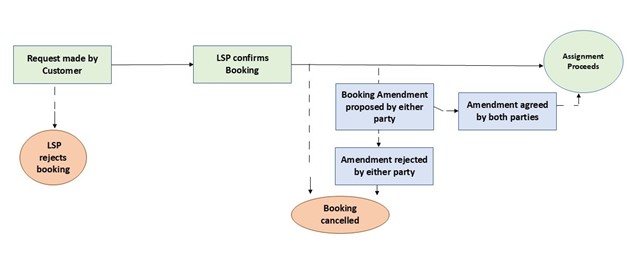
Core booking steps (green boxes)
These are the minimum required steps for a booking to proceed and be completed.
- Request made by customer – The customer initiates the booking
- LSP confirms booking – The language service provider (LSP) accepts and confirms the booking
- Assignment proceeds – The interpreter assignment takes place as planned
Optional or conditional steps (blue boxes)
These steps may arise during the booking process.
- Booking amendment proposed – Either party may suggest changes to the booking
- Amendment agreed by both parties – If both parties accept the amendment, the assignment proceeds
- Amendment rejected by either party – If either party rejects the amendment, the booking is cancelled
Booking termination points (orange boxes)
These indicate when a booking does not go ahead.
- LSP rejects booking – The LSP may decline the initial request. This may be due to their not being able to source an interpreter in the requested language.
- Booking cancelled – A confirmed booking may be cancelled by either party before the scheduled booking start time.
Once an interpreter arrives in person or virtually to commence at the scheduled time of the booking, the assignment has commenced, unless there has been an agreed prior amendment. This is regardless of whether the customer’s appointment goes ahead or not.