

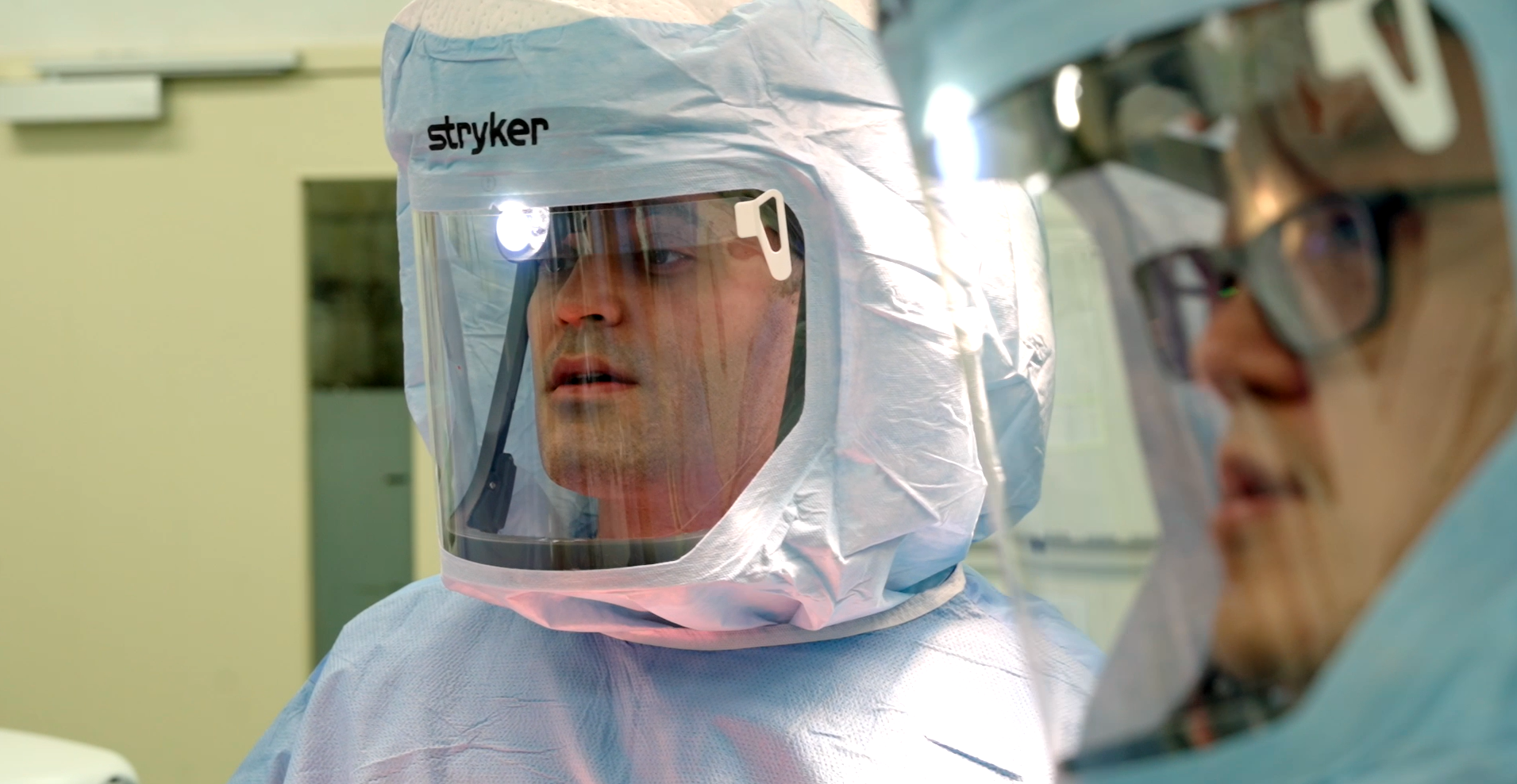
The Prince Charles Hospital’s Director of Orthopaedic Surgery Dr Anthony Silva during a knee operation.
Day to day use of robots once seemed like the realm of science fiction, but surgical robots have now become commonplace in Queensland hospitals.
Robotic revolution
Today, surgical robots are now involved in operations at hospitals right across the southeast corner, out west to Toowoomba, and extending north to Townsville, Mackay and Cairns.
The number of cases involving technology or robotic-assisted medical care by Queensland Health across the state has increased by more than 250 per cent over the last five years alone – demonstrating the rapid rise in its use and real-life application.
Metro North Hospital and Health Service is the state’s hotspot for robotic use.
The Prince Charles Hospital was the first public hospital in Australia to have a second surgical robot in operation after the success of its first machine, which provides orthopaedic surgeries on hips, knees and shoulders.
This has doubled the hospital’s capacity to deliver eight robotic joint replacement surgeries a day.
The second robot came online in February and together the two have been involved in more than 2800 operations to date.
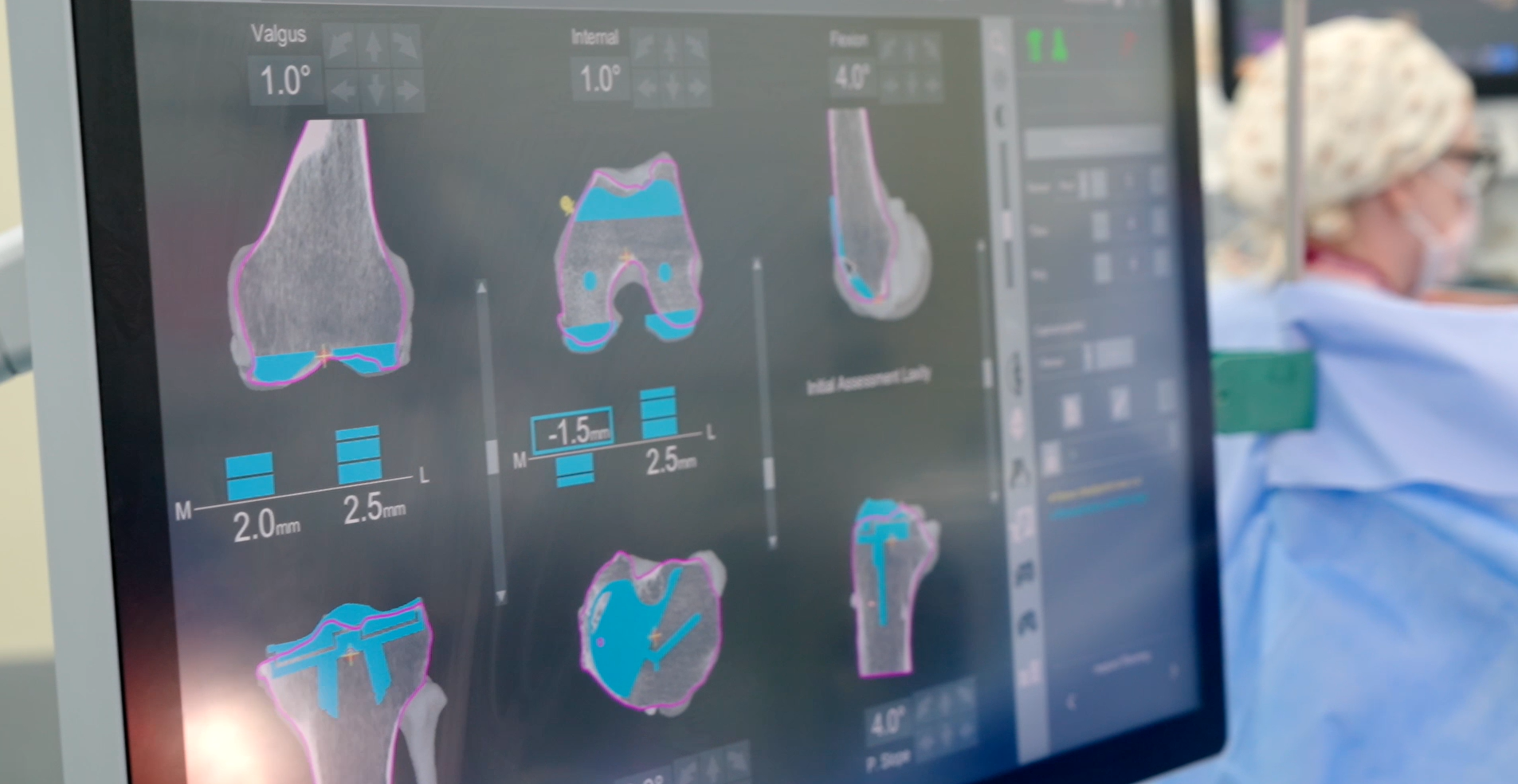
The Prince Charles Hospital’s Director of Orthopaedic Surgery, Dr Anthony Silva, said surgical robots allowed surgeons to work with enhanced precision.
He explained the surgeon is still very much in control but the technology allows surgeons to work with unparalleled accuracy.
“We can actually do the operation within one millimetre and a degree of precision,” Dr Silva said.
“Ultimately, this results in better outcomes for our patients, which is our biggest priority.
“It means less inflammation, less pain and quicker recovery times. This is a big step forward.”
Back on her feet
Northsider Teresa Jones has now had both her knees operated on with the use of surgical robots.
She was feeling so good shortly after her second knee operation, Teresa joked she was going to start preparing to compete in the 2032 Olympic Games.
“This is the best operation I’ve ever had,” she said.
“It was over so quickly and I didn’t feel anything.”
She is just one of many Queenslanders who are feeling firsthand the benefits of the technology, which is getting patients back on their feet sooner and living life pain-free.
Future is now
After their initial introduction, surgical robots are now being used in Queensland hospitals for more than orthopaedic operations.
They are currently in use for urology, gynaecology, colorectal, hepatobiliary, paediatric, ear, nose and throat, and general surgery.
Robots are also used in non-surgical areas, with Gold Coast University Hospital the first hospital in Australia to use the ROBERT robot for rehabilitation.
ROBERT is used by patients during upper limb rehabilitation while in recovering from stroke.
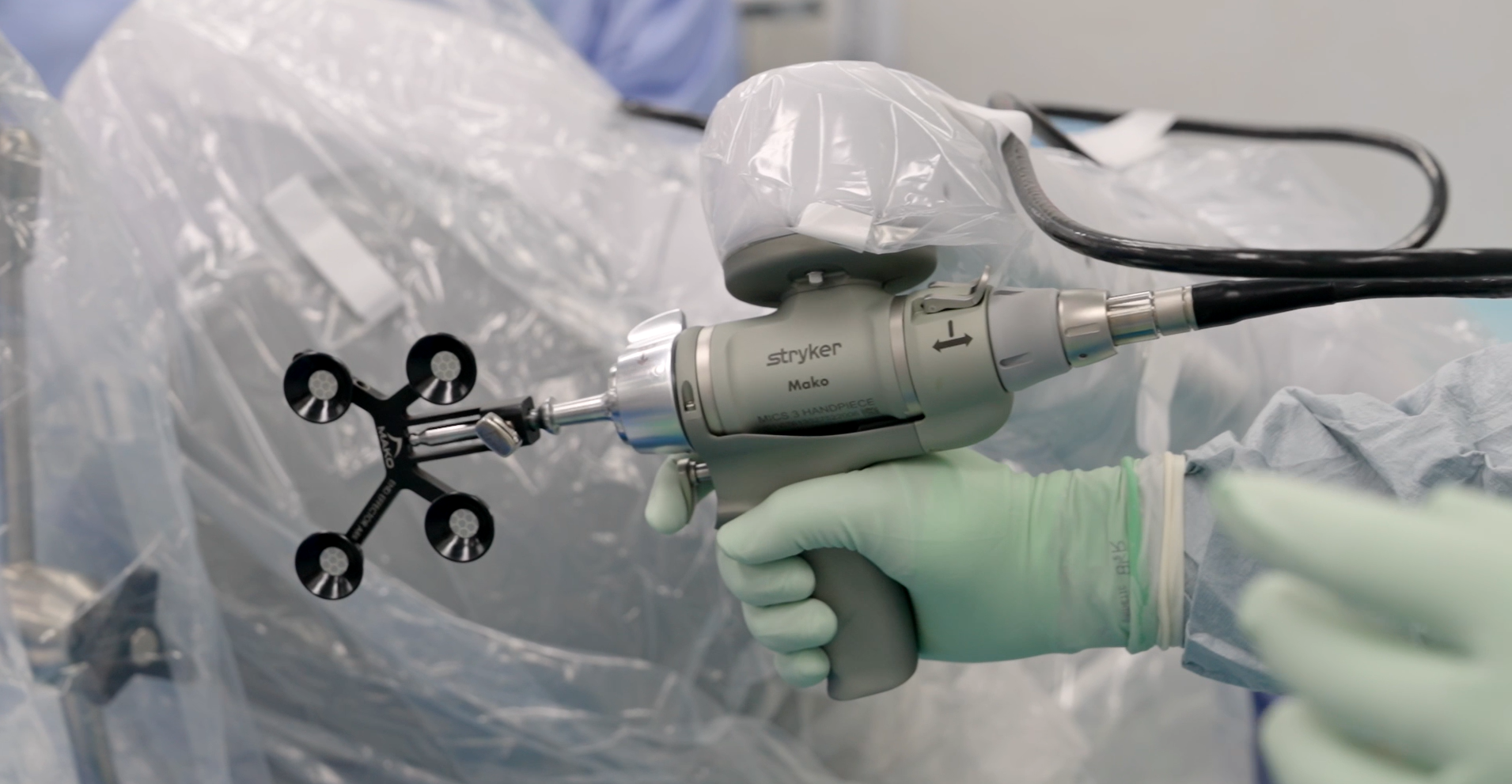
Queensland Health’s Chief Medical Officer Dr Catherine McDougall said the benefits were significant for both patients and surgeons.
As an orthopaedic surgeon who has used the technology herself in surgery, she has seen this firsthand.
“This is a capability that will only grow in Queensland with the positive results we have seen so far,” Dr McDougall said.
“We want to provide the best possible healthcare for Queenslanders close to home and having access to technologies like robotics is a big part of that.
“The therapeutic relationship between surgeon and patient, technical expertise and considered decision-making will always be paramount, but increasing use of robotics and other technologies allows more accuracy in surgical planning and execution.
“This ultimately improves safety and quality for the patient which is what it’s all about.”