

Summary
This episode is part of the It Can’t Hurt to Ask: Parents' Group
How do you support your child through their first big friendships, growing independence and never-ending questions while also navigating your own parenting triggers?
Welcome to episode 7 of Parents' Group, season 4 of It Can’t Hurt to Ask, a podcast by Queensland Health. This week, your hosts Steph, Alex and Caitlin explore the wild ride that is parenting a 3- to 4-year-old, from kindy transitions and emotional blow-ups to rediscovering your own inner child (whether you want to or not).
Early Intervention Clinician Karen is back to help us understand what’s really happening at this age: socially, emotionally, and developmentally. We chat about preparing kids for kindy, helping them navigate friendships, and how to manage the complex feelings this stage brings up in us, as parents too.
Follow It Can’t Hurt to Ask for future episodes and share with any parent who could use a warm, wise voice in their ear.
Episode resources
If you or someone you know is struggling with their mental wellbeing, support is available.
In an emergency, always call Triple Zero (000).
The following services can provide help and counselling to you in non-emergency situations.
- 13HEALTH: call 13 43 25 84 and talk to a registered nurse 24 hours a day, 7 days a week.
- Pregnancy, Birth and Baby Helpline: call 1800 822 436 to speak with a trained counsellor about the first year of your child’s life.
- Parentline: call 1300 301 300 for advice and counselling about any issue that affects you as a parent. Available from 6am to midnight AEST, 7 days a week.
- Perinatal Anxiety and Depression Australia (PANDA): contact PANDA on 1300 726 306 or chat online if you or your partner are feeling depressed, or you are struggling after the birth of your child. Available from Monday to Friday, 9am–7pm.
- MensLine Australia: call 1300 789 978 if you’re a man and have family or relationship concerns. Available 24 hours a day.
- Lifeline: call 13 11 14 (24 hours a day) if you are experiencing a personal crisis or chat to a counsellor online.
- Beyond Blue: call 1300 224 636 for broad mental wellbeing support or speak to a counsellor online.
- Connecting2u: sign up for free text messages, support, info and tips for during pregnancy and after you have your baby.
- ForWhen: call 1300 242 322. Available Monday to Friday, 9.00am–4.30pm.
- SMS4DADS: sign up for free text messages, support, info and tips – for dads and dads-to-be.
- Raising Children Network offers ad-free parenting videos, articles and apps backed by Australian experts.
- Triple P – Positive Parenting Program: free parenting courses for parents and carers of children under 12.
- Queensland Health Child Health Clinics: Child health services have clinics across the state to provide parenting information and support for families in Queensland. Free services may include nutrition, child growth and development assessments. You need to book an appointment for these services.
Disclaimer
The stories and conversations shared by the hosts in this podcast reflect their personal views, experiences, and opinions. They are shared for informational and educational purposes only and are not intended as a substitute for professional medical advice, diagnosis, or treatment.
Queensland Health does not guarantee the accuracy or completeness of the views expressed by guests and accepts no responsibility for any loss or damage that may result from relying on this content.
If you have questions about your health or treatment, please speak with a qualified healthcare professional.
Featured in this episode
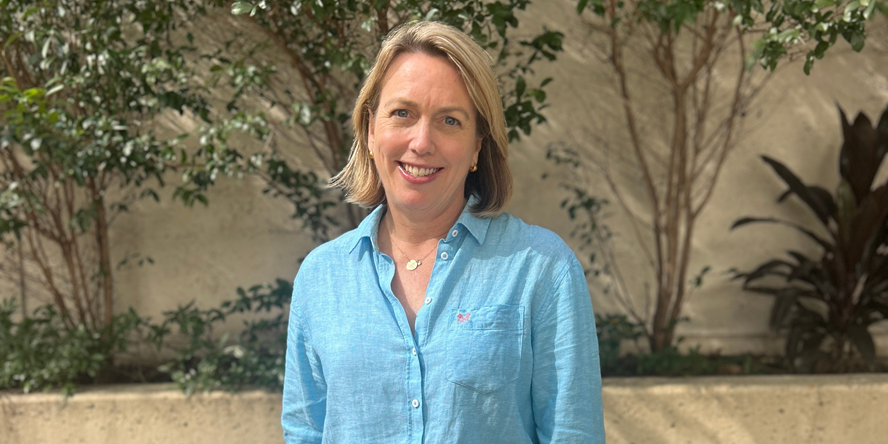
Karen
Karen McKeering is an Early Intervention Clinician – Social Worker with Child Health Qld.
As a mother of 4 herself, she is passionate about all things parenting, especially when it comes to helping to support families with the wonderful, tiring, exhausting, puzzling, delightful – and sometimes challenging – journey of raising children.

Caitlin
Caitlin is the proud mum of a busy, maths-loving and dino-obsessed 7-year-old and a sassy, creative, princess-obsessed 4-year-old. She loves the mess and magic of motherhood and manages the extra complexity of parenting a child with a disability and navigating her own physical birth injury.
In between her paid work in digital marketing, school and kindy drop offs, playdates, and kids' sports, therapy and extracurricular activities, Caitlin relishes the moments she gets to herself and the simple joys of a hot shower (bliss!), warm cuppa and chatting with her besties on the drive home from work.

Steph
Steph is a non-birthing mum of two kids — a 6-month-old and a 3-year-old. Her wife carried both of their babies and is currently a stay-at-home mum while Steph works full-time in communications.
As a mum of 2 little ones, Steph doesn’t have time or energy for hobbies, but when she does get the chance, she enjoys sitting down for more than 5 minutes and eating a meal when it is still hot.

Alex
Alex has spent more time raising kids than being one. He is a dad to an 18- and 17-year-old from his first marriage, and a 4-year-old from his second.
Between working in creative media and being a parent, he also enjoys playing guitar, cooking and martial arts (but only between 10pm and 12am when everyone is asleep). He lives with his 3 kids, wife and mum, leaning into the richness and chaos of intergenerational living.
Note
The stories and conversations shared by the hosts in this podcast reflect their personal views, experiences, and opinions. They are shared for informational and educational purposes only and are not intended as a substitute for professional medical advice, diagnosis, or treatment.
Queensland Health does not guarantee the accuracy or completeness of the views expressed by guests and accepts no responsibility for any loss or damage that may result from relying on this content.
If you have questions about your health or treatment, please speak with a qualified healthcare professional.
Transcript
Alex
Hello and welcome back to It Can't Hurt to Ask, the podcast from Queensland Health that's basically your virtual parents’ group. I'm Alex.
Caitlin
I'm Caitlin.
Steph
And I'm Steph. Whether you're deep in toddler tantrums prepping for kindy or hiding in the pantry for 2 minutes, we see you.
Alex
This week we're talking about that big leap from toddlerhood to kindy, helping our little ones adjust to new routines, new friendships, and, if we're being honest, helping ourselves adjust too.
Steph
Yeah, so true.
Caitlin
Yeah. It's a very big transition to say the least. For some kids, they might go from mostly being at home or with family to suddenly navigating a much bigger world.
Alex
Yeah, I've been through this stage a couple of times with my older children. We're right in the thick of it now with our third and every child handles it really differently.
Steph
Mm-hmm.
Alex
My daughter's really adjusting super well to kindy. She's one of the older kids in the room, and I think she just loves the social aspects of it.
Steph
Mm-hmm.
Alex
This week I got to catch up with one of the carers who looks after her during the day, and she started talking about how there's a little friendship group that's been forming between her and these 2 other girls.
And my daughter has this unicorn dress that flares out when she twirls. That's really important. It's got to spin.
Steph
Yeah.
Alex
For her to wear it.
Steph
Seems important. I get it.
Alex
And you've got a spin.
Steph
Yeah.
Alex
And it's obviously really important for these other 2 girls too, because their mums have gone to the shops and bought the exact same unicorn dress and there are days when all 3 will rock up in their little unicorn gang, and they are just the best friends.
And this carer said, ‘look, we might be witnessing the beginning of a lifelong friendship here’. Which really kind of hit me in the feels because it took me back to thinking, wow, actually, yeah, there's a friend I had from daycare who carried right through to like early childhood before, you know, I moved house and everything, but if I hadn't, maybe we would've still been friends today.
How's parenting been treating both of you this week?
Steph
Yeah. Well, you know, speaking of new experiences…
Alex
Say no more, say no more.
Steph
Speaking of new experiences, we decided it would be a really good idea to take our kids to the movies on the weekend.
Alex
Brave of you.
Caitlin
Yeah.
Steph
Look, we're not in our movie era yet.
It didn't go well. Luckily it was just a toddler session, so everyone was equally mental and feral, and you know, people running up and down – when I say people, little people, toddlers and me – running up and down the aisles, dancing at the front and shaking their bums.
Thankfully, clothes stayed on. But at least I did get to enjoy my choc-top right before I had to start running around. I've gotta look at the silver linings here.
And look, the movie wasn't really to my taste. You know, it was Pepper Pig. So I wasn't too sad to be, you know.
Alex
Missing the plot points.
Steph
Yeah, I caught up okay. Let's just say I could catch up from where I left off, so it was okay. How about you, Caitlin?
Caitlin
I had a really funny conversation with my husband on the way in this morning.
Steph
Oh no.
Caitlin
So, he did the school and kindy drop off. You know, it's my fault for sure. My son is really curious about every single thing in the whole wide world. And we get about 4 million questions daily. And the thing he's into at the moment is how babies are born. So, we've gone through all the different ways babies are born and he specifically wants to know how he was created.
So, I've explained mummy has eggs in her tummy, daddy has sperm in his body, and he know where is the sperm, where does it come from? So, he knows it's in testicles. I provided this information and my poor husband suffered for it.
So, he's driving into school, pulls up outside of school and my son pipes up with, ‘Daddy, how did the sperm in your balls get into mummy's tummy?’ My husband rang me and he's like, ‘I'm not ready for this mate. How does he know there's sperm in my balls?’
And I've had to admit I've told him this information. What a moment. I mean, it's a pretty funny start to the day for him.
Alex
Yeah.
Steph
I love that they just come out with this stuff, too.
Yeah, like it's completely random, too. Like there can be no lead in and it's just like the most absurd thing that you've ever heard, and it's like... What got you to that point?
Caitlin
Oh, yeah.
Alex
Yeah.
Steph
You know, like what?
Caitlin
What was the thinking?
Steph
Yeah. What was the process behind this? That that's where we landed.
Alex
Yeah, the act of creation can be sandwiched between like, how does a banana peel?
Caitlin
Yeah, absolutely.
Alex
What's this on my shoe? Yeah. But in the middle is sort like, yeah. Where? Where does the sperm come from the balls?
Steph
Yeah. Yeah.
Caitlin
And specifically your balls, dad. What on earth?
He didn't even answer the question, too. He said like saved by the bell, right at school drop off. He said, ‘We'll talk about it later, mate.’ So, you know, it was a fun morning in my household. I wasn't there luckily, but yeah, my husband carried it for us all.
Steph
Mm-hmm.
Alex
I reckon the kindy carers would have little jokes in between them, of all the things that have been said at drop off that day, like they must be some absolute corkers.
Caitlin
They know a lot about us, I reckon.
Alex
Oh my God, I never thought about that.
Caitlin
Oh yeah.
Steph
They just secretly know all our secrets. Good on them.
Alex
Changes the rules. Changes the game.
Kindy. Here we go.
Steph
Before we begin, we want to acknowledge the Traditional Custodians of the land on which we're recording. For us, it's Meanjin, the Land of the Yuggera and Turrbal people. We pay our respects to Elders, past and present and extend that respect to all Aboriginal and Torres Strait Islander listeners, parents and caregivers.
Alex
We are joined now by Karen, who is an early intervention clinician. Karen, thanks so much for being here.
Karen
Thanks for having me.
I really love this stage. It's such a time of growth, but also of big feelings for both the child and the parents.
Steph
Karen, let's start with the big one. Kindy. It's such a huge step for kids and parents alike.
What are some ways that we can prepare our kids emotionally?
Karen
3- and 4-year-olds have some emerging skills that are really well timed with the new kindy environment, at this age.
They can problem solve a little bit more confidently. Plus, they're really getting into imaginative play in a big way.
So, pretend play around kindy with children this age is a really great way to build their confidence and learn about kindy scenarios, in a fun way. It could also be a good chance to practice some small routines like putting a drink bottle in their backpack or getting a hat ready for the next day.
If your child asks you a question or brings up a comment about kindy, this is a really good golden ticket for a conversation. They are likely ready to hear more, and so gently see if you can both have a short conversation about, you know, what kindy's going to be like and listening and sharing ideas together.
Emotionally, children can have mixed feelings about going to kindy. They might be excited, but they also might be worried too about what to expect. We can assure them that it is okay to have lots of feelings and, you know, that goes for parents too.
I mean, parents and carers are also preparing for their own adjustment, and you can show your child how you are managing by, you know, staying calm, taking some deep breaths, and knowing that it is normal to feel uncertain or worried. So, being kind to yourself at this time is also important, too.
Caitlin
Hmm, such good advice, Karen.
Both my kids were very nervous before kindy, so I related my own experiences to them of saying when I started a new job. I felt really nervous, I didn't know anyone, I didn't have any friends. But look how many friends I have at work now and I love my job.
And that really helped, I think, normalise that feeling for them. And then role play. Like roleplaying is such a good way to relate, I think, to your kids. You know, sitting on the ground, Barbie practised going to kindy and then Spider-Man for my son practiced going to kindy. We set up with the kindy teacher, you know, named them and went through the day of what it would look like. ‘Barbie's going have lie down and have her sleep now…’ And it really, really helped both my children settle into that idea and build their confidence a lot.
But speaking of confidence, I had a question for you. Because my daughter is quite shy. She's 4. Around unfamiliar situations or people or there might be change or transition, she's super reserved and she clings to your leg. She's not speaking.
And she really flips a switch when she gets home, she turns into this rambunctious little person that's full of energy. And I wanted to check, is that common? Is this something that, you know, parents do see? And how do you manage those sorts of things?
Karen
Yeah, look, that is not unusual at all and something really to be expected when our young children are in new environments, meeting new people and just working out all of the information around them.
It's a lot. Although their brains are rapidly growing and responding well to new challenges, there still is a long way to go.
Their brains are doing a lot of checking about safety. They're really working out where everyone is fitting in and they're wondering, is there a parent or carer nearby?
Every child has their own temperament and tolerance for adjusting for these new different environments. So, for some, we're really helping them develop resilience.
There are some manageable challenges in this, and there may be some activating stress responses that we're seeing in our kids, but at the same time, these responses are healthy and opportunities for us to help our kids.
So, through helping our kids making transitions like this, we're actually exposing their brains to manageable challenges; that will also strengthen their ability to handle future transitions and adapt to new environments like when they go up to school.
It may help to let your child know what to expect before arriving somewhere new. Maybe even having a special goodbye or a special hello hug can signal the transition at drop off. And give something special between you both.
I recently heard of a really great one where a mom got a piece of paper in the morning before school or kindy, and she kissed it with her lipstick and then put it into her son's pocket, so that during the day if he just wanted to feel a kiss from mum, he could pull out that little piece of paper and connect with mum.
So, with that in mind, it's really good to remember that children at this age are still trying to find the words to describe their worries. You know, be it, what's it going be like at nap time, or what's it like when you know I have to do what the teacher wants me to do and I'm not ready to stop playing my game.
Alex
Yeah. So obviously learning how to cope with change is really important at this age, so environmental change, but what about the social side of things?
I know I mentioned earlier at the beginning of the episode about my daughter's friend group and all the positive things that are happening there, but there are some days she comes home and, you know, so-and-so's not my best friend today, and so-and-so did this, but I didn't want them to, and then this person took my thing or I did this.
And so, there are a lot of, things that are happening, I guess, for them, that are unexpected due to other people's actions. Like how do you deal with all that and what's going on with toddlers in this social setting at this point?
Karen
Yeah, Alex,
I mean, children aged 3 to 4 are going through some really major social learning curves and for some it's the first time they've even spent an extended period of time with a group of kids their own age without their parent. And for others they might feel confident in this setting, but mixing with others and all the different personality types and dynamics may bring up some challenges.
It can seem hard to watch them go through all this, but just remember that their little powerful brains, which are still in that phase of growth, are learning so much and they're really learning so much about resilience as well.
It's interesting when you think about it, you know, there's still those impulse actions, like pushing, is still being engaged and there's so much learning about, recognizing other people's perspectives as well as that bit about, you know, regulating their emotions.
And kids are also trying to decode so many social cues from their peers and carers. So, in all of these moments, they're actually also building blocks of problem solving and empathy in children. and we know that we are really also trying to help them navigate through those awful feelings of being rejected or excluded, or negotiating games or sharing.
So, in that, you know, our job really is to model empathy. We want to use feeling words that might describe how they were feeling. Like, oh, you know, it sounds like you're upset. That must have been really hard for you.
When we talk about these events with them, with warmth and empathy and that gentle listening, the great thing is that our kids are going to feel safe and secure, and they're going develop more confidence to try something differently the next day, but they've also got that channel of safety where they can keep coming back to you and talk about how they're feeling. Which is something that we want them to carry through all their life, isn't it? As parents, we want them to be able to come to us with anything.
So, having those channels of communication now where they're going through these new experiences is the same way.
We want them to come to us when they're teenagers and they'll have other struggles and we want them to know they can come to us then, as well.
Alex
I think that's really interesting that like it's the building blocks of their adult life that you're kind of laying at this point, even this early on. Do you guys think about that much? It doesn't cross my mind every day. I think sometimes I'm just dealing with a 3-year-old, but I'm kind of dealing with a future 30-year-old, aren't I?
Steph
Mm-hmm. Yeah. I think you can see glimpses of things where you're like, oh... Especially if they take on something that you do and you don't want them to, like, they model a behavior that you've done. It's a very offensive mirror.
But yeah, you can definitely see like as their personality grows and things like that they are taking on those things, they are becoming a person, and you get that glimpse into how they will go when they're out in the world without you, which is a scary thought.
I know at the moment with my toddler, she's 3 and a half and, she was very much like not wanting to play with other kids very much. If anyone came near her, she was like, no, I'm not interested. I don't know. It's like a light switch has gone off in her and all of a sudden she's obsessed with other kids, especially bigger girls.
We'll go to the park and she's like, ‘I wanna play with the big girls.’ And we were at the park the other day and she went up to this group of big girls and she's like ‘hello’ and introduced herself and they didn't want play with her. Oh, and fair enough. She's 3 and a half. And they were like in primary school, like they were much older. And part of me was like, don't get involved in this conversation, but she was hurt by it. And my little like, mama bear heart was like, oh my gosh, like, how dare you not want to play with my angel. She's amazing.
You know, it's hard to see them go out and do these things and still stand back and watch it play out even though, you know, it's not the way that you want it to play out. And then what's happening when we're not there, when they're at kindy and things like that, you know, they've experienced a whole world without you there and they've had a whole day to themselves where they're navigating these relationships and friendships and enemies and all that kind of stuff without you there.
And it's just like, how do we look after ourselves? How do we become okay with them doing those things and having those interactions, because we can't always be there?
Karen
Yeah, Steph, I completely understand what you're asking there and it's so true. Looking after our own mental wellbeing is just so important. It's really important to use that analogy again, of keeping our cup full so that we are ready for any adjustments and we're all fuelled up to be able to deal with those things, because it's so easy to get depleted as parents. It really is.
Our children are becoming little people bursting to make decisions and they're ready for new things, but sometimes we're not ready at all for any of this. And sometimes all this is happening along many other changes in our family.
You know, younger siblings, babies, jobs, everything, life is so busy. So, staying connected is just so important. And that might be with other parents or family, or maybe there are supports like, mental health professionals that you could check in with. If you were really feeling like you do need a real boost of support amongst a busy schedule, it would be really great also to make sure you're including those short breaks that help you reset.
I often call them micro moments of self-care. And they're those little treats that give you joy. They're really important because it really is true we can't pour from an empty cup.
Finally, though, I think, you know, in, we've got to remember the big picture and it's about setting realistic goals. So, by being kind to yourself about routines and standards during big adjustment periods is really important. And we've really just gotta expect the ups and downs. And just remember, they're a normal part of the learning curve.
But if the struggle to manage becomes persistent, you know it is time to get some further support. So, don't be afraid to reach out to professionals and supports to help you get through this time.
Caitlin
Karen, that's such important advice. I found it incredibly helpful. You know, life changing, after I had both my kids and all throughout my parenting journey to seek advice.
My psychologist has really improved my mental wellbeing with all the strategies she's given me, and I couldn't have done it without her support really.
Steph
Thanks for sharing that, Caitlin. I think it's really important to reach out for support when you need it. We've also got information about support services and ways you can seek support in the show notes. If anyone listening feels like they might need a bit of a top up or feels like they're struggling, they're not quite themselves, please reach out to those support services.
Alex
Yeah, it's something I wish I had actually done more of. I guess it might be a stereotypical thing, but as a man, as a dad, it just didn't really feel like that applied to me a lot of the time.
So, I think anyone listening, who feels that maybe it doesn't apply to you and that there isn't support for you, there is. And yeah, link into those show notes and go through and have a look at the different support services out there. Also, remember just to reach out to friends, close ones, it really does matter and can make all the difference.
Caitlin
We spoke to Alex and his partner Olivia, about how they supported their daughter's transition to kindy. Let's take a listen.
Olivia
The days where the transition to kindy on the individual day, the days that they were good were the ones where drop off was quick.
Alex
I was gonna say this. Not just drop off. I actually think if we think back to, if we're talking about routine days where the time between her waking up and landing at kindy was the shortest –
Olivia
Yeah.
Alex
– were always the best. She was great. You spend more than an hour settling in at home in the morning.
Olivia
Yeah.
Alex
Taking your time, having breakfast. It was almost like she was, she had this false sense of reality that, ‘Oh, mum and dad, this is gonna be what it's like at home all day today.’
Olivia
Mm-hmm.
Alex
And, and then you would find yourself running into so much resistance. So much resistance to get in the car and everything takes twice as long. And then I don't want to go to kindy and then crying in tears at the door. And then, no, don't make me, oh, don't leave. Don't leave.
Caitlin
Oh gosh. It's so hard, isn't it, those drop offs? Oh yeah. It's that separation, not just for the kids, but for the parents as well. And I feel like the kindy, too. It's almost that next step of separating from your child. It's like that first step into what school kind of feels like of that transition into more independence.
And it's so bittersweet because they are tiny still, like they're, they're so little when they're 3 and 4.
Steph
Mm-hmm.
Caitlin
For us, kindy has been the best year so far. Half a year for my daughter and 2 years for my son. I feel like I wish they could go to kindy for longer because it's so much fun.
You know, the play-based learning and the growth, the developmental leaps that they make, the friendships and the fun, and their amazing teachers.
Karen, what would be your advice, you know, listening to Alex and Olivia, what would be the advice around managing that struggle of introducing the new routine, the drop off, and all those sorts of things that come with kindy?
Karen
Thanks so much, Caitlin. I could really understand what they were going through when they were talking about that difficulty in separation and how hard it can be for us as parents.
One way to view that is to think about the child as developing new neural pathways to deal with a whole new situation. So, it's not just that they're distressed, they're actually learning a whole new way of operating, and there's more going on in their little brain sometimes than we realise.
So, being able to understand that in the end will be a very protective thing and is part of their growth is helpful, but it doesn't take away from the pain at the moment.
So, you know, self-care, again, I'm really going plug here, be really compassionate and gentle with yourself as well. Because those times are really tricky and hard, I know.
You know, this new kindy routine is happening during quite a lot of transformation for the whole family unit. And it is such a big milestone to send you a little one to kindy after all your preparation and anticipation about how it's going to go.
And, no matter how well prepared you are for your new kindy routine, you've just got to be ready to simply test and tweak what you have in place.
You know, it's an evolving thing. So really remember to have some flexibility. Which will probably help with reducing anxiety in the household and just gives a bit more space for problem solving.
One thing I'd also mention is remember that the kids are going to come home so tired. Their days are going to be so big and busy. I would really recommend not taking them into really overstimulating environments after kindy.
So, really avoid shopping centres if you can. You're really not going to see your child at their best. They're probably going to be really tired. And with that at night too, you might find that those evenings, you might see a lot of big feelings.
So, keep those evenings really nice and simple. Maybe don't expect too much of them because they're decompressing after a really big, busy day. So just manage those expectations.
Again, being kind and compassionate with yourself is also important here. If things don't work with the routine, you know, don't give yourself a hard time. Breathe, remind yourself about all the small successes and make a new plan for the next round.
Remember, again, of course, being good enough is the key here. Our kids are learning, so we've also got to give them time to get used to things as well.
Alex
Yeah, that's really great advice, isn't it?
Just to kind of not overwhelm them at the end of the day. I think we've all experienced that shopping centre meltdown at 4:30 PM.
Steph
I'd hate to know how many meltdowns Kmart has seen.
Caitlin
Yeah. Yeah. Oh my gosh. Kmart. You have so many low moments in Kmart.
Alex
Mopping the floor of Kmart with your child
Caitlin
Or carrying out, I remember carrying my son out like a surfboard, like a plank, and him just screaming and you could see everyone looking at you like, this is bad. This is a low moment.
Alex
Oh, you know what? I think any parent looking on, like I've been in that situation, but also when I see parents like that, I just want to go and give 'em a hug. As inappropriate as that would be, I just wanna be like, you're doing fine.
You're doing fine. This is all normal. Yeah. Happens to us all.
Caitlin
You're not alone.
Alex
Exactly.
Caitlin
No one's judging you.
Alex
Exactly.
Steph
Yeah.
Caitlin
Yeah, exactly.
Alex
We've all been there. So, this 3- to 4-year-old phase of our children can really bring up some unexpected feelings, as we've discussed with the children. But also for us as parents, I feel, there's a lot of new emotional territory for us to explore.
For instance, like, you know, you're trying to get out the door and your child's deciding which shoes to put on, are socks the right way on? Maybe they just wanna get naked and dance as you're about to head off to an important appointment or something.
It makes me sometimes feel like I'm my parents. Like I'm stepping into that role of just feeling like the cranky, older kind of grumpy person. How do you guys feel about that? Like, does that ever happen to either of you?
Steph
Oh, absolutely. And I feel like it's so hard because when you step into this phase. It's like, they were a potato, you could just pick them up and put them in the car and you're on your way. You don't have to factor in the naked dancing. You don't have to factor in all those crazy things that they do.
I think as well, like we weren't taught how to deal with these frustrations when we were children. Like a lot of the time, the discipline of the time was to, you know, you get a smack or you get yelled at or whatever, and you know, it was very much the focus was on doing as you were told, or, you are seen and not heard, and all those kinds of things that we've all sort of heard before.
And, now it's very much about, teaching them and them expressing their independence and, building their own skills, which is so important. But it's so hard to be in the thick of it when you were never taught that yourself.
And you're kind of having to like almost reparent yourself in these really difficult moments where you are feeling really triggered yourself as well. It's really tricky.
Caitlin
Gosh, I really feel that too, Steph. I relate. It honestly takes me personally, so much effort and so much intention to break that cycle of parenting and not default to sort of just repeating –
Steph
Mm-hmm.
Caitlin
– exactly my experiences as a child. And I feel like for me as a parent, the biggest thing I've had to learn is how to regulate my emotions.
Steph
Mm.
Caitlin
And bring a sense of that calm and that kindness that you're talking about, Karen, to hard moments. To not react, not be reactive, and to stop myself from parenting the way that I was parented.
We actually have now another beautiful voice note from Alex, and this time he touches on some of these themes that we've been talking about.
Alex
The biggest thing I'm afraid of as a parent is the relationship I'm going to have with my kids for the rest of their life.
I sadly don't have the relationship with my parents that Olivia has with her parents. I want my kids to be my best friends as I get older. When they get to that stage of life of adulthood, I still want them to feel comfortable to call me for everything first.
Not that they have to, but that they want to.
I've got strong emotions. So as a parent, the hardest thing for me is trying to manage my child's emotions as well as keeping my own in check.
The hardest part about parenting is it's relentless and nonstop. So, no matter the day you've had at work, no matter what else is going on in your life, which your child is completely oblivious to, you then have to come home and be… Ultimately try and be your best self for your kids because they don't know otherwise. And that influence is just so powerful, which I think is what really, like, it scares me.
Alex
Yeah, that's some pretty powerful stuff he's unpacking there.
Caitlin
Mm.
Alex
Karen, can we talk about this for a second? Why is parenting a 3- to 4-year-old, this age range, particularly so emotionally triggering for the parents? What are we being confronted with, and is it okay to not be able to cope with this perfectly all the time?
Steph
That is such a great question, Alex, and just such an important one. And we know, look at the age of 3 and 4, our children are developmentally building, you know, readiness to have more autonomy. Now they're showing up, they're being firm about their opinions and they're also having those really big emotions that are showing up at times.
And you know what? This can also be a time where we are getting triggered about how we were parented. And perhaps emotions weren't discussed in your family. Maybe discipline was harsh, or maybe it just didn't feel safe to explore different solutions with your parents growing up.
I think the key here is self-reflection. You know, we talked about that power of observation and we are often looking for it in our kids. What are the cues that they're giving us? But also we’ve got to look at ourselves and go, ‘Okay, where is this showing up for me? You know, what are the tricky points for me?’
Things like even keeping a journal could be helpful because what we want to do is learn what we need to be able to make those tricky times easier. You know, what's working, what's not working, we really want to be curious.
We might even see this showing up in our partners and, and we can be soft and respectful of what they're going through, rather than judging them and, and being harsh for struggling.
Alex
Yeah, and I can definitely relate to, to everything that's been said here and Alex's story, and both Steph and Caitlin as well.
I know when my children were quite young, so like around that 2-, 3-year age and I was going through a marriage separation and my parents actually came up to visit just for a couple of weeks to be supportive, and it was unexpected, but it brought up a lot of feelings around the decisions I was making towards my children and the decisions I was going to have to make going forward in this new situation and basing that on my own experience was suddenly like, hang on, there's a huge gap between my experience and what I would like the outcome to be for my kids.
And to my parents' eternal credit, and I'm very grateful, I was able to ask them. We spent a good couple of days together and I just really asked them, ‘Why did you make these decisions when I was younger? What were you thinking? What was going on for you at the time?’
Kind of like that observational thing that you've just mentioned about, we can look at our partners, we can look at ourselves, but I think it, it can actually be really beneficial to actually look at your parents and not just judge them for things they've done in the past.
I guess as parents, you know, we're always trying to do our best. We've talked about it a lot on the show so far that we're not about perfect parenting, we're about good enough parenting.
Having that space to sit down and ask those questions and, and getting some very honest responses. I know it might not be the case for everybody, not everybody has that kind of relationship with parents, but I was very lucky in that instance and it helped me clarify that my parents were just doing the best at the time. It gave me that kind of permission, I guess, to then make my own decisions.
Steph
Mm-hmm.
Alex
Not to make them in spite of my parents
Steph
Yes.
Alex
But to make them because of the things that had happened to me and what I would like to see done differently, but I definitely echo Alex's feelings of wanting to have that great relationship with your kids throughout your life, being their friend, being there for them, being that support.
And who knows, maybe one day my kids will come to me and ask me those hard truths and, and I'll have to be prepared to answer them as well.
Steph
Mm-hmm.
Thanks Alex. I feel like that's such a good reminder that, we are parents, but we're also people and our parents are people as well. And it's easy to forget that. We are humans, we make mistakes, and, you know, that's just part of life.
We are managing our kids' emotions, but also our own, which could be really tricky to do.
Caitlin
Mm-hmm.
Karen
And we really want to remember, too, to reach out to those support networks and catch it before we become burnt out. It's really important to have a chat with a good friend, talk to your partner, someone that you trust, or all those wonderful supports that are out there in the community
Caitlin
And it's absolutely not a failure to ask for support or need that support.
I feel like it's such a strength actually to be able to say, I want to do this differently, or I want to do this better.
For my kids, I try and be really, really honest with them. And I actually had a beautiful moment a couple of weeks ago. We were driving home from school in kindy and both kids were screaming in the back of the car and fighting and hitting each other.
And that was not the beautiful moment, but what followed... You know, I pulled over and I said to the kids, ‘I need a second guys. Mummy's driving. I need to concentrate.’ And I was pretty assertive and I wasn't very gentle and kind in the way I spoke to them. I actually said, ‘Can everyone stop talking to me?’ Which did not work. You know, I had that minute and I calmed myself down and I turned around and apologised to them both and, and I said, ‘Oh, I felt like I wasn't being a good mum there guys. And I'm really sorry. I shouldn't have spoken to you like that.’
And my 7-year-old son piped up and said, ‘No, mummy, you are the greatest mummy in the world. I wouldn't want anyone else to be my mom.’
And they were so flabbergasted that I would think otherwise. And it was such a reminder to me, you know, it makes me feel emotional, to say, but it was such a reminder to me that I just don't love them unconditionally. They love me unconditionally, and they don't want you to be perfect.
They actually just want you and they love you. With, you know, all of the hard times and all the good times and it doesn't matter. And it was such a reminder of that in that moment that they just, they love me no matter what and I can make a mistake. And I repaired with them and they repaired with me and we got on with it.
But it stayed with me, that moment, and it's really beautiful.
You don't have to be a perfect parent. You just have to be a good enough parent.
Steph
Yeah, absolutely. I feel like I had little tears in my eyes, too, because I feel like we've all been in that moment where we're like, am I doing a good job? We've all Googled, ‘Am I a good parent?’ I feel like we've all had those moments where you feel like, have I just stuffed everything up?
And then you do have those moments where you're like, oh no, like we are getting there. I love my kids, they love me, and I'm doing my best. And you know, it's actually making a difference and they're turning out to be really cool little people.
Karen
Mm-hmm. And I'm also hearing from both of you, it's all about keeping that connection, and through this beautiful emotional regulation, naming the emotions, being able to be present with our kids in whatever feelings that they're feeling as they're going through these transitions, and we've talked about kindy today. We're actually building that beautiful, safe connection where our kids feel safe to be able to share anything with us.
And when Alex did share previously about how his fear about his kids connecting with him in the future, if we can connect with our kids now through these times, again this is what will set us up for a wonderful connection in the future too. So, we're building a really beautiful highway of love, between our beautiful kids.
So, it's a pretty special time.
Steph
I love that, highway of love. How cool is that?
Caitlin
Beautiful.
Alex
Karen, thank you so much for joining us today. It's been a real pleasure, some really wonderful insights.
Before we wrap the episode up, do you have a key takeaway you'd like to leave any parents with out there?
Karen
Thanks so much. I'd say that the key takeaway would be, you know, kindy is a big step. It involves big feelings, wobbly moments, and lots of learning on both sides.
But through all the messiness, we're also building resilience. So, remember, again, your child doesn't need you to be perfect, they just need you to be present, kind to yourself and open to growing alongside them. And those little rituals, those gentle chats and a whole lot of empathy go a long way. You've got this and you don't have to do it alone.
Caitlin
It's wise words. Karen, thank you. Before we finish, I did want to say a big thank you to Alex and Olivia for sharing their parenting experiences.
Next episode will sadly be our last of this season.
Steph
Oh no!
Caitlin
And we are finishing, you know, on a high, we are going to talk about life with a 4- to 5-year-old. One of my favourite stages and ages.
Alex
Yeah,
Steph
I've got a lot to learn.
Caitlin
And until then, be kind to yourself guys. And remember, if nobody's told you today, you are doing a great job.
Bye bye.