

Summary
Death is one of life's few guarantees. It's natural and will happen to all of us—so why are we so afraid to talk about it?
In Episode 1 of It Can’t Hurt to Ask ... about Death and Dying, our host Lauren kicks off the season by asking what seems like an obvious question: what are death and dying? The answer, however, is a little more complex.
We're joined by Dr Christian, a palliative care specialist from Rockhampton Base Hospital and Laurelle, a social worker from our statewide Specialist Palliative Rural Telehealth Service based out of Gold Coast University Hospital.
They help us explore the clinical definitions of death and dying (and how they differ from what we understand as death), share what we do and don't know about death, and help us understand what a "good death" really means.
It may seem scary, but this episode is just the start of tackling the silence and stigma that surrounds death. Because talking about it can help us feel more prepared, more informed and help us live our lives to their fullest.
This episode is part of the It Can’t Hurt to Ask: Death and Dying.
Featured in this episode
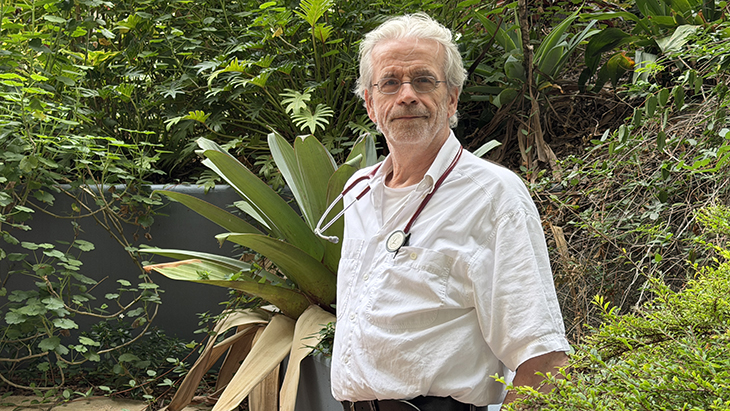
Dr Christian
Dr Christian is a palliative medicine specialist working with the palliative care team at Rockhampton Base Hospital. He had his palliative care training in Germany where he was medical director of a palliative care department at a 12-hospital hospital group. He was also the chair of the ethics committee at the hospital group.
Christian moved to New Zealand in 2009 where he became medical director of a hospice. He later worked for several years as a locum specialist in the UK, New Zealand and Australia. For the past year he has been working with Central Queensland Health.
Christian is a strong advocate for the development of holistic palliative care that supports patients and families in the most difficult phase of their lives. He also fosters strong cooperation between palliative care, GPs and other health providers.
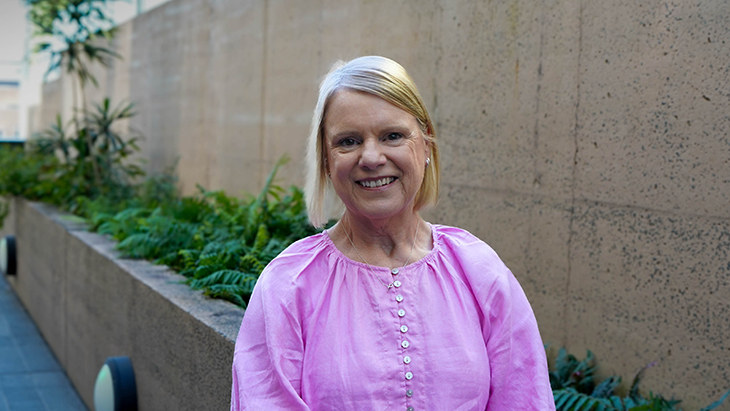
Laurelle
Laurelle is a Senior Social Worker with the Specialist Palliative Rural Telehealth Service (Gold Coast–Toowoomba Hub), supporting patients and families across South East Queensland. She has 25 years of experience in paediatric and adult hospital settings, with expertise in oncology, critical care, trauma, and palliative care. Laurelle is passionate about improving access to specialist palliative care for people living in rural and remote communities.
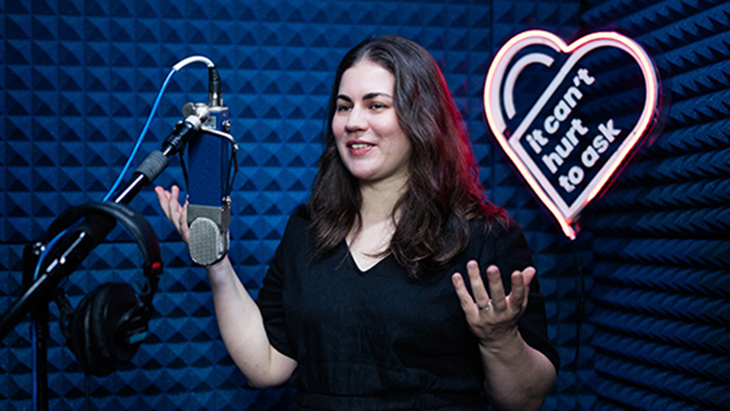
Lauren
With equal parts curiosity and caution, Lauren has delved into all things death and dying to produce and host this podcast series. She's talked to healthcare workers, allied health staff and people with lived experience from right across Queensland to get the full picture of what happens at the end of life and how we can prepare to live, and die, as well as we can.
Episode resources
Care at the end of life is a campaign and resource hub for Queenslanders with information about advance care planning and support for patients, carers and families.
Talking about death and dying can bring up challenging emotions. If you or someone you know is struggling with their mental wellbeing, support is available:
- Lifeline: call 13 11 14 (24 hours a day) if you are experiencing a personal crisis or chat to a counsellor online.
- Beyond Blue: call 1300 22 463 for broad mental wellbeing support or speak to a counsellor online.
- Griefline: call 1300 845 745 (9am–6pm, Monday - Friday, 12 noon–6pm weekends).
- PalAssist has general information and advice about palliative care services in Queensland. Call 1800 772 273 (free for Queensland residents) or chat online (from 7am to 7pm, 7 days).
- In an emergency, always call Triple Zero (000).
The following services were discussed in the episode or can provide additional information and resources:
- The Statewide Office of Advance Care Planning offers free advance care planning information and support for patients, families, carers, and health professionals. Phone: 1300 007 227 or email: acp@health.qld.gov.au.
- Apply for aged care services first by applying for an assessment. You can do this through your GP or local health service, online at the My Aged Care website, by calling My Aged Care on 1800 200 422, in-person with an Aged Care Specialist Officer at a Services Australia office.
- Any Aboriginal and Torres Strait Islander person who is 50 and over can access the Elder Care Support program. The program provides support workers who can give you information about aged care and guide you through the process of accessing services.
- Support is provided for infants, children and young people with life-limiting illnesses, as well as their parents, siblings, grandparents, school and community. Learn more via Children’s Health Queensland’s Paediatric Palliative Care Service, reach out to the Children's Health Queensland Bereavement Service via phone: 1800 080 316 or email: CHQ_Bereavement@health.qld.gov.au.
- Regional and rural patients, and their families, can access specialist palliative care services via telehealth. A referral is required from your GP, oncologist, other specialist or community nurse. Care is delivered by Specialist Palliative Rural Telehealth service (SPaRTa).
- Seniors Enquiry Line is a free, statewide information and referral service for Queensland seniors, families, friends, grandparents and carers. Phone: 1300 135 500 between 9am to 5pm, Monday to Friday.
- Voluntary assisted dying is one of several choices a person may have at the end of their life. It is important to discuss all options with your doctor. QVAD-Support provides advice and support to Queenslanders. Phone: 1800 431 371 or email: qvadsupport@health.qld.gov.au
Disclaimer
The stories and conversations shared by everyone in this podcast reflect their personal views, experiences and opinions. They are shared for informational and educational purposes only and are not intended to be a substitute for professional medical advice, diagnosis, or treatment.
Queensland Health does not guarantee the accuracy or completeness of the views expressed by guests and accepts no responsibility for any loss or damage that may result from relying on this content.
If you have questions about your health or treatment, please speak with a qualified healthcare professional.
Transcript
Lauren
Okay, it’s time. Let’s get in, let’s see if he’s there.
I'm about to sit down for an interview with a doctor called Christian from Rockhampton.
There he is.
We're recording online, and I'm hoping the Wi-Fi holds out. I'm a little bit nervous. I can hear it in my voice. We're going to be talking about dying. He's something of an expert.
Let’s get started.
I'm Lauren. Recently, I've been learning about what happens when we die. It's the kind of work that makes people recoil. I have not been everybody's favorite dinner party guest, but that's the point. Generally, we're not a society that talks enough or well about death, and that attitude might be stopping us from living as well as we could be.
Christian
I think we should all be aware of the fact that we are approaching end of life the moment we are born.
Graham Grove
For me, the start of a good death is truth. People knowing the truth.
Laurelle
When we talk about death and dying, it takes away some of the fear.
Lauren
1,000 days. It sounds like a lot, right? It's just over 2 and a half years.
When you're a parent of young kids like I am, it might seem like an eternity. But if you knew it was all you had left, that time would take on a new significance. You might want to think about where you wanted to spend your time and who you would want to be with.
The reality is too many people are spending too many of their precious last days in hospital. One way to prevent that, one pretty simple way, is to plan ahead for what could happen as we get older or get sick.
But before we get comfortable planning for end of life, we need to be able to actually talk about it. So, let's get started
So, the first question I'm going to ask you, hopefully is really easy.
Dr. Christian is passionate about educating his community about the normalcy of dying, and he's the perfect person to give me an introduction to the topic. I asked him to rip off the Band-Aid and start with the basics. What is dying?
Christian
My name is Dr Christian. I'm a palliative care specialist with the Rockhampton Base Hospital, and we cover the region of Rockhampton and Central Queensland.
Dying is a process, and dying means that we change. We transition from our life into a phase where our life becomes weaker and frailer.
Death in the medical term is that certain body functions stop happening. So, the use of energy reserves that the body has the heartbeat breathing and the brain function of being awake, alert, and being conscious is All part of being alive. These functions eventually stop, and when all functions have stopped, this is what we call death.
Lauren
If you've ever delved into your family history, you'll know that the ways we live and die have changed a lot in the past couple of centuries. Since the late 1800s, average life expectancy has risen from about 48 years to 80.8. These days, we're living longer, but with support from modern medicine and lifestyle changes, we're also dying for longer, too.
Dr. Christian told me that to understand death, I might need to change my perception of it
Christian
dying is not something that happens all of a sudden unless you have an accident or you have an acute illness. But when you are growing older, death and dying is a process that develops over a quite long time, and we are talking about several months.
We age, and aging means that we have more problems with the function of our bodies. We have more problems sometimes with the function of our minds as well, we don't remember things as well. Some people develop dementia, for example. And eventually it means that this dysfunctioning of the body leads to death.
Lauren
In the time before antibiotics and modern emergency medicine, death was often the result of an acute illness or accident. Now, our biggest killers can be slow-moving.
The most common cause of death for Australian men is coronary heart disease, which causes conditions like heart failure. For women, it's dementia, including Alzheimer's disease.
Christian
The concept of all of a sudden we die and all of a sudden things change that is prevalent in the Western world is definitely wrong. don't have a good idea of what death and dying looks like.
Lauren
It's one thing to change my expectations about what death could look like. It's another thing to accept the reality that it's actually going to happen.
Laurelle
My name is Laurelle. I work at the Gold Coast University Hospital in the SPARTA Rural Telehealth Palliative Care team.
Lauren
Laurelle is a social worker. Her job is to support people who have a life-limiting illness, and that includes talking openly and honestly about death. When we met online, I got to experience her skills in making difficult topics easy to discuss.
We talked about this resistance to accepting death. It turns out it's not just me grappling with the fact that I'll die. Surveys show about a third of people don't plan ahead for end of life because they just don't want to think about it. I wanted to know how Laurelle approaches this conversation with people who can't avoid it any longer.
Laurelle
Look, I think, death is a natural part of life. When I am actually explaining it to patients and families, I keep it really simple and honest. I share with people what I've seen in my career as a social worker in palliative care over many years, supporting people at the end of their life. And I guess it's about not using any big medical words, just using plain language about what is happening and what they might likely expect. And more importantly, I think, I make sure to listen probably more than I talk because everyone processes their stuff differently.
Lauren
As I've researched death and dying, I've noticed a common phrase kept coming up. Even when people didn't want to talk about the topic, everyone said they wanted a good death.
It seems like a bit of an oxymoron. How can a death be good?
Well, Laurelle knows better than most of us what death actually looks like. So, I put it to her, what is a good death?
Laurelle
I'm not quite 100% sure that I like the term good, in inverted commas, death as it is totally not a one-size-fits-all scenario. I think it's really different for everyone. But, you know, if we were to look at it in general terms, I think it generally means being comfortable, not in pain, and I guess having your wishes respected.
And that might mean, you know, being at home, being surrounded by the people love you, or returning to country and have your cultural and spiritual needs met, remembering that we continue to live until we take our last breath and die.
So, for me, the answer to this question is really simple; it is whatever a good death means to you. It's so individual.
Lauren
I don't have a crystal ball to see into the future. None of us know how we'll die or when, whether it will be sudden or if it will be the final step in a long journey. But I can think about what would be important to me in the last weeks of life and after I'm gone too. Family, friends, being able to enjoy the time with people that I love, they're the same things that are important to me now.
Maybe that idea of a good death isn't so hard to bring to mind after all.
You might have noticed that I've been using the words death and dying a lot in this episode. It might have been a more comfortable listen if I'd used phrases like passing away instead.
But What does it mean that we're so uncomfortable with the idea of death and dying that we won't even use the words? As a society, we're getting older and older, but more removed from life's inevitable end. Dr. Christian shared his thoughts about why this has happened and how he works to rebalance how people think about dying.
Christian
Our world is very focused on well-functioning people. We should be able to work, we should be able to make money. All that requires a well-functioning body and a well-functioning mind. Death and dying and illness It's not just regarded as something that is normal as we are aging, but it's something that we regard as a failure.
I believe that one of the big misconceptions is that death and dying is something that we need to prevent by all means. And yes, we can extend our lifespan, we can preserve quality of life over a long time, but eventually our life is finite. What palliative care and hospice try to do is to reintegrate death, dying, end of life, and the process of aging into our normal lives.
Don't try to prevent everything. Make sure that you have good quality of life, your doctors can help you with that, but accept that aging is part of what happens in our lives. It's normal.
Laurelle
When we talk about death and dying, it takes away some of the fear, and for some it can be really liberating. When we don't talk about it, it can feel really unknown and scary.
Lauren
Avoiding talking about death, either by using creative euphemisms or shutting down challenging conversations, can make the topic seem even more unapproachable.
While making this series, I've heard from a lot of older people who would actually like to talk to their adult children about their thoughts, feelings, and fears about the rest of their life and what will happen when they die.
While they mean well, when their families shut those conversations down, saying things like, "Oh, that's not going to happen," or, "Let's not worry about that yet," or, "Don't talk about it, it makes me too sad," they're less likely to bring it up again, which can have negative consequences for everyone further down the line.
Laurelle encourages us to think about having these conversations as a way to empower everyone.
Laurelle
So talking gives people a bit more control. It helps them say what really matters to them, and allows them to make plans and have those important conversations with the people who are around them that love them.
It's really about having those conversations about the end of your life early, so the people around you understand what matters most to you, and, what you actually want if things do change. It's what we call advance care planning.
And advance care planning can make a huge difference for families because instead of having to guess or make those really tough decisions in the moment where everyone's emotionally charged, they've got some clear guidance from you, which takes a lot of stress off your family members, and they are simply just, you know, carrying out your wishes.
Lauren
No one wants to be a burden to others. In fact, it's one of the other reasons people have given me to explain why they've avoided conversations about death and dying with their loved ones. Who wants to be the first to bring up death at the dinner table?
Like many clinicians I've been speaking to, Dr. Christian has seen what it's like for families when these conversations haven't been had and decisions need to be made quickly in really stressful situations.
Christian
I have seen many people who avoided that talk, who eventually, because nothing was implemented, nothing was done to prevent bad developments, who ended up in ED at a hospital, where then all of a sudden things needed to be rushed because nothing was prepared before.
So, the better we plan ahead, the more easier it will be to have a smooth transition from a very healthy life into a not so healthy life into death and dying.
Lauren
These days, it's common for people to make a birth plan when they're expecting a new baby, and we don't only plan for the birth. Before I had my first son, I had thought about pregnancy, my healthcare options, where a baby would sleep, how my husband and I would work, even what kind of nappies we'd use.
Sometimes those plans came to fruition, sometimes circumstances tipped everything upside down. But what that planning did was allow me to think about what kind of parent I wanted to be, what kind of life I wanted for a child and my family, and how much say I wanted when it came to my healthcare.
As I've learned about death, I've been surprised at how similar the language we use to talk about it is to the language we use to talk about having a baby. When I brought this up with Laurelle, she said the similarities extend beyond the words to the very nature of planning for life.
Laurelle
Our bodies know how the birth process works, and Our bodies also know how the death process works. And, yeah, we have our birth plans, and we can just as easily have our death plans. We know, plans don't always go, as planned, but at least we know where we're heading and have a general direction of where we're heading.
So, I encourage end-of-life care planning and talking to families about that.
Lauren
Dr. Christian has worked in palliative care across the world, in Germany where he grew up and trained as a doctor, in New Zealand, and now in Australia in Central Queensland.
To finish off this episode, I asked him to share what he's learned about living from working with people who are dying.
Christian
I spent some time in a palliative care university clinics ward, got an introduction into palliative care, and found this absolutely fascinating. The concept of accepting end of life, of accepting that we will die one day, was something that we don't learn during medical studies. We always try to prevent end of life.
And all of a sudden, I realise that the time before death is such an important time, is such a valuable time. So I learned about the value of that time, how much meaning that has.
I learned from Māoris later in New Zealand and also from Aboriginal people here in Australia that the connection to the place where they were born is so important, and returning to that place is important. It's also a time to reconnect for families.
So I learned something about the cycle of life, and that completing the cycle of life and supporting this completion is very satisfying.
One of the things that I learned from palliative care is that life is so fascinating because it has so many opportunities to develop, to change, grow, sometimes also to fail. But life is a wonderful opportunity to try something, to complete something over time. It's not just about achievements.
It's not just about making money. It's not just about being a functioning person in a system. It's our individual beautiful journey in life from birth to death, where we actually learn huge amounts. And I, as the doctor who has the privilege to accompany people towards the end, I see how much that enriches me, how much it gives me, and it will be exactly the same if you talk about, an obstetrician about the experience of helping somebody into life.
It's exactly the same fascination. It's exactly the same beauty. It is the same satisfying work.
Lauren
I'm gonna press our stop recording button and you'll see that it pops up with a little uploading thing...
Before I started this project, I didn't know a lot about death and dying. You might not either, and that's okay.
What I know now is the more I've learned by talking to people who do know about it, the more certain I've become about what's important to me, what I think and feel about life and death, and that I want to know the same for the people I care about.
During this series, we're going to learn everything we need to know to plan well for our future and support those around us. You might listen to every episode or dip in and out of topics that are most relevant to you. I can't promise it's all going to be comfortable. The idea of dying can be scary, and I'm not going to pretend that it isn't.
What I can say is that with more information, you might feel more confident and prepared to think, talk about, and plan for what's important to you.
Coming up on It Can't Hurt to Ask about Death and Dying.
Dr Sheryl
A common question would be "How long, doctor?" And that's different for everyone.
Dr Graham
I guess as medicine's evolved and become better at keeping people alive, there's been increasing recognition that there are times that people can't be kept alive. And focusing on other things, quality of life, relief of their suffering is what becomes more important and all that we can actually offer.
Dr Melissa
If we know that we only have 3 months of our life potentially left to live, what is most important to that person and their family?
Jacinta
I would say a lot of those things that you hear are true, and I don't really have a clinical explanation for it. I've had many instances where family have been nervous to leave the bedside, and family will literally be out at the lifts when that person passes away.
Lauren
New episodes in this series will be released weekly. You can subscribe to It Can't Hurt to Ask on your favorite streaming service or listen on the Queensland Health website.
To help more people find this series, give it a rating or review in your streaming app, send the link to friends or family, or use it as a conversation starter to find out what's important to your loved ones. After all, it can't hurt to ask!
Queensland Health acknowledges the Traditional Owners and Cultural Custodians of the lands on which this recording was made and where our health services operate. We pay our respects to Aboriginal and Torres Strait Islander peoples across Queensland and honour their enduring connection to Country. We are committed to working in genuine partnership to improve health outcomes and advance health equity, to instil confidence and re-establish trust in the health system.