
Summary
So far in this season, we've focused on what happens when someone dies at an old age or after living with longer-term illness. But what happens when someone dies unexpectedly?
From what paramedics do when they arrive on a scene when someone is very unwell or has died, to what an ICU is like and how the decision is made that a patient is no longer benefitting from treatment, in this episode we're learning about sudden and unexpected deaths.
Director of strategic wellbeing for Queensland Ambulance Service and former paramedic Todd, talks us through what happens when you call Triple Zero (000) when someone has died.
Then, Townsville University Hospital clinical nurse consultant Carly explains what kind of care is provided in an intensive care unit (ICU) and why not every patient can be saved. Her colleague, donation specialist nurse Meagan, shares why the conditions required for organ donation mean that donors have almost always died unexpectedly, and what conversations will be had with their family about their donation wishes.
What services need to attend if someone dies unexpectedly at home? Who leads conversations about whether life-sustaining treatment is in a person's best interest? Who gets to decide if you’ll become an organ donor?
Listen on to find out.
This episode is part of the podcast series It Can’t Hurt to Ask ... about Death and Dying.
Featured in the episode
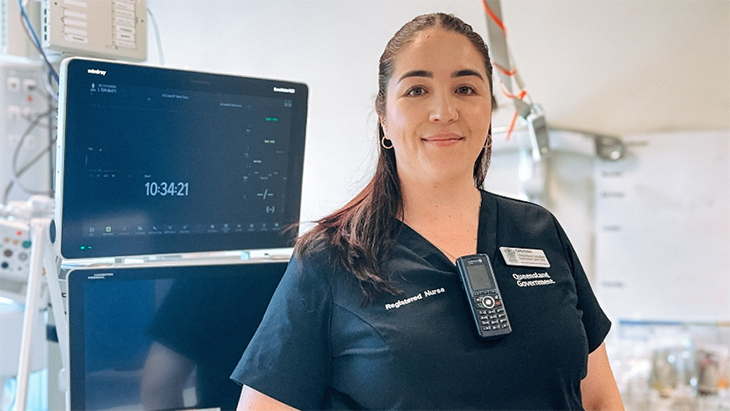
Carly
Carly is a clinical nurse consultant in the Intensive Care Unit at Townsville University Hospital. Having spent nearly 12 years working in Intensive Care, she is passionate about ensuring that North Queenslanders receive clinically excellent and compassionate care closer to home during some of the most challenging moments in people’s lives.
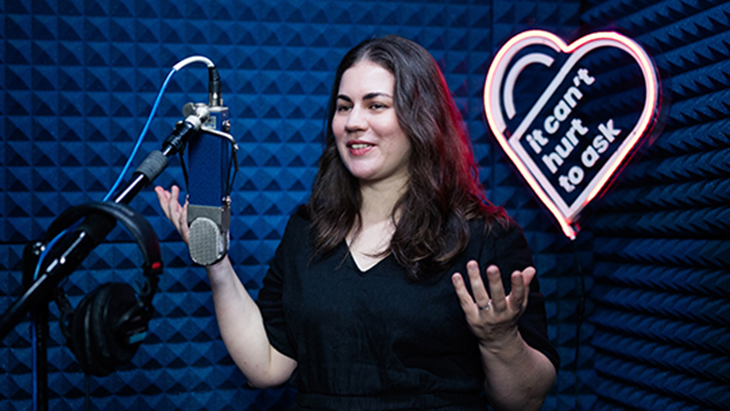
Lauren
With equal parts curiosity and caution, Lauren has delved into all things death and dying to produce and host this podcast series. She's talked to healthcare workers, allied health staff and people with lived experience from right across Queensland to get the full picture of what happens at the end of life and how we can prepare to live, and die, as well as we can.
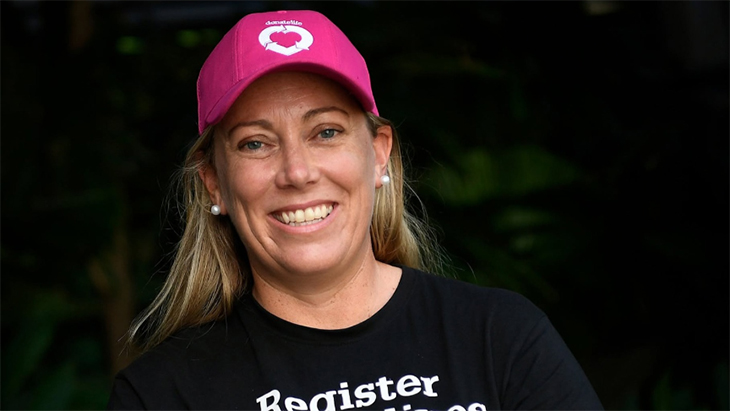
Meagan
Meagan is a donation specialist nurse coordinator at Townsville University Hospital. She has worked in ICUs across Australia for 22 years, spending 14 of those in Townsville. She finds purpose in providing care for families during some of their toughest moments and loves working in a highly skilled multidisciplinary team of healthcare professionals serving their community.
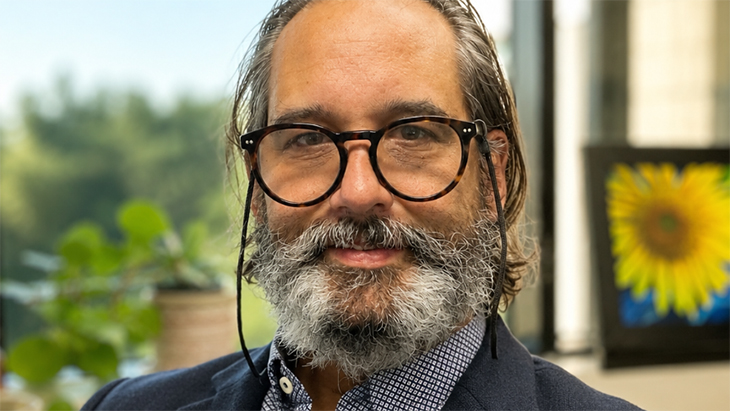
Todd
Todd is a former paramedic and the Director of Strategic Wellbeing for Queensland Ambulance Service (QAS). In his role, he combines his passion for emergency healthcare and psychology to find ways to continue supporting the wellbeing of paramedics and QAS staff, to enable them to have long, fulfilling and healthy careers.
Episode resources
Care at the end of life is a campaign and resource hub for Queenslanders with information about advance care planning and support for patients, carers and families.
Talking about death and dying can bring up challenging emotions. If you or someone you know is struggling with their mental wellbeing, support is available:
- Lifeline: call 13 11 14 (24 hours a day) if you are experiencing a personal crisis or chat to a counsellor online.
- Beyond Blue: call 1300 224 636 for broad mental wellbeing support or speak to a counsellor online.
- Griefline: call 1300 845 745 (9am–6pm, Monday - Friday, 12 noon–6pm weekends).
- PalAssist has general information and advice about palliative care services in Queensland. Call 1800 772 273 (free for Queensland residents) or chat online (from 7am to 7pm, 7 days).
- In an emergency, always call Triple Zero (000).
The following services were discussed in the episode or can provide additional information and resources:
- The Statewide Office of Advance Care Planning offers free advance care planning information and support for patients, families, carers, and health professionals. Phone: 1300 007 227 or email: acp@health.qld.gov.au.
- Apply for aged care services first by applying for an assessment. You can do this through your GP or local health service, online at the My Aged Care website, by calling My Aged Care on 1800 200 422, in-person with an Aged Care Specialist Officer at a Services Australia office.
- Any Aboriginal and Torres Strait Islander person who is 50 and over can access the Elder Care Support program. The program provides support workers who can give you information about aged care and guide you through the process of accessing services.
- Support is provided for infants, children and young people with life-limiting illnesses, as well as their parents, siblings, grandparents, school and community. Learn more via Children’s Health Queensland’s Paediatric Palliative Care Service, reach out to the Children's Health Queensland Bereavement Service via phone: 1800 080 316 or email: CHQ_Bereavement@health.qld.gov.au.
- Regional and rural patients, and their families, can access specialist palliative care services via telehealth. A referral is required from your GP, oncologist, other specialist or community nurse. Care is delivered by Specialist Palliative Rural Telehealth service (SPaRTa).
- Seniors Enquiry Line is a free, statewide information and referral service for Queensland seniors, families, friends, grandparents and carers. Phone: 1300 135 500 between 9am to 5pm, Monday to Friday.
- Voluntary assisted dying is one of several choices a person may have at the end of their life. It is important to discuss all options with your doctor. QVAD-Support provides advice and support to Queenslanders. Phone: 1800 431 371 or email: qvadsupport@health.qld.gov.au
Disclaimer
The stories and conversations shared by everyone in this podcast reflect their personal views, experiences and opinions. They are shared for informational and educational purposes only and are not intended to be a substitute for professional medical advice, diagnosis, or treatment.
Queensland Health does not guarantee the accuracy or completeness of the views expressed by guests and accepts no responsibility for any loss or damage that may result from relying on this content.
If you have questions about your health or treatment, please speak with a qualified healthcare professional.
Transcript
Lauren (in interview)
Obviously your —the work you do is all focused around, saving lives really and, and seeing people who've come in with a really acute situation and we're trying to make sure, as you said, that person can, can go back home.
Lauren
I'm talking to Carly, a critical care nurse from Townsville University Hospital. She works in the intensive care unit, where, to put it simply, she saves lives.
Lauren (in interview)
So, it's a bit different to then be asking you about what happens when that doesn't work.
Lauren
I'm in Brisbane, so we met online. As soon as I started this interview, I realised there was something different about it.
Lauren (in interview)
But when someone is in that really kind of acute situation, what are some of the reasons that medical intervention may ultimately not work?
Lauren
Hi, my name's Lauren. If you've listened to other episodes in this series, you'll know that it's all about getting used to talking about death and dying.
From our health experts, I've learned that these days the majority of us are going to die either at the end of a long life or after a known illness. Talking about dying helps us plan ahead for that, and there's a lot of useful planning to be done. But not everyone gets to know their time is growing short and to really start thinking about the important things.
For some, death is sudden and unexpected. Accidents and injuries, sudden acute illnesses, or large cardiac or neurological events can mean that an otherwise healthy seeming person might die really quickly.
What I learned from making this episode is that while it's easy to talk about death when it's slowly approaching, it might never be easy to talk about the sudden deaths of people who were healthy or young.
But that doesn't mean we shouldn't talk about it, because there are ways we can plan ahead that might help, even in life's most unplanned-for moments. Thinking ahead about these times can actually make a really big difference.
I wanted to begin this episode from the start. So, before we hear more from Carly in the ICU, I had a chat with Todd.
Todd
My name is Todd and I'm the Director of Strategic Wellbeing for the Queensland Ambulance Service.
Lauren
If someone dies suddenly out of hospital or gets so sick or injured that they could die, it's likely you would call an ambulance, and the crew would often be the first people to arrive at the scene.
I asked Todd how paramedics manage these tough scenarios.
Todd
It takes 3 years training to become a paramedic in terms of a university degree. You get lots of opportunities to learn a lot about different components around anatomy and physiology, but you also get a lot of opportunity to practise what would happen in the real world in terms of scenarios where they're really getting a chance to not only understand the skills but practice those skills, and particularly in situations where somebody has died where it might be somewhat more confronting.
Lauren
I’ve had to call an ambulance when someone was really unwell. From the operator on the phone to the paramedics who came to my house, I was surprised and then later intrigued by their behaviour. It didn't match my own.
While I was heightened —it was an emergency —they were calm, full of questions, deliberate. It was both reassuring and mildly frustrating.
I asked Todd to explain why paramedics are trained to behave the way they do even when delivering potentially life-saving emergency care.
Todd
There's a lot that paramedics do as they're getting to the scene and as they're arriving on scene that I think people don't necessarily recognise.
They're thinking about a whole range of things, and when they're getting on scene, initially they're thinking about safety. Is the scene safe both for them to go into, and is it safe for the people that are around the scene?
So, they'll tend to be not necessarily quickly jumping out of their ambulance when they get there. They might actually be looking out the windscreen, checking out for safety and making sure everything's okay. And that also gives them a bit of a view as to, are there any people on scene that might need some additional support as well?
Lauren
So that difference I was feeling between my surging adrenaline and the paramedic's calm, methodical manner wasn't all in my head. It was deliberate and for good reason.
Did you know that in most situations, emergency services personnel are actually trained not to run? I didn't, but when Todd explained why, it made total sense
Todd
The first level of safety is for them, and if they actually fall over and injure themselves, they can't help the patient or anybody else on scene then, and then they become a patient.
So, you'll see them being really calm and talking measured and they might even be asking questions of a bystander or a person on scene. Which is really helping them to get the information around the patient, but also helping the other people on scene to have a sense of control and to be able to calm down as well.
Lauren
Todd told me that if there's a chance someone's life could be saved, that's what paramedics will focus on. They do what they can to stabilise the patient to the point that they can safely transfer them to hospital.
This might involve calling for other resources, like an ambulance that has a doctor or different equipment, and liaising with their destination hospital, as well as talking to anyone on the scene that could give them a picture of what's happened to the patient leading up to the current event.
But sometimes it's clear a person's life won't be saved. They have died. This can be hard for members of the public to accept in the moment.
Todd
A paramedic might say pretty quickly that there's nothing else that we can do. And it's usually based off what they're seeing on the screen there and how long the person might have been dead.
Sometimes families can get a bit upset because they think the paramedics are not doing anything. We see on movies and TV shows where there's a flat line on the screen, but if you keep on working and keep on, you know, defibrillating with that defibrillator, then that person will eventually become okay.
The reality is, when somebody has that flat line on the screen, there is no level of defibrillation that you can do, to bring them back. Sometimes, there's nothing else clinically that you can do for that patient.
Lauren
Todd explained to me that deciding when to stop treatment is also part of caring for both the patient and those around them.
Todd
Paramedics are usually pretty good at explaining to bystanders what's happened from the best of what they can work out, and why they might not be able to continue to resuscitate that person, so that the family members or bystanders can understand that as much as possible.
Lauren
A paramedic's job extends beyond caring for the initial patient, particularly when they've been called out for a fatality. Todd explained that paramedics try to consider everyone on the scene when someone has died.
Todd
It's not uncommon for somebody else on scene to be emotionally distressed and need some additional support.
There is a whole range of emotions that people who witness a serious incident or accident, or people who witness somebody die, there's a whole range of emotions that they might have, and they're all completely normal.
Sometimes they might even have chest pain from cardiac issues that they might have and the stress causes them to have chest pain. Then there's another patient for the paramedics to consider.
Lauren
Todd told me that there are other misconceptions about what paramedics do or don't do, especially when someone has died.
Todd
I think a bit like TV; it gets a bit skewed in terms of what paramedics do. In Queensland, we don't transport dead bodies from the scene. The undertaker or the mortuary would actually provide those services. Whereas in other countries they do do that.
Sometimes when it is in a public scene or when there's lots of people around, the paramedics are thinking again about the safety of everybody else.
And they're also thinking about the dignity of the person who's died. So, they might actually then consider taking that patient away from the scene and taking them into the ambulance.
Lauren
When a person dies unexpectedly, different services, including the ambulance service, will be involved in certifying their death and notifying the people or organisations that need to be told.
Todd
When somebody dies out of hospital or a facility, there might be different things that can occur at that point in time. Generally, the ambulance will arrive because it's related to a medical issue, or an injury or accident, even when it might be that somebody has clearly died.
In some situations, ambulance paramedics can declare that person has died. That's all that needs to come to the scene, and that can occur particularly if the person has a GP that knows that patient had a medical condition that might have led to the death of that person.
But in some situations, the police might need to be called as well. There are various situations where they are required to be called, and it doesn't mean that it's because anyone thinks there's been something done wrong on scene or somebody's done something illegal. It's really part of the protocol to really just understand why that person has died.
Usually then they might then be able to contact family members or contact the person's doctor.
Lauren
Todd told me that as a paramedic, he found the care he could offer for those present when someone had died was a protective factor for him as well as for bystanders.
Todd
Even when you would go to a scene and somebody died, which was really sad, I would have a sense that, ‘Well, I can still support those people around them.’
You know that there's only so much you can do for the, patient, but if you can leave the scene and go, ‘But I know that I could help provide the family with as much information as possible, they knew what the next steps were and could be as reassured as possible,’ then I think for paramedics that's equally as satisfying.
Lauren
If you've had an experience where someone close to you has died unexpectedly, it's normal that hearing the kind of details we've included in this episode might bring up emotions, memories, or even physical feelings in your body. If you need some support, we've included resources in our show notes.
If a person is seriously unwell or injured but still alive, they will be transported by ambulance to a hospital.
Carly
My name is Carly, and I work in the intensive care unit at the Townsville University Hospital and I'm the clinical nurse consultant.
Lauren
Remember Carly from the beginning of the episode? Sometimes after arriving in an ambulance, a patient might receive their initial treatment in an emergency department and then get transferred to a specialised ward. Or they might come straight to the intensive care unit, or ICU, where they'll be cared for by staff like Carly.
Not all of Carly's patients will come from outside the hospital. Her team also cares for people who have become very unwell in hospital or who have had major surgeries and need round-the-clock care. I asked Carly to explain when a patient might require intensive care.
Carly
Intensive care units provide highly specialised care for people of all ages who are critically unwell. So, whether that's from a major trauma, major surgery, severe infection such as sepsis, post cardiac arrest, stroke, respiratory failure from pneumonia or the flu, they are all people who might find themselves in an ICU, either expectedly or unexpectedly.
Lauren
Carly explained to me that the reason a person needs intensive care may determine which health facility they are transferred to. It's not always just a case of going to the closest hospital. Depending on where they are in Queensland, they might even be driven or flown to a different town or city.
Carly
The location and the type of ICU that you end up in really depends on your reason for needing to be in an ICU, as the location, depending on where you live, is very specialised for some ICUs.
If you live in, Brisbane that has multiple ICUs, they tend to be a little bit more specialised and then other ICUs, like the one that I work at, we do everything. There isn't a patient group that doesn't come to us if they need an ICU bed.
I think for patients and their families, sometimes that's challenging because you think, ‘I'll just go to the one that's closest to home.’
But it doesn't always work out that way, particularly if you need really specialised care.
Lauren
I've visited ICUs, and they're not like other hospital wards. From different rules, sounds, and the number of staff, I think it's helpful to be prepared for the experience.
I asked Carly to explain what her ICU is like and why it's so different to other areas of the hospital.
Carly
I think it's a really good question, because I think it's something that ICU clinicians —we lose sight of that because I get up every day and come to work, and this is my normal. I don't know a different environment. And I think it's really easy to forget how many Australians have never set foot in an ICU.
They don't know what it looks like. They don't know what the rules are. I think for many patients and families entering ICU for the first time, it's a really overwhelming and confronting experience.
ICUs are noisy. They're busy. Everything seems really invasive. If you're visiting a loved one, they'll likely have lots of tubes. They'll have lots of devices connected to them. Some of those devices seem really scary; they're big. They've got lots of numbers, lots of words, lots of lines. They make lots of noise.
All the beeps sound different. All the alarms sound different. Everything makes a different noise. Things sound like the noises are really important, and the nurse or the doctor will just be standing there having a regular conversation with you, and you'll think, ‘Shouldn't you be doing something about that noise?’
There's always a lot of staff. It always seems to be really busy. You'll have one-on-one nursing care, so every patient will have their own nurse.
If you're a family member, there's a really good chance that your loved one's not going to look like their usual self, which can be incredibly confronting for people. Sometimes they might not behave like themselves. They can be confused and agitated, which can be really difficult for people to witness when they think, ‘They've never behaved like this a day in their life.’
So, there's a whole host of things that people never consider before they step into an ICU.
Lauren
Carly told me that the other thing that often catches people off guard is that because the care required by patients is so intensive, visitors can be much more restricted than on a regular ward.
There may only be one person allowed by a patient's bedside at a time, and they may be asked to leave if the staff need to do medical procedures or tests.
Carly
The other thing is, and people never realise this, there's a lot of restrictions in terms of visiting, the number of visitors you're allowed. There's exclusion time, so if procedures are being performed or if they're doing medical rounds or if the nurse is doing pressure area care or something for your loved one, people will ask you to leave all of the time.
Families often experience a whole host of emotions. Our goal, I guess, is always to support patients and their families through it. We have amazing social workers who work very closely with our families.
And I guess the other thing is, if you're unsure, you just have to ask, because people will always be happy to answer your questions, and it's really easy, I guess, for us to forget that you might not know, because we just do it all the time, so we assume that people understand when they probably don't.
Lauren
While some patients are admitted to ICU after a planned surgery and they've been given an idea of what their care and timeline for being on the ward might look like, for many, an ICU admission comes out of the blue.
Carly told me that means staff may also not have the answers about what a patient's trajectory or treatment might be.
Carly
I think the other thing is that sometimes it does seem like nobody has an answer for why your loved one might be here, or even an answer for your question, ‘How are we going to treat this? What's the plan?’
And the reason for that is that truthfully, sometimes we actually don't know, and we do need a little bit of time to run all of the tests and start treatment before the exact reason for why they ended up in the ICU becomes clear.
And I think that can be really frustrating for people because I think there is an expectation that, well, they're in the ICU and these people know what they're doing, so they should have an answer for me. And I think that can be really challenging to have someone say, ‘We're really not sure. We just need a little bit of time.’
Sometimes we ask you to wait, which waiting's hard. Waiting's overwhelming.
Lauren
For much of this series, we’ve been talking about slower declines in health or living with a longer-term diagnosis.
In these situations, time is on your side when it comes to planning ahead for what medical interventions you'd like to have or not have, or the situations you'd be okay to find yourself in.
Carly said that even though that's often the norm, we should still plan ahead with more sudden medical events in mind. Having had these conversations ahead of time can be really helpful for families or other loved ones when a person is very unwell in the ICU.
Carly
We give you a lot of information, so much information in a really short period of time, and then we often ask you to make decisions really quickly, which can be really, really stressful for people.
One minute you're having a conversation about why they ended up in ICU, the next minute someone's asking you to sign a consent form to go to theatre for a procedure, and it all kind of happens very rapidly. And I think sometimes you don't get a lot of time to process all of that information and all of those decisions.
So, I think that's why it's really important to sort of have discussions with your families beforehand about if you ever end up in those circumstances, what it is that you might or might not want, because it does help your family to make decisions more rapidly if it's conversations that you've had before.
Lauren
ICU teams like Carly's spend their days helping people stay alive and recover from significant illness, injury, or medical procedures. But even with the best care, not every patient will live. I asked Carly how they know when a patient might not respond to treatment.
Carly
It's a challenging question to ask because it's never the same for every patient. There are circumstances where from the moment they're admitted, we understand that they will not have a favourable outcome. But then there are other circumstances where it happens over time, or it's not quite so clear at the beginning.
Identifying that a person is unlikely to survive despite the intensive treatment that you get in an ICU is a really considered and ongoing process that involves the ICU team, whatever specialist teams you might have involved, but then also the multidisciplinary team, you as a patient, if you're able to participate in your decision-making.
And the way that we sort of come to making those decisions is the ICU team will continually assess the patient. They'll assess their response to treatment. They'll see how their underlying illnesses, so like their pre-existing comorbidities are going. Have we made them worse? Are they getting better?
And then we'll consider heavily the likelihood of recovery, meaningful recovery, in terms of you returning to a life that you would find acceptable.
Lauren
It surprised me to learn that sometimes patients themselves are part of these conversations. I'd always imagined that people in ICU are, for the most part, unconscious. But Carly told me that's not the case.
Carly
Some patients get to participate in this planning and decision-making. Some people are awake in ICU, and they know that this is the end of their life. We get to have these discussions. But sometimes your families have to make those decisions for you.
The goal at the end of life is always to provide people with the most dignity and comfort as we can for them and their families.
Lauren
At this point, Carly says that having done advance care planning and talking about our wishes with our families can be really impactful, and it's why she encourages us to have these conversations no matter our stage of life.
Carly
Advanced care planning, for healthcare professionals, helps us to ensure that the patient's values, their goals, and their preferences for healthcare and what they would or wouldn't want are respected and considered, particularly if they find themselves in a situation where they can't communicate for themselves, which does happen very often in the ICU.
With that in mind, it's really important to have had discussions with your family before you ever become unwell so that it's very clear what your wishes are. Having those conversations, I think, is the most important part of the process, as I do think it helps your family cope and process should the time ever come.
I think it makes their decision-making a lot simpler knowing, ‘Oh, I talked to mum about this, and she said she wouldn't ever want that.’ Because at the end of the day, we don't want to do anything or put you through anything that if you had the choice, you wouldn't choose for yourself.
Once we've considered all of that, if it becomes clear that treatment is no longer going to achieve meaningful recovery, or that the person you love won't ever be the person that you know again, that's kind of when we get to the point where we start talking about transitioning to comfort-focused care.
Lauren
In the movies, when someone is receiving intensive care and the decision is made that further treatment isn't their best option, we're often shown the flicking of a switch, followed by a pretty quick and sometimes dramatic death. I asked Carly what it's really like when this decision is made.
Carly
We have access to a whole host of medications that make them comfortable. Their families get to spend time with them. We do memory making. We can put on your favourite music. We can do all the things that you might ever want to do.
We're really lucky; we have an incredible palliative care centre. We have access to these big, beautiful gardens.
If you decline very rapidly, there might just come a point where, despite everything that we're doing, your body cannot sustain what it is doing anymore, and you might die very quickly, which does happen.
There are some patients, though, where it is a little bit like the movies, and we do start medications to keep them comfortable, and then we will, sort of, take the breathing tube out and turn the ventilator off. And generally, people will pass quite peacefully and quite quickly.
I think people get really scared that they're going to suffer. But I can tell you that it is an ICU clinician's worst nightmare to have anybody suffer. So, it is not something that we do. We make people the most comfortable that we can.
There's this really interesting concept amongst healthcare professionals when you've done it for a really long time, where you realise that there are choices that are worse than dying. And sometimes we do see that with people, and I certainly know that it's not something I would ever choose for my family or my loved ones. I would want them to be comfortable and dignified, and I would want to be able to spend time with them.
So, for the most part, it's not like Grey's Anatomy, but there are different circumstances for every situation, and I think that's the really hard part about ICU, is it's never the same. But the end result is always the same, and that is that people are comfortable and they don't suffer.
Meagan
Sometimes we have family that raise donation spontaneously, they know loved one's wishes and are advocating for their loved one to be an organ donor. Other circumstances where we raise donation, it can be a bit of a shock to the family.
Lauren
To finish off this episode, I spoke to Carly's colleague Megan about organ donation.
Meagan
My name is Megan. I'm an ICU nurse at Townsville University Hospital and I'm also a donation nurse specialist, for DonateLife.
Lauren
Many people don't know that to be an organ donor, you need to die while ventilated, which means most donors are receiving ICU care when the conversation about donation begins.
Meagan
The opportunity for someone to donate their organs is quite rare. Not everyone can donate their organs because to donate your organs, the person requires to die in a specific hospital setting, usually on a ventilator in the intensive care unit. That's so that the organs remain functional and healthy up until the time of donation surgery.
Only about 2% of the way people die in Australia in a position where they can help others through organ donation. Generally, the conditions that people have to contribute to them being an organ donor are, where the person has sustained a severe brain injury, and often they progress to something we call brain death, and that's the irreversible cessation of the function of the whole brain.
Lauren
For many families and friends of organ donors, Megan says the donation process gives them a positive out of what was often a very dark time.
Meagan
When we raise organ donation, we try to give them enough information to ensure that the decision they're making is a decision that they're comfortable with, not only on that day, but in the weeks, months, and years going forward.
And we know like for some families, organ donation is the only thing they've seen positive through that admission, that every other aspect has been a shock. Nothing has been a pleasant experience but knowing that their loved one is able to help others through organ donation is the only thing that they see as a positive aspect.
Lauren
Our next episode is going to be all about organ and tissue donation. So, if you're after more information, including who can register as a donor and what the process is like for donors and recipients, make sure you tune in.
Many of us won't ever experience what it's like to become or care for someone who becomes unexpectedly ill or dies suddenly. But most of us will know someone it's happened to and will find ourselves searching for understanding about their experience.
All of us can take time to think about what our wishes would be if we ended up being treated by paramedics like Todd's team or in an ICU with staff like Carly or Meagan, and we can talk to those who care about us and who we care about, to understand their wishes and share our own.
In our next episode, we're going to be learning more about organ and tissue donation. We'll hear from the DonateLife team about how organ and tissue donation work, how to register as a potential donor in Australia, and why it's so important to share our preferences with those close family or loved ones who may consent on our behalf.
We'll also hear from Rob and his wife Janet, who received a liver from an organ donor just this year.
Janet
All I could think of is, "What's he doing on the phone at this time of night?" Like, "Well, get off the phone." And then he just turned to me while he was still talking to the surgeon, and just thumbs up, and I started to cry, and then he had a tear.
Lauren
And Helen, who tells us about the experience of being given the gift of renewed sight from a tissue donor.
Helen
So I did that, went back to sit at my desk in front of the computer, and it was the first time in my life that I realised that a keyboard, the keys on a keyboard actually had depth. Prior to that it was flat.
Lauren
How do you register as an organ and tissue donor? Can you pick what parts of your body you'd be comfortable to donate? Why is it so hard to find donor and recipient matches? It can't hurt to ask!