

Summary
We've learned about what happens when someone is dying, but what comes next?
In this episode, we learn about what happens after an expected death in a hospital or home setting. Our host Lauren talks to clinical nurse consultant Dylan from Redcliffe Palliative Care Service about the planning that takes place for after-death care and how his patients and their loved ones are included in the process.
Dr Erin and nurse Jane from Metro North Community Palliative Care Service then explain what happens when someone dies in a home setting and why these deaths aren't considered an emergency. And Toowoomba woman Rosita joins us again to tell her story of caring for her mum Johanna at home and the support she continued to receive after Johanna's death.
We also talk paperwork, funeral planning and even how pets can be involved in saying their final goodbyes.
What will happen to my body after I've died? How long can you keep a loved one at home after they've died? Who needs to sign all the forms? Let's find out.
This episode is part of the podcast series It Can’t Hurt to Ask ... about Death and Dying.
Featured in the episode

Rosita and Johanna
Rosita lives in Toowoomba and for the past 10 years has cared for her mother, Johanna (pictured). After living with Rosita and her family for her final year, Johanna died peacefully at home at age 99. Rosita felt it was a privilege to care for her mother during this time in her life.
Johanna's photo was taken on her 99th birthday at Rosita's home.

Jane
Jane is a clinical nurse consultant with the Metro North Community Palliative Care service. She began her nursing career in Scotland before moving to Australia where she specialised in palliative care. Jane is passionate about ensuring that people die with dignity.
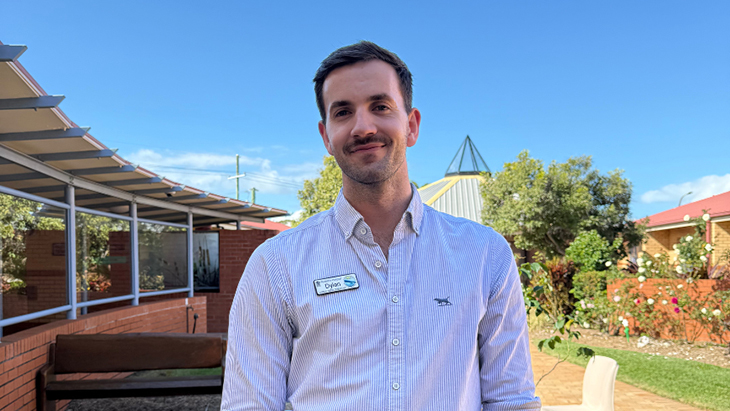
Dylan
Dylan is a clinical nurse consultant with the Redcliffe Palliative Care Service. He finds providing patient-centred care for his community extremely rewarding and values working as part of a supportive multidisciplinary team.
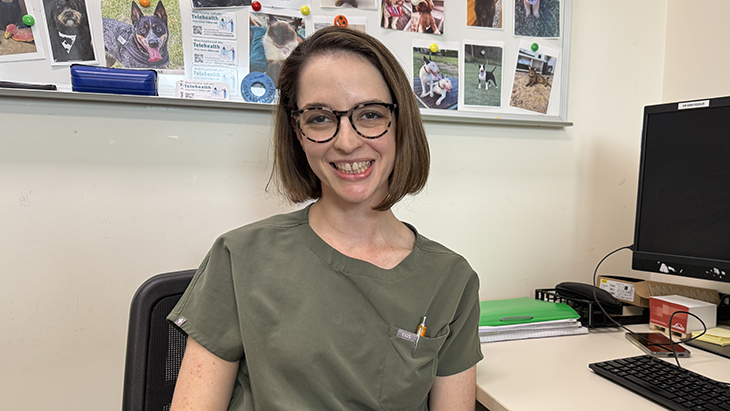
Dr Erin
Dr Erin is a senior medical officer who works in the Metro North Community Palliative Care Service. She is passionate about supporting people to maintain their quality of life and enjoys getting to know her patients as individuals while supporting their healthcare in a home setting.
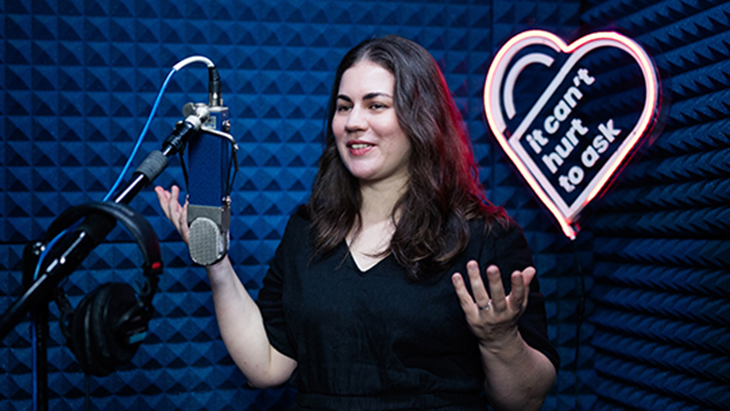
Lauren
With equal parts curiosity and caution, Lauren has delved into all things death and dying to produce and host this podcast series. She's talked to healthcare workers, allied health staff and people with lived experience from right across Queensland to get the full picture of what happens at the end of life and how we can prepare to live, and die, as well as we can.
Episode resources
Care at the end of life is a campaign and resource hub for Queenslanders with information about advance care planning and support for patients, carers and families.
Talking about death and dying can bring up challenging emotions. If you or someone you know is struggling with their mental wellbeing, support is available:
- Lifeline: call 13 11 14 (24 hours a day) if you are experiencing a personal crisis or chat to a counsellor online.
- Beyond Blue: call 1300 22 4636 for broad mental wellbeing support or speak to a counsellor online.
- Griefline: call 1300 845 745 (9am–6pm, Monday - Friday, 12 noon–6pm weekends).
- PalAssist has general information and advice about palliative care services in Queensland. Call 1800 772 273 (free for Queensland residents) or chat online (from 7am to 7pm, 7 days).
- In an emergency, always call Triple Zero (000).
The following services were discussed in the episode or can provide additional information and resources:
- The Statewide Office of Advance Care Planning offers free advance care planning information and support for patients, families, carers, and health professionals. Phone: 1300 007 227 or email: acp@health.qld.gov.au.
- Apply for aged care services first by applying for an assessment. You can do this through your GP or local health service, online at the My Aged Care website, by calling My Aged Care on 1800 200 422, in-person with an Aged Care Specialist Officer at a Services Australia office.
- Any Aboriginal and Torres Strait Islander person who is 50 and over can access the Elder Care Support program. The program provides support workers who can give you information about aged care and guide you through the process of accessing services.
- Support is provided for infants, children and young people with life-limiting illnesses, as well as their parents, siblings, grandparents, school and community. Learn more via Children’s Health Queensland’s Paediatric Palliative Care Service, reach out to the Children's Health Queensland Bereavement Service via phone: 1800 080 316 or email: CHQ_Bereavement@health.qld.gov.au.
- Regional and rural patients, and their families, can access specialist palliative care services via telehealth. A referral is required from your GP, oncologist, other specialist or community nurse. Care is delivered by Specialist Palliative Rural Telehealth service (SPaRTa).
- Seniors Enquiry Line is a free, statewide information and referral service for Queensland seniors, families, friends, grandparents and carers. Phone: 1300 135 500 between 9am to 5pm, Monday to Friday.
- Voluntary assisted dying is one of several choices a person may have at the end of their life. It is important to discuss all options with your doctor. QVAD-Support provides advice and support to Queenslanders. Phone: 1800 431 371 or email: qvadsupport@health.qld.gov.au
Disclaimer
The stories and conversations shared by everyone in this podcast reflect their personal views, experiences and opinions. They are shared for informational and educational purposes only and are not intended to be a substitute for professional medical advice, diagnosis, or treatment.
Queensland Health does not guarantee the accuracy or completeness of the views expressed by guests and accepts no responsibility for any loss or damage that may result from relying on this content.
If you have questions about your health or treatment, please speak with a qualified healthcare professional.
Transcript
Jane
Yep, that.
Lauren (in interview)
Can I just check, did you just say extinction of life or —
Jane
Yes.
Lauren (in interview)
Extinction?
Jane
Extinction, yes.
Lauren (in interview)
Um ...
Jane
I suppose it sounds a little bit full on, the Extinction of Life. Sorry, and I'll explain. Basically what you're saying is you go and you're checking for vital signs...
Lauren
What happens after someone dies?
I'm not talking about the spiritual side of things; I can't answer that question for anyone. I'm talking about the admin, I suppose, of death, and the experience of those who are still alive.
I'm at a stage in life where my peers' parents are starting to die. Many of them have confided in me that one of the first questions they have asked is when it happens is, 'What happens next?'
Regardless of where you're at in life, navigating death is something most of us will have to do sooner or later. In this episode, I'm going to find out some of the answers to that question of what actually happens after someone dies.
From what happens to your body when you die, to whether every death outside hospital requires police to be called, or what on earth Jane was talking about when she said "extinction of life", let's learn about what happens in the hours and days after a person has died.
Lauren (in interview)
Because you really, you bring it back to the life part of life, aren't you?
Dylan
Absolutely.
Lauren (in interview)
Rather than just focusing on the death and the dying part of things.
Dylan
And we broach that subject as we know you're feeling anxious about this. You know, you might have been married to your wife—I remember I met someone a couple weeks ago, married for 63 years. That is an absolute milestone.
Lauren
That's Dylan. He's a clinical nurse consultant at the palliative care service at Redcliffe Hospital.
Dylan
I really get people to reflect on their life. Sharing stories, you know. She was explaining to me how they came across on a boat. Tell me about when you got married? Tell me about the birth of your first child? Tell me about your first kiss?
Lauren
Dylan was explaining to me that even when someone has died, as a palliative care nurse the focus of his job is still life.
Now, it's about the life of those who care for a person, the way they will experience their grief and cherish their memories.
Dylan
Seeing people's eyes light up and the glow that they have talking about their loved one when they're really grieving is something really special, and it really helps people move past some of those things they may be feeling at that time.
Lauren
Even though his patient has died, Dylan's work isn't finished.
Dylan
His wife sat beside him the entire time, held his hand until he died, and you can't fathom that loss. You can't fathom what they would be going through.
And that's when the rest of our team steps up. Our social work team get in there; our bereavement counselors get in there. Our nurses are fantastic.
I've got teabags in my drawer, the good ones, not the hospital ones. And I will go in, and that will start a conversation as, 'Hey, I've got a good teabag. Do you want me to come and sit with you?'
Lauren
I wanted to pause here to make it clear that what Dylan is talking about is the time after an expected death.
These days, most people will die either from a diagnosed life-limiting illness or at an old age, and their death won't be an emergency. In both cases, people around them likely know they are approaching the end of their life, and they may be receiving palliative care.
But some people do die unexpectedly. Acute illnesses, sudden cardiac arrests or strokes, accidents and injury can all take people quickly and without warning.
We're going to do a whole episode about unexpected death later in the series, so if you've had that experience and are raising an eyebrow at Dylan's calm cups of tea, know that we're going to cover the topic in depth.
Dylan
Dying is a natural bodily process. It's like giving birth. It's like healing a wound. Our body knows exactly what to do, and our job in palliative care is really just to support through that process.
Lauren
Normalising death helps Dylan have honest conversations with patients about what is going to happen, and what they want during the rest of their life and after they've died.
Dylan
I believe honesty is the best policy. If we see things are changing for you, we will have that conversation no matter how hard it is. And we revise all of your goals of care once again and say, 'What do we need to do for you?'
If we understand how you operate emotionally, spiritually, physically, then we are able to adapt those conversations to what's necessary.
I personally love to ask, 'Who's who in the zoo? Who's part of your family? Who's important to you? What pets are there? What did you do for a job? What's your interests?'
We know who to call. We know what we need to do. You are front of our mind when we think about those things.
Lauren
Having these open conversations helps people plan ahead. Dylan told me that not only can this reduce the burden on their loved ones making the decisions after they have died, it also provides peace of mind for them during the rest of their life.
Dylan
We try to have really early funeral planning if we can, if people are open to it. Some people aren't, and some people want their family to sort it out, which often leads to a bigger conversation as well.
I always think people do a lot better when we have honest conversations, because if you know what to expect, things will be okay.
Our senior medical officers here, our nursing staff, our allied health, right even to our receptionist and our AINs, our volunteers, we will always be there to support those honest conversations and sit with you.
We take our time. We're not driven by a clock. We're not driven by how much time you have. We just spend time to make sure that you understand that this is normal.
Everyone goes through this, and that things are going to be okay. Your family's going to be okay. I always really love to tell my patients when they're dying, 'When you have time, tell your family, "I'm going to be okay." Reassure them that, "I'm going to be okay. You're going to be okay."'
Really have those words with each other, because it helps bridge that process.
Lauren
Having these conversations early means that when someone does die, Dylan's team have already begun to support those around them, knowing that for a lot of people, this might be the first time they've personally experienced death.
Dylan
I think things have changed over generations. So, our grandparents and their grandparents really looked after each other. They were very familiar with what death looked like.
To be with someone in their final days and to care for someone when they're dying is an absolute privilege. I think we forget that. It's like giving birth. And to sit with someone and watch them take their last breath, or to come back the next day—because often people will die alone.
It's a really common thing, and we really explain that to family up front as, 'Hey, Granddad might die through the night, and he, you might not be here, and that's okay. That will be the way he goes.'
Lauren
I've been in hospital, so I know the pace at which things can move on a regular ward. What struck me as Dylan walked me through what happens after one of his patients has died was how much time there is for people to do whatever they needed to do to.
Dylan
Allowing people to have time to process is really important. You know, we give people the space, the time to sit there, to touch their loved one's hand, to give them a kiss, to touch their skin, to talk, to have a cup of tea, to close the blinds, to open the blinds.
People will often bring their animals in now. I think that's really important if you've got a wee dog or a wee cat or something that's special, that allowing them time to process that as well.
We had someone recently who had a beautiful little fox terrier, and it was his life. He loved that dog, and she brought him in, and he, she just laid on his bed for half an hour, and she knew he was gone, but she also needed that time to process that. And I would love that for myself too, to have my animal there.
But we don't expedite things. We're never in a rush. We sit with you. We talk with you. Again, reflection is key, and allowing people just to process what they've just seen or experienced is really important because everyone's emotions are valid, no matter what they're feeling.
I think time is really important and giving family the opportunity to have that time, because there's always immense sadness and grief.
Lauren
Then there's the question of what happens to the person's body after they have died. I expected to hear that there were protocols or rules, but this too, is a much more personal journey than I expected.
Dylan
Our nurses and our doctors will come in and they will give you after-death care. We'll clean you, we'll wash you, we'll dress you in your nice clothes, you know, spiritually, whatever you like to wear.
Some people want to wear their Johnny Bulls, their nice work boots. Some people want to wear a beautiful brand-new suit. Some people want to wear their sundress. Whatever you would like is what we're willing to send you off in.
The process normally is that we will get you ready, and you either go directly to our hospital mortuary, where then the funeral director will pick you up, or in some circumstances the funeral director will pick you up.
And culturally, that's really important for us to recognise. You know, some people want 24-hour burials. Some people of Māori culture want their loved one at home to lay for days. And we respect any decision that you have around that.
There's obviously hospital logistics that come into play and we have to be upfront about that, too. If a death is due to something that might be reportable to the coroner, then we have an obligation to report that for safety things, and often that can delay the discharge to the funeral home around those things.
But again, we identify those things early when the patient's actually still alive, and we have those conversations, 'Hey, this is what to expect.'
And again, when we set those expectations and have those honest conversations, things go smoothly. Things go well. They don't get easier, but they go well.
Lauren
Dylan says that just because they have died doesn't mean a person is treated with any less dignity than when they were alive, and this extends to medical procedures.
When someone is expected to die and they die in that way, there's usually no need for an autopsy or medical testing to determine their cause of death.
Dylan
We've got a preparation phase. Often, we have known you for quite some time, or we might not have, we might have met you the day before. But we prepare those conversations nice and early, and we let the body rest.
You know, you live as you die, and I think that's really important to let our public know that we would never do any harm to anyone. We would treat you with respect regardless if you're alive or dead. We would never do biopsies or anything that people wouldn't want.
Lauren
People can choose to donate their bodies to research facilities or donate tissues if they're eligible, something Dylan has witnessed.
Dylan
And it's amazing. You'll meet people who might be 30 years old, who might be 90 years old and are saying, 'Hey, I'm willing to have my body donated to university for science or donated for study of new cancers or things might, there might be interest.'
And I think that is really special as well, and families really embrace that. Again, that's all about preparation and having those conversations early.
Lauren
The care Dylan's team provides doesn't end after a patient has left their unit; supporting their loves ones during bereavement is an ongoing process.
Dylan
Grief never goes away. I think if you were to bottle grief up, it would fill the bottle initially, but the bottle gets bigger over time. That grief doesn't actually get any smaller, but your capacity to deal with it gets bigger over time, and I think that's what we really need to remember is that everyone's grief doesn't shrink.
Our services don't stop when your patient, when your family member or your loved one dies. We have really beautiful bereavement support. Our social workers will reach out to you in the coming weeks to months.
If we feel you really need support, then either me or our SMOs, our senior medical officers, will also give you a call and check in. Our nursing staff on the ground will as well. That support isn't, is not linear. You know, there's going be highs and lows, and it's about riding the wave with you.
Often people will come back, do a full circle to the unit, and they will come back in the coming days to weeks, and they thank us, and that can be really overwhelming and makes me really tearful to think, 'Wow, I've made an impact on someone's life'. And they have made an effort to bring some flowers back or some chocolates.
You know, I've probably gained about 5kg since I've been here because of that.
Those family members become your family. You run into them in the supermarket, you know. We're professional, but I will give you a hug. I'll check in. I'll see how the kids are. You know, palliative care doesn't just stop when your loved one leaves the door or when you leave the door.
Lauren
Speaking with Dylan gave me a lot of comfort that if I was to encounter palliative care, that care would be holistic and focused on the people involved.
Dylan told me he was inspired to deliver this kind of person-centred care by a family experience he had when he was young.
Dylan
I was a bit of a naughty kid at school, you could say, and I remember getting to 17 and thinking, 'What am I going to do with my life?'
And I was drawn back to when my great-grandad, Ted, passed away in hospice in New Zealand. And he was a stoic old man.I probably am quite similar to him in my personality now. I'm called Mini Ted.
But he lived in a beautiful shack, in the middle of nowhere. He was a country lad. He had prostate cancer and the community nurses in hospice did such an amazing job for him.
And I remember being a young kid, 11 or 12, and seeing him on his deathbed in hospice and thinking, 'These nurses just get it. They understand us as a family. They're supporting us.'
Grandad Ted was so comfortable, and that's what draws me back. And to now be able to do it for other families and also for myself is really special.
Rosita
Even though you think you know, and you've got your head on, at that point you're just a little bit in disbelief. Because I hadn't seen anybody, alive one moment and gone the next.
Lauren
In our last episode, we heard from Rosita, who cared for her mother, Johanna, at home during the last year of her life.
Rosita
Hi, I'm Rosita, and I live in a small suburb near Toowoomba.
Lauren
We also heard from Jane, a community palliative care nurse, who spoke about what happens when people die at home.
Jane
My name's Jane, and I'm the clinical nurse consultant for Metro North Community Palliative Care.
And Dr Erin, who works with Jane in the community team.
Dr Erin
My name's Dr Erin. I am a palliative care specialist working with the Metro North Community team.
Lauren
I asked to Rosita, Jane and Erin to walk me through what happens when someone dies at home, if their death has been expected.
Without that in-hospital support, what happens to their body and how do things like paperwork, all often taken care of in a palliative care unit, get completed?
Dr Erin said the first thing people need to know is that just like in hospital, an expected death at home isn't an emergency.
Dr Erin
Families ask, 'What do we do when our loved one dies? Do we need to call an ambulance? Do we need to call the police?' And the vast majority of the time the answer is no.
The people that we're working with; these are expected deaths from a known life-limiting illness. Unless there's some concern about traumatic or suspicious circumstances, there's no need to involve the coroner or call the police.
There are some specific circumstances that we might need to do a little bit of extra paperwork and speak to the coroner, but that's something we would tell families in advance that we need to do.
Lauren
Jane told me that keeping people calm when death actually happens is a big part of the service.
Jane
We have a long conversation with them beforehand about what death might look like, what to do when it happens. Basically, our job is to keep everything nice and calm, so the families know that whatever they're doing is fine. They're doing a good job. They don't have to panic.
Lauren
Again, I was surprised to learn that there's no rush to this process; you can have a person's body at home and look after them how it suits you.
Palliative care teams like Jane's can give guidance on how to keep the body and what the next steps are.
Jane
There's not really time frames. So, they'll ring us. If it's overnight, because we've got one nurse on call, and depending on where it is, we might just say, 'Are you happy to keep them till the morning?' And normally they are, because they just want to spend time with them.
However, if it is summer, we will say, 'Put your air con on, just keep it cool,' for obvious reasons. And maybe just get them to lie them a little bit straight, to help the funeral director. But they don't have to. We've had people that have died in the chairs and things like that.
We will go out to remove any catheters, if they've got catheters in, any of the intimas, which are the little needles under their arms attached to the infusion. So, we'll remove all that.
If they want us to help wash them and kind of lay them out, we will. Sometimes if there's a big family there, the carers want to do that because it's kind of their last act, you know, to say goodbye and show their love for them. But everyone's different, so we're kind of guided with what they want.
Once they've called the funeral director, it's up to them. We've had people that have kept people for 24 hours, but then that's up to the funeral director.
Lauren
When Rosita's mum Johanna died at her home, the community palliative care nurse was visiting for her regular appointment. Together, she and Rosita looked after Johanna's final cares.
Rosita
I was particularly grateful that the palliative care nurse was there because she was able to guide me through the process. She said, 'Look, Rosita, take a breath. There's no rush.'
And she got another palliative care nurse to come and help her, and the 3 of us were able to bath mum and change her and make sure she had nice clothes on. And that made it easier for family who wanted to come and say goodbye to her, to come and see her.
And then she sort of prompted me, she said, 'Well, if you want to, and you're ready, you can ring your funeral home so that you've got them organised for whatever time you want them to come and collect your mum.'
So, I'd called the funeral home and knew that they would be there by 4:00 o'clock in the afternoon to collect mum.
The other thing the palliative care nurse did was she was able to have a certificate to say that mum had passed away written up, and then she guided me in ringing the doctor to do the medical cause of death certificate.
It's paperwork that's really important to do, but I didn't have to call anybody else to come to the home and that was nice not to have a whole raft of strange people coming into your house.
Lauren
Let's talk more about that paperwork. At the start of the episode, Jane and I were talking about the Extinction of Life form; I'll admit it's a phrase that threw me.
It turns out this form, however jarring the name, is one of the reasons that other services like the police or ambulance don't need to be involved in an expected death at home.
Jane
Basically, the extinction of life, the funeral director cannot take the body or the loved one until they've got that form saying that they have died.
So ,it's checking that they are deceased. And what you're saying is you go and you're checking for vital signs. So, have they got a pulse? Do they respond to touch of the eyes? As nurses, we cannot do a death certificate, so the doctors will do that after.
Lauren
Dr Erin is one of the doctors who would then go on to continue paperwork for the patient. I was surprised to learn she doesn't even need to be there in person to complete her role.
Dr Erin
The doctors in the service will do a death certificate and that goes directly to the funeral home to allow the funeral service to proceed. So, that's a bit of paper that needs to be done before a funeral service can happen.
We put all the details and what we think the cause of death is and that goes off to the Office of Births, Deaths and Marriages. If there's any paperwork that family need in terms of medical certificates or certification of death, we can do official letters from the medical staff here.
As a medical officer, I can complete a death certificate even if I have not physically been a part of the care of that patient. If the patient has been known to our service and seen by one of our other doctors, I'm able to do their death certificate, where there's just different sections that you tick that say either, "I attended the death of this person," or "I was involved in their care before death," or "I considered the circumstances of their death".
We all share the same documentation, so I'm able to see quite clearly what the diagnosis was and what the changes have been to complete that documentation.
Lauren
Both Jane and Dylan have spoken about how care doesn't stop after a person has died. For Rosita, this came in the form of reassurance that she had cared for her mum well, reassurance that helped her have peace after her mum's death.
Rosita
It was quite late that afternoon, the palliative care doctor actually called. I said to the nurse, 'It wasn't the medication that I gave to her this morning, was it?'
Even though logically I knew it wasn't, and I had the approval of the nurse to do it, and I double-checked which ones I was giving. You just have these random thoughts, you know?
But the doctor actually rang back because the nurse must have told him I asked her that. And even though she'd assured me, and I knew logically that it was fine, he rang back to make sure I understood that it had no impact at all. I thought that was pretty nice of him to do that.
Lauren
There's been a lot of talk about funeral homes in this episode, but I wondered if everyone needs a funeral?
There's no legal requirement to have a funeral. You can do whatever you want to celebrate or remember a person after they've died, whatever is meaningful to them and you.
But Jane said it's helpful for people to have an idea of what they might like to be done, so that these decisions don't need to be made in the time directly after they've died.
Jane
Before that happens, we have the conversation with them to say, 'Have you picked your funeral director?' Things like that, because you'll be surprised that a lot don't. So then when it happens, there's this big panic going, 'Oh my God, I don't know what to do.' So we have those conversations, so it's just nice and calm.
Lauren
After someone dies, there are often a lot of details to sort out. Everything from legal and financial decisions, to allocating caring roles and sorting through the person's possessions. We've linked to a list of early "must dos" and government websites where you can get further assistance, in our show notes.
Of all the jobs and activities to do, one of the most important, and easiest to forget, is to remember to look after yourself.
Jane
When we go out we have a bereavement pack that just gives them, advice, well, actually on what to expect and then what to do after.
We do provide social worker, if they want that ongoing counseling, and now we do have a bereavement service for complex grief, which can be identified at that point.
Lauren
Everybody feels and expresses grief differently and there's no timeline on how you should feel and when. The service Jane works for has a number of different support systems for people who are grieving.
Jane
Grief is normal; it's up and down, but there is that complex grief. So, if we're finding or we've found that someone, we're thinking, 'Oh, look, this is really quite intense,' then we can refer them to this, grief and bereavement service, and they're the specialists that kind of deal with that as well.
But it is about letting them know that grief is normal. And they can ring us at any point in time, and we do give normally, depending on what they want, a follow-up call just to see if they're okay.
Sometimes people don't need it, you know, they've got the family and friends. Other times they're happy for us to be involved. Everyone's different.
Lauren
There are a number of ways to seek support if you're feeling very upset or overwhelmed after someone has died, and we've listed some in the show notes for this episode. We'll also share an episode about grief and bereavement later in this series.
Have you learned something new about what happens after a person has died?
I learned that in a non-emergency death, there can be a lot flexibility about what happens next and a lot of time to allow people to begin grieving.
It also reminded me that the more we have open and honest conversations about death, the easier this process might be for all of us.
In our next episode, I'll be learning about how people's cultural and religious practices can be part of their end-of-life care and hear stories about how meaningful this can be to communities.
Andrew
Being culturally aware or safe is very important because we do have different ceremony and different story and different protocols and traditions that they need to meet. So, identifying that patient's culture and being able to deliver them cares properly is very important.
Angela
I was able to get the Greek priest to come. When he came around the corner and she saw him, her face was like the sun. She was so happy to see him, and it was a huge relief. It's one of the biggest reliefs I've ever had.
Lauren
Are there health benefits to including people's cultural and religious beliefs as part of their care? Are you able to do religious ceremonies in a hospital room? How do you communicate your values to a hospital team? It can't hurt to ask!