
Summary
How do you live once you know that you’re dying? How do people handle a terminal diagnosis? Can doctors predict when someone with a life-limiting illness will die? In this episode, we tackle some of the hardest and most persistent questions about death and dying.
To help us answer them, our host Lauren is joined by Avalon, Clinical State Lead for the Specialist Palliative Rural Telehealth service. She walks us through the meaning of language like life-limiting illness, prognosis and terminal diagnosis, shares what it’s like to tell someone they’re dying and how people respond to the news.
Senior social worker Laurelle explains how she supports people and their families as they grapple with the reality of a terminal diagnosis. Then, paramedic and Ambulance Wish Queensland volunteer, Sue, shares what she’s learned about how to live from helping dying people fulfil their final wishes. Finally, we’re joined by Eva, a Queensland woman living with a terminal diagnosis, who shares her experience of living while knowing that she’s dying.
If you’ve ever spent a sleepless night worrying about how you’d cope with a scary diagnosis, not known what to say when someone told you their disease was terminal or wondered how healthcare workers cope with delivering a life-limiting diagnosis, this episode is for you.
This episode is part of the podcast series It Can’t Hurt to Ask ... about Death and Dying.
Featured in the episode
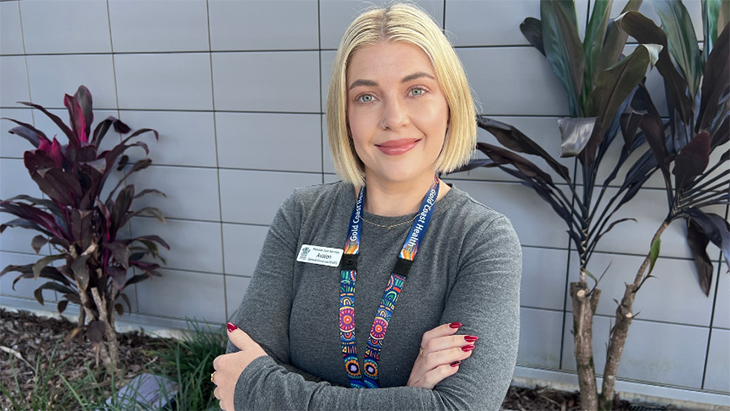
Avalon
Avalon is the QLD Clinical State Lead for the Specialist Palliative Rural Telehealth service (SPaRTa).
She has worked in the Specialist Palliative Care field since 2020, including completing a Masters of Palliative Care, in addition to 7 years in Intensive Care. Her passion lies in supporting rural and remote communities, to ensure that everyone can receive optimal palliative care, no matter where they call home. This passion stems for many years nursing in the rural and remote space in regional NSW (Wagga Wagga) before her move to the Gold Coast Health Service in 2025.
Avalon works with the SPaRTa state team and the SPaRTa clinicians across Queensland, to ensure the ongoing growth of palliative care provision. This includes over 1 million people who live in the rural and remote of QLD.
In the last 12 months SPaRTa has received nearly 2000 referrals. conducted 2000 calls with clinicians requesting advice and performed over 8000 telehealth consults.
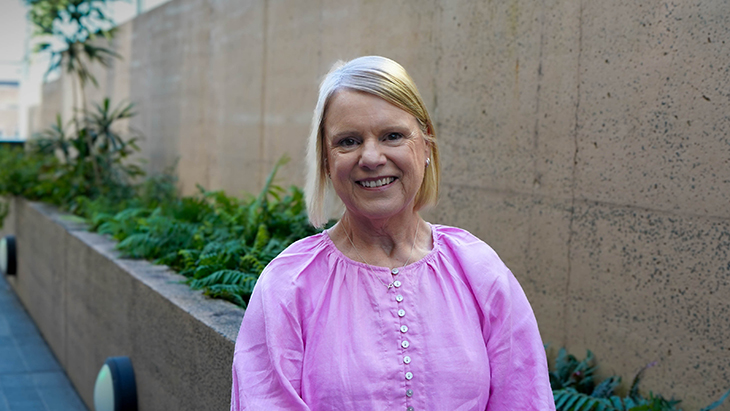
Laurelle
Laurelle is a Senior Social Worker with the Specialist Palliative Rural Telehealth Service (Gold Coast–Toowoomba Hub), supporting patients and families across South East Queensland. She has 25 years of experience in paediatric and adult hospital settings, with expertise in oncology, critical care, trauma, and palliative care. Laurelle is passionate about improving access to specialist palliative care for people living in rural and remote communities.
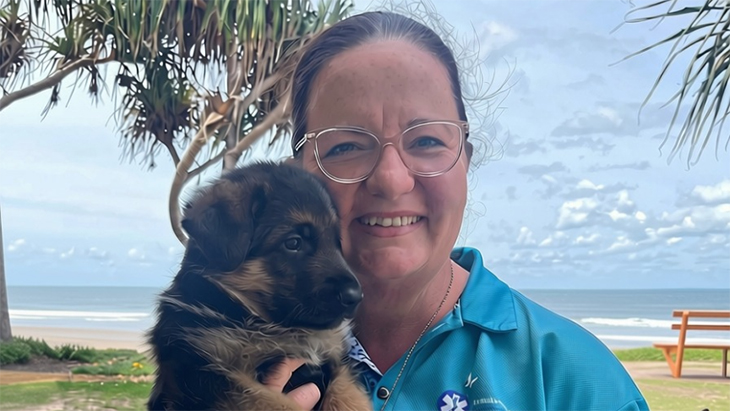
Sue
Alongside her work as a paramedic, since 2018, Sue has volunteered to with Ambulance Wish Queensland to help people who are dying fulfil final wish journeys.
Sue finds purpose in supporting palliative patients and their families to find moments of joy, connection and comfort.
In 2026, Sue’s compassion and commitment to serving the community were recognised with an Ambulance Service Medal.
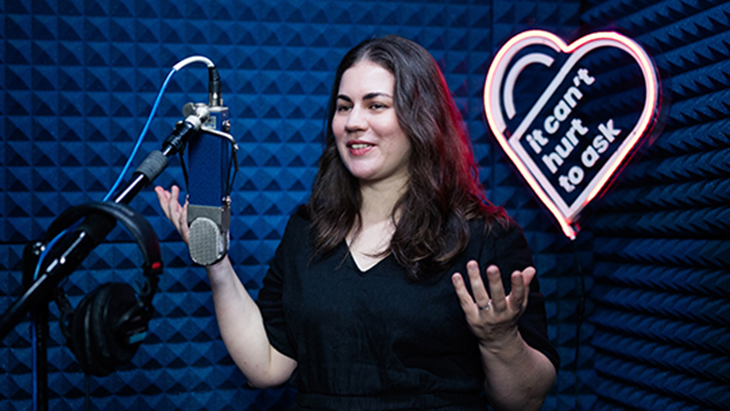
Lauren
With equal parts curiosity and caution, Lauren has delved into all things death and dying to produce and host this podcast series. She's talked to healthcare workers, allied health staff and people with lived experience from right across Queensland to get the full picture of what happens at the end of life and how we can prepare to live, and die, as well as we can.
Episode resources
Care at the end of life is a campaign and resource hub for Queenslanders with information about advance care planning and support for patients, carers and families.
Talking about death and dying can bring up challenging emotions. If you or someone you know is struggling with their mental wellbeing, support is available:
- Lifeline: call 13 11 14 (24 hours a day) if you are experiencing a personal crisis or chat to a counsellor online.
- Beyond Blue: call 1300 22 463 for broad mental wellbeing support or speak to a counsellor online.
- Griefline: call 1300 845 745 (9am–6pm, Monday - Friday, 12 noon–6pm weekends).
- PalAssist has general information and advice about palliative care services in Queensland. Call 1800 772 273 (free for Queensland residents) or chat online (from 7am to 7pm, 7 days).
- In an emergency, always call Triple Zero (000).
The following services were discussed in the episode or can provide additional information and resources:
- The Statewide Office of Advance Care Planning offers free advance care planning information and support for patients, families, carers, and health professionals. Phone: 1300 007 227 or email: acp@health.qld.gov.au.
- Apply for aged care services first by applying for an assessment. You can do this through your GP or local health service, online at the My Aged Care website, by calling My Aged Care on 1800 200 422, in-person with an Aged Care Specialist Officer at a Services Australia office.
- Any Aboriginal and Torres Strait Islander person who is 50 and over can access the Elder Care Support program. The program provides support workers who can give you information about aged care and guide you through the process of accessing services.
- Support is provided for infants, children and young people with life-limiting illnesses, as well as their parents, siblings, grandparents, school and community. Learn more via Children’s Health Queensland’s Paediatric Palliative Care Service, reach out to the Children's Health Queensland Bereavement Service via phone: 1800 080 316 or email: CHQ_Bereavement@health.qld.gov.au.
- Regional and rural patients, and their families, can access specialist palliative care services via telehealth. A referral is required from your GP, oncologist, other specialist or community nurse. Care is delivered by Specialist Palliative Rural Telehealth service (SPaRTa).
- Seniors Enquiry Line is a free, statewide information and referral service for Queensland seniors, families, friends, grandparents and carers. Phone: 1300 135 500 between 9am to 5pm, Monday to Friday.
- Voluntary assisted dying is one of several choices a person may have at the end of their life. It is important to discuss all options with your doctor. QVAD-Support provides advice and support to Queenslanders. Phone: 1800 431 371 or email: qvadsupport@health.qld.gov.au
Disclaimer
The stories and conversations shared by everyone in this podcast reflect their personal views, experiences and opinions. They are shared for informational and educational purposes only and are not intended to be a substitute for professional medical advice, diagnosis, or treatment.
Queensland Health does not guarantee the accuracy or completeness of the views expressed by guests and accepts no responsibility for any loss or damage that may result from relying on this content.
If you have questions about your health or treatment, please speak with a qualified healthcare professional.
Transcript
Eva
I wish more people would talk to me about the fact that I'm dying. I find with a lot of people, it makes them too sad and they don't know what to say. So, a lot of the time it turns out to be me comforting them, not the other way around.
Lauren
Is it better to know you're going to die or to have it happen all of a sudden and to not be aware? How would I cope with the knowledge? What would I do with my time if I knew just how limited it was? When it comes to our mortality, these are some of the age-old questions that have been keeping people up at night for millennia.
The thing is none of us really get a say in the answers. But can planning ahead help us make peace with this uncertainty?
Hi, I'm Lauren. In this episode, we'll be learning about what it's like to know you're dying and how planning ahead for the inevitable end of our lives can be helpful before and after receiving a life-limiting diagnosis.
I talk to Nurse Avalon about what it's like to tell someone they're dying and find out from social worker Laurelle how people live with this news. I'll also be joined by Sue, a paramedic who spends her free time taking dying people on final wish journeys, and hear the perspective of Eva, a Queensland woman living with a terminal prognosis.
Eva
now I'm choosing to live. I'm dying, but I am alive, and I'm going to live in the time that I have. It's just choosing what's right for me.
Avalon
My name is Avalon, I am the clinical state lead for the Specialist Palliative Rural Telehealth Service, also known as SPaRTa.
Lauren
Through her role at SPaRTa, Avalon coordinates a team of nurses and allied health professionals who provide palliative care to people who live in rural and remote areas of Queensland. Her background in critical care and palliative care nursing means she spent a lot of time caring for people when they're dying.
Avalon
We often hear that saying of live like you might die tomorrow, but really, as humans, we have this innate thing that we're going to live forever.
Being given that final, diagnosis all those things that are really important to you really come to the forefront of your mind.
Lauren
I imagine that telling someone that they or their loved one is going to die is one of the most difficult conversations a clinician can have. I asked Avalon how these conversations play out.
Avalon
Having that conversation early in someone's prognosis or diagnosis is really important. But the way that it's done is also really important. You don't want to be having really heavy-hitting conversations when someone's just had a diagnosis.
They've got quite a lot to process, but you do still want to start laying those foundations.
And so often it can be something as simple as, has anyone ever talked to you about advance care planning? Have you ever done an advance care directive?
Lauren
Avalon says that many of these conversations might be had with a person when they've been referred to a palliative care service like SPaRTa, and it's important that clinicians take things at the person's pace.
Avalon
You might have someone initially who is, "Oh no, I don't even want to think about that. I'm going to be cured, everything's going to be fine."
And that's kind of where you go, okay, this is our first touch point. Let's just let that sit when we have the telehealth with the doctor, and we link in some other support, say like the social work, then we can start unpacking that a little bit more.
Let's just let them have some time to process and then we can open up that conversation again.
For someone else, you might have someone who's like, "Oh yep, I've done my advance care planning. This is what I want. I've told all my family. We're all across it."
But sometimes people, and I think this is also really important, sometimes people need to get to that point themselves. Even though we can identify it, their loved ones can identify it, sometimes they need to get to the point that things aren't working for them to then go, "Oh, okay."
And we can see that as human beings quite often in whole different set of circumstances. But until we're ready to accept that, and we're emotionally or psychologically in that position, then we're not going to listen.
Lauren
When someone doesn't want to talk about the fact that they're going to die, Avalon says she sees it as an opportunity for clinicians to understand what might be driving their choices and use this to inform how they deliver healthcare.
Avalon
Ultimately, it's also their right to say, "I don't want to have this conversation." It's normally all just coming from fear of the unknown, and then once you unpack that, you can usually get through. But I think palliative care is a really beautiful example of it's about the individual and what they want, and we've got to be respectful of that.
Lauren
Even with training and experience as a clinician, Avalon said that it's important for healthcare professionals to acknowledge that having these conversations can be difficult, but this discomfort shouldn't get in the way of sharing information honestly and openly.
Avalon
Quite often we're much more anxious or uncomfortable about talking to someone who's dying about dying than that individual actually is. And that's been shown in some of the research that's been done in different areas about these conversations, that it's often the clinician who is balking.
Quite often it's the elephant in the room with someone who has a life-limiting illness, and by shining light on it and talking about what to expect and what's important, you actually get rid of that.
Lauren
Avalon has found that having these conversations with plenty of time for patients to think and ask questions can be the start of making the dying process easier for all involved.
Avalon
Most people actually feel calmer and more at peace with that clarity as opposed to that fear of, am I going to be in a lot of pain? Am I going to be in distress?
I've also had a lot of people where if you sit down and have that conversation about what to expect, especially when they're more in that deteriorating phase, is that their existential distress actually really reduced because they were actually worried about this Hollywood death that they were going to have, which that's not actually what it is, and most of the time it's extremely peaceful.
Lauren
If you haven't listened to our earlier episodes and you're keen to know what normal death looks like rather than the movie version, jump back to the episode about what happens when someone is dying.
Let's unpack some of the clinical language that Avalon has been using.
A life-limiting illness is a disease that is progressive and ultimately incurable that will shorten someone's lifespan. Motor neuron disease is an example of a life-limiting illness that currently has no cure.
A terminal diagnosis is given when someone has reached the end stage of certain diseases like cancer and will likely die within the next six to 12 months.
A prognosis is a medical team's best estimation of around how much time a person has left to live.
Avalon
None of us have a crystal ball, but quite a few of our conditions can be given a prognosis. A prognosis is always an estimate, but at least it gives people a bit of a timeframe to work with. But whatever that prognosis may be, knowing that you have a life-limiting illness or knowing that you're dying gives you the ability to live.
Lauren
It's a different way to think about things, isn't it? I've always worried about how I would respond to the news that I was going to die. Would I suddenly want to change my will or plan out my own funeral?
But Avalon says that when a person receives a diagnosis that means they will die, either in the near or more distant future, advance care planning really helps them think about how they want to live.
They can answer not only clinical questions like what medical treatments they do and don't want to receive, but also personal preferences about their lifestyle and goals.
Avalon
I think the other important side of things is not just that end phase, but also what are the things that are important to you before that? Are there goals that you have? Is there a way that we can support you to achieve them, to go to the coast one more time, to do some memory making, have conversations with loved ones?
being given that, final, you are actually going to come to your end of your life sooner than you anticipated, all of a sudden, those things that you may have put on the back burner or those bucket list items, all those things that are really important to you really come to the forefront of your mind.
Depending on timeframes, of course, some people have very late diagnosis, but it gives you the ability to do those things that are really important to you, whether it's having a loved one that's overseas that you really want to see one more time, whether it's something as simple as going and seeing the ocean again. We're all different, and our goals of care and the things that are important to us are all different.
Lauren
The advance care planning process can also help prepare loved ones for what is going to happen when someone is dying and afterwards.
It's also really important to include the family and the loved ones in that conversation. The last thing that you want to occur is families not knowing what they would have wanted. And when the person can't articulate for themselves, that can be really challenging for the family would they still want life-supporting care? Would they not? That can actually then impact their loved one's grief journey moving forward.
Lauren
While not everyone will know in advance when their life is coming to an end, Avalon says that this makes advance care planning even more important.
Avalon
None of us have a crystal ball. That's true for someone with a life-limiting illness. That's true of you and I sitting here now. And so, if we can put some plans in place and then focus on the here and now and enjoy the time we have, then that's what we should do.
Lauren
Once a person is in a terminal phase of their disease, they can experience symptoms that make it difficult to go about day-to-day living. So how do people achieve these bucket list items and goals, or even just have an opportunity to make positive memories with those close to them?
Sue
My name is Sue. I'm primarily an advanced care paramedic with Queensland Ambulance. And then when I'm on days off, I volunteer with Ambulance Wish.
Lauren
Paramedics like Sue can volunteer with Ambulance Wish Queensland to use their skills and donated equipment to help people safely achieve their goals.
Sue
With Ambulance Wish, our primary role is really the safe transport of Wish recipients to and from their venue of choice and just ensuring that they're comfortable and relaxed as they can be for the duration of the wish. We have a clinical escort that comes along with them, but obviously we work closely with those people to make sure that everything the patient needs is well catered for.
Lauren
I asked Sue why she chose to use her time to help people fulfil these end-of-life wishes and why it's meaningful to her.
Sue
I think it's important both for the wish recipient themself, while they've still got that agency to make some memories and make the most of, whatever time they've got left.
It's all about dignity in dying, and normalising that, death is very much unfortunately a part of life. It's going to happen to all of us. We do address that stigma, around the, the fear aspect of death and dying. We try to de-stigmatise that as much as we can, and just make these wish experiences just as normal as just a normal day.
Lauren
Some people choose to have big days out, taking the family to a special destination like the zoo or attending a birthday or a wedding. But for many, Sue says their wish is just to go somewhere they feel comfortable and at peace.
Sue
Certainly, some of those wishes are about those big life events and that's obviously, an incredibly important thing for people to be able to have their nearest and dearest with them for those big, really memorable events.
A lot of our wish requests are incredibly simple. People just want to be outside. We often just go to a local park or botanical gardens, out to the beach. They're quite common wish requests. For some folks, they want to return to their home. They want that familiarity. Sometimes we go to, the site of a first date or a marriage ceremony or somewhere that's got a lot of core memories for those people and their families.
Lauren
Sue says that adding a bit of normalcy back to life when it's been turned upside down can be a huge gift for people.
Sue
There's nothing more normal than going out to the park for a picnic or as I say, going down to the beach and putting your toes in the sand and feeling the water on your feet and I think really grounds people and just, reminds them, I think that's quite often, it's just really simple things in life that actually are the most important.
Lauren
Has Sue learned anything from working with people who are coming to the end of their lives?
Sue
Oh, it's a big question, isn't it? I think just the power of just truly being present with people really can't be understated. just being present, offering compassion to people just matters so much.
The wish recipients focus so much more on just the present moment. The extra noise and things really become... They get a lot more clarity, I think, on the things that are really important. Just those little things, being outside in the sunshine or feeling the breeze on their face watching the appreciation for that, quite often even as you're just coming out of the hospital ward and just walking out to the vehicle.
Because they're bed-bound previously, they often haven't been outside for a month or more. And you know, we obviously take those things for granted. But when they sort of just see the sun on their face and they close their eyes and say, "Oh, it's beautiful," and you think, "Oh, wow."
Having chatted to a lot of these wish recipients, I think teaching people to live a lot more authentically, follow their own dreams and what makes them truly happy and do that, whatever those things are. I'm yet to meet anyone who wishes, I, spent a lot more time at work.
people are, incredibly brave, you know? They're acknowledging their mortality and really accepting that reality and finality of death. But I think in doing that it helps them to engage a lot more fully with the life that they have right at this moment. So, let's make the most of the next couple of hours at least.
Lauren
You might remember Laurelle, a senior social worker who works in the SPaRTa service from earlier episodes in the series.
I asked Laurelle how people cope mentally and emotionally with the knowledge that they're going to die.
Laurelle
We always ask the patient and family what they would like to know, what are they worried about, and be totally guided by them about the level of detail that we provide. some people want to know everything, but others, just want the basic information, and that's okay.
Lauren
I asked her what questions people have and how their healthcare teams answer them.
Laurelle
The really big ones are, will I be in pain? How long do I have? what will I feel at the end? And families often worried about doing and saying the right thing and patients are worried usually about being a burden on their families or what would happen with their loved ones when they've died.
It's never easy leaving those who are close to us and who we love. So, what I do is encourage open communication with those around them about their thoughts and their worries and their feelings.
Lauren
Laurelle told me that for many people, shifting their thinking from being unwell and having treatments to get better to being unwell and accepting that they will die is a big part of coming to terms with their prognosis and moving forward with their life.
Laurelle
A big part of its helping them shift their thinking about cure to thinking about quality of life and comfort, and what's important to them. we all live right up until we die, therefore it's important to make sure that we're able to live well and the way we want to before we die.
I really create space for honest conversations, answer questions, and help them focus on what really matters to them right now. It can be a real mix of fear, sadness, and sometimes even a sense of peace or relief if they've been suffering for some time.
Everyone's journey to the end of their life is unique, the humans we all are, and sometimes this is a time for reflection on life and relationships and finding meaning and purpose in your life. So, there's often a lot of looking back and reviewing memories made over a lifetime, and also thinking about what still feels really important.
Being told you have a life-limiting conditions creates a really heightened awareness of our own mortality, our values, and our belief systems.
Lauren
People might feel all sorts of emotions when they know they're going to die. They might feel scared, sad, worried, or angry, and all of these are okay and normal. Laurelle says there is support for people to help them work through their emotions and decide what's important to them in their remaining time.
Laurelle
It's about normalising that these conversations at the end of life are really hard and, the whole team is around to support, patients and their families with conversations with things they're finding hard. there is psychology available as well, too. There are also professionals there to support if they do need more therapeutic intervention at the end of their lives.
Lauren
Whether a person is feeling very emotional and wants to share that with others, or they don't want to talk about their prognosis at all, Laurelle says that the people caring for someone who is dying can be a great support just by being present.
Laurelle
What helps people most is being heard. It's that deep listening again, and having those honest conversations, and having the right support around them, whether it's family, to talk to, having their cultural needs met, or whether it's spiritual or religious care.
Lauren
To finish this episode, we're going to hear from Eva. My team met Eva at a Death Café event where she had come to talk openly and honestly with others about dying.
Eva was living with terminal cancer and knew that she was likely to die within the year of our conversation. She didn't want her voice to be recorded, but she did want to share her story. As you'll hear, she felt strongly that we need to talk more openly about death and dying in our society, particularly with people who are going through it.
My colleague Nicole read her words for us.
Eva
Having a terminal diagnosis isn't all that hard. There's nothing I can do about it. It surprised me how easy it's been to accept what's going to happen.
The hardest thing is managing the world around me. I don't want to leave a big mess, so I need to be sensitive to other people, my family, because they're going through this too, and they'll keep living it when I don't. I'm trying to get through the administration side of things as much as I can in advance so that they're not left doing it after I'm dead.
The last round of treatment I did was a long shot. It made me feel so unwell. If it had just been down to me, I don't know if I would have done it. But when the specialist mentioned that there was one more thing we could try, the look of hope on my husband's face was something I couldn't ignore, so I did it for him.
Now I'm choosing to live. I'm dying, but I am alive, and I'm going to live in the time that I have. I stopped treatment because it was stopping me from living. It was taking away my quality of life, and it wasn't working anymore anyway. It's not giving up. It's just choosing what's right for me.
I wish more people would talk to me about the fact that I'm dying. But we're not used to talking about it, so we don't have much practice.
I find with a lot of people, it makes them too sad and they don't know what to say. So a lot of the time it turns out to be me comforting them, not the other way around. I'm the one dying.
When you're dying, you figure out that there are 4 main types of people in the way they'll respond to you. There's the people who want to help because they love you, and if you can accept that help, it's a real gift.
There are the people that want to help, but they're paralysed by their fear or emotions or getting it right, so they just don't do anything. Then there are people who just ignore it. They don't want to talk about it, but then really they're just ignoring you.
And then you've got what I call the death tourists. They say they're helping, but they're just being nosy or wanting to, like, play the Good Samaritan.
The paralysed people, the ignorers, and the tourists, they're exhausting. Managing them is really exhausting.
What I really want is for people just to treat me normally. Ask questions if you're interested and you care about the answers, just like you'd ask questions if I had a new baby or a, change in job. Help is wonderful, but don't do things out of obligation.
My time is limited, so don't let me waste it trying to make you feel better about what's happening to me.
Humor is great. One of my kids, my adult kids, said to me on my birthday this year, "Gee, I guess this is the last time I get to enjoy this date Thanks, Mum." We laughed at that. When we can have a laugh, it really helps us talk about it with love.
So yeah, I'm surprised by how easy it is to be dying. I can't do anything about it, but I've stopped telling people now. I'm just going to invite them to my celebration of life, which will be a big party while I'm still well enough to enjoy it.
I came here today just to be able to talk about it freely without worrying about upsetting anyone. I've got questions just like anyone would. It's nice to have a space to ask them.
I'm glad this program is being made. More people need to be able to talk about death. It's coming for all of us sooner or later.
I wish you could listen to it, but hey, I can't make any promises.
Lauren
No matter how much we talk about it, it will likely never be easy to tell someone they are dying or to receive that news. But not talking about it, shying away from the topic with family, friends, or healthcare professionals can make these conversations even harder. There's no right way to respond to the news that you or a loved one is going to die, just like there's no right way to live. There's only your way.
So, has this episode made you think about what that might be for you?
Is it time to write it down in an advance care plan or start that conversation with your loved ones so that you and anyone who might need to knows what's important?
For most of this series, we've been talking about what happens when someone dies and their death is more or less expected. In our next episode, we're going to talk about what happens when someone dies unexpectedly. We'll hear from paramedics and ICU specialists about how this plays out and what people might encounter.
Todd
For paramedics, they're thinking about a whole range of things, so they'll tend to be not necessarily quickly jumping out of their ambulance when they get there.
Carly
We have access to everything you could ever dream of, and there are still some people who we unfortunately can't help.
Lauren
What happens if an ambulance arrives at a scene and a person has already died? How do paramedics and ICU workers know if someone's life can be saved? What conversations would be had with my family if I died suddenly? It can't hurt to ask.