
Summary
Would you like to donate your organs or tissues when you die? What parts of the body can be donated? How do you register to be a donor?
While most Queenslanders say they would like to donate their organs or tissues when they die, only 30% have registered their wishes with the Australian Organ Donation Register. So, in this episode, we're breaking down how organ and tissue donation work in Queensland and why it's so important to register what you'd like to happen if you were in the position to donate.
Tina, State Manager and Director of Nursing for DonateLife Queensland, will join our host Lauren to go over the surprising number of body parts that can be donated, how donors and recipients are chosen, and why it's so important to tell your loved ones if you want to be a donor.
Donation Specialist Nurse Coordinator Meagan explains why the opportunity to be an organ donor is so rare and shares how she talks to families of potential donors about their wishes, helping them to come to a decision about donation. Clinical Nurse Consultant Donna joins us to talk about why more people can donate tissue than organs, and the reason she decided to become trained in eye tissue retrieval.
We'll also hear from Queenslanders Rob and Janet, who tell their story about what it was like when Rob received a life-saving liver transplant earlier this year, and Helen, who talks about her experience of receiving an eye tissue graft that renewed her sight.
If you've ever thought about registering as an organ or tissue donor, or if you've never thought about it, this episode has all the details that can help you decide what your wishes are and how you want to communicate them.
This episode is part of the podcast series It Can’t Hurt to Ask ... about Death and Dying.
Featured in the episode
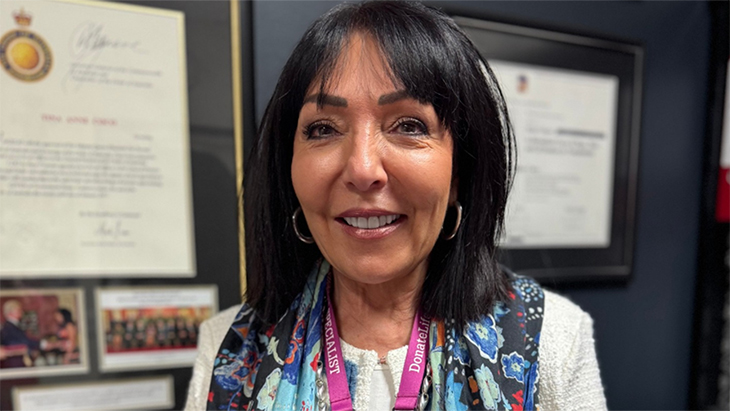
Tina
Tina (AO) is the State Manager and Director of Nursing for DonateLife Queensland. She has been clinically involved in organ and tissue donation for over 30 years, originally as a donor coordinator and later, in 1999, established the statewide organ and tissue donation service for Queensland.
She has a strong commitment to donor family care and communication and has been a national facilitator for family communication training in Australia for donation doctors and nurses, delivering training workshops and presentations both nationally and internationally on donor family care and communication.
In 2017, Tina was awarded an Order of Australia (AO) for distinguished service to community health, as a leader of, and advocate for organ and tissue donation and transplantation coordination organisations at the state, national and international level.
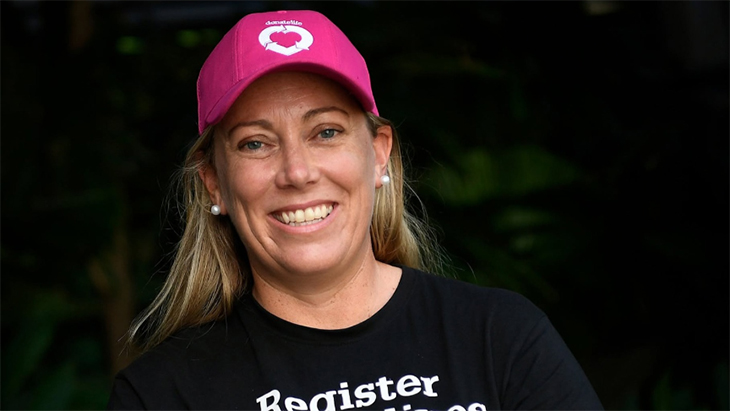
Meagan
Meagan is a donation specialist nurse coordinator at Townsville University Hospital. She has worked in ICUs across Australia for 22 years, spending 14 of those in Townsville. She finds purpose in providing care for families during some of their toughest moments and loves working in a highly skilled multidisciplinary team of healthcare professionals serving their community.
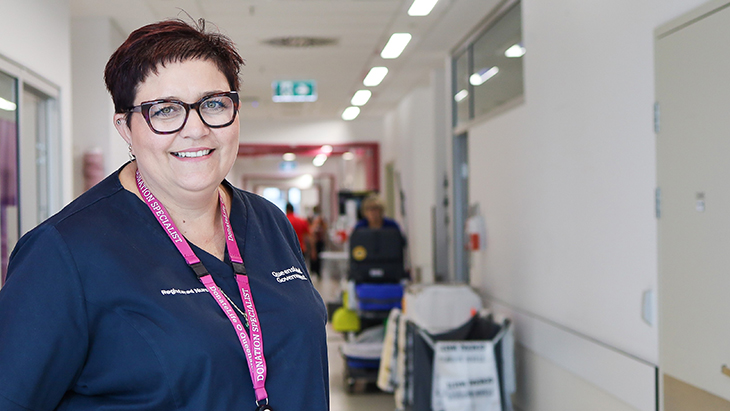
Donna
An inability to fulfil the final wish of a former patient prompted Mackay Hospital and Health Service clinical nurse consultant for organ donation Donna to undertake specialised training in eye tissue donation.
Donna has dedicated many years to supporting those in the region who wish to donate or receive organs. She takes inspiration from the resilience of donor families and gratitude of recipients.
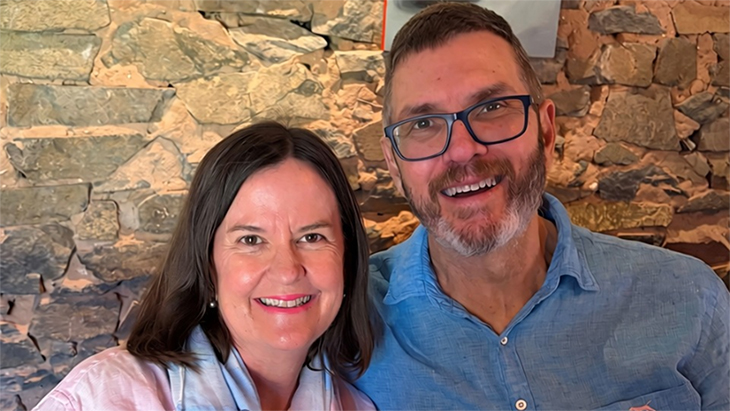
Rob and Janet
After a recurrence of liver cancer left him without viable treatment options, Rob received a life-saving liver transplant. He and his wife Janet speak about his experience waiting for a transplant, undergoing surgery and Rob's recovery, sharing their gratitude to the organ donor and their family, for the generous gift that saved Rob's life.
Helen
After living with keratoconus (a progressive eye condition that affects the shape of the cornea) for years, Helen underwent an eye tissue graft. After a simple recovery, Helen was able to have further laser eye surgery to improve her vision and can now wear regular contact lenses.
Helen doesn't take for granted her ability to do simple things, like drive at night or wear her contacts on long-haul flights.
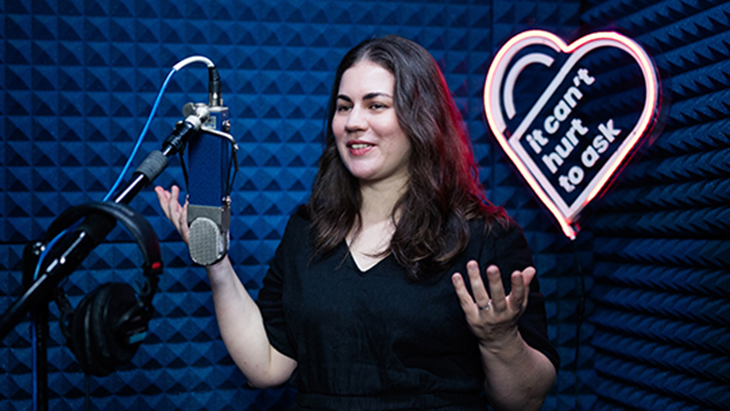
Lauren
With equal parts curiosity and caution, Lauren has delved into all things death and dying to produce and host this podcast series. She's talked to healthcare workers, allied health staff and people with lived experience from right across Queensland to get the full picture of what happens at the end of life and how we can prepare to live, and die, as well as we can.
Episode resources
Care at the end of life is a campaign and resource hub for Queenslanders with information about advance care planning and support for patients, carers and families.
Talking about death and dying can bring up challenging emotions. If you or someone you know is struggling with their mental wellbeing, support is available:
- Lifeline: call 13 11 14 (24 hours a day) if you are experiencing a personal crisis or chat to a counsellor online.
- Beyond Blue: call 1300 224 636 for broad mental wellbeing support or speak to a counsellor online.
- Griefline: call 1300 845 745 (9am–6pm, Monday - Friday, 12 noon–6pm weekends).
- PalAssist has general information and advice about palliative care services in Queensland. Call 1800 772 273 (free for Queensland residents) or chat online (from 7am to 7pm, 7 days).
- In an emergency, always call Triple Zero (000).
The following services were discussed in the episode or can provide additional information and resources:
- The Statewide Office of Advance Care Planning offers free advance care planning information and support for patients, families, carers, and health professionals. Phone: 1300 007 227 or email: acp@health.qld.gov.au.
- Apply for aged care services first by applying for an assessment. You can do this through your GP or local health service, online at the My Aged Care website, by calling My Aged Care on 1800 200 422, in-person with an Aged Care Specialist Officer at a Services Australia office.
- Any Aboriginal and Torres Strait Islander person who is 50 and over can access the Elder Care Support program. The program provides support workers who can give you information about aged care and guide you through the process of accessing services.
- Support is provided for infants, children and young people with life-limiting illnesses, as well as their parents, siblings, grandparents, school and community. Learn more via Children’s Health Queensland’s Paediatric Palliative Care Service, reach out to the Children's Health Queensland Bereavement Service via phone: 1800 080 316 or email: CHQ_Bereavement@health.qld.gov.au.
- Regional and rural patients, and their families, can access specialist palliative care services via telehealth. A referral is required from your GP, oncologist, other specialist or community nurse. Care is delivered by Specialist Palliative Rural Telehealth service (SPaRTa).
- Seniors Enquiry Line is a free, statewide information and referral service for Queensland seniors, families, friends, grandparents and carers. Phone: 1300 135 500 between 9am to 5pm, Monday to Friday.
- Voluntary assisted dying is one of several choices a person may have at the end of their life. It is important to discuss all options with your doctor. QVAD-Support provides advice and support to Queenslanders. Phone: 1800 431 371 or email: qvadsupport@health.qld.gov.au
Disclaimer
The stories and conversations shared by everyone in this podcast reflect their personal views, experiences and opinions. They are shared for informational and educational purposes only and are not intended to be a substitute for professional medical advice, diagnosis, or treatment.
Queensland Health does not guarantee the accuracy or completeness of the views expressed by guests and accepts no responsibility for any loss or damage that may result from relying on this content.
If you have questions about your health or treatment, please speak with a qualified healthcare professional.
Transcript
Rob
We'd just gone to bed on a Sunday night, and we were reading in bed. Got a phone call, "Got a viable liver. We would like you to come in." And I was trying to get Jan's attention.
Jan
And then he just turned to me while he was still talking to the surgeon, and just thumbs up, and I started to cry, and then he had a tear.
Rob
Really exciting because it was, you know, it's what you hope for. But then also very daunting because, even though I had cancer, I felt well. And you know, you're walking into a hospital, about to undergo a very major surgery.
Lauren
Would you like to be an organ donor? What about donating tissues? Have you registered your wishes? Are you sure?
Many people find that donation is one of the easier starting points for conversations about death and dying. Sad as contemplating our death might be, it's nice to think about a potential positive that could come out of it.
But most of us don't really know much about how the process works, the differences between organ and tissue donation, or how to make our wishes clear. And that matters because while surveys show that the majority of people would be happy to be donors, only 30% of Queenslanders have registered their wishes either way.
So, in this episode, we're covering the ins and outs of organ and tissue donation. We'll hear more from Rob and Janet about what happened when Rob received a life-saving liver transplant earlier this year. And I'll also talk to Helen, who received an eye tissue donation that renewed her sight.
Tina, the state manager and nursing director of DonateLife Queensland, is going to talk about how it all works, and donation specialist nurses Donna and Megan will walk us through the donation process.
Tina
My name's Tina, I'm the State Manager and Nursing Director of DonateLife Queensland.
Lauren
Tina has been working for DonateLife for 35 years, so she's the perfect person to give us an overview of how it all works.
Tina
I was very fortunate as a young nurse to be working in the operating theatre and I was part of what they call the transplant team, where surgeons would actually implant organs such as the liver and the kidneys.
And I always wondered when the team arrived back to the hospital to do the transplant, ‘Who was the human behind this? Where did this organ come from? What was their story?’
I just had this burning desire to be part of the other side of helping with donation, which is why I went into the field of organ donation.
Lauren
I asked Tina to walk me through what can be donated. It turns out there are way more parts of the body that can be given to others than I was aware of.
Tina
Most people are aware of the organs that are inside our chest and our tummy, heart and lungs, liver, pancreas, and kidneys. Sometimes intestines, but not a lot of people are on the waiting list for intestinal transplant.
Tissues include corneas of the eyes, which give people the gift of sight, heart tissue, which gives heart valve replacements to babies right through to adults, and we know 75% of heart tissue that's donated will go to babies.
Then there's bone tissue. Bone tissue is the second most commonly used tissue in the world next to blood. So it's very common to use bone tissue, and that is used for spinal surgery, people who've had trauma or cancer. So, it gives people back their mobility, and that is absolutely quality of life restoring.
Then there's skin tissue, for people who have severe burns, and sometimes trauma where they've lost a lot of skin tissue in that trauma as well, and that is actually life-saving skin tissue.
Lauren
Did you know so many tissue types can be donated? I didn't. I also wasn't aware how different the processes are for donating tissues and organs.
Tina
A lot more people in the community can donate tissues than they can organs. To be an organ donor, you need to die in a hospital in an intensive care on mechanical ventilation and unfortunately that reduces the number down by a lot, which is why we know organ donation is a very, very rare opportunity.
And so, with tissue donation it’s completely different. You can die in a hospital ward, no machines attached to you, or you can die at home. Tissue donation can happen in an operating theatre, it can also happen in the hospital mortuary and can also happen in the funeral home.
The difference between organ and tissue donation is that tissues can be retrieved up to 24 hours after the heart has stopped. Tissues don't require a blood supply to work in someone else and that's the important difference between organs and tissues. They will still work because they don't depend on that blood supply.
If you're an organ donor, you can most certainly also be a tissue donor as well. But you don't have to be an organ and a tissue donor. When you're a tissue only donor, it means that you have not died in the circumstances where organ donation was possible.
Lauren
In our last episode about unexpected deaths, I spoke to Meagan. She's a donation specialist critical care nurse from Townsville University Hospital. For this episode, I asked Meagan to talk about how she broaches donation conversations with families.
Meagan
Organ donation is only ever raised when somebody's on an end-of-life pathway. Once there is a consensus that they're on an end-of-life pathway, we generally have a conversation with family about end-of-life cares.
That conversation might include things like the opportunity for memory making, where we can do ink hand prints, locks of hair. We can offer religious blessings. We've got time for important family and friends to come and say their goodbyes.
But it's also in this conversation where we raise that it's the opportunity that their loved one may be able to help others through organ donation. If that person's registered on the organ donor register, we let the family know that information. We also ask the family if they've had a conversation with that person about organ donation previously.
If that person hadn't registered their decision or hadn't talked to their family, often we ask family to look at the life that that person may have led, to see if organ donation sits with that person's previous life. If they had been a blood donor, then it might fit with being an organ donor as well. At the end of the day, we want to ensure that that person's decisions are honoured.
Every conversation that I have is never the same as the one I've had previously. Every circumstance is different. If we have patients that come in through the emergency department and it's quite clear from their admission in emergency that that they are not going to survive. We're having conversations a few hours into that person's first admission to hospital.
Other times, the person might have been in a hospital for days to weeks, where we've reached a point where it's unfortunately become clear that the person's not going to survive and then we're talking to family about organ donation.
Lauren
I asked Meagan to explain what happens after a person's loved ones have consented to organ donation. She let me know it can take a bit of time to do the necessary testing and organising required for the donation processes.
Meagan
During the preparation for organ donation, their loved one is kept in the intensive care unit on the life-sustaining therapies and still cared for as they had been since admission from our nursing and medical staff. We also ensure that families understand that they're not receiving any less care. It's still the same care that their loved ones received.
We let the family know that we need to do some blood tests work out who our recipients might be. It also screens for certain infections and diseases that means organ donation may or may not be able to go ahead.
We also let the family know that we need to do a medical and social questionnaire and that looks at things like did the person have diabetes or hypertension or any medical illnesses that means that there might be some organ dysfunction? It also looks at things like travel history, where someone who might have gone to some tropical areas of the world sometimes can pick up some illnesses that they might not be suffering from, but may be in their blood.
And we just make sure that we screen to ensure that safe transplantation occurs. We also let the family know that we might need to do some tests like ultrasounds and scans to ensure that there's no unknown or hidden cancers that we weren't aware of that might cause issues to somebody if we were to transplant those organs.
Lauren
Meagan says that she has found the organ donation process can often provide a moment of positivity for people who have lost a loved one in an otherwise very difficult time.
Meagan
We know for some families organ donation is the only thing they've seen positive through that admission, that every other aspect has been a shock. Nothing has been a pleasant experience, but knowing that their loved one is able to help others through organ donation is the only thing that they see as a positive aspect.
Lauren
Remember Tina from the start of the episode? She says that the rare set of circumstances that can lead to a person being a suitable organ donor, plus the traumatic situation that may have led to their death, can make it a very difficult time for families to decide in the moment to go ahead with donation.
This is why it's important to register your wishes about donation, regardless of whether you would or wouldn't like to donate.
Tina
So, if we look, for example, just last year in Australia, 187,000 people died in this country, yet only 89,000 of those people died in a hospital. Now only 1,670 people died in an ICU that had the potential to be an organ donor. That's the whole of this country. And out of those people who were asked about organ and tissue donation, only 790 people gave consent. So, we've gone from 187,000 people dying down to the possibility of 790 people being able to donate.
And we know that when you register your decision, that your family, 4 out of 5 times, that family's going to say yes because they want to support the decision that you made during your lifetime. We always add, ‘Tell someone you love what you've decided.’ Because at that time, when we talk to families about organ donation or tissue donation, we are speaking to a family who are so vulnerable because they've just lost their person, someone they dearly love, and then we're asking them to make a decision. And if they don't know what you wanted, families will say, ‘Oh look, I don't know what they wanted. I'm going to say no.’
And we know that that may not have been the decision that that person would've made, but because you've not shared it with that person then, often the answer is no.
Lauren
Rob and his wife Janet have firsthand experience with organ donation. A few years ago, Rob received a diagnosis of liver cancer. While it was successfully treated, the cancer returned last year, and Rob was told his only option for a cure was a liver transplant.
Rob
And on the last scan, unfortunately, it showed that the cancer had returned and was growing. When I got the diagnosis of the cancer returned, basically the doctor said the only option available was a liver transplant. Which was fantastic to hear that there was an option, but it's also scary because that starts the process that you then try to get onto the liver transplant list, which is a whole process in itself. That took over 3 months of tests, one test after the other.
Lauren
Organ donation recipients are thoroughly screened to ensure that their donation has the best chance of success. Once they're on the recipient list, then the waiting begins. Tina explained why it can take a long time to find a matching donor and recipient.
Tina
So, we need to have the person who's the same blood group, but also size is important because organs such as the heart, the lungs, and the liver, they need to go back into the same place where their diseased organ is removed.
When I'm talking about organ donation when in the community, I usually talk about myself because I'm a shortstop, right? I'm 5 foot 2. I say, ‘Look at me,’ and I pick a really tall man out of the audience, and I say, ‘Look at this man. He's probably 30, 40 kilos bigger than me. So even though we might be the same blood group, I couldn't give him my heart because my heart muscle would be too small to pump blood around the size of his body. Equally, he couldn't donate his heart to me because his heart muscle would be too big to fit into my chest.’
But when it comes to kidneys, size is not an issue at all. Blood group is important, but also a special cross-matching process takes place to make sure that the kidneys will actually match very, very well.
Lauren
When everything comes together with the right donor for the right recipient, a phone call is made to the recipient to come in for surgery straight away.
Rob
It's just a transition period. You don't know what's going to happen. You do have to confront the possibility that you're not going to live, you know? Christmas time was like, I'm not sure if I'm going to make next Christmas.
I was incredibly fortunate that I was only on the list for less than 2 weeks, which was a blessing. It was very surreal; we were just getting our heads around getting onto the list, let alone the idea of then getting a viable liver.
It was just, really exciting, because it's what you hope for. But then also very daunting. Even though I had cancer, I felt well. And you know, you're walking into a hospital about to undergo a very major surgery.
And we'd been living with hoping the phone call would come.
Janet
So wonderful. Absolutely wonderful. I didn't have the daunting bit. I had nothing but excitement. I've been a nurse for 40 years, maybe it was that lens where I knew the calibre of the care that he was going into, that I had no qualms about the operation. I thought, ‘As long as we can get him into the hospital.’
Rob
But even then they, you know, they do tell you that even when you get the call in, which was, you know, exciting and terrifying at the same time, there's a 20% chance that the transplant can't go ahead because the liver's not suitable or there's a problem with you.
If you have a cold or something which is going to, you know, compromise the surgery.
Lauren
Receiving an organ transplant isn't easy. For Rob, the initial recovery from his large surgery was rough. He now has ongoing appointments to check on the health of his liver and has had to be readmitted a couple of times.
Rob
It's a major operation. It's a very large cut, right through your abdomen. So it was, you know, it was painful. But the hospital and the staff, unbelievable.
And they do everything they can to make your life as comfortable as possible and they do everything they can to get you going as quickly as possible. So even though it's painful, they get you up and walking and you can see the benefits of that. I was only in hospital for 6 days, which was amazing given the, you know, if you look day by day, the change in myself, it was incredible.
But it was so exciting because they said it was a very good liver and that the operation looked very successful.
Lauren
Despite the difficulty of recovery, both Rob and Janet are very grateful for Rob's second chance at life and the gift his donor gave him.
Rob
Compared to the alternatives, it was fantastic.
Janet
And I guess you can't describe the debt you feel to, I get a bit emotional, to someone who, with their family in their darkest hour, either they or their loved ones made a such a big decision.
Rob
Yeah.
Janet
At a time when it would have been very easy to say that was all too much. And they've given him the gift of 20 years, 30 years.
Rob
Yeah.
Janet
The impact on our 3 kids and our granddaughter, they've given this ongoing gift of life to an entire family, and our friend network who are all as elated as we are. Like, it's such a beautiful, special gift.
For people who are making that decision and contemplating that decision; the respect and the expertise that the whole transplant team use for both the recipient but very much for the donor is so beautifully done that we could reassure you how seriously they take the care of the donor. It's done very carefully and with great respect.
Lauren
As Tina explained earlier, tissue donation is more common than organ donation, even though fewer people know about it.
Donation Specialist Nurse Donna from Mackay trained specially to be able to perform eye tissue donation surgery to fulfil the last wishes of people in her community.
Donna
Our region is quite big, actually. We go down south to St. Lawrence, out west as far as Clermont and Collinsville, and up to Bowen. We've got the Whitsundays plus we also have the mining towns to the west of Mackay.
I had been thinking for some time we don't do a lot in the regional centres because we needed a tissue banker on the plane when the retrieval team was coming up with a donor.
Ordinarily we would have said, ‘Look, you were suitable, but unfortunately we haven't got the resources to be able to retrieve.’
There's some people with some primary cancers that are ruled out for organ donation, and I'd get a lot of phone calls from our palliative care team, you know, ‘This patient would like to donate’, and we'd have to say no because we couldn't where potentially they could have donated their eye tissue.
Lauren
Donna explained why people might need an eye tissue donation or graft and what parts of the eye can be used.
Donna
People can have numerous conditions which causes the cornea, the clear part in the middle of your eye, to cloud over. You lose your vision. So, a corneal transplant can help with those. Also, with infections or trauma can sometimes lead to people needing a corneal transplant.
Then there's also the sclera, the white of the eye, which can be also used for trauma to the eyes if there's been a traumatic injury to the eye that can be used to repair that as well.
Lauren
If someone is questioning whether they should register as an organ or tissue donor, Donna says that everyone who wants to should put their name down. There's a good chance that they could be a tissue donor, even if they don't meet the stricter requirements of organ donation.
Donna
There's a lot of guidelines and there are a lot of illnesses and diseases that rule you out. But what we say to people is don't make the assumption that you're not suitable. We will assess that or the doctors will assess that at the time, whether that potential donor is suitable to donate.
With tissues, the age is a bit wider. You can go up to 90 to donate your tissue. It will come down at that time when we do the assessment whether that person will be suitable when we do a full medical history.
Lauren
Donna's new training has given her more insight into the experience of donor families and recipients, and she finds a lot of purpose in her work.
Donna
I think one of the hardest things to lose is your sight. There are stories of people, they lose their livelihood, they lose their jobs, and getting a corneal transplant, you know, brings that back. They can continue on with whatever their job was. You think organ transplantation is life-saving, and tissue transplantation hasn't been in the limelight a lot, but it is definitely very life-restoring. You look at the outcome for the recipients and you know this is absolutely life-changing.
But the donor families, they're one of a kind. Their resilience, their strength that they show at the time, you just don't see anywhere else. They're pretty amazing. It's those donor families and knowing that we're doing the right thing by them and their relative. We're fulfilling their wishes.
Lauren
Helen lives on the Gold Coast. She joined me to talk about what it was like to receive an eye tissue transplant after years of poor sight that was getting increasingly hard to correct with glasses and contact lenses.
Helen
I've got a condition called keratoconus, and I've got that in both eyes. Keratoconus actually affects the curvature of your cornea. Because of the keratoconus, I couldn't wear a contact lens on my right eye, it was just too cornical to have anything sit on it.
So I went to this ophthalmologist and he ended up prescribing me what they called RGP lenses, which are really, really tiny lenses. And I do remember him saying to me, ‘Don't sneeze because they'll pop off your eyes.’
It was costing me every 6 months to get new contacts, new lenses and my glasses, because obviously the condition was progressing. So, my optometrist at the time, and the ophthalmologist, kept throwing around the idea of a graft.
Lauren
Helen was nervous about having the surgery but eventually decided it was the best treatment option on offer. Because tissues don't require blood type matching, she didn't have to be on a waiting list or keep her phone on for a late-night phone call like Rob.
Helen
The graft that I had was what they call a partial graft, so it wasn't a full thickness, it was a partial thickness. It was all quite simple. I had no issues. It means multiple eye drops for quite a few weeks.
Normally with keratoconus you can't have any sort of laser because your cornea's too thin anyway. So, after the graft, and the stitches came out, I then had a lens replacement and also a little bit of laser afterwards to flatten it out and make it a bit more even.
Lauren
For Helen, the change to her life after surgery is evident in moments many of us take for granted.
Helen
You don't know what you don't have when you don't have it. And I think through school I probably would've done a lot better if I could read the blackboard and keep up with things that way. Even filling up a water bottle, you know, in a workplace water cooler thing, was always missing.
I can drive at night. I'm a lot more comfortable driving at night. For quite a while there I wouldn't drive at night because you get a double reflection.
The lenses that I have these days, and this is thanks to the graft and the technology of new lenses, I can wear my lenses for, you know, 16, 18 hours a day and still don't feel like I'm wearing them. Whereas, other types in the past have been quite uncomfortable, especially the RGPs or the other types of sclerals.
You get tired and as soon as you get tired it's always your eyes that hurt first; you see people rubbing them because they're tired. When you've got a hard bit of plastic on your eye it's a little bit hard and it just makes your eyes a lot more sore, you know, red, watery, all that sort of thing.
But these new lenses that I can wear in both eyes, I can wear for 16, 18 hours and still not realise that they're in or feel that they're in. I can, if I was doing a flight or anything like that, you know, without having to worry about your eyes. So yeah, I can do anything.
Lauren
Organ and tissue donations are needed and many of us want to be donors, but numbers are low. I asked Tina what might be getting in the way.
She said one really valid concern people have is what an organ or tissue donor will look like after the donation procedure.
Tina
I'm glad you asked that question, because I think people may have concerns about how their loved one might look after organ or tissue donation, and I think I can address both of those very clearly.
And going back to when I first saw a transplant happen, and I saw how lovingly the surgeons cared for this organ and how they placed it in the recipient, now 35 years later working in organ donation, I can say that every donor is treated with the utmost respect, and every organ is lovingly cared for, taken out of that patient, and then that patient is cared for and beautifully closed.
And at the end of the procedure, we actually encourage families to come back and spend some time with their loved one after the organ donation surgery, because we want them to know that we have taken beautiful care of their loved one and that they will look exactly the same after organ donation. And that's important for families to know.
Most families take up that opportunity to come back and see their loved one and I can honestly say, in my experience, families say, ‘But I thought you were going to take the eye tissue?’
‘Yes, we've done that already’, you know? And it's just, they can't tell that, that organs or tissues have been removed.
Tissue donation is often not done at the same time as organ donation, and when that's done later on, again I can tell you, the patients are prepared beautifully for an open casket funeral. You know, there's nothing that they can see superficially on that person that makes them look any different to anyone who's not donated.
So, I think that's really important, because families, I can understand why they might wonder, ‘Well, what are they going to look like?’ And it's not an uncommon thought. Even if they don't verbalise it, I know that may be of a concern, and that's why when we're talking to families in the ICU, we encourage them to come back and see their loved one after donation surgery.
Lauren
Let's go back to those questions I asked at the start of the episode. Would you like to donate your organs or tissues after you've died? Are you sure you've registered your decision? And if you've registered, have you told your loved ones so that they know your wishes?
Recording your wishes about organ and tissue donation can be done through your myGov account, on the DonateLife website, or by a downloadable form available from Services Australia.
As you've heard in this episode, registering is a great first step, backed up by a conversation with your loved ones about your wishes.
If you're finding that conversation daunting, DonateLife has tips on their website. We've linked to all of these services in this episode's show notes.
For most of this series, we've been focused on what happens and what can be planned for when someone is coming to the end of their life.
In our next episode, we'll be learning about grief and bereavement and the experiences of people who go on living after loss.
Laura
I encourage anyone listening, to think about a time that you’ve had someone close to you die, or you've lost something that meant so much to you.
Being able to wrap your head around what that means is incredibly painful and difficult. And your body, and your mind, and emotions are going to try and express that pain in lots of different ways. There's no one-size-fits-all approach to this.
Lauren
What's the difference between grief and bereavement? How long will grief take to pass? Is there a right or wrong way to feel after someone has died? It can't hurt to ask!