

Summary
While it may feel uncomfortable, we can't talk about Death and Dying, without answering this one—what actually happens when someone is dying?
Lauren tackles this question head on to find out more—what are the different stages of dying, how long does it take and what do the movies get right (if anything)? We also learn more about the importance of advance care planning as we age and how voluntary assisted dying works from Karen, a clinical nurse consultant from Toowoomba.
In this episode, we'll hear from clinical nurse consultant Jacinta and palliative care specialist Dr Sheryl from Caboolture Hospital's palliative care service, who explain what to expect as people come to the end of their lives.
Remember, death may feel scary, but talking about it shouldn't. After all, it can't hurt to ask!
This episode is part of the It Can’t Hurt to Ask: Death and Dying.
Featured in this episode
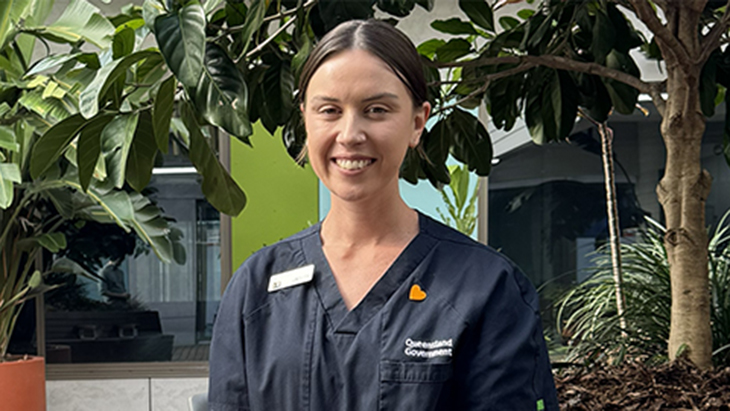
Jacinta
Jacinta is the palliative care clinical nurse consultant at Caboolture hospital. She ensures patients across the hospital receive appropriate access to palliative care and quality end of life care. She is passionate about patients being at the centre of their care and is particularly interested in what makes a good death for both patients and their loved ones, and how we perceive death as a society.
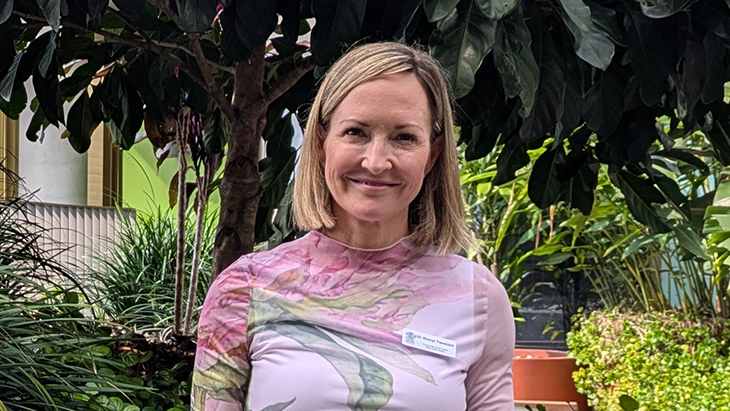
Dr Sheryl
Dr Sheryl is a specialist palliative care physician with a passion for helping people navigate serious illness with dignity, comfort and choice. She works across hospital, community and aged care settings, supporting patients, families and healthcare teams through complex decisions and end-of-life care.
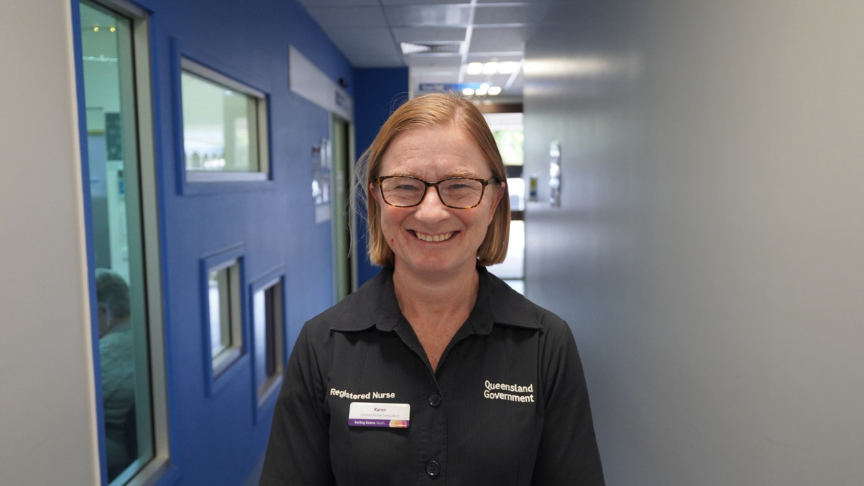
Karen
Karen trained in the UK, graduating in 1996 and commencing her nursing career in Acute Neuro medicine. She later moved to work in the haematology and bone marrow transplant in 2002 and in 2004 became a Clinical Nurse Specialist in Palliative Care.
Karen completed her master’s degree in Ethics in Cancer and Palliative Care, writing her thesis on the ‘Patient Autonomy and Voluntary Active Euthanasia’. In 2012 she moved to Australia and worked as the palliative care clinical nurse consultant at Toowoomba Hospital until late 2022, before starting the role of VAD CNC for Darling Downs Hospital and Health Service in November 2022.
She finds VAD an extremely rewarding area to work in and being able to support people through their VAD journey is a real privilege.
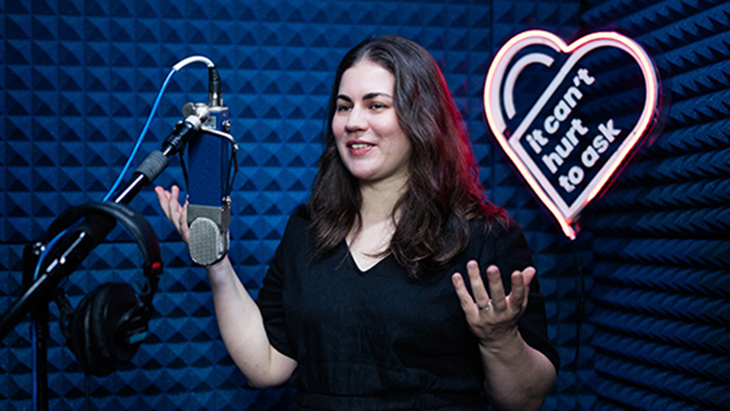
Lauren
With equal parts curiosity and caution, Lauren has delved into all things death and dying to produce and host this podcast series. She's talked to healthcare workers, allied health staff and people with lived experience from right across Queensland to get the full picture of what happens at the end of life and how we can prepare to live, and die, as well as we can.
Episode resources
Care at the end of life is a campaign and resource hub for Queenslanders with information about advance care planning and support for patients, carers and families.
Talking about death and dying can bring up challenging emotions. If you or someone you know is struggling with their mental wellbeing, support is available:
- Lifeline: call 13 11 14 (24 hours a day) if you are experiencing a personal crisis or chat to a counsellor online.
- Beyond Blue: call 1300 22 463 for broad mental wellbeing support or speak to a counsellor online.
- Griefline: call 1300 845 745 (9am–6pm, Monday - Friday, 12 noon–6pm weekends).
- PalAssist has general information and advice about palliative care services in Queensland. Call 1800 772 273 (free for Queensland residents) or chat online (from 7am to 7pm, 7 days).
- In an emergency, always call Triple Zero (000).
The following services were discussed in the episode or can provide additional information and resources:
- The Statewide Office of Advance Care Planning offers free advance care planning information and support for patients, families, carers, and health professionals. Phone: 1300 007 227 or email: acp@health.qld.gov.au.
- Apply for aged care services first by applying for an assessment. You can do this through your GP or local health service, online at the My Aged Care website, by calling My Aged Care on 1800 200 422, in-person with an Aged Care Specialist Officer at a Services Australia office.
- Any Aboriginal and Torres Strait Islander person who is 50 and over can access the Elder Care Support program. The program provides support workers who can give you information about aged care and guide you through the process of accessing services.
- Support is provided for infants, children and young people with life-limiting illnesses, as well as their parents, siblings, grandparents, school and community. Learn more via Children’s Health Queensland’s Paediatric Palliative Care Service, reach out to the Children's Health Queensland Bereavement Service via phone: 1800 080 316 or email: CHQ_Bereavement@health.qld.gov.au.
- Regional and rural patients, and their families, can access specialist palliative care services via telehealth. A referral is required from your GP, oncologist, other specialist or community nurse. Care is delivered by Specialist Palliative Rural Telehealth service (SPaRTa).
- Seniors Enquiry Line is a free, statewide information and referral service for Queensland seniors, families, friends, grandparents and carers. Phone: 1300 135 500 between 9am to 5pm, Monday to Friday.
- Voluntary assisted dying is one of several choices a person may have at the end of their life. It is important to discuss all options with your doctor. QVAD-Support provides advice and support to Queenslanders. Phone: 1800 431 371 or email: qvadsupport@health.qld.gov.au
Disclaimer
The stories and conversations shared by everyone in this podcast reflect their personal views, experiences and opinions. They are shared for informational and educational purposes only and are not intended to be a substitute for professional medical advice, diagnosis, or treatment.
Queensland Health does not guarantee the accuracy or completeness of the views expressed by guests and accepts no responsibility for any loss or damage that may result from relying on this content.
If you have questions about your health or treatment, please speak with a qualified healthcare professional.
Transcript
Jacinta
As you said before we started, you know, death doesn't often play out how it does in the movies.
Lauren
You're trying to fit it into a 10-minute section of a 90-minute movie...
Jacinta
Yeah.
Lauren
On one hand, if they haven't witnessed before, it might be quite surprising, but it's also just very common.
Lauren
What do you know about what happens when someone's dying?
Like me, you've probably picked up some things from TV and movies. But it turns out those shows aren't always accurate.
It can be hard to get people to talk about this stuff, and that silence breeds fear. If that fear is stopping us from planning for death in a healthy way, we need to address it.
Dying is normal. We're all going to do it. So today, you and I are going to learn about what happens in someone's last months, weeks, and days.
Jacinta
In that deteriorating phase, we do expect that life is coming to an end.
Lauren
We'll also hear about what happens when someone chooses to access voluntary assisted dying.
Karen
There's no right or wrong way to use voluntary assisted dying. It's about that choice and having that choice available to you.
Lauren
And find out why knowing these details can be important when we're planning ahead for our futures.
Dr Sheryl
It's still very unfortunate as to how many of my patients that I see in an acute setting like that have not had the opportunity to talk about what it is that matters most to them.
Lauren
Just like growing or turning food into energy, dying is something our bodies know how to do. Dr. Sheryl works at Caboolture Hospital as a palliative care specialist. She gave me the big-picture overview of what dying looks like in the last months and weeks of life.
Dr Sheryl
Many studies that have been done on how people die, have teased out patterns that we see, in dying where you get your sudden death which is unexpected, and unique. Then you get a malignant death, which is cancers. And then you do get specific instances where, say for instance, your brain is involved and any minor changes can cause significant changes in your function.
Lauren
As a person dies, their body goes through many complex changes. Dr Sheryl was able to tell me about the signs a person who is nearing the end of their life, and those around them, might notice as the body's functioning changes.
Dr Sheryl
As the burden of disease increases the body eventually gets to the point where it is devoting so much energy trying to keep the very basic functions going, that there is very little energy left over to do things that we would normally do as humans.
A lot of it is fatigue. "I can't go to the shops anymore because I just can't be out of the house for more than 2 hours without needing to take a nap. And maybe 2 months ago, I was able to go with my wife to Woolies and do a shop and now I can't." That is something that we frequently see. And people will often tell you that it's a fatigue that you can't sleep away.
That burden becomes increasingly bigger as time gets shorter. As those things increase, then it starts impacting on someone's function. So, when your function changes somebody might say, '2 weeks ago, I was able to get out of bed in the morning and dress myself and now it's hard for me to even stand up next to the bed.'
Sometimes people will start to withdraw from the world around them. It may start with more sort of social activities and then progress to maybe not wanting to communicate with the wider family, but just bringing it into their everyday carers or the people who are close to them. And again, that becomes a sort of cognitive slowing as well that can occur, memory might not be as good as it was.
Those transitions are very indicative of that progressive functional decline. That decline is rooted in a metabolic process that is happening. But on the outside, that's what you see.
Lauren
Think of all the things you do every day to keep your body well and functioning properly. A lot of people notice that when they're caring for a loved one who is nearing the end of their life, that the person no longer feels like doing many of these things, like eating, which is a sign that they're coming closer to dying.
The length of time it takes for someone to die after entering this phase can vary from person to person. Dr. Sheryl says those with them may notice other gradual changes as they get closer to the end of their life.
Dr Sheryl
Someone may become bed-bound . Appetite will reduce and eventually someone won't be able to swallow much in way of food. And that naturally becomes more and more prevalent until, they may sleep most of the day. And often coincides with needing medication, to maybe keep pain under control.
And eventually, that becomes a permanent sort of Unconsciousness state, and that can be present for a number of days. A common question would be being asked, "How long, doctor?" And that's different for everyone.
Lauren
Hearing these details can be a bit full on if you've never seen or been told much about death.
If listening to this episode brings up uncomfortable feelings, there are support services listed in our show notes. Remember, talking about dying doesn't make it happen, but learning about it can help us choose how we want to live.
Jacinta is a clinical nurse consultant who works with Dr. Sheryl at Caboolture Hospital. She's cared for many patients as they've died, and she's going to talk me through the stages of dying in more detail and about the care that can help people feel comfortable and dignified at this time.
Jacinta
When someone has a palliative diagnosis, we do talk in different phases.
Someone who's a phase one would be someone quite stable who does have a terminal illness but is managing day-to-day life. Someone who's a phase 2 has entered a situation where things are a bit unstable, and they may need adjustment of medications. They may need to come into hospital to have some procedures or changes made. And then they may return back to that stable phase. Or they may go into phase 3, where we identify that the patient is deteriorating.
In that deteriorating phase, we do expect that life is coming to an end. There is a marked change in their function. Sleeping a lot more, less wake periods, perhaps eating less, drinking less. There might be some changes in mood, more flat, not as conversational.
Lauren
It's around this stage that family or friends might get a call as it becomes clear that a person is close to dying. Come now, it's time to say goodbye.
Jacinta
And then we would enter phase 4, which is a terminal phase, and we use that language when people are expected to die within days.
They may have periods where they don't wake up at all. And they may be unconscious, not rousable to voice or touch, or perhaps just barely rousable, opening their eyes but then closing them again, not able to engage in conversation.
These are the signs that we look at and explain to their family that they have entered that terminal stage.
Their body is just doing what it naturally knows how to do and everything is slowing right down. There's no requirement for food or feeling of thirst and all of the organs will just slow right down and stop working.
Lauren
Some of these physical changes can be concerning if you're caring for a dying person and don't know what to expect. But Jacinta reassured me there's no need to worry; all of this is normal.
Jacinta
Quite often the mouth will fall open a little bit, and that is just because everything is so relaxed. It can also be due to changes in people's face as they're frail or have lost some weight in the months or weeks leading up to this.
Other visual changes they might notice is the color of, or the texture of the person's skin, and that's just as the body is slowing down. They might look a little bit gray or have some blue-tinged lips or fingertips and toes just as the oxygen prioritizes going to the major organs like the brain.
They might experience some noisy breath sounds. And that's often what we call the terminal secretions and is very normal as people come to the end of their life. They're not able to maintain their swallow, so any saliva that's produced just sits at the back of the mouth. And because the vocal cords and respiratory tract and all of those muscles are so relaxed, you can get a little bit of noise as the air is moving in and out of their body.
And that is something that can be confronting for people. It might not sound very nice, and people might be worried this is uncomfortable for them. We can give medication to try and dry up some of that and alleviate the noise, but really it's not a discomfort to the person. It's just to try and alleviate some of that distress from the people sitting at the bedside. And we ensure that we're doing regular mouth cares and removing that saliva that might be sitting there or positioning the patient on their side so that the saliva is able to drain away naturally.
Lauren
When I've talked to people about their experiences watching someone die, this noisy breathing is something a lot of people have brought up. The other common question is about pain. It's clear that dying in pain is a big fear for many people.
I asked Jacinta how pain is managed at these last stages of life.
Jacinta
Because the patient isn't able to tell us if they're uncomfortable or not, nursing staff and the doctors really rely on non-verbal cues. We're constantly assessing the patient on a frequent basis, looking for any signs of, you know, frowning, moaning, groaning, if they're pulling away when we're trying to move them or touch them, if they are quite stiff or, or clenching fists, that type of thing.
Our care really revolves around that assessment that will guide us for delivering medications to ease pain. Also, we give medications to keep the patient calm.
Lauren
In these last hours of life, the basic functions of the body, breathing and heartbeat begin to wind down.
Jacinta
There might be periods where they're breathing quite fast, and then they may not take a breath at all for a while and then resume breathing again. And that irregular breathing is something that we will often identify with the family as a sign that they might be in their final hours of life at that stage.
Lauren
So, death doesn't usually play out like it does in the movies. It's often a lot slower and a lot less dramatic. But what about those common stories, like people seeing long-dead relatives or seeming to wait for the right moment to take their last breath? I asked Jacinta if those stories have any truth to them, and I was surprised by her answer.
Jacinta
I would say a lot of those things that you hear are true, and I don't really have a clinical explanation for it.
I've had many instances where family have been nervous to leave the bedside, and I will explain that perhaps they're waiting for you to head out. And family will literally be out at the lifts when that person passes away. And it's just reassuring them that perhaps this is the way it was meant to be.
People can sit bedside for hours and not leave and then step away for a moment and that's when a person chooses to take their last breath. A lot of people feel guilt of that. 'I just stepped out to go to the toilet,' even. And it's like you have to go to the bathroom at some point, and there was obviously something that has allowed, for it to play out this way.
I've also heard things about, people seeing deceased relatives and things when time is close, and I have had a number of patients who might be quite elderly, but will be asking for their mother or their sister, who we know are deceased.
Whether they can see them or not, I'm not sure. But they certainly are thinking of them and can see them in the, in their mind at least, and will be asking for them or trying to talk to them.
And we do see moments where patients may be asleep a lot, very low level of consciousness, and then have a rally, as we call it. Pipe up, have conversations with people, use that last bit of energy and then fall back into that very sleeping, unconscious state and pass away, within 24 hours after that.
So yeah, unexplainable, but definitely witnessed and true.
Dr Sheryl
These patterns of dying are there. They take a lot longer, and they are not evident at the beginning.
Lauren
These days, our longevity can also mean a longer decline in health and ability. As we age, increasing frailty overlaps with chronic diseases, and it's changing how we die. Dr Sheryl says this has changed how she teaches junior doctors to work with an aging population.
Dr Sheryl
The pattern of dying in these particular patients is often one of a stepwise decline. It's like going down on a sort of ladder that's not very well angled, but each disease or hospitalisation, is a little bit of a drop. You never quite get back to where you were.
As you go down on this ladder, your ability to recover becomes less and less. So, your reserve, your physiological resilience, becomes less and less. And what we tend to see is the hospitalisations become more and more.
So, the time between hospital stays becomes less and less. And this is a pattern that we see in the hospital.
I speak to my junior doctors a lot about this because as a junior doctor now, they will spend the next 30 or 40 years, seeing an increasingly frail, people with lots of organ disease, living longer.
We talk about the surprise question with our juniors. Would you be surprised if your patient was alive in 12 months' time? If the answer is yes, then that is a very good reason to start those conversations with your patient.
It's not about an age, certainly is not about an age. We can have an 85-year-old who is still living well. It's a chronic disease that becomes worse and worse over time, and the baseline of that person's function decreases.
Karen
Obviously, it's a really strange thing, isn't it? It's almost like planning your own death date. But people enjoy it 'cause they can organise for people to come and visit them, and they have parties, and they have living wakes, and they do all that celebration of life while they're there to enjoy it.
Lauren
Since 2023, there's been the option for some Queenslanders with a life-limiting illness to be able to access voluntary assisted dying or VAD. This is when, under medical supervision, a person takes or is given a substance which brings on their death.
Karen is a clinical nurse consultant who delivers the VAD program in the Darling Downs region. I asked Karen to walk me through the steps that happen when someone dies using VAD.
She started with the referral and assessment process
Karen
Hi, I'm Karen. I'm the voluntary assisted dying clinical nurse consultant for Darling Downs Health.
So, the first step in the assessment process of VAD is that they have to be seen by a doctor that's an authorized VAD practitioner.
They check the eligibility criteria; that the person is over 18, an Australian citizen lived in Queensland for twelve months, has capacity, is acting voluntarily, and that they've got an advanced life-limiting illness that will cause their death, and that we think it's likely they will die from that disease within the next twelve months.
We then have to refer them to a second authorized VAD doctor to do an independent assessment. The patient themselves then has to do what we call a second request, which is actually a written request.
They then have to make a final request, to their first coordinating doctor, and we have to wait a minimum of 9 days between that first request and that final request to make sure that it's enduring and that people aren't making sort of spur-of-the-moment decisions because of a particularly bad day or something.
Lauren
If that sounds like a lot of admin, it is. I learned that there have to be a lot of checks and balances around something like voluntary assisted dying to make sure it's used fairly and safely.
Karen
So ideally, we wait the 9 days, they make that 3rd request, and then the doctor would talk to them about which VAD substance they would go. There's self-administration, there's practitioner administration.
And then it's at that point that we can write a prescription and put it in the post to Brisbane. And then we always say to patients, people use it very differently from that point.
Lauren
For Karen, the purpose of VAD is to give people the power to choose how their end of life will be.
She sees the sense of control, relief, and dignity this can provide to patients, even if they never actually choose to use their VAD substance and die naturally instead.
Karen
There's no right or wrong way to use voluntary assisted dying. It's about that choice and having that choice available to you.
So, we have some patients that are desperate the minute we meet them, and they want this substance as soon as we can get it, and we say that's probably going be 3 weeks from when you see the first doctor. Other people, and the majority of our patients would sit in this category, really, where they're not ready yet, but they've all got trigger points.
We've had a couple of guys where it was like when they couldn't go fishing on the dam anymore, that was their quality of life, and once they couldn't do that, they didn't want to be here.
Lots of patients, like when they can't drink a beer or they can't eat a meal, that would be their trigger point. And then lots of patients where it's when I can't get out of bed, and I can't go to the bathroom by myself, or I can't shower myself; that would be the time that they would want to use their substance.
And then, there's a probably about a third of patients that want this, as I call it, a "comfort blanket". So, they just want it set up. They just want to know that it's there if things got that bad. And they never reach the point where things are that bad that they decide to use it, and they pass away naturally from their illness never having used it.
Lauren
On the day someone has chosen to use VAD, a practitioner like Karen will either administer the substance via an injection or a feeding tube, or the person can take it themselves with food or drink.
Karen
Somebody that's chosen a self-administration can take that substance at home. They don't need us to be present, so they can just do it with family around. They're given very clear instructions about how it all works by the QVAD pharmacist when the kit's delivered to them.
So, there are cases where we're never involved on that day, and I've heard some lovely stories from families that have then contacted us to say it's happened. That people just woke up and go, 'Actually, today is the day,' and have done this without our involvement, and it's gone beautifully.
Understandably there are lots of patients that do want us to support them, whether it's a supported self-admin or we're going to do a prac admin. We have lots of patients that don't want to die at home. They want to come into hospital, and we'll bring them in on the day for that reason.
Lauren
Regardless of where they are or how it's administered, Karen says that when people use VAD, their death is peaceful and quick.
Karen
I've called them the most undramatic deaths I've ever seen. People just go to sleep. It's peaceful. It's calm. It takes families by surprise sometimes, especially with the practitioner administration, how quickly this happens.
And so we do try and warn people that, it does happen quickly. You need to have had your conversations before we start, so you're not expecting to tell War and Peace after we've given the medication, because it doesn't work that way. It's about those open and honest conversations beforehand so that they've got an expectation of what this will look like.
And that's often what families comment, how peaceful it is, how dignified, how peaceful, and how undramatic.
Lauren
You might be wondering why I'm going into all these details about death.
When I asked Dr Sheryl what drew her to palliative care, she told me about something she noticed when she started working in emergency medicine that ended up changing the trajectory of her career. It was a story that highlighted to me why, in our world of incredible medical advances, we still need to understand and accept what dying looks like.
Dr Sheryl
I was always drawn to the frail older persons that we would see coming through our emergency. And I just felt we were often in the situation where these things hadn't been considered and we were providing life-sustaining care to a clearly frail elderly person that we probably were not doing what was right for them.
Lauren
When very old or frail people get sick at home or have a fall, an ambulance is often called or they are taken to the local emergency department. When very old or frail people get sick at home or have a fall. When very old or frail people get sick at home or have a fall, an ambulance is often called or they're taken to the local emergency department.
But it's struck Sheryl that the ED wasn't always the place these people wanted to be, and they or those caring for them were now being asked to make difficult decisions about their healthcare in a high-pressure, stressful situation.
Dr Sheryl
Being in that emergency environment very much a hot state of high intense emotions, everything has to be decided right now because it literally is a life-or-death situation.
And I felt that was a system failure as much as it is a societal failure. Because we were doing what we were comfortable with. We were trained to keep people alive, and that's what we did. But as a human, feeling that something's not right here. And, often questioning whether we need to take a step back and get in before we're in this situation.
Lauren
It struck me that Dr Sheryl felt so strongly that an opportunity was being missed to make sure many of these vulnerable people never ended up in hospital in the first place.
Dr Sheryl
It's still very unfortunate as to how many of my patients that I see in an acute setting like that have not had the opportunity to talk about what it is that matters most to them.
And I think that's really what led me towards palliative care. So, I still work as an emergency physician but my specialty is actually geriatric emergency medicine and I am involved in a team that specifically looks and cares for older people in the emergency. And a lot of what we do is advance care planning talking about why are we here today?
Because sometimes, older, more frail, sicker patients will be there because, things are not going well at home. When you open up the conversation, they want a choice. And the choice to say, 'I don't want you to keep me alive at all costs. I want you to make me comfortable, is my priority.'
It's okay to not want to keep living regardless of your quality of life. That is a choice that we can make. We can give you specialist-level care that is focused on your comfort, not on prolonging your life at all costs.
Lauren
So, knowing what normal aging and dying look like, knowing what healthcare options exist and what decisions can be made in advance means that people have the opportunity for a more peaceful and comfortable end-of-life experience, and those who love them are left with happier memories of their time together.
Dr Sheryl
I have very rarely had people say, 'Yeah, nup I don't mind what you do, just keep me alive.' Because people are intelligent. They know what is happening. But I think it takes somebody to just sit down and open up that conversation and present them with an alternative.
And it's notoriously difficult for medical teams to not do something. We always want to do something. And palliative care is very good at going, Hang on. Let's just pause for a moment and ask the patient and be honest with them.
‘I can fix your pneumonia today, but I think you will be back next month because your lungs are not fixable, and your lungs are very diseased. And we can choose to keep you at home because you're telling me you really hate the hospital, which we hear a lot, and get our community team to come and care for you at home, knowing that if you did get unwell, we'd be focusing on making sure you were comfortable, not giving you more antibiotics to get you maybe another week of life.’
And I think that's really what is very satisfying about palliative care is we're the ones who are able to come in and go, ‘Okay, let's just pause and reflect and establish what is important to you.’
And then presenting and giving them the opportunity to choose high-quality, comfort-focused, quality-of-life-focused care that may not be in hospital.
Lauren
Chances are you might know a bit more about what happens when someone is dying than you did before listening to this episode. I certainly do. Has it changed how you think about planning ahead for yourself or the conversations you might want have with those you're close to about your wishes or theirs?
Maybe you've started to consider doing some advance care planning of your own so you can record your wishes formally. Maybe you've started to consider doing some advance care planning of your own so you can record your wishes formally. In our next episode, we're going to learn about what it's like to care for someone who is dying.
In our next episode, we're going to learn about what it's like to care for someone as they're dying.
I'll speak to Rosita, a woman from Toowoomba who cared for her mum at home in her final months, sharing the challenges and joys of taking on this role. I'll also learn tips from our palliative care experts about how people can be there for others during this important time of life, with ways to show care regardless of where they are or the type of healthcare they're receiving I'll also learn tips from our palliative care experts about how people can be there for others during this important time of life, with ways to show care regardless of where they are or the type of healthcare they're receiving.
Until then, I hope that being more informed about death and dying is helping you ask questions about what is important to you and those you care about. After all, it can't hurt to ask.
Coming up on It Can't Hurt to Ask ... about Death and Dying.
Rosita
She wanted to be at home, and that was a significant factor to determine what it was that she wanted. She didn't like hospital and she didn't feel good there, despite how well she was treated.
So, the palliative care team made sure that her wishes were recorded so that anyone who treated her in the future, ambulance or a doctor, knew what it was that she wanted really clearly for her end-of-life journey.