

Summary
What if we told you that palliative care is less about death and dying, and more about living?
In Episode 2 about Death and Dying, Lauren heads to different services across the state to find out what palliative care is, how it works and the many different ways you can access care.
We start with a history lesson from Dr Graham, the director of the Specialist Rural Telehealth Service, who explains what palliative care is and who it's for. We will also hear from clinical nurse consultant Jacinta about how a hospital palliative care ward works, meet community palliative care specialist Dr Erin who explains what in-community care looks like, and find out how the Specialist Rural Telehealth Service delivers care to people in rural and remote areas from Dr Graham.
Hit play to find out how palliative care services are evolving to meet the needs of people right across the state.
This episode is part of the It Can’t Hurt to Ask: Death and Dying.
Featured in this episode
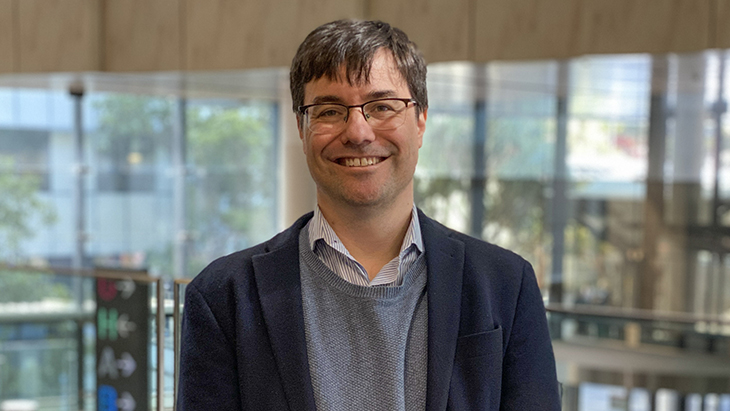
Dr Graham
Graham is the Medical Director of SPARTA, Queensland’s Specialist Palliative Rural Telehealth Service. Based on the Gold Coast, he has led the creation of specialist hubs in Townsville, Cairns, Sunshine Coast and Gold Coast, where teams use technology platforms to provide care in rural and remote regional areas.
Graham uses his love of innovation and technology to pioneer care and to generate positive patient outcomes. He strives to support colleagues and junior team members to engage in, and excel at, palliative care delivery.
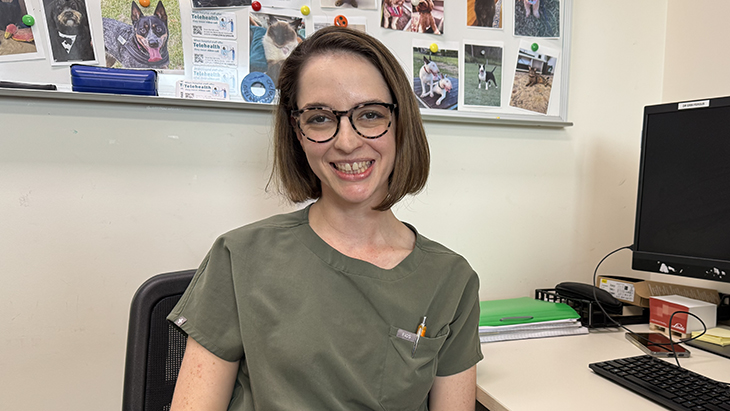
Dr Erin
Dr Erin is a senior medical officer who works in the Metro North Community Palliative Care Service. She is passionate about supporting people to maintain their quality of life and enjoys getting to know her patients as individuals while supporting their healthcare in a home setting.
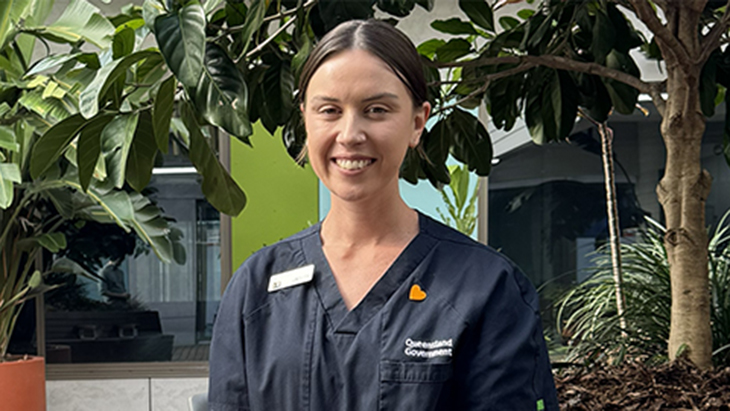
Jacinta
Jacinta is the palliative care clinical nurse consultant at Caboolture hospital. She ensures patients across the hospital receive appropriate access to palliative care and quality end of life care. She is passionate about patients being at the centre of their care and is particularly interested in what makes a good death for both patients and their loved ones, and how we perceive death as a society.
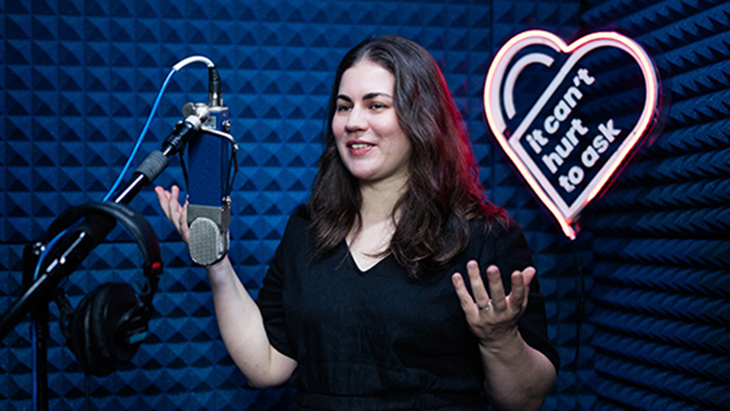
Lauren
With equal parts curiosity and caution, Lauren has delved into all things death and dying to produce and host this podcast series. She's talked to healthcare workers, allied health staff and people with lived experience from right across Queensland to get the full picture of what happens at the end of life and how we can prepare to live, and die, as well as we can.
Episode resources
Care at the end of life is a campaign and resource hub for Queenslanders with information about advance care planning and support for patients, carers and families.
Talking about death and dying can bring up challenging emotions. If you or someone you know is struggling with their mental wellbeing, support is available:
- Lifeline: call 13 11 14 (24 hours a day) if you are experiencing a personal crisis or chat to a counsellor online.
- Beyond Blue: call 1300 22 463 for broad mental wellbeing support or speak to a counsellor online.
- Griefline: call 1300 845 745 (9am–6pm, Monday - Friday, 12 noon–6pm weekends).
- PalAssist has general information and advice about palliative care services in Queensland. Call 1800 772 273 (free for Queensland residents) or chat online (from 7am to 7pm, 7 days).
- In an emergency, always call Triple Zero (000).
The following services were discussed in the episode or can provide additional information and resources:
- The Statewide Office of Advance Care Planning offers free advance care planning information and support for patients, families, carers, and health professionals. Phone: 1300 007 227 or email: acp@health.qld.gov.au.
- Apply for aged care services first by applying for an assessment. You can do this through your GP or local health service, online at the My Aged Care website, by calling My Aged Care on 1800 200 422, in-person with an Aged Care Specialist Officer at a Services Australia office.
- Any Aboriginal and Torres Strait Islander person who is 50 and over can access the Elder Care Support program. The program provides support workers who can give you information about aged care and guide you through the process of accessing services.
- Support is provided for infants, children and young people with life-limiting illnesses, as well as their parents, siblings, grandparents, school and community. Learn more via Children’s Health Queensland’s Paediatric Palliative Care Service, reach out to the Children's Health Queensland Bereavement Service via phone: 1800 080 316 or email: CHQ_Bereavement@health.qld.gov.au.
- Regional and rural patients, and their families, can access specialist palliative care services via telehealth. A referral is required from your GP, oncologist, other specialist or community nurse. Care is delivered by Specialist Palliative Rural Telehealth service (SPaRTa).
- Seniors Enquiry Line is a free, statewide information and referral service for Queensland seniors, families, friends, grandparents and carers. Phone: 1300 135 500 between 9am to 5pm, Monday to Friday.
- Voluntary assisted dying is one of several choices a person may have at the end of their life. It is important to discuss all options with your doctor. QVAD-Support provides advice and support to Queenslanders. Phone: 1800 431 371 or email: qvadsupport@health.qld.gov.au
Disclaimer
The stories and conversations shared by everyone in this podcast reflect their personal views, experiences and opinions. They are shared for informational and educational purposes only and are not intended to be a substitute for professional medical advice, diagnosis, or treatment.
Queensland Health does not guarantee the accuracy or completeness of the views expressed by guests and accepts no responsibility for any loss or damage that may result from relying on this content.
If you have questions about your health or treatment, please speak with a qualified healthcare professional.
Transcript
Lauren
The first thing I notice about the palliative care ward at Caboolture Hospital is how peaceful it is. Small family groups move between the communal sitting area talking, sometimes laughing, over cups of tea and coffee.
Cleaning staff move quietly down the hallway. A nurse discusses notes with a doctor, and a food services officer knocks gently on the door of a patient room holding a tray of morning tea.
Outside, the day is bright and cheerful, and that warm light pours in through the floor-to-ceiling windows. I'm shown through an empty patient room to a door that opens onto the lush balcony garden where the sound of children playing floats over from the school across the street.
I'm here to learn about what palliative care is and the different types of healthcare people can receive when they're dying.
My assumptions are already being challenged. This isn't what I expected a palliative care ward to feel like. This place is, well, it's really nice.
Have you ever thought about where you'd like to die? I find most people fall into two main camps, those who have very specific ideas about where they'd like to be, and those who don't want to think about it at all.
While not everyone gets to choose where they'd like to be when the time comes, we can make some choices about the type of care we'd like to receive, our preferred place for care, and the people we'd like around us in our final days.
But we can't make informed choices if we don't know what our options are.
From inpatient palliative care to at-home care, telehealth to geriatrics. I've spoken to healthcare workers in services across the state to better understand what's out there when it comes to end-of-life care.
Let's start with the big one, palliative care. Palliative care usually comes into play when someone has been diagnosed with a life-limiting illness, like cancer or motor neuron disease. As we learned in episode 1, people are now living longer and longer with these kinds of illnesses before they die.
Palliative care workers are specialists in managing the complex symptoms that come with these conditions and knowing how things might progress over time. But this kind of care hasn't always existed. In fact, I was surprised to learn how new it is.
Dr Graham is a palliative care specialist based on the Gold Coast, and he's going to kick things off with a little history lesson.
Dr Graham
Hi, I'm Dr Graham. Obviously, palliative care in a sense has been practiced since time immemorial. People have always died, and people have always cared for people who are dying.
Throughout the 20th century, there was an increasing focus on how to cure disease. Interventions to keep people alive became better and better, people no longer died of bacterial infections like they used to. The same thing happened with treatments for heart attacks. But there was an increasing recognition that people were living longer and longer with illnesses that were causing more and more symptoms.
Lauren
In the 1960s, UK nurse and social worker Cicely Saunders started calling on healthcare practitioners to think differently about how people were cared for while they were dying. While extending people's time of life was an incredible feat, she said that addressing their quality of life was just as important.
Dr Graham
Her big idea was we had to in the medical world, start paying attention to people's pain and suffering that their illness was causing, particularly in the illnesses that couldn't be cured. And so, she was driven to develop healthcare in a way that took that into account, and she set up the world's first modern hospice in London, St. Christopher's Hospice in 1967.
Lauren
I've done the maths. That's less than 60 years of modern palliative care. In Australia, the specialty is even newer. The Royal Australasian College of Physicians established early training for palliative care doctors in 1988, but the Australian government didn't formally recognize palliative care as a medical specialty until 2005.
I'd always assumed that most people receiving palliative care died in hospital, so I was surprised to learn that there are palliative care services that help people to die at home, and a lot of people use them. It turns out there are a lot of different services that support people to have the kind of end-of-life care that suits them best.
Let's learn about them.
Dr Erin
One of the things that our service will ask you at your initial appointment with community palliative care is, have you thought about where you would like to be when you die?
Lauren
That's Dr Erin. I met her at the Metro North Community Palliative Care Service. It's a really different environment to the Caboolture unit I visited at the start of the episode for one big reason: there are no patients here.
Dr Erin
For the people that want to die at home, there are a few things that we have to take into account when we're working out with them and their family, whether that's going to be something that's possible and safe. One of the main things is just who's around and what kind of support you have from your carers.
Lauren
Community palliative care services provide care for people in their home setting, whether that's their own home, a carer's home, or residential aged care. Well, there are circumstances that can mean someone has to be transferred to hospital for care if a person's goal is to stay at home the team will support them to do so for as long as possible.
Dr Erin
The vast majority of the time, we can get all the equipment in, like hospital beds and toilet frames. And we can teach carers how to care for a person who's becoming sicker. We can supply medications and teach carers how to give those, and our nurses can come in variably. Towards the end of a person's life, we might have a nurse coming for symptom management every day.
Lauren
Jacinta is an acting clinical nurse consultant in the Caboolture Palliative Care Unit. She was the one who gave me the tour at the start of this episode. Patients often start their palliative care journey with outpatient appointments.
Jacinta told me that when they're admitted to the unit, people often think that's where they're going to be until they die. They're surprised when that's not always the case
Jacinta
Palliative care focuses on quality of life and delivering holistic care. For each person that may differ slightly.
So, one person's goal of care may be to get back home and go home with their pain better managed so that they can go out and do things with their kids. And another person's goal of care might be around just being comfortable here in hospital and their preference to have end of life in an inpatient setting rather than at home.
Another person's goal of care may be to continue having some treatment for their illness, but they would like some introduction to the palliative care service to manage some of the symptoms they're experiencing with their treatment.
Lauren
I'll admit, I was nervous to visit the inpatient service. I was worried about intruding in a space where people were having very personal and vulnerable experiences. What struck me most about visiting was how light the atmosphere was. Jacinta says this is because the focus of palliative care, no matter what the setting, is on living, not on dying.
Jacinta
I think my favourite part about palliative care is being able to adjust that thinking and focus more on the quality rather than the quantity.
And yes, whilst their time might be short, and we're not doing anything to give them more time, we're doing things to try and ensure that the short time that they have is meaningful and allows them to do the things that they want to do and not be stuck in a hospital attached to infusions, not being shipped off to ICU to have invasive treatments, and that they can maybe be here on the palliative care unit and have their whole family visit, have lunch out on the balcony, go for day trips, go home, be with their pets, whatever it is that they want to do.
That's where the fun part of palliative care comes in as well, because we try to make that happen for people.
Lauren
Which delivers care to people who live where there isn't a large local hospital with a palliative care service.
Dr Graham, who delivered our palliative care history lesson is the medical director of the Specialist Palliative Rural Telehealth Service, or SPARTA, which delivers care to people who live in areas where there isn't a large local hospital with a palliative care service.
Started in 2020, SPARTA keeps people living in their communities and receiving their care locally.
Dr Graham
There was actually a survey done of all the palliative care teams in Queensland and where the doctors were. And there were at the time 21 doctors in Brisbane, 4 in the Gold Coast, 3 in the Sunshine Coast, a couple up in Cairns and a couple in Townsville, and that was it. There were well over a million Queenslanders that lived in a part of the country which did not have any palliative care doctor. We can provide care in their local communities rather than bringing them into Brisbane.
Lauren
Dr Graham's team used telehealth to link in with the person's local healthcare team to provide specialist care when they need it.
Dr Graham
Many of the towns of 5, 10,000 people in Queensland have a community nurse or a hospital nurse that helps with outpatients. They might drive out and see a patient in their home and then telehealth to the doctor in Toowoomba or the Gold Coast or Sunshine Coast. The doctor will review the patient with the nurse present in the home and, that way we can look at their medical needs, and pain relief medication needs and so on and, do a prescription or feedback to the GP. We can talk to the patient about their goals, what's happening with their illness.
Lauren
This hybrid approach means there's still someone with the patient when they need them to continue providing important physical and emotional care.
Dr Graham
It's so helpful to have a nurse on the ground because, you know, I can break some very bad news to a patient, and I've got no idea what happens when I turn the video off. And so if there's a nurse there with the patient, that's someone to help explain it again, to comfort the patient, if that's needed.
Then what might happen is the nurse might work with, say, the local Blue Care team. So Blue Care will help out with end-of-life care in regional Australia in a lot of places. And they might arrange for a nurse to come out daily to the person's house. And so a nurse will draw up some medications ready to be given by family members as they're needed through the day, help with some personal care, a, bed bath.
You kind of adjust as you go. And obviously if things aren't working at home, there's the ambulance and into hospital.
Lauren
It's been really comforting to learn that palliative care services across the state are evolving to accommodate the needs of the people they treat. To deliver that care where people want to be, as much as possible, and keep people living their lives in a way that is meaningful to them.
Having these conversations, though, I've learned that not everyone who's dying will receive palliative care.
Of course, some people die unexpectedly and suddenly from illness or injuries, so we're going to cover what happens in those circumstances in a later episode.
And a lot of people die at an older age, but not necessarily from a diagnosed life-limiting illness like cancer. It might be a combination of frailty, chronic disease and overall, just, aging, that means they eventually die. They won't necessarily need specialist palliative care, so, who looks after them?
In our next episode, I'm going to find out. Together, we're going to learn all about who in the health system looks after us at the end of our lives. If you've had any experience with end-of-life care, you'll know there can be a lot of different people involved and it can be overwhelming keeping track who's who and what they do.
Who puts their hand up for a career working with dying people and why? What are the different responsibilities of a doctor and nurse and how do they work together? Why is an occupational therapist involved in caring for people at the end of their lives? Who can help you understand what's happening to your body as you get older and frailer? As we're learning, it can't hurt to ask!
Coming up on It Can't Hurt to Ask about Death and Dying...
Dr Graham
The first comment I normally get from people is, 'That must be so sad to work in palliative care and so hard.'
Dr Erin
There are some days that are really tough, but I think the work is so rewarding.