

Summary
There can be a lot of people involved in end-of-life care, so in this episode, we're finding out who's who and what they do.
In this episode, Lauren meets with staff from across the state who help care for people who are dying, to find out what their jobs are and what they love about their work.
From the role of doctors and nurses in palliative care settings, to allied health professionals and a geriatrician, we're finding out how many different disciplines can come together to support a person's quality of life in their final months, weeks and days.
What's the most common request a palliative care music therapist gets? Why might an occupational therapist talk to a patient's neighbours? How does a geriatrician explain ageing?
Come along for the journey to find out!
This episode is part of the It Can’t Hurt to Ask: Death and Dying.
Featured in this episode
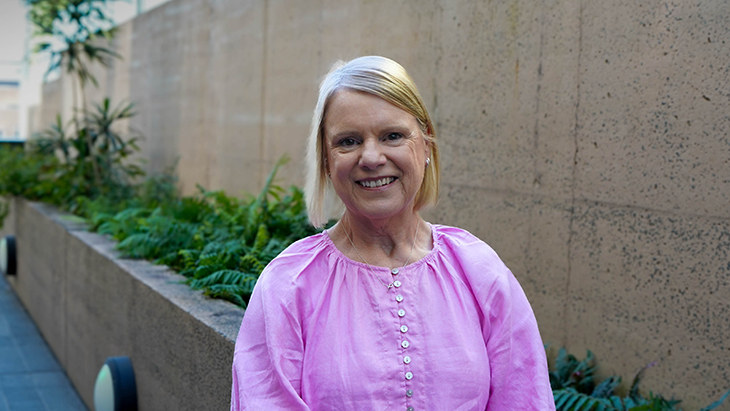
Laurelle
Laurelle is a Senior Social Worker with the Specialist Palliative Rural Telehealth Service (Gold Coast–Toowoomba Hub), supporting patients and families across South East Queensland. She has 25 years of experience in paediatric and adult hospital settings, with expertise in oncology, critical care, trauma, and palliative care. Laurelle is passionate about improving access to specialist palliative care for people living in rural and remote communities.
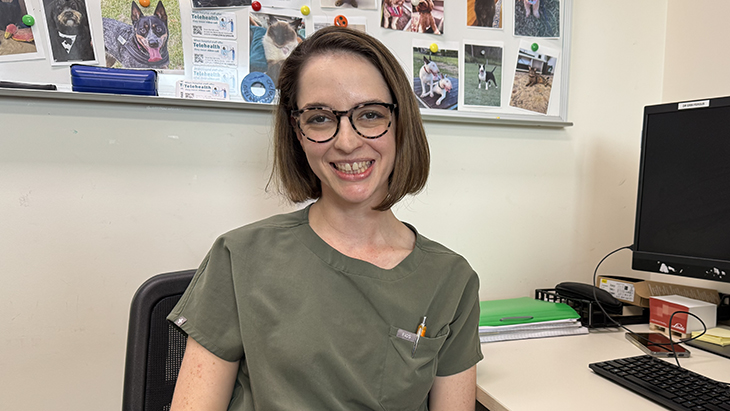
Dr Erin
Dr Erin is a senior medical officer who works in the Metro North Community Palliative Care Service. She is passionate about supporting people to maintain their quality of life and enjoys getting to know her patients as individuals while supporting their healthcare in a home setting.
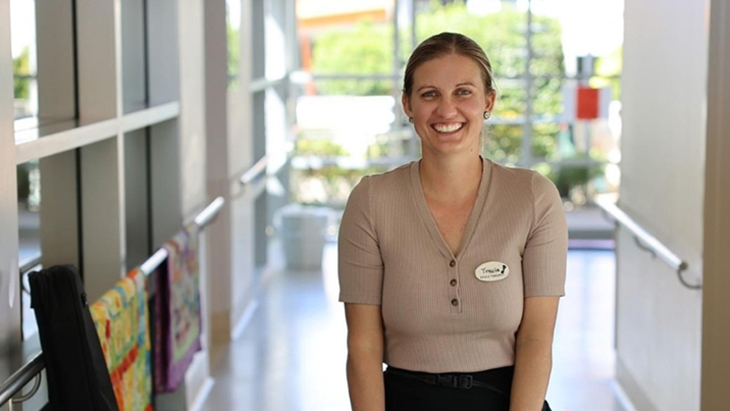
Tracie
Tracie Wicks is a registered Music Therapist employed by the Sunshine Coast Hospital Health Service, working at Dove, the inpatient Palliative Care Unit in Caloundra Hospital. Tracie has felt honoured to work in adult palliative care for over a decade and has a particular interest in the use of music therapy in supporting legacy and memory making for patients and families. Tracie is a mother of two children and one cheeky cavoodle and holds an undergraduate degree in Psychology and a master’s in Music Therapy from the University of Queensland.
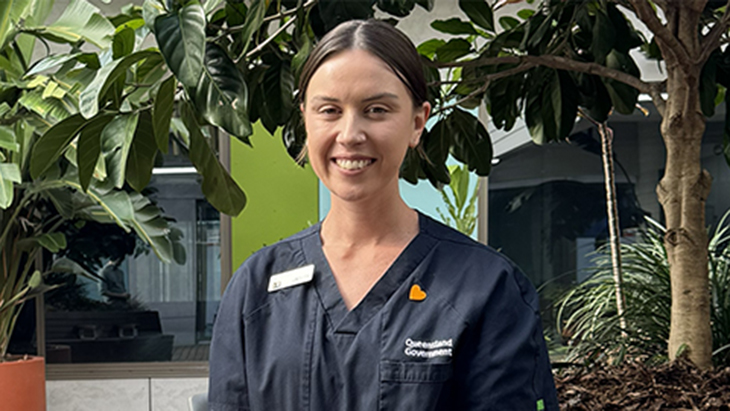
Jacinta
Jacinta is the palliative care clinical nurse consultant at Caboolture hospital. She ensures patients across the hospital receive appropriate access to palliative care and quality end of life care. She is passionate about patients being at the centre of their care and is particularly interested in what makes a good death for both patients and their loved ones, and how we perceive death as a society.
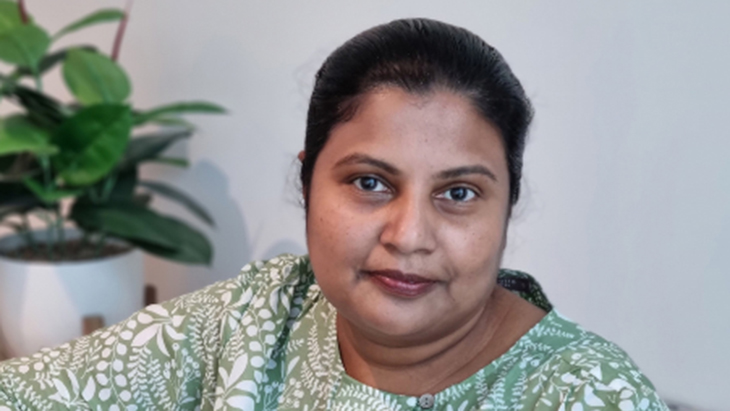
Dr Champa
Dr Champa Ranasinghe is a Senior Staff Specialist Geriatrics at Ipswich Hospital. Dr Ranasinghe is a champion in aged care and specialises in creating awareness, reducing stigma and fostering a more supportive and safe culture for care of the elderly. Her specialist aged care projects include the Sunflower Initiative, which streamlines in-hospital care for the elderly.
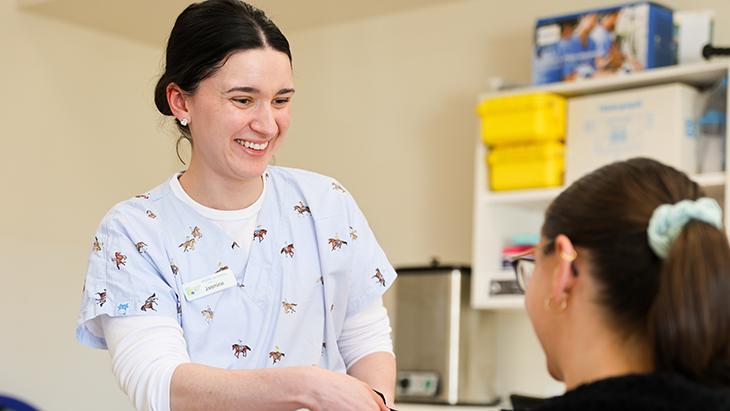
Jasmine
Jasmine is occupational therapist (OT) at Central West Hospital and Health Service. She works out of Longreach Hospital and also in the community across the region, including Barcaldine, Blackall and Winton. She loves that being an OT in a regional area means she has a very varied caseload and enjoys getting to know her patients, particularly the relationships she forms through long-term care with elderly patients, and is especially interested in helping people with oedema and swelling of the legs.
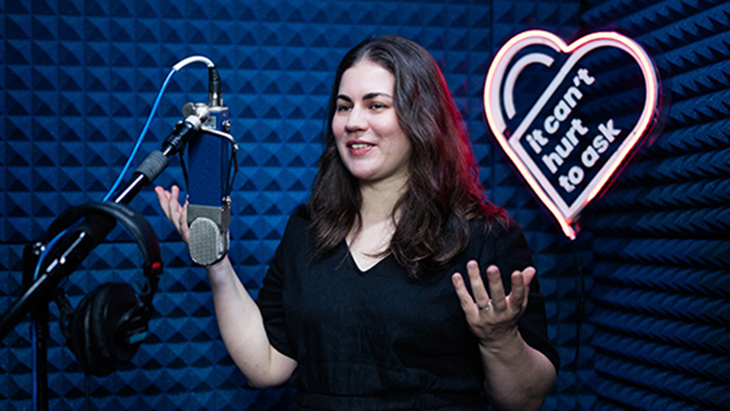
Lauren
With equal parts curiosity and caution, Lauren has delved into all things death and dying to produce and host this podcast series. She's talked to healthcare workers, allied health staff and people with lived experience from right across Queensland to get the full picture of what happens at the end of life and how we can prepare to live, and die, as well as we can.
Episode resources
Care at the end of life is a campaign and resource hub for Queenslanders with information about advance care planning and support for patients, carers and families.
Talking about death and dying can bring up challenging emotions. If you or someone you know is struggling with their mental wellbeing, support is available:
- Lifeline: call 13 11 14 (24 hours a day) if you are experiencing a personal crisis or chat to a counsellor online.
- Beyond Blue: call 1300 22 463 for broad mental wellbeing support or speak to a counsellor online.
- Griefline: call 1300 845 745 (9am–6pm, Monday - Friday, 12 noon–6pm weekends).
- PalAssist has general information and advice about palliative care services in Queensland. Call 1800 772 273 (free for Queensland residents) or chat online (from 7am to 7pm, 7 days).
- In an emergency, always call Triple Zero (000).
The following services were discussed in the episode or can provide additional information and resources:
- The Statewide Office of Advance Care Planning offers free advance care planning information and support for patients, families, carers, and health professionals. Phone: 1300 007 227 or email: acp@health.qld.gov.au.
- Apply for aged care services first by applying for an assessment. You can do this through your GP or local health service, online at the My Aged Care website, by calling My Aged Care on 1800 200 422, in-person with an Aged Care Specialist Officer at a Services Australia office.
- Any Aboriginal and Torres Strait Islander person who is 50 and over can access the Elder Care Support program. The program provides support workers who can give you information about aged care and guide you through the process of accessing services.
- Support is provided for infants, children and young people with life-limiting illnesses, as well as their parents, siblings, grandparents, school and community. Learn more via Children’s Health Queensland’s Paediatric Palliative Care Service, reach out to the Children's Health Queensland Bereavement Service via phone: 1800 080 316 or email: CHQ_Bereavement@health.qld.gov.au.
- Regional and rural patients, and their families, can access specialist palliative care services via telehealth. A referral is required from your GP, oncologist, other specialist or community nurse. Care is delivered by Specialist Palliative Rural Telehealth service (SPaRTa).
- Seniors Enquiry Line is a free, statewide information and referral service for Queensland seniors, families, friends, grandparents and carers. Phone: 1300 135 500 between 9am to 5pm, Monday to Friday.
- Voluntary assisted dying is one of several choices a person may have at the end of their life. It is important to discuss all options with your doctor. QVAD-Support provides advice and support to Queenslanders. Phone: 1800 431 371 or email: qvadsupport@health.qld.gov.au
Disclaimer
The stories and conversations shared by everyone in this podcast reflect their personal views, experiences and opinions. They are shared for informational and educational purposes only and are not intended to be a substitute for professional medical advice, diagnosis, or treatment.
Queensland Health does not guarantee the accuracy or completeness of the views expressed by guests and accepts no responsibility for any loss or damage that may result from relying on this content.
If you have questions about your health or treatment, please speak with a qualified healthcare professional.
Transcript
Dr Erin
A lot of people say, ‘Oh, my God, that must be so sad and depressing. Aren't you unhappy all the time?’
Tracie
This work can be quite isolating because when people know you work in palliative care, they don't often readily ask you about your work.
Dr Graham
The first comment I normally get from people is, 'That must be so sad to work in palliative care and so hard.'
Lauren
Greek philosopher Epicurus wisely said, "Death is nothing to us. When we exist, death is not, and when death exists, we are not." Another way to put this is that we live until the moment we die. In palliative care, the focus isn't really on death. It's about making sure a person can live as well as possible in the time that they have.
Doctors, nurses, social workers, and allied health professionals all play a part in caring not for a patient, but a whole person, helping to meet their medical, physical, psychological, spiritual, and emotional needs.
What struck me in meeting these people is how much they loved their jobs and how much purpose and joy they took from their work.
But they all said that in our death-adverse culture people often mistake their work for depressing, even horrible.
I asked staff from palliative care services across the state to give me some insight into their work, to help us understand what their role is in providing care and what they find enjoyable about their jobs.
Dr Erin
A big part of my job is to help choose medications and strategies that can ease the burden associated with those symptoms.
Lauren
That's Dr. Erin again. A palliative care doctor oversees the medical management of a patient and plans ahead for what might come next.
Dr Erin
One of the big roles that the doctor plays in the team is to guide medication choices. So palliative care specialists are specialists in pain management, also in management of other symptoms that can sometimes happen as a person's getting closer to the end of their life, things like nausea or breathlessness.
Another big part of my job is to help with questions about advanced care planning. I help people sign off different documents, like resuscitation plans or health directives, and I can help guide the conversations about what kind of healthcare does and doesn't match up with the person's wishes for their future.
Lauren
If you've listened to episode 2, you'll know there are a few different models of palliative care. Dr Erin works in a community palliative care service, which means she delivers care to her patients in their own homes. She told me that's one of the things she loves about her job.
Dr Erin
I do a lot of home visiting, which is something I really enjoy. I think that being able to sit in someone's living room in a place that's comfortable for them lets you get a better idea about how they're really feeling and what's happening. It's a privilege to be allowed to go into people's houses.
Lauren
Nurses do a lot of hands-on caring work, especially when a person is in hospital receiving inpatient care.
Nurse Jacinta shared how she works closely with doctors like Erin and allied health professionals to provide a high level of round-the-clock care for palliative patients.
Jacinta
The nursing team here are quite special. They are with the patients 24/7. We do 8-hour shifts, so it's a long time to spend at the bedside. A lot of what our nursing team does is around assessment of symptoms, delivery of medications to manage those symptoms, and then being able to evaluate whether those medications worked, and if they didn't work, what else can we try? And relaying all of that back to the doctors who are prescribing these medications.
Beyond that, the nurses are doing all of the other things that the patient perhaps can't do themselves. So assisting with daily cares, hygiene cares, toileting, showering, helping people to order their meals and eat their meals comfortably.
And then although nurses, can refer to social workers, I think the nurses often play a vital role in that as well. It's the difficult conversations in the middle of the night. It's the nurses that are having those with patients, answering their questions in the moment.
Lauren
It's not just the individual patients that Jacinta cares for. Family, friends, and loved ones come for visits or stay overnight in the unit's family rooms. Jacinta told me that providing care for these people is also a big part of her job
Jacinta
I find people sitting at the bedside probably aren't looking after themselves very well. The days and hours can go by in a blur, and knowing when they last ate, it often slips their mind. So we really will just be checking in, ‘Have you eaten breakfast? Have you eaten lunch? Have you had a shower today?’
A lot of people are frightened to leave the bedside, so we try to empower them to do that in order to look after themselves.
We also assist with any memory-making or legacy building that they'd like to do, so collecting fingerprints or curls of hair. Supporting them to have family visiting or bringing pets in for visitation as well.
Just really wrapping them up, I guess, in all of the love and care that we can.
Lauren
Jacinta mentioned the important role of social workers and psychologists in palliative care teams.
You might remember Lorelle from episode one. She's a social worker from Gold Coast University Hospital and SPARTA.
She gave me insight into the breadth of support a social worker can provide
Laurelle
We actually do a bit of everything. So social workers provide emotional support, practical help, and connecting people with services. We help with tough conversations, often supporting people through their conversations with the medical team, and generally just being there.
We're good at putting things into plain language, explaining the hierarchy of the medical teams in the different doctors, nurses or the various allied health that they encounter. We might be helping a family try to figure out practical or emotional issues or help them with problem-solving, particularly around the lifetime chores that people do, like caring for children or caring for others that they may be responsible for.
At other times, it's just sitting quietly with people, holding space for them, so just listening. I think the best part about my job is the time that I get to spend with people, getting to know their life story as they're nearing the end. It's hearing about important connections and relationships in their lives, and about the many adventures that they've had. We collect many stories over our lifetime, so reflecting on these at the end of life can be very therapeutic, bringing a sense of peace to patients and their families.
Tracie
We know music is a really strong connector to our sense of identity and memories. people are able to use music to recall those positive memories from their life and the people in it. And that in turn supports their connection to self and to be able to process the complex emotions that can arise when you're faced with the end of your life.
Lauren
Is there music that helps you feel calm and relaxed? Do you have a favorite song that brings up memories from your past?
We've just been hearing the words and music of Tracie, senior music therapist at Dove Palliative Care Inpatient Unit at Caloundra Health Service. Music is a powerful tool that can impact people's wellbeing, and Tracie's job is to use music to support people receiving palliative care.
Tracie
Music therapy is an allied health profession. We use music and music activities to support a person's health, functioning and wellbeing.
That can be through the lens of supporting quality of life, providing those moments for positive connection, improving feelings of relaxation and enjoyment, supporting personhood through life review, reminiscence, supporting symptom management, like around looking at sleep within the hospital environment or post-discharge home, looking at reducing perception of pain and feelings of anxiety.
Lauren
Anyone who has been really sick knows how it feels to transform into a patient, losing a sense of yourself as a person. The many appointments, tests, symptoms, and medications can become overwhelming.
Tracie's job can be to help people return to themselves, reigniting their memories, passions, and joy, and creating new memories for their loved ones to treasure after they have died.
Tracie
It's quite common that music listening falls by the wayside when we become really unwell. I've had lots of experiences with patients who have been very withdrawn due to their condition, being able to really become animated again in their expression, remembering that song, their families lighting up to see their loved ones singing and smiling, tapping their feet to the beat of the music.
I recall a woman who I supported to create a playlist of her life and she said to me, ‘You've just helped remind me of a whole life I've lived.’
Patients themselves might engage in memory-making activities such as songwriting or creating a playlist of songs from their life to share with their family, or other interventions like heartbeat recordings, where we actually record a person's heartbeat and embed that in a particular special piece of music. And that becomes a much-loved preservation that's honoring of that person, that supports the bereaved, supporting their continued bonds with their loved one.
Lauren
I had to ask, what's the most common request a palliative care music therapist gets?
Tracie
This is usually the one everybody wants to know . What song do you play? It is very varied because Dove accepts adults 18 and over, that music repertoire is phenomenal.
The most popular genre, I would say, is country music. For it to have therapeutic impact, it has to be aligned with the music preference of the person we're supporting. On a given day, I can be playing jazz in one room, hymns in another, AC/DC in another room. There's something very special about when people share with you their favorite song.
Lauren
Jas is an occupational therapist, or OT, working in Central Western Queensland. Unlike the other people we've heard from, she doesn't just work with palliative patients. In fact, she doesn't even work in one town.
Jasmine
I'm Jas. I'm an occupational therapist. I work in Longreach at the hospital out here. We don't just stay in Longreach. We provide outreach to other smaller towns such as Barcaldine, Blackall, Winton.
Lauren
Jas's work in outback Queensland means that she supports patients right across the health system. When she's working with people who are coming to the end of their life, her focus is on understanding their goals and what's most important to them to maintain their quality of life and dignity
Jasmine
An OT's job is to make sure that people are able to participate as independently and safely as they can in their daily tasks that they find meaningful to them. I like to highlight the meaningful aspect because not every task that you do in your life is meaningful to you. And I think it shifts across the lifespan. What was once important to you when you're in your forties, fifties becomes very different once you enter into your sixties, seventies, eighties.
Lauren
Jas's job takes her on the road, often into people's homes or care facilities so that she can really get to know them and figure out how to help them reach their goals
Jasmine
Oftentimes you are talking to the family, the friends, the neighbors, their service providers if they're involved with people for personal cares or transport. Providing support to those people too because sometimes by supporting those people, it leads to better outcomes for that patient.
As people get older, and many patients have said this to me, they just want to be able to do as much as they can and they get a lot of joy from that. So it's just trying to increase that joy as much as we can in a safe way.
Lauren
Not everyone who dies needs palliative care, but even those who reach an old age without diagnosed life-limiting illnesses often need supportive healthcare. That's where a geriatrician like Dr. Champa can come in
Dr Champa
I'm Dr. Champa. I'm the clinical director of geriatrics and a senior geriatrician. I work in Ipswich Hospital, which is part of West Moreton Health.
A geriatrician is a specialised physician who focuses on the healthcare needs of older adults. They provide comprehensive assessments, manage complex medical conditions, and coordinate multidisciplinary care to promote healthy aging, preserve independence, and improve overall quality of life.
As a geriatrician, I can get to know them and their close relatives as individuals, and also I get to support and educate the carers as well, because the carers are doing a very challenging duty and supporting these people with geriatric syndromes and their carers can be very rewarding as well.
Lauren
Geriatricians help people manage the common health impacts of aging, including frailty. I didn't know this before I spoke to her, but frailty is a defined medical term, and doctors like Dr. Champa can assess your level of frailty on a scale. It turns out that increasing frailty is pretty predictable.
Someone at a 1 on the frailty scale is extremely fit for their age. Someone rated at an 8 or 9 is a severely frail person who is dependent on others for daily care and is reaching the end of their life. In between that are gradual steps down in day-to-day functioning
Dr Champa
When people become older and increasingly frailer, they become little bit more dependent on others to maintain their day-to-day life.
It could be just that they need some help in cleaning their house, cleaning their backyard, getting their shopping done or going to appointments because they don't drive anymore. Or it could be very intense support with regular physical therapy, help with toileting, and so on assistance showering or getting dressing done.
Lauren
It's fair to say that as a society, we see aging as a negative. But like death, trying to ignore aging won't make the reality go away. It's important to know about these predictable stages of getting older so that we can plan ahead for them, for ourselves and for those we care about
Dr Champa
If you notice that you or a loved one needs some help to maintain their daily function, you can access support by registering with My Aged Care, requesting an Aged Care Assessment, so that if you assessed and you are eligible to access support. You may qualify to have a home care package, so that you are able to have nursing, allied health like physiotherapy, occupational therapy, social work so that you can still maintain your independence and ability to live at home.
Furthermore, in case that you can't maintain your independence and need more support than you can maintain in your home environment, if you are registered with My Aged Care and have a Home Care Package with appropriate approvals like respite and residential care, this allows you to enter into the residential care as well.
But the most important thing is recognising the need early, because as with anything in the healthcare system, there is huge demand and pressure to access these resources. So, you need to identify needs early, register with My Aged Care, request the assessment, because even after the assessment, there is a lag time to locate the funding, and then you need to find a provider as well. So, it's always better to do those things early than waiting for the crisis to happen.
Lauren
Across the health system, there are so many people who play a role in caring for us when we're coming to the end of our lives. But I couldn't end this episode without highlighting the role that general practitioners or GPs play in end-of-life care.
GPs provide care for people throughout their entire lives, from birth to death. When someone is aging or has been diagnosed with a life-limiting illness, their GP can refer them into services like the ones mentioned in this episode. GPs are also often the first port of call when people want to do advance care planning documents or are thinking about registering for services like My Aged Care.
If you've been listening to this episode and think it might be time to start planning for your future healthcare needs, your GP is a fantastic person to start the conversation with
Dr Erin
There are some days that are really tough, but I think the work is so rewarding.
Dr Graham
Because we're helping people at a really vulnerable time in their life, and we're making a big difference.
Tracie
We know that the way we come into the world and the way we leave the world is incredibly important, and the care we receive has lasting impacts.
Lauren
Earlier, we heard palliative care staff talking about the misconceptions people have about their jobs. I'll be honest, I wasn't that surprised to hear how people react because I've had the same responses when I've talked about making this podcast. I can honestly say that after talking to them, these jobs aren't depressing or difficult.
Having accepted our collective mortality, their work is full of purpose as they play an integral role in one of the most important times in people's lives.
Hopefully by hearing them explain their roles and the services they operate, you've gained some understanding about the system you or your loved ones might access if diagnosed with a life-limiting illness or see a natural decline with aging
Will that knowledge shape the way you think about planning for your future? Has it changed what you think is possible or what you would ask about at an appointment?
In our next episode, we're going to keep learning from these specialists as they share what happens when someone is dying including the changes that can be seen, felt, and heard during their last weeks, days, and hours.
How long does dying take? How do we know that someone is comfortable in the final stages of life? Is the death rattle a real thing? It can't hurt to ask.
Dr Erin
A lot of people, this might be the first time they've encountered death, and I think preparing people is really important, preparing people for what normal death can look like.
Jacinta
So, in that deteriorating phase, we do expect that life is coming to an end. There is a marked change in their function.
Karen
It's peaceful. It's calm. That's often what families comment, how peaceful it is, how dignified, how peaceful, and how undramatic.