

Mpox surveillance
- Queensland has seen a recent increase of mpox notifications.
- People at risk should be encouraged to seek testing promptly if they develop symptoms or have been exposed to mpox and eligible people should be encouraged to receive mpox vaccination.
- Clinicians are encouraged to offer vaccination to all eligible priority populations.
- ATAGI recommends pre-travel vaccination for anyone (regardless of sexual orientation or gender identity) who may engage in sexual activities during travel to countries with transmission of clade I mpox.
Queensland Health updates this mpox surveillance webpage quarterly. Weekly totals for mpox cases can be found under Sexually transmissable on the Notifiable conditions weekly totals | Queensland Health webpage.
Last updated date: 30 September 2026
Refer to ATAGI Clinical Guidance on the use of vaccines for the prevention of mpox.
- ATAGI recommends pre-travel vaccination for anyone (regardless of sexual orientation or gender identity) who may undertake sexual risk activities during travel to countries with transmission of clade I mpox.
- There is good supply of mpox vaccine in Queensland and it is available free of charge to all Queensland Health Immunisation Program (QHIP) registered vaccine service providers. Email QHIP-ADMIN@health.qld.gov.au to order mpox vaccine (or register if not already registered).
- Vaccine providers can be found at mpox (monkeypox) vaccination centres.
- Clinicians are encouraged to offer vaccination to all eligible priority populations and to follow-up people who have not had their second vaccination at least 28 days following their first vaccine. Eligibility criteria can be found at mpox (previously known as monkeypox).
Refer to the mpox National Guidelines for Public Health Units for the public health response to cases and contacts of mpox.
Since 1 January 2024, there have been 157 confirmed cases of mpox notified in Queensland, including 18 cases in 2026 as of 30 September:
- Most cases were acquired in Australia, with the primary transmission route being sexual transmission between men who have sex with men.
- The key new pattern in 2026 to date is an increase of cases predominantly involving clade Ib cases, concentrated in Metro North and Metro South.
- Several cases reported during August and September were epidemiologically linked and associated with group events. Appropriate case investigation and contact tracing were completed.
- Despite changes in clade and geographical concentration, transmission continued to occur predominantly among adult males reporting sexual exposure, particularly same-sex exposure.
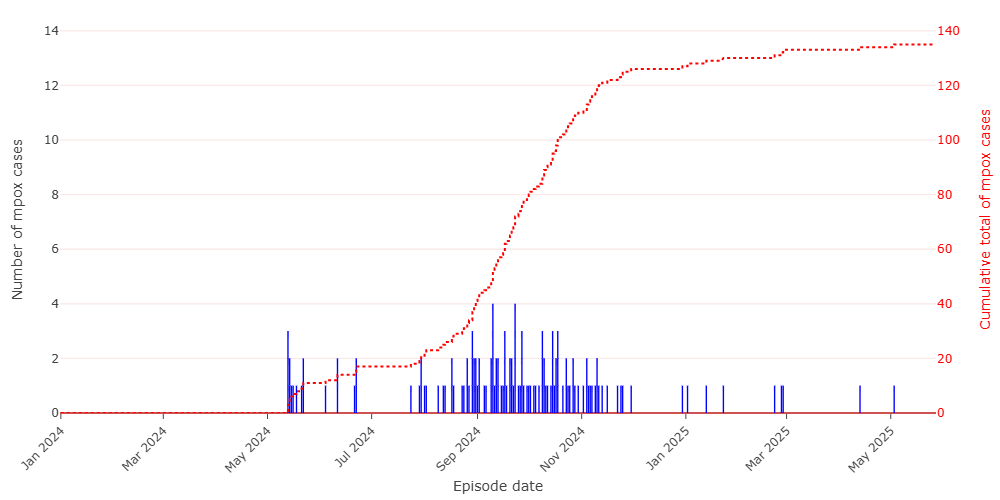
Figure 1: Mpox cases notified in Queensland since 01 January 2024, as of 30 September 2026.
Table 1. Characteristics of mpox cases notified in Queensland since 1 January 2024, as of 30 September 2026.
| Characteristic | 2024 | 2025 | 2026 |
|---|---|---|---|
| N = 127 | N = 12 | N = 18 | |
| Median age (range) | 36 (18, 82) | 37 (0, 53) | 44 (20, 62) |
| Sex | |||
| Female | 2 / 127 (1.6%) | 3 / 12 (25%) | 0 / 18 (0%) |
| Male | 125 / 127 (98%) | 9 / 12 (75%) | 18 / 18 (100%) |
| First Nations Status | |||
| First Nations | 6 / 127 (4.7%) | 1 / 12 (8.3%) | 1 / 18 (5.6%) |
| Other Queenslanders | 119 / 127 (94%) | 11 / 12 (92%) | 16 / 18 (89%) |
| Unknown | 2 / 127 (1.6%) | 0 / 12 (0%) | 1 / 18 (5.6%) |
| HHS of residence | |||
| Cairns and Hinterland | 0 / 127 (0%) | 2 / 12 (17%) | 2 / 18 (11%) |
| Darling Downs | 4 / 127 (3.1%) | 1 / 12 (8.3%) | 0 / 18 (0%) |
| Gold Coast | 28 / 127 (22%) | 0 / 12 (0%) | 0 / 18 (0%) |
| Metro North | 48 / 127 (38%) | 2 / 12 (17%) | 10 / 18 (56%) |
| Metro South | 21 / 127 (17%) | 4 / 12 (33%) | 4 / 18 (22%) |
| Overseas | 2 / 127 (1.6%) | 0 / 12 (0%) | 1 / 18 (5.6%) |
| South West | 1 / 127 (0.8%) | 0 / 12 (0%) | 0 / 18 (0%) |
| Sunshine Coast | 11 / 127 (8.7%) | 0 / 12 (0%) | 0 / 18 (0%) |
| Townsville | 1 / 127 (0.8%) | 1 / 12 (8.3%) | 0 / 18 (0%) |
| West Moreton | 10 / 127 (7.9%) | 2 / 12 (17%) | 1 / 18 (5.6%) |
| Wide Bay | 1 / 127 (0.8%) | 0 / 12 (0%) | 0 / 18 (0%) |
| Vaccination status prior to exposure | |||
| Fully vaccinated | 33 / 127 (26%) | 1 / 12 (8.3%) | 7 / 18 (39%) |
| Not vaccinated | 81 / 127 (64%) | 9 / 12 (75%) | 8 / 18 (44%) |
| Partially vaccinated | 5 / 127 (3.9%) | 1 / 12 (8.3%) | 1 / 18 (5.6%) |
| Unknown | 8 / 127 (6.3%) | 1 / 12 (8.3%) | 2 / 18 (11%) |
| HIV coinfection | |||
| HIV negative | 114 / 127 (90%) | 12 / 12 (100%) | 17 / 18 (94%) |
| HIV positive | 13 / 127 (10%) | 0 / 12 (0%) | 1 / 18 (5.6%) |
| Place of acquisition | |||
| Australia | 123 / 127 (97%) | 9 / 12 (75%) | 12 / 18 (67%) |
| Overseas | 0 / 127 (0%) | 3 / 12 (25%) | 3 / 18 (17%) |
| Unknown/Under investigation | 4 / 127 (3.1%) | 0 / 12 (0%) | 3 / 18 (17%) |
| Clade | |||
| Ib | 0 / 127 (0%) | 3 / 12 (25%) | 13 / 18 (72%) |
| IIb | 111 / 127 (87%) | 7 / 12 (58%) | 5 / 18 (28%) |
| Not available | 16 / 127 (13%) | 2 / 12 (17%) | 0 / 18 (0%) |
| Transmission mode | |||
| Sexual transmission | 126 / 127 (99%) | 8 / 12 (67%) | 15 / 18 (83%) |
| Unknown/Under investigation | 1 / 127 (0.8%) | 4 / 12 (33%) | 3 / 18 (17%) |
| Sexual exposure type | |||
| Both sexes | 2 / 127 (1.6%) | 0 / 12 (0%) | 1 / 18 (5.6%) |
| Opposite sex | 4 / 127 (3.1%) | 1 / 12 (8.3%) | 0 / 18 (0%) |
| Same sex | 118 / 127 (93%) | 7 / 12 (58%) | 14 / 18 (78%) |
| Unknown/Under investigation | 3 / 127 (2.4%) | 4 / 12 (33%) | 3 / 18 (17%) |
1 n / N (%); Median (Min, Max)
For a national mpox epidemiological snapshot, refer to the National Communicable Disease Surveillance Dashboard: https://nindss.health.gov.au/pbi-dashboard/
Additional information
The mpox fact sheet on the Health Conditions Directory:
Fact sheets for cases and contacts:
- Information for people with mpox (health.qld.gov.au)
- Information for contacts of mpox (health.qld.gov.au)
Primary Care clinicians are encouraged to access their local HealthPathways platform for further information.