

The cultural reform team, led by First Nations professionals, is shifting Queensland Health from cultural capability to systemic cultural reform. This means moving beyond individual learning to embed cultural safety and eliminate racism at every level of the system.
Their work focuses on 5 key areas:
- system review and redesign: strengthening learning programs to embed anti-racism and cultural safety
- communications and resources: developing statewide campaigns and tools to support culturally safe practice
- policy leadership: embedding anti-racism into policy, governance and accountability
- partnership and co-design: ensuring First Nations voices and organisations lead in shaping reforms
- evidence and innovation: using research and tools to measure cultural safety and track progress.
This work is essential to achieving long-term systemic change and to ensuring Queensland Health is culturally safe, accountable and responsive to the needs of First Nations peoples.
‘It’s about addressing racism in the system. We have a system to change. We must be bold to push for change and take the opportunity when it is there.’
Matthew Cooke
Board Chair, Central Queensland Hospital and Health Service
CEO Gladstone Region Aboriginal and Islander Community Controlled Health Service
Embedding cultural safety in renal care
Story | North West
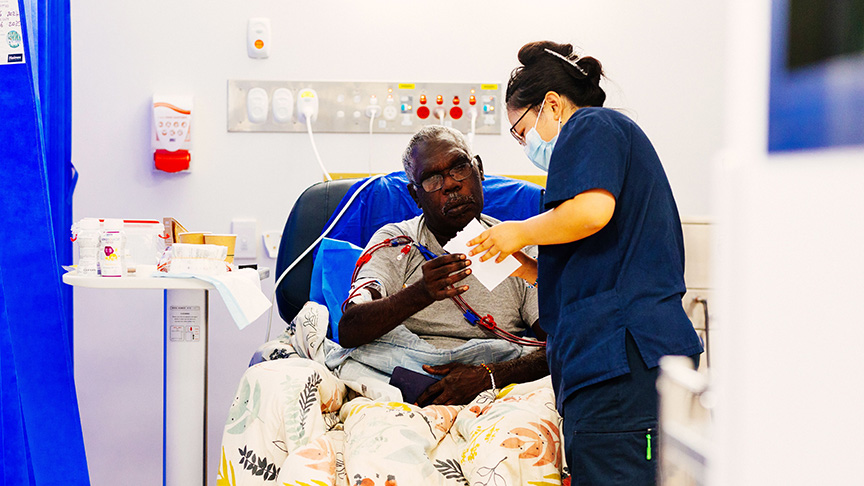
The shift from cultural capability to cultural reform is reshaping how care is delivered across Queensland Health. This means embedding cultural safety and eliminating racism not just at the point of care, but across systems, structures and models of service delivery.
Renal care is one example. Through collaborative planning with GPs, nurses, specialists and community leaders, Aboriginal and Torres Strait Islander patients are now able to access dialysis closer to home in places like Doomadgee and Mornington Island – an initiative supported by North West Hospital and Health Service.
For Lardil man Frank Watt, a Mornington Island resident and dialysis patient, this has meant staying connected to family and community, and receiving care on Country.
‘It’s very good here because after we finish our dialysis here, we can go home to our families.’
Frank Watt, Lardil man
Providing care in community not only reduces the disruption of treatment, it also strengthens engagement. Renal nurse Jomil Armatage said patients are more involved in their care when it is delivered in a culturally safe, familiar environment.
'Here, our patients don’t miss dialysis and they don’t miss any medications' Jomil said.