

Building accountable, equity-focused systems
Queensland Health is building more responsive and accountable systems to close the gap in health outcomes for First Nations peoples by embedding equity-focused performance monitoring, improving service access and strengthening cultural safety across the system.
Ensuring First Nations targets in the HHS service agreements
- Queensland Health uses key performance indicators (KPIs) and targets in all service agreements with hospital and health services to monitor improvements in health outcomes and service access.
- The KPIs are developed in consultation with HHSs, and are in agreement with the CFNHO and hospital and health boards.
- All KPIs are disaggregated by First Nations status, focusing on life expectancy, birth weight and suicide rates.
Reducing missed opportunities to treat
- From 2024–25, a new KPI on missed opportunity to treat (MOTT) has been included in hospital and health service agreements, helping assess performance statewide and locally.
- Since implementation, there has been a 10.6% increase in outpatient appointments scheduled for First Nations patients (compared to 2023–24), with nearly 33,000 additional appointments offered in 2024–25.
- The MOTT rate for First Nations peoples in 2024–25 was 15.9%, down from 16.4% in 2023–24. The MOTT rate gap between First Nations peoples and non-Indigenous Queenslanders narrowed to 9.0 percentage points, from 9.3 percentage points in 2023–24.
Improving patient safety and experience
- The First Nations Health Office is partnering with Clinical Excellence Queensland to develop a First Nations-specific patient reported experience measures (PREMs) survey. This will capture patient feedback and identify barriers to safe and responsive care.
- A partnership between the Institute for Urban Indigenous Health and Metro North Hospital and Health Service has improved access to culturally safe gynaecological care at the Royal Brisbane and Women’s Hospital. Since the program began, in-person appointments offered and attended by First Nations women have more than tripled. From 2020–21 to 2025, appointments offered increased from 229 to 770, with attendance rising from 209 to 666.
Supporting travel with culturally appropriate systems
- Across multiple hospital and health services, improved systems support booking and payment of travel and accommodation for First Nations patients and families, focusing on making the process simple, timely and culturally appropriate.
Building a culturally safe and representative workforce
- Workforce is one of four pillars of the First Nations First Strategy 2032, backed by $145.6 million over 4 years in the 2024–25 state budget. The strategy aims to develop a First Nations workforce that is valued, culturally safe, equipped, empowered and commensurate with need.
- Key initiatives include:
- developing a talent pipeline for First Nations staff in Queensland Health
- growing workforce opportunities through traineeships and cadetships
- retention strategies including cultural safety and leadership opportunities
- advancing Aboriginal and Torres Strait Islander health worker and practitioner roles through clinical governance and professional development.
The power of early detection and culturally safe care
Story
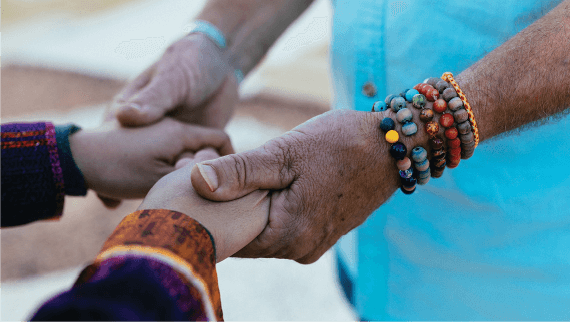
Early intervention and culturally safe care are making a life-saving difference for First Nations people affected by cancer.
Coralie Achterberg began having annual health checks in her mid-50s. During her third check, her doctor found blood in her urine and ordered follow-up tests. She was soon diagnosed with cancer in her right kidney.
Coralie underwent keyhole surgery to remove the kidney and was back at work 6 weeks later. The cancer had not spread, so she didn’t need further treatment.
She now encourages others not to skip their health check.
‘Getting cancer is no fun. But at least when it’s diagnosed early there’s a good chance it can be treated. That’s why I think everyone needs to get an annual health check.’
Coralie Achterberg
Des McGrady, a survivor of Stage 4 Nasopharyngeal Carcinoma, also shares his story to encourage others to speak up, ask questions and persist.
'I kept asking questions and requesting tests until I was finally diagnosed. I was just fortunate that the diagnosis came early enough for me to have treatment.'
Des says 3 things got him through treatment: support from his family, being able to stay on Country, and using bush medicine alongside clinical care to stay strong in body and spirit.