

The need for health equity
The 2008 Council of Australian Governments’ National Indigenous Reform Agreement first outlined the ambition to close the life expectancy gap between First Nations peoples and other Australians. Since then, Queensland has made significant progress:1
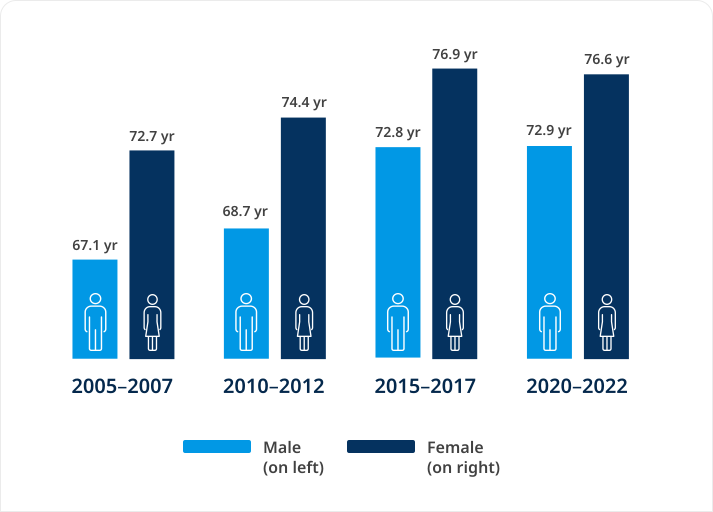
- A First Nations boy born in Queensland in 2020–22 can expect to live 5.8 years longer than one born in 2005–07.
- A First Nations girl born in 2020–22 can expect to live 3.9 years longer than one born in 2005–07.
These are among the largest recorded year-on-year improvements in life expectancy globally. However, a life expectancy gap of 7.3 years for males and 6.6 years for females remains. Life expectancy alone does not tell the full story.
Figure 1
Life expectancy at birth in years for First Nations Queenslanders, 2005–07 to 2020–22
Health inequities affecting First Nations peoples
First Nations peoples in Queensland continue to experience higher rates of:
- preventable illness
- hospitalisation and premature death
- poor maternal and infant health outcomes.
These outcomes reflect systemic inequities, including unequal access to care, the ongoing impacts of racism, and models of care that may not meet the cultural and social needs of First Nations peoples.
Figure 2
Rate ratio of First Nations peoples to other Queenslanders for a selection of health indicators
RR of 1.0 = parity
Rates rounded to the closest decimal point
* Includes diabetes
Child and maternal health

5.7×
More likely to smoke during pregnancy

1.9×
More likely to be born at less than 37 weeks gestation

2.5×
More likely to be born with a low birthweight at 37+ weeks gestation
Morbidity
1.9×
Higher rate of all-cause hospitalisations

2.4×
Higher rate of potentially preventable hospitalisations (PPH)

2.7×
Higher rate of chronic PPH

2.0×
Higher rate of acute PPH

3.7×
Higher rate of total potential vaccine-preventable hospitalisations
Mortality

1.4×
More all-cause mortality

2.6×
More potentially avoidable deaths
1.4×
More deaths from cancer
1.4×
Higher rate of deaths from cardiovascular disease

1.6×
Higher rate of deaths from injuries

3.1×
Higher rate of deaths from endocrine, nutritional and metabolic disorders*

1.7×
Higher rate of deaths from diseases of the respiratory system
Service provision
2.4×
Higher rate of discharge against medical advice

2.3×
Higher rate of missed opportunities to treat
The cost of health inequity
The health equity gap comes at a significant cost to Queensland Health.
- In 2022–23, estimated expenditure on First Nations peoples was $2.12 billion, or 8.7% of total Queensland Health expenditure.
- An additional $1 billion was expended due to the health inequities experienced by First Nations peoples.
This gap between estimated and expected expenditure illustrates the economic impact of systemic health inequity. Achieving health equity requires addressing root causes, not just the symptoms — through culturally safe, community-led care, improved accountability, and system-wide reform.
Sources
- Australian Bureau of Statistics (ABS), Aboriginal and Torres Strait Islander life expectancy – 2020–2022, ABS website, 2023, accessed 25 June 2025.
- Queensland Health, Queensland Admitted Patients Hospital Data Collection (QAPHDC), morbidity data, 2021–22 to 2023–24, Queensland Government, unpublished, accessed 26 May 2025.
- Queensland Health, Queensland Admitted Patients Hospital Data Collection (QAPHDC), discharge against medical advice (DAMA), Queensland Government, unpublished, accessed 26 May 2025.
- Queensland Health, Investment outcome indicators: missed opportunity to treat (MOTT), First Nations peoples in Queensland, Queensland Government, unpublished, accessed 2 June 2025.
- Australian Bureau of Statistics (ABS), Deaths, Australia – 2023, ABS website, 2023, accessed 19 May 2025.
- Queensland Health, Queensland Perinatal Data Collection (PDC), Queensland Government, unpublished, accessed 28 May 2025.