

Affecting cultural safety through clinical safety
First Nations voices within the health system are crucial to effecting system change, especially First Nations clinical voices. In August 2021, the Queensland Aboriginal and Torres Strait Islander Clinical Network (QATSICN) was established by Dr Alicia Veasey and Dr Mark Wenitong. It is currently co-chaired by Tess Symes and Patrick Rosser.
The focus of the network is strengthening and supporting Aboriginal and Torres Strait Islander peoples and their health rights. The network provides advocacy and leadership by placing First Nations peoples’ views, voices, priorities and knowledge at the centre of the health care system.
While the network is a First Nations clinical network, it is managed by Clinical Excellence Queensland, demonstrating the system-wide collaboration and commitment needed to achieve health equity for First Nations Queenslanders.
‘Indigenous leadership isn’t representational, it’s foundational. Elders, clinicians, and community leaders share cultural authority and decision-making power, embedding Aboriginal and Torres Strait Islander voices into every level of health governance.’
Dr Alicia Veasey
Inaugural co-chair Queensland Aboriginal and Torres Strait Islander Clinical Network
A key achievement has been the development of First Nations Patient Reported Experience Measures (PREMs), championed and led by the QATSICN. This work fills a long-standing gap by creating a culturally meaningful way to capture the voices and experiences of First Nations patients in Queensland Health services. Reporting against these PREMs will begin in late 2025, providing valuable insights to support more responsive, culturally safe care.
Co-designed clinical trials grounded in community trust
Story | Wide Bay
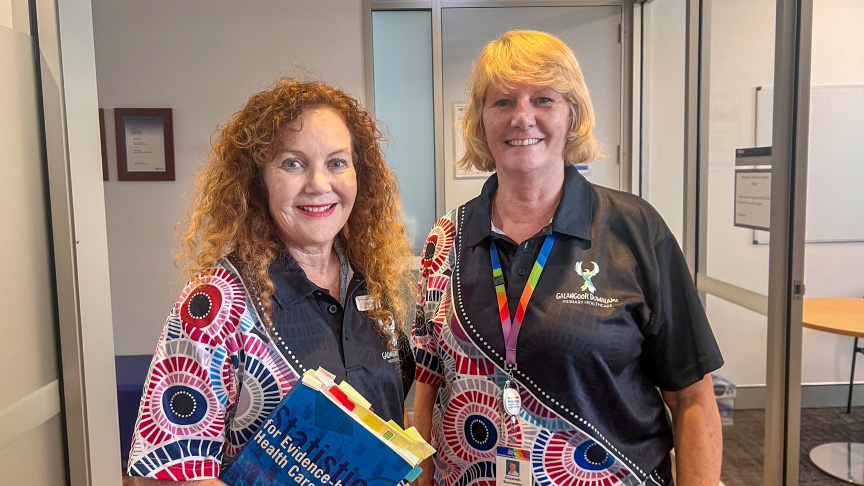
In the Wide Bay region, more than 100 clinical trials are underway, many focused on improving access for rural and remote First Nations patients.
One major project, led by Dr Angela Ratsch, investigates the impact of tobacco and nicotine exposure during pregnancy, in partnership with the Butchulla people and Galangoor Duwalami Primary Healthcare Service in Wide Bay Hospital and Health Service.
‘The mums are really supportive and invested,’ Dr Ratsch said.
‘They want to know what’s happening in their community, and how we can use that knowledge to improve outcomes for them and their babies.’
Dr Angela Ratsch
Ten spin-off projects are now underway, what Dr Ratsch calls a ‘quantum shift in scholarly knowledge’ grounded in community ownership and trust.