

Lessons learnt from a pandemic
Aboriginal and Torres Strait Islander communities across Queensland faced heightened risks during the COVID-19 pandemic due to longstanding health inequities. Higher rates of chronic conditions, coupled with crowded living conditions and limited access to health services, increased the likelihood of more severe illness.
In March 2020, Queensland Health established the First Nations COVID-19 Response Team within the Aboriginal and Torres Strait Islander Health Division. This followed early recognition by the Chief Aboriginal and Torres Strait Islander Health Officer that the pandemic would present unique challenges for First Nations peoples, requiring a tailored, community-led response.
‘Since early 2020, when the COVID-19 virus first threatened our shores, we have been on a journey to protect the Aboriginal and Torres Strait Islander peoples of Queensland.’
Haylene Grogan
Chief First Nations Health Officer
At the national level, the National Aboriginal Community Controlled Health Organisation (NACCHO) convened the COVID-19 Aboriginal and Torres Strait Islander Advisory Group to coordinate a national management plan. The CFNHO played a key role in this group and across other national forums, helping ensure coordinated responses to community outbreaks.
Leadership by First Nations people was central to the pandemic response. This was reflected both formally—through local councils, mayors, Elders and forums—and informally, with community members stepping into leadership roles to support each other. This leadership was enabled by the FNHO and contributed significantly to the effective management of COVID-19 in the first 2 years of the pandemic.
Where Aboriginal and Torres Strait Islander voices were embedded in planning and response efforts, communities reported better relationships, stronger engagement and higher trust in health authorities. This translated into:
- Higher vaccination rates
- Stronger participation in public health measures
- Reduced anxiety within communities
The pandemic also led to growth in the First Nations workforce within Queensland Health. From January 2020 to December 2022, the number of First Nations employees increased by 20%, more than double the growth of the overall Queensland Health workforce (8%).
Emergency care shaped by culture
Story | Children’s Health Queensland
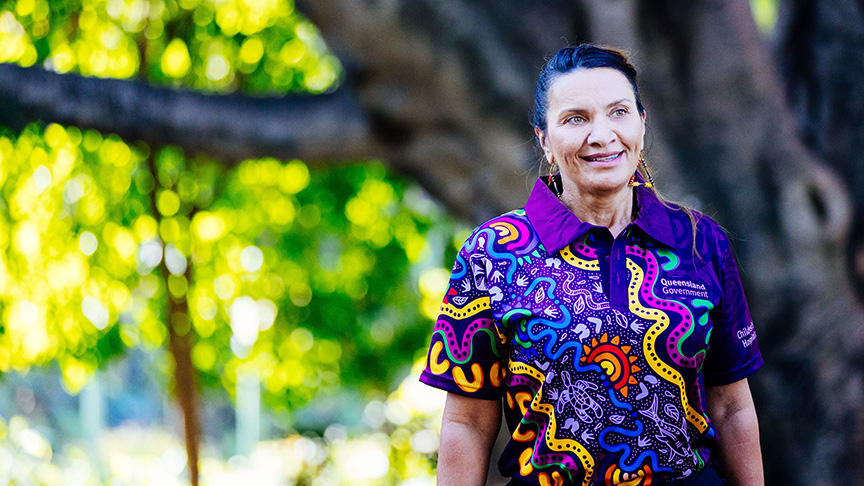
Culturally responsive leadership during the COVID-19 pandemic highlighted how care shaped by First Nations knowledges can strengthen health outcomes. That same understanding is now reshaping other parts of the system, including emergency care.
At Children’s Health Queensland (CHQ), the MOB ED program is setting a new standard. Co-designed with families and entirely led by Aboriginal and Torres Strait Islander staff, it ensures emergency care is delivered in a culturally safe and respectful environment.
Since launching in 2023, more than 7,300 Aboriginal and Torres Strait Islander people have attended Queensland Children’s Hospital, with 3,282 being seen by a MOB ED health worker.
Darsha Beetson, Clinical Nurse Consultant with MOB ED, has seen the impact of this program firsthand.
'We’ve seen a real shift in staff understanding the importance of culturally safe care,' Darsha said.
‘It was a big step to ask the system to change so that our people are better seen and care delivery is improved.’
Darsha Beetson, Clinical Nurse Consultant with MOB ED